Improving your website's effectiveness can be as easy as connecting to social media or investing in search engine optimization. However, there are major Google search engine updates that are rolling out regularly and changing user expectations.


Data is one of the most crucial assets today that demands high-end security to safeguard it from intruders and cyber attackers. A leak or breach in the data can be disastrous at an individual and organizational level. Therefore, various security certificates are available online to ensure the complete security of your data.
The general rule of thumb in marketing circles is that when utilizing web forms, optimization requires their shortening. Indeed, this is a logical conclusion in that, generally speaking, people will be perturbed by a long list of questions. The golden rule is usually five fields or less, but of course, depending on exactly what you are selling, that may be impossible. Long web forms are necessary for a host of services and products, so reducing your form to five fields or fewer is just not an option for many businesses. If you are stuck with your long-form, how do you go about maximizing conversion rates, then? These simple steps will reveal exactly how.
Apart from fast page load speed, stable web performance, and effective marketing strategies, eCommerce websites should also load properly on all devices. This is where a responsive web design comes into play. With it, mobile users can see all site content clearly and navigate through web pages easily, whether they use a tablet, desktop, or smartphone.
Drupal is open-source software, which means that you can update and redistribute the program's source code without paying license fees. A set of Drupal software tools makes it possible to work with site content even for beginners. With this in mind, it is no wonder why Drupal is so popular today.
A sitemap is the file that you specify to let the search engines know about the pages, videos, and images hosted on your website. By creating a sitemap, you can specify which pages are important, when they were last updated, and how often they were changed as well as alternate language versions (if any). You may also create an HTML version of the sitemap for your visitors to allow them to easily navigate your website.
Client Hints is a new feature introduced by Google on Chrome browser and is later adopted by other browsers and included in the HTTP specifications. Client Hints was developed to help deliver responsive web easier and faster, and also makes it easier for webmasters to markup less code.
Google is introducing new search algorithms such as mobile-first indexing and passage ranking as well as new frameworks like advanced mobile pages (AMP). Page load time is a key factor in search rankings, and more and more users are searching from mobile devices than desktop. The key takeaway from this is (1) speed and (2) mobile-friendly.
The Internet is a part of our lives, and can no longer live without it. We use it to check our daily weather forecast, read morning news briefs, trade stocks, and listen to our favorite music on Spotify. What makes the World Wide Web possible is domain names, and ICANN is the organization that manages them.
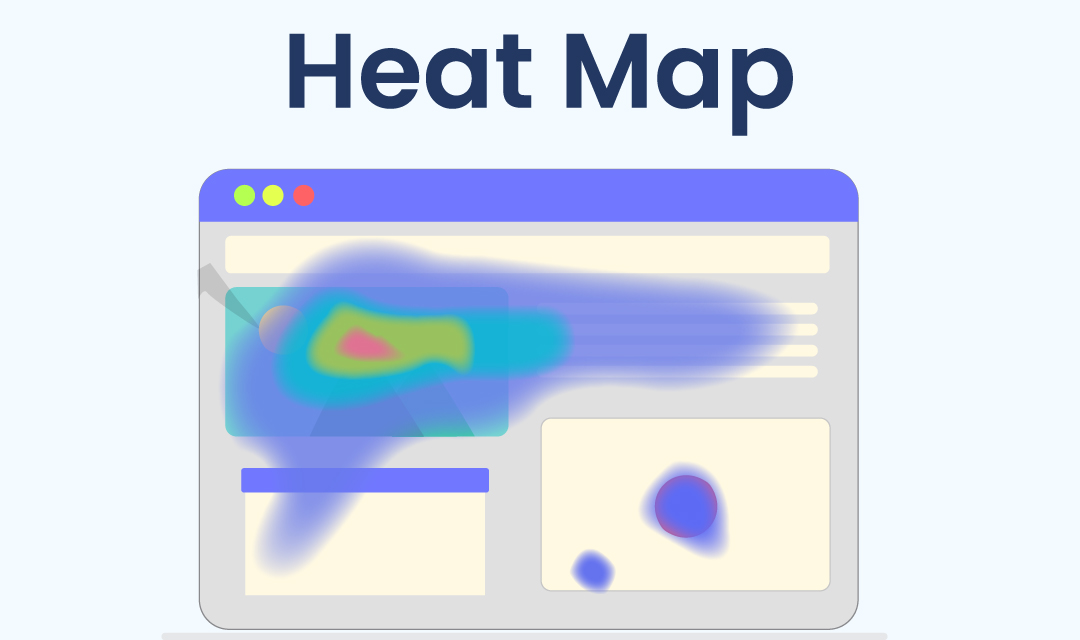
Development of heat maps dated back to the 19th century to provide a graphical representation of complex data so that it is easier for humans to analyze at-a-glance. Back then, a gray-scale shading was used to depict data patterns and the darker color was used to indicated dense values while lighter color was used to depict lesser values. A few applications of heat maps include depicting weather reports, real estate market data, and financial market analysis. The beauty of using heat maps is that you don't have to read a table of data in rows and columns to understand complex data, but rather view a simple colored map to grasp the big picture of data representation.