

When someone in Melbourne searches for game server hosting, they're not just looking for any provider. They want low ping, minimal lag, and servers that are physically close to their location. This presents a significant challenge for businesses entering the Rust hosting market. How do you compete for visibility when your product exists entirely online, yet location matters more than almost any other factor?
The answer lies in understanding that digital services can be intensely local, even when there's no storefront to visit. For anyone considering starting a hosting business or optimizing an existing one, the intersection of geographic targeting and search visibility offers real opportunities that many providers overlook.
The Ping Problem Nobody Talks About
Rust players understand something that casual internet users often don't. A 200-millisecond delay between pressing a button and seeing the result on screen can mean the difference between winning a firefight and respawning at the beach. When you're building a base or defending against raiders, server location becomes critical.
This technical reality creates surprisingly predictable search behavior. A player in Dallas won't search for generic hosting terms. They'll type "rust host Dallas" or "Dallas Rust server" because they already know what they need. The same pattern repeats in Sydney, London, Singapore, and every other city where gaming communities gather.
For hosting providers, this presents both a challenge and an opportunity. You can't rank well for every location using a single generic page. But you also can't ignore that most serious players filter by geography before comparing features or pricing.
Building Visibility Without a Physical Address
Traditional local businesses have clear signals for search engines. They have an address, operating hours, and, perhaps, customer reviews mentioning the neighborhood. Game server hosting lacks these markers, yet it still needs to compete in local search results.
The solution requires thinking about location in terms of infrastructure rather than storefronts. A Rust host with servers in multiple cities can legitimately target each market. The key is to create dedicated content that speaks directly to players in specific regions, rather than simply copying and pasting the same information with different city names.
This means building separate landing pages that address location-specific concerns. A page targeting Sydney might mention popular Australian Rust communities, typical ping ranges from major cities, and local payment options. The London page might reference UK server populations, peak playing times in GMT, and connections to European data centers.
The content needs substance. Search engines have become skilled at identifying thin location pages that exist solely to capture search traffic. Pages that actually serve players in those regions, providing relevant technical details and community information, tend to perform better.
The Technical Side of Geographic Content
Creating location-specific pages involves more than just mentioning city names. The technical structure matters. URLs should clearly indicate location, whether through subdirectories or clear naming conventions. Page titles need to include both the service and the location naturally.
Metadata plays an important role. Each page should have unique descriptions that reflect both the hosting service and the geographic focus. Schema markup can help search engines understand that these pages represent service availability in specific areas, even without a physical business address.
Internal linking structure supports this strategy. The main hosting page should link to each location-specific page, and those pages should link back to the central service description. This creates clear pathways for both visitors and search algorithms to understand how geography relates to the overall service.
Content That Actually Serves Local Players
The real test of geographic targeting is whether the content provides value to someone actually searching from that location. A player in Singapore searching for hosting doesn't just want to know that servers exist nearby. They want to understand connection quality to other Southeast Asian countries, typical ping times to major population centers, and how the hosting provider handles traffic patterns in their time zone.
Quality content addresses these specifics. It might discuss local gaming communities, mention popular Rust streamers or server groups in the region, or provide connection data from different neighborhoods within the metro area. This level of detail signals to both readers and search engines that the page exists to serve a genuine need, not just capture search traffic.
Reviews and testimonials gain extra weight when they reference specific locations. A testimonial from a server owner in Perth about player retention and connection quality carries greater relevance in that market than a generic five-star rating.
Scaling the Strategy Across Multiple Markets
Once the framework exists for one location, expanding to additional markets becomes more efficient. The challenge is maintaining quality and relevance as you scale. Each new location requires research into that region's gaming community, an understanding of local search patterns, and content that genuinely serves players in that area.
Some markets will naturally be larger than others. London, New York, and Tokyo may support extensive coverage of their gaming scenes and player populations. Smaller markets still deserve attention, but might focus more on technical details about connectivity and server performance.
The long game involves building authority in each target market gradually. This might mean starting with a few well-developed location pages and expanding as resources allow, rather than launching dozens of thin pages simultaneously.
When Location and User Experience Intersect
Geographic targeting works best when it aligns with actual service delivery. Providers with servers genuinely located in the regions they target will naturally create more authentic and helpful content. They can speak with authority about network infrastructure, connection quality, and relationships with local data centers.
This authenticity extends to the user experience. When someone clicks through to a Sydney-focused page, they should see server options actually located in Australia, pricing in local currency if possible, and support hours that make sense for their timezone. The geographic targeting shouldn't end at search visibility; it should enhance the entire service experience.
Building Sustainable Search Visibility
The goal isn't to manipulate search results but to create genuine utility for players searching from specific locations. A rust host operating in a dozen cities can legitimately claim expertise in each market, provided the content supports that claim.
Search algorithms continue to refine how they evaluate location-specific content. Providers who invest in creating genuinely useful resources for different geographic markets will build sustainable visibility over time. Those who simply paste city names into templated pages will likely see diminishing returns.
Bottom Line
For anyone entering the hosting market or looking to expand an existing service, geographic targeting offers a clear path forward. The technical requirements of online gaming create natural search patterns that align with location-specific content. Success comes from understanding those patterns and serving them with substance, not just keywords.
The digital nature of game hosting doesn't eliminate geography. It transforms it into something more granular and specific, where the distance between a server and a player can determine whether a business earns their trust. Meeting players where they search, with content that reflects their actual needs, remains the foundation of effective visibility in this market.
Featured Image generated by Google Gemini.
Share this post
Author

Read the latest articles from Jack Mike
What Tools Can Help Me Stream Pre-Recorded Videos on YouTube?

March 12, 2026
Going live on YouTube doesn’t always mean you actually have to be present.
Learn moreWhy Website Performance Varies by Location
January 12, 2026
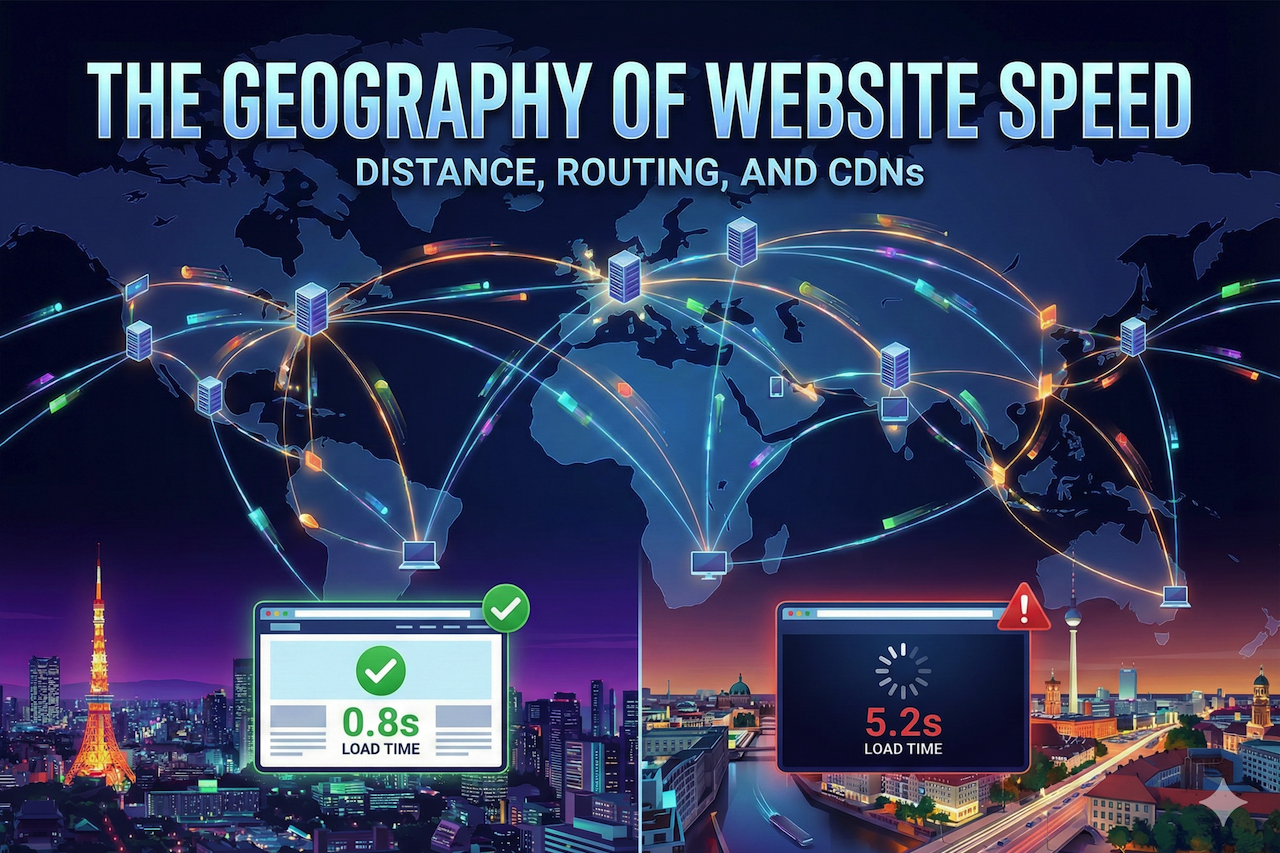
Ever notice how someone in Tokyo loads your website in under a second, while a visitor in Berlin waits five seconds for the same page? That’s not just a random glitch. It’s actually baked into the way the internet works.
Learn moreLeave a comment
All comments are moderated. Spammy and bot submitted comments are deleted. Please submit the comments that are helpful to others, and we'll approve your comments. A comment that includes outbound link will only be approved if the content is relevant to the topic, and has some value to our readers.
Comments (0)
No comment