

The real estate industry has become increasingly digital. Most buyers and sellers now begin their property search online, researching neighborhoods, comparing listings, and evaluating agents before ever scheduling a showing. Because of this shift, real estate SEO has become one of the most important marketing strategies for agents and brokerages looking to generate consistent leads.
Search engine optimization helps real estate professionals appear in search results when potential clients are actively researching properties or local market trends. By building visibility for the right searches, agents can connect with motivated buyers and sellers at the earliest stages of their decision-making process.
This guide explains how real estate SEO works and outlines the strategies agents use to attract organic traffic, build authority in local markets, and convert website visitors into qualified leads.
What Is Real Estate SEO?
Real estate SEO refers to search engine optimization strategies specifically designed for the real estate industry.
Definition of Real Estate SEO
At its core, real estate SEO focuses on improving a website’s visibility in search engines when users look for real estate information, properties, or agents in a particular area.
Examples of common real estate searches include:
- “homes for sale in Seattle”
- “real estate agent near me”
- “best neighborhoods in Austin”
Ranking for these types of queries helps real estate professionals reach people who are actively researching property decisions.
Why SEO Matters for Real Estate
Organic search traffic can become one of the most reliable sources of leads for real estate businesses.
Unlike paid advertising, which stops generating traffic when budgets end, SEO continues driving visitors over time once strong rankings are achieved. This makes SEO a long-term investment that can consistently attract potential buyers and sellers.
Understanding the Real Estate Buyer and Seller Journey
A strong SEO strategy aligns content with how people search during different stages of the real estate process.
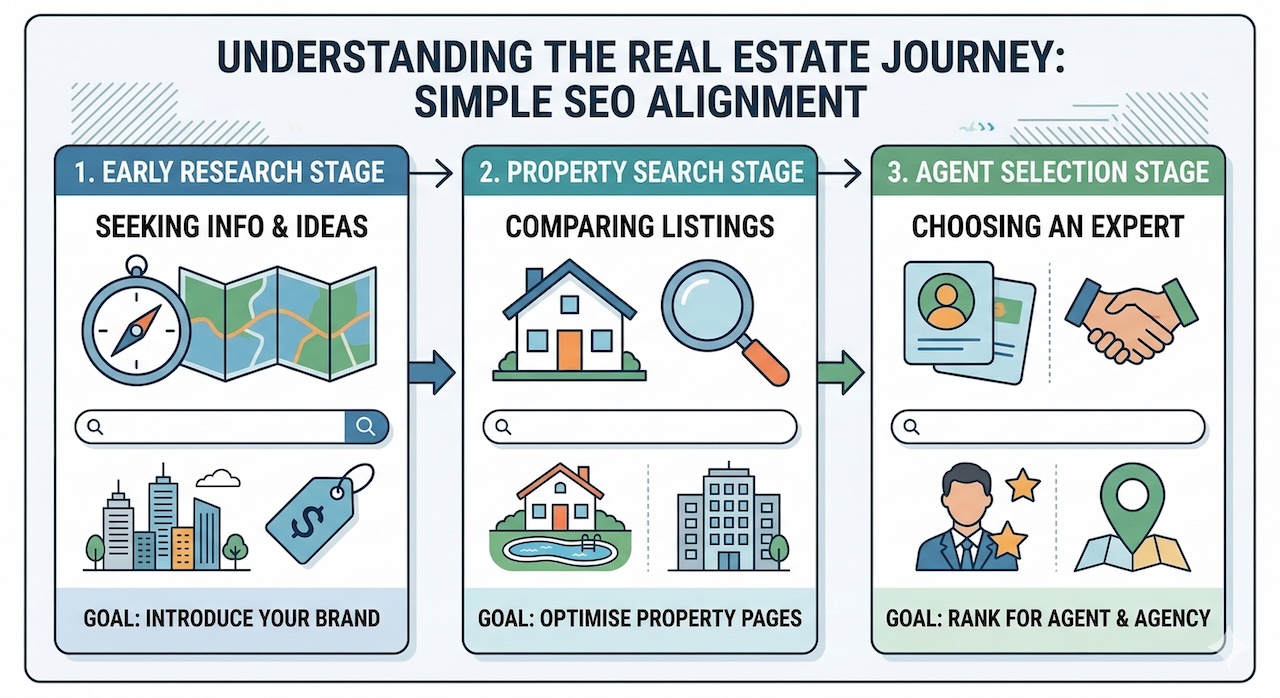
Early Research Stage
At the beginning of the journey, users often search for general information about cities or neighborhoods.
Examples include:
- “best neighborhoods in Denver”
- “cost of living in Phoenix”
Content targeting these searches helps introduce potential clients to an agent’s website early in their research process.
Property Search Stage
Once buyers narrow their preferences, they begin searching for specific listings.
Searches might include:
- “condos for sale in downtown Miami”
- “homes for sale in Scottsdale with pool”
Optimizing listing pages for these keywords can help property pages appear in search results.
Agent Selection Stage
Eventually, users begin searching for agents or real estate services.
Typical searches include:
- “top real estate agent in Dallas”
- “real estate agency near me”
Ranking for these terms allows agents to connect with clients who are ready to work with a professional.
Step 1: Local SEO for Real Estate
Real estate is inherently local, which makes local SEO one of the most important elements of a successful strategy.
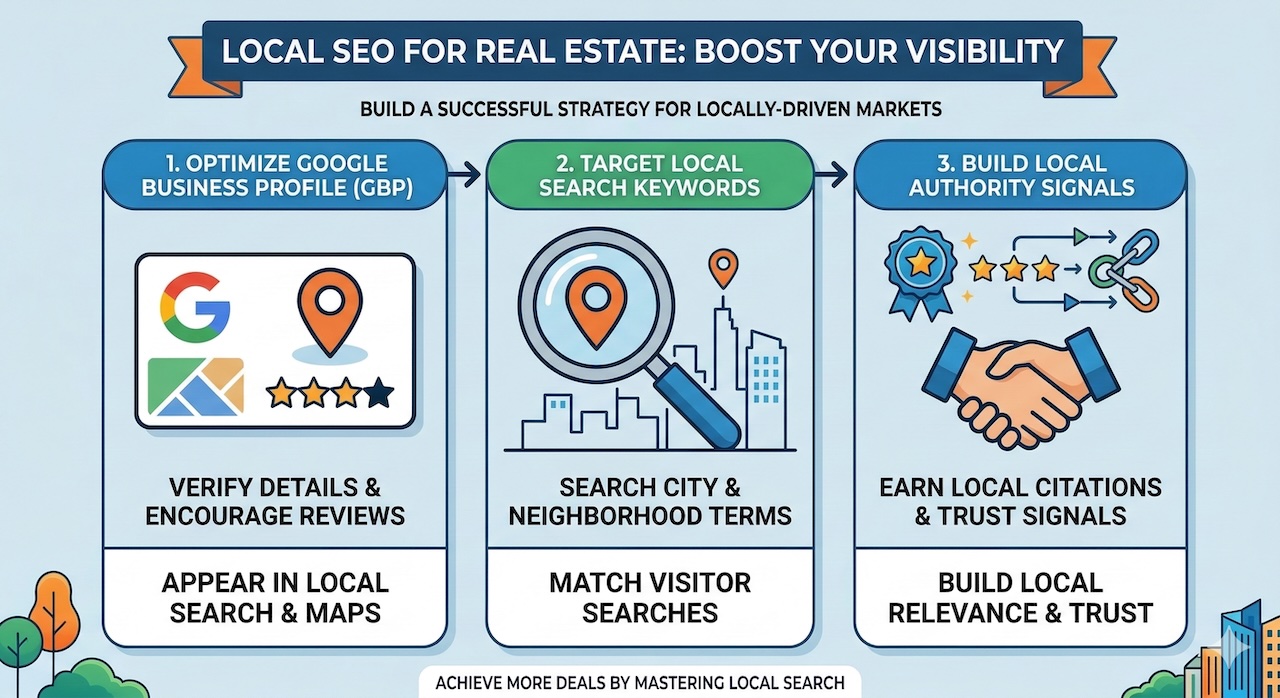
Optimize Google Business Profile
A Google Business Profile allows real estate professionals to appear in local search results and map listings.
Important optimization steps include:
- Accurate contact information
- Business categories related to real estate services
- Updated office hours and service areas
- Client reviews
Local search visibility can significantly increase inquiries from nearby clients.
Target Local Search Keywords
Successful real estate SEO strategies focus heavily on location-based keywords.
Examples include:
- “homes for sale in Nashville”
- “real estate agent in Portland”
These keywords match the way buyers search when exploring housing options in specific areas.
Build Local Authority
Local authority signals help search engines determine the relevance of a real estate website.
These signals may include:
- Local business citations
- Customer reviews
- Links from local organizations or publications
Together, these factors help establish credibility within a geographic market.
Step 2: Keyword Research for Property Searches
Keyword research helps identify the searches that potential clients use when looking for properties or real estate services.
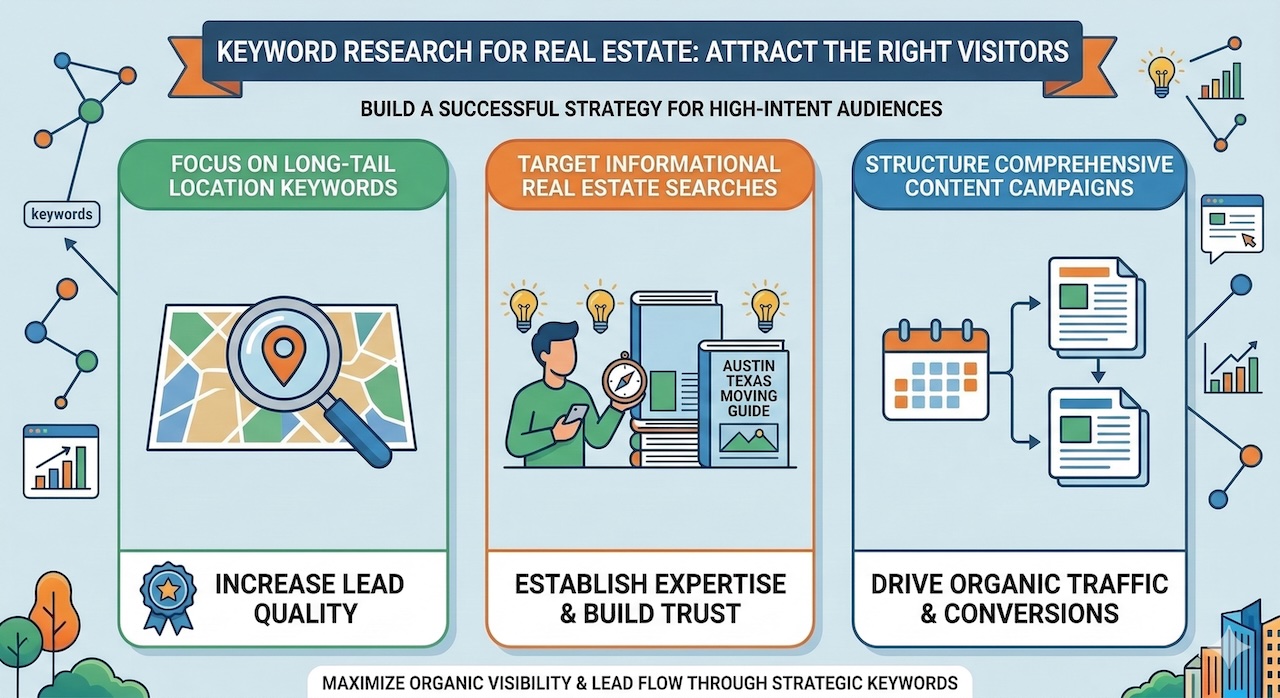
Focus on Long-Tail Location Keywords
Long-tail keywords are longer search phrases that often include location details or specific housing features.
Examples include:
- “3 bedroom homes for sale in San Diego”
- “waterfront homes in Tampa”
Although these phrases may have lower search volume, they often attract more qualified visitors.
Target Informational Real Estate Searches
Not every search involves a property listing. Many users begin with informational queries such as:
- “best school districts in Chicago”
- “moving to Austin Texas guide”
Creating content that answers these questions helps establish expertise and builds trust with potential clients.
Some real estate businesses develop comprehensive content strategies with digital marketing specialists such as Kova Team that help structure SEO campaigns designed to attract high-intent visitors through organic search.
Step 3: Create Neighborhood and Market Content
Content marketing plays a major role in real estate SEO success.
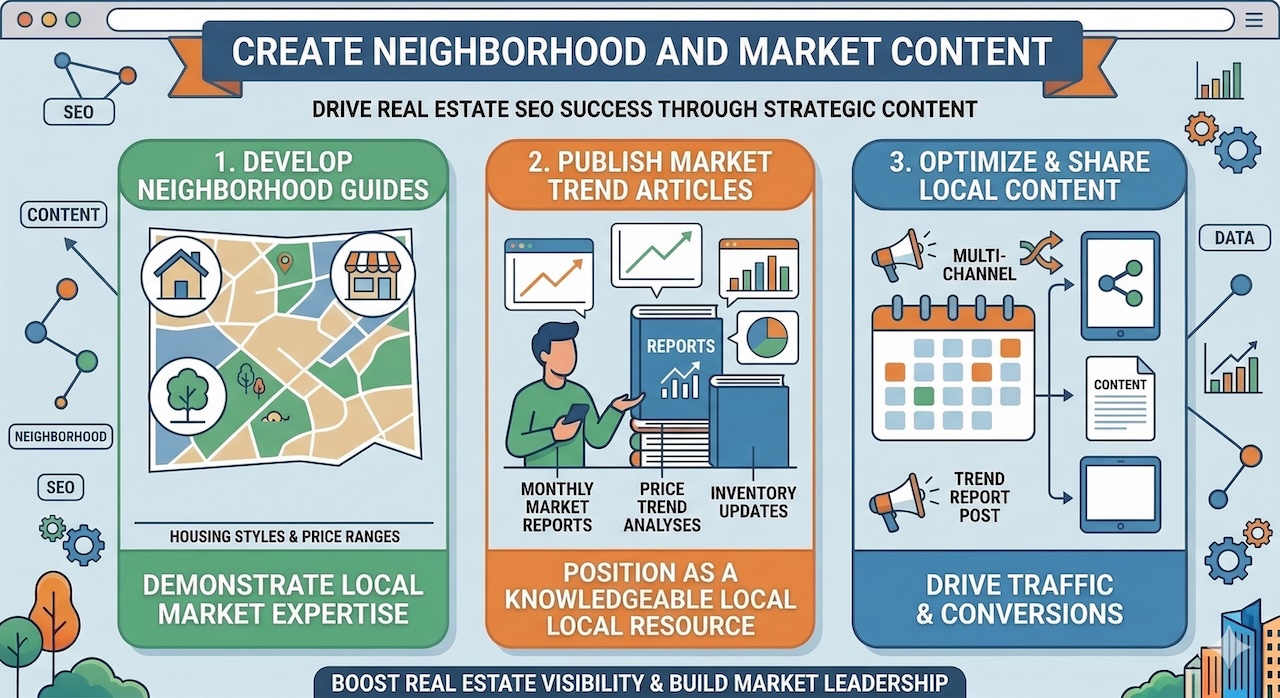
Neighborhood Guides
Neighborhood guides help potential buyers learn about communities before deciding where to live.
These guides may include information about:
- schools
- restaurants and local businesses
- parks and recreation areas
- housing styles and price ranges
Publishing detailed guides allows agents to rank for local searches while demonstrating market expertise.
Market Trend Articles
Market trend content helps educate buyers and sellers about local housing conditions.
Examples include:
- monthly market reports
- price trend analyses
- inventory updates
These articles attract readers researching the market and position the agent as a knowledgeable resource.
Step 4: Optimize Technical SEO for Property Websites
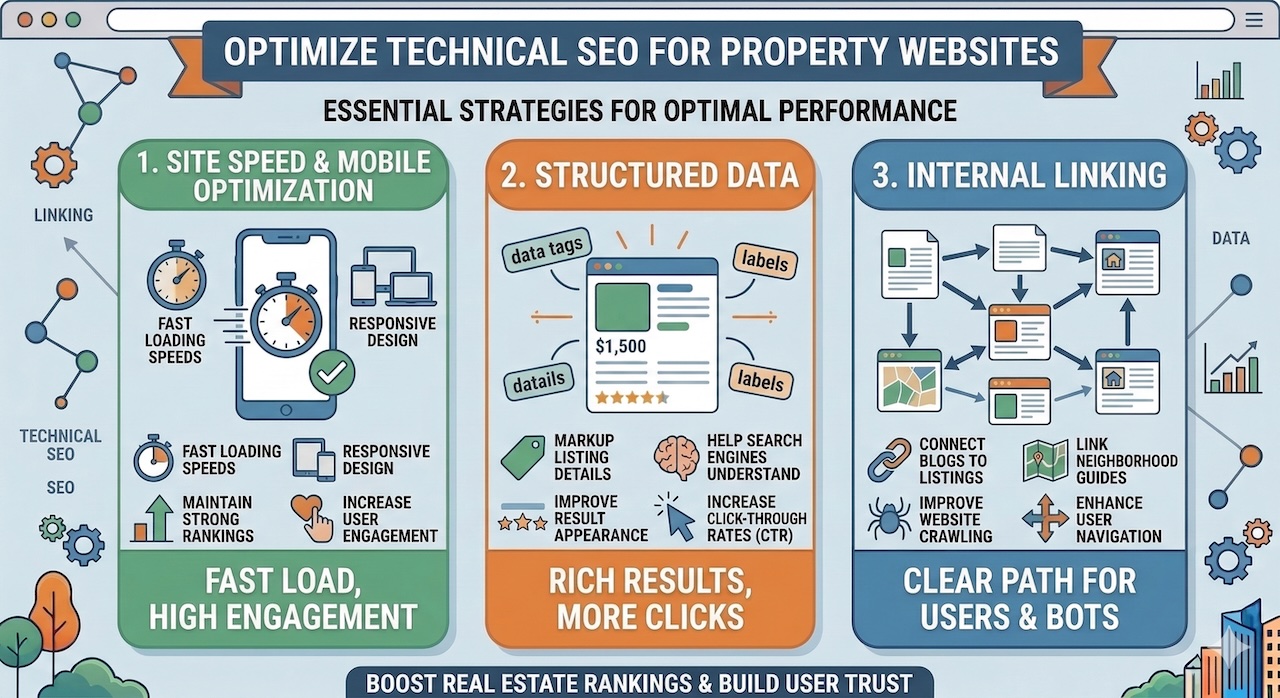
Technical SEO ensures that a website performs well in search engines.
Site Speed and Mobile Optimization
Most real estate searches now occur on mobile devices. Fast loading speeds and responsive design are essential for maintaining strong rankings and user engagement.
Structured Data for Listings
Structured data markup allows search engines to better understand property listings. This can improve how listings appear in search results and may increase click-through rates.
Internal Linking Between Listings and Content
Connecting blog articles, neighborhood guides, and property listings through internal links helps search engines crawl the website efficiently and improves user navigation.
Step 5: Build Authority Through Backlinks
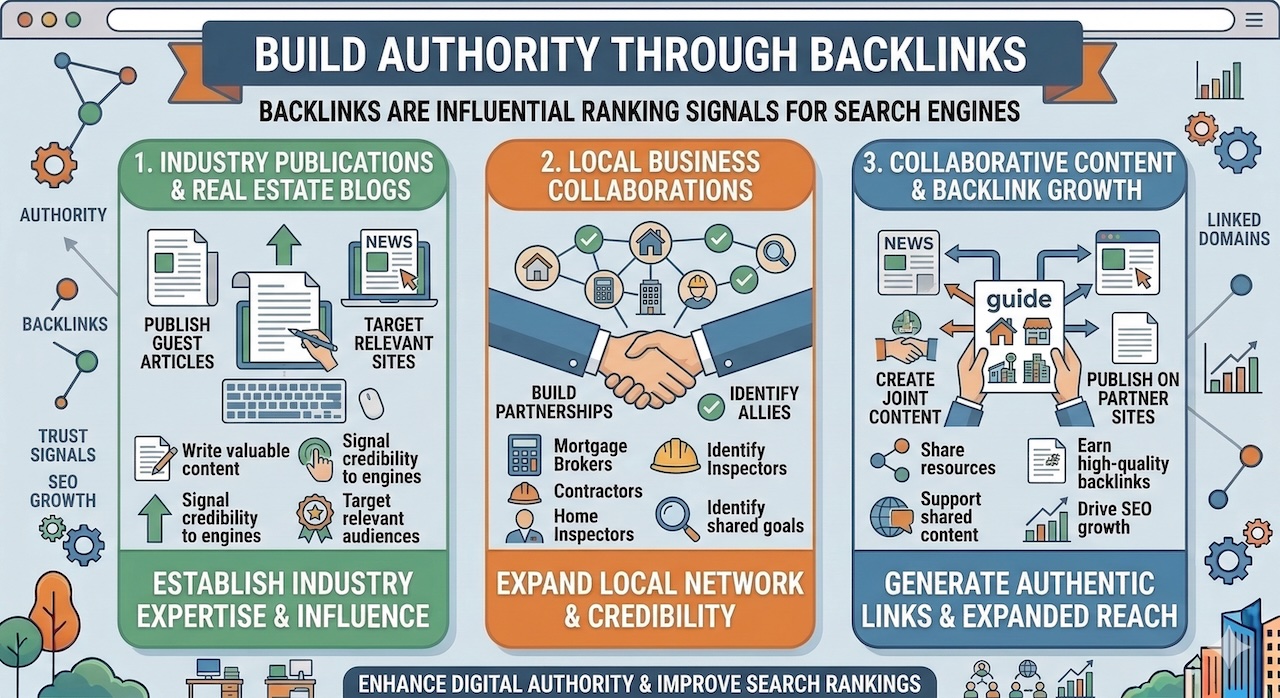
Backlinks remain one of the most influential ranking signals for search engines.
Industry Publications and Real Estate Blogs
Publishing guest articles on relevant websites can help earn backlinks that strengthen a site’s authority.
These links signal credibility to search engines and improve ranking potential.
Local Business Collaborations
Real estate professionals often build partnerships with other local businesses such as:
- mortgage brokers
- contractors
- home inspectors
These relationships may lead to collaborative content and backlinks that support SEO growth.
Step 6: Convert SEO Traffic into Leads
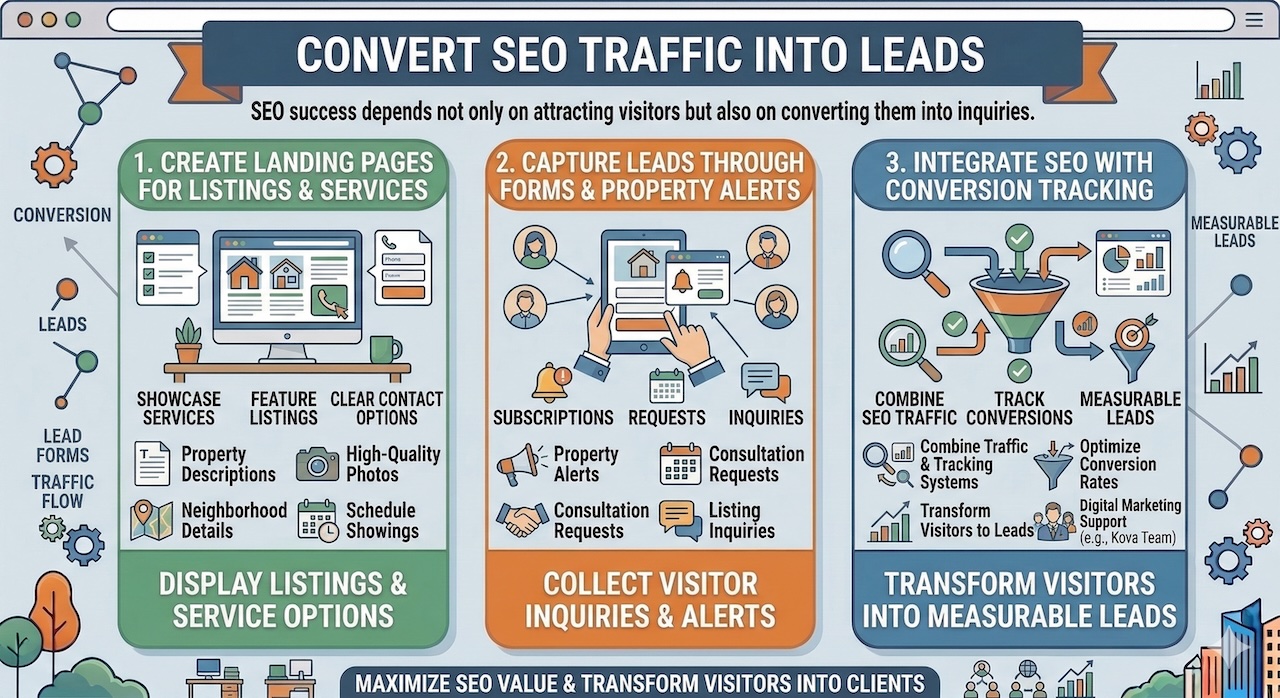
SEO success depends not only on attracting visitors but also on converting them into inquiries.
Create Landing Pages for Listings and Services
Dedicated landing pages allow agents to showcase services or property listings while providing clear contact options.
Effective pages typically include:
- property descriptions
- high-quality photos
- neighborhood details
- scheduling options for showings
Capture Leads Through Forms and Property Alerts
Many real estate websites collect leads through:
- property alert subscriptions
- consultation requests
- listing inquiries
Digital Marketing companies such as Kova Team help businesses combine SEO traffic with conversion tracking systems that transform search visitors into measurable leads.
Common Real Estate SEO Mistakes
Some SEO efforts fail due to common strategic mistakes.
- Targeting Only Broad Keywords: Highly competitive keywords such as “real estate agent” are difficult to rank for without strong authority. More specific location-based keywords often perform better.
- Ignoring Local Search Intent: Because real estate is location-based, failing to optimize for local keywords can limit visibility.
- Poor Website Performance: Slow loading pages or outdated listing systems can negatively impact both search rankings and user experience.
Tips for Building a Long-Term Real Estate SEO Strategy
Real estate SEO success typically requires consistent effort over time.
Some effective strategies include:
- publishing regular neighborhood content
- optimizing listing pages with detailed descriptions
- earning backlinks from local organizations
- monitoring rankings and traffic performance
Consistency and data analysis help refine strategies as the market evolves.
Final Thoughts
A well-executed real estate SEO strategy helps agents and brokerages reach potential clients when they are actively researching properties or market information online. By focusing on local search optimization, valuable content, and effective lead conversion strategies, real estate professionals can build sustainable visibility in search engines.
Although SEO requires ongoing effort, it can become one of the most reliable ways for real estate businesses to attract qualified buyers and sellers over time.
Infographics generated by Google Gemini.
Share this post
Author

Read the latest articles from Faviola Publico
How to Repair Hardwood Floor Scratches: Practical Fixes and When to Bring in Flooring or Painting Pros

January 30, 2026
Hardwood floors add warmth, character, and long-term value to a home, but even the best-maintained floors eventually pick up scratches. Moving furniture, pet nails, shoes, and everyday traffic can all leave marks that make floors look worn before their time. The good news is that many scratches can be rep [...]
Learn moreHow Long Does a Roof Last? A Homeowner Guide to Roof Lifespan, Remodeling, and Replacement Planning

January 28, 2026
A roof is one of the most critical components of any home, yet many homeowners are unsure how long their roof is actually supposed to last. While manufacturer warranties often advertise long timeframes, real-world roof lifespans depend on more than a number on paper.
Learn moreLeave a comment
All comments are moderated. Spammy and bot submitted comments are deleted. Please submit the comments that are helpful to others, and we'll approve your comments. A comment that includes outbound link will only be approved if the content is relevant to the topic, and has some value to our readers.
Comments (0)
No comment