
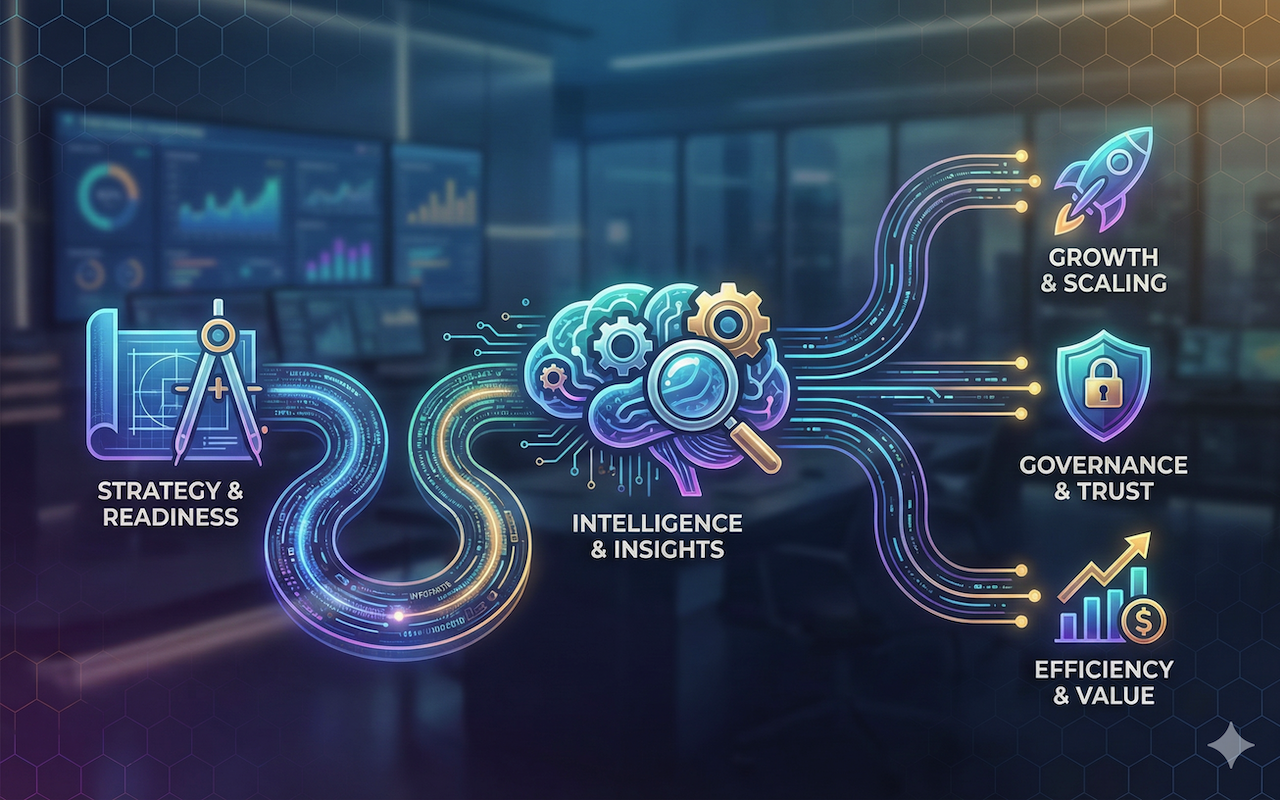
Artificial intelligence is reshaping how businesses operate, compete, and grow. From automating internal processes to enabling data-driven decision-making, AI has become a practical component of modern business strategy. However, successful adoption requires more than selecting tools or hiring developers. Organizations need clarity on where AI fits, how to implement it responsibly, and how to scale it over time.
Understanding AI Adoption in a Business Context
Artificial intelligence adoption involves aligning technology with real operational needs. In many organizations, this process may include guidance from artificial intelligence consulting services alongside internal teams to help identify suitable use cases, prepare data and infrastructure, and ensure AI systems support broader business objectives.
Rather than treating AI as a standalone initiative, organizations that succeed integrate it into existing workflows, decision-making processes, and long-term planning. This approach helps ensure AI delivers measurable value rather than isolated experimentation.
Why Strategy Matters Before AI Development
Many AI initiatives struggle because implementation begins without a clear strategy. Without defined goals, organizations risk building solutions that are difficult to scale, maintain, or justify from a business perspective.
Establishing direction early helps avoid overengineering, reduces unnecessary costs, and focuses resources on applications that deliver meaningful impact. Strategic clarity ensures AI efforts address real problems instead of theoretical possibilities.
Assessing Organizational Readiness for AI
Before deploying AI, organizations must evaluate their readiness. This includes reviewing workflows, data availability, system integration, and internal capabilities. Common challenges include fragmented data, inconsistent data quality, unclear ownership, or misaligned expectations.
Addressing these issues early improves adoption outcomes and reduces friction during implementation. Readiness assessment helps organizations understand not only what AI can do, but what must change internally to support it.
Identifying High-Impact AI Use Cases
Not every process benefits from artificial intelligence. Effective AI adoption starts with prioritization. High-impact use cases often include automation of repetitive tasks, predictive analytics, forecasting, customer behavior analysis, and decision-support systems.
Focusing on practical applications allows organizations to see results faster while building confidence and internal support for broader AI initiatives.
Building a Scalable AI Roadmap
A structured roadmap helps guide AI adoption over time. Rather than deploying everything at once, organizations benefit from phased implementation that balances speed, cost, and scalability.
A roadmap typically outlines short-term improvements, medium-term expansion, and long-term transformation goals. It also establishes success metrics, governance principles, and resource planning to keep AI aligned with business growth.
Technology and Architecture Considerations
The technology choices behind AI systems affect how easily they scale and adapt. Organizations must consider infrastructure, data pipelines, integration with existing systems, and long-term maintainability.
Sound architecture decisions reduce technical debt and allow AI systems to evolve as business needs change, rather than requiring frequent rebuilds.
Data as the Foundation of AI
Data quality and governance are central to effective AI. Organizations must plan how data is collected, stored, secured, and maintained. Inconsistent or unreliable data limits model accuracy and undermines trust in AI-driven insights.
A strong data strategy supports more accurate models, continuous improvement, and reliable decision-making across departments.
Moving From Strategy to Execution
Once priorities and direction are defined, AI initiatives shift from planning to execution. This phase involves building models, integrating systems, and embedding AI into daily operations.
Clear alignment between strategic intent and technical implementation ensures that AI systems support intended outcomes rather than becoming disconnected technical assets.
Applying AI Across Business Functions
AI adoption often spans multiple areas of an organization. Operations benefit from automation, finance from forecasting and risk analysis, marketing from personalization, and customer support from intelligent assistance.
Successful implementation requires attention to change management so teams understand how to work alongside AI systems rather than view them as opaque or disruptive tools.
Improving Decision-Making With AI Insights
One of AI’s most valuable contributions is improved decision-making. Predictive analytics and real-time insights allow organizations to move from reactive responses to proactive planning.
These capabilities support leadership in resource allocation, risk management, and long-term strategy by providing clearer visibility into trends and outcomes.
Cost Efficiency and Operational Optimization
AI can significantly improve efficiency by reducing manual work, optimizing processes, and identifying inefficiencies. When implemented thoughtfully, organizations can scale output without proportional increases in cost.
This creates more sustainable growth models while freeing teams to focus on higher-value work.
Managing Risk, Compliance, and Responsible AI
As AI becomes more embedded in business operations, considerations around privacy, compliance, and ethical use become increasingly important. Organizations must address transparency, bias, data protection, and regulatory requirements.
Establishing governance frameworks early helps mitigate risk and builds trust with customers, employees, and partners.
Continuous Improvement and Long-Term Value
AI is not a one-time deployment. Models require monitoring, refinement, and adaptation as data, markets, and business priorities evolve.
Ongoing evaluation ensures AI systems remain effective, relevant, and aligned with organizational goals over time.
Conclusion
Artificial intelligence delivers the greatest value when adopted with intention, structure, and long-term perspective. By focusing on readiness, prioritization, data strategy, and responsible implementation, organizations can turn AI into a practical tool for efficiency, insight, and growth.
Rather than treating AI as a standalone technology project, businesses that integrate it thoughtfully into operations and decision-making are better positioned to scale sustainably and maintain a competitive edge.
Featured Image generated by Google Gemini.
Share this post
Author

Read the latest articles from Kylie Miler
How PPC Can Help a New Subscription Business Grow Fast

December 24, 2025
In a competitive digital landscape, new subscription businesses face a common problem: attracting attention quickly enough to build momentum. Unlike one-time purchases, subscriptions depend on a steady pipeline of qualified customers who are willing to commit and stay. Pay-Per-Click (PPC) advertising can be a pow [...]
Learn moreHow Predictive Analytics Can Help Identify Fulfillment Process Bottlenecks

December 10, 2025
Next-generation analytics leverage scan data, records from warehouse and transport systems, and the timing of each process step to identify which receiving, picking, kitting, or shipping activities are underperforming. Standardized metrics and real-time dashboards across sites and shifts enable more effec [...]
Learn moreLeave a comment
All comments are moderated. Spammy and bot submitted comments are deleted. Please submit the comments that are helpful to others, and we'll approve your comments. A comment that includes outbound link will only be approved if the content is relevant to the topic, and has some value to our readers.
Comments (0)
No comment