
AI can write very fast now. That part is no longer exciting.
What does matter is whether the writing sounds natural to read. And a lot of the time it doesn't. It sounds smooth, but the wrong kind of smooth. It's made of clean sentences, proper grammar, and correct structure, but it just doesn't sound as if someone actually meant it.
That's why many writers are looking for ways to humanize AI output before they publish it. Not because every draft requires this, but because many of them sound too polished, too careful, too generic when you read them as a content editor instead of as a prompt engineer.
The question I hear the most is often straightforward: what makes AI writing sound robotic?
In my experience, it's often the same few problems.
1. The Rhythm Is Too Even
This is one of the biggest red flags, and once you see it, you can't unsee it.
A lot of AI writing moves at one steady speed from beginning to end. The sentences are similar in length. The paragraphs are tidy in the same way. Every transition arrives on cue. Nothing feels wrong, but nothing feels alive either.
But that's not how people usually write. Writing from a human perspective varies widely. One sentence lands fast. One stretches a bit. One paragraph is to the point. One slows down and adds emphasis. That irregularity is what makes writing feel natural.
How to Fix It
Read it out loud. If everything feels like it's moving at the same tempo, start breaking it up. Shorten another sentence, on the other hand. Merge two that feel abrupt. Delete transitions that are technically correct but lack the tie that makes writing feel alive.
A lot of writing sounds robotic until you stop focusing on smoothness as the end goal.
2. The Wording Is Too Generic
This is the problem I see most often in AI-assisted drafts.
The writing says things that are broadly acceptable, but not especially real. It uses phrases like “improve efficiency,” “enhance engagement,” or “streamline the workflow” without ever sounding like someone with actual context is behind the words.
This is where readers start to disengage. Not because the writing is confusing, but because it feels interchangeable. It could belong to almost any article, from almost any brand, in almost any niche.
And this is also the point at which an AI humanizer can be useful.
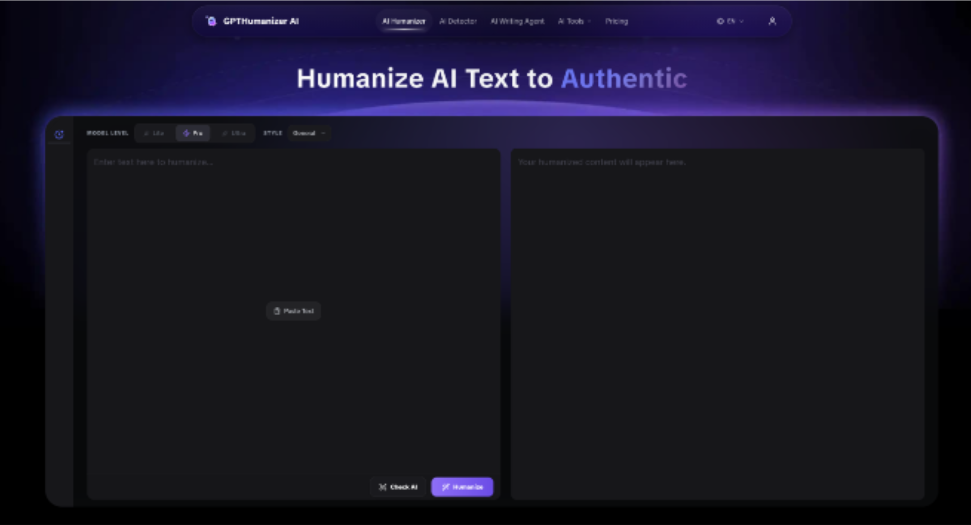
If the draft is already structurally sound and the main issue is that it feels too generic or overly polished, rewriting everything manually may not be the most efficient approach. In some cases, tools like GPTHumanizer AI can be used as part of the editing process. These tools can help adjust phrasing, vary sentence structure, and reduce overly uniform language before a final manual review. This kind of approach works best as a light refinement step rather than a replacement for editorial judgment.
How to Fix It
First, replace broad abstract language with specifics. Do not say a process “improves productivity” if what you really mean is that it cuts editing time by half an hour or removes two rounds of internal revision.
Second, look for phrases that sound finished but say very little. Those are often the most robotic lines in the piece.
And third, if the draft already says the right things but still reads too flat, this is one of the few cases where GPTHumanizer AI can make sense as part of the workflow. It gives you an easy way to improve flow and phrasing before your own final pass, which is often exactly what this kind of draft needs.
3. The Tone Is Too Neutral
AI often writes as if it’s trying not to offend anyone.
You get the logical right answer, but the sentence is weak. It says it, but it doesn’t say it.
Real writing communicates. Human writing always has a bit more gravitas. In even the most ‘objective’ writing, people will signal preference. They imply judgment. They tell the reader what matters, what is overhyped, what is misunderstood, and what should be celebrated.
So robotic writing feels distant. It has the facts, but not enough conviction.
How to Fix It
Create a point of view.
You don’t have to make everything personal; you don’t have to sound dramatic. But you do have to sound like you’re making choices. Even a sentence that says “this is typically where most AI renderings go wrong” already feels more human than a paragraph of sweet, polite filler.
4. It Over-Explains Obvious Points
AI loves completeness. Readers usually do not.
A lot of robotic writing is not bad because it is inaccurate. It is bad because it keeps adding explanatory layers around ideas that were already clear. It introduces the point, restates it, and summarizes it again at the end of the paragraph.
That kind of writing feels robotic because it sounds like the system is trying to prove it has covered the topic thoroughly, rather than helping the reader move through it naturally.
How to Fix It
Cut the scaffolding.
If a sentence only exists to announce that a point is coming, remove it. If the last sentence of the paragraph repeats the paragraph, remove that too. Most AI writing improves faster from subtraction than from addition.
5. It Lacks Real-World Detail
This is the hardest thing for AI to fake well.
The writing may be clear, but it often lacks the tiny details that make something feel real: a specific objection, a real workflow frustration, a phrase your audience actually uses, or a judgment that sounds like it came from experience rather than pattern prediction.
Without that texture, the writing remains readable but still feels detached.
Readers may not say, “This lacks real-world detail.” They usually say, “This feels generic.” But that is often what they are reacting to.
How to Fix It
Add one detail that the model would not naturally invent.
That could be something you have actually seen in client work, something readers in your niche repeatedly misunderstand, or a tiny operational detail that makes the section feel grounded. You do not need to flood the piece with stories. One sharp detail in the right place can do a lot.
What Actually Fixes Robotic AI Writing?
Most of the time, this isn’t one trick. It’s a mix.
You improve the input. You remove generic language. You adjust the rhythm. You add specific detail. Over time, the writing starts to sound more natural and less like automated output.
This process is not about replacing editorial judgment. In many cases, drafts already have the right structure and meaning but feel too safe, overly polished, or generic. In those situations, rewriting techniques or AI-assisted editing tools can help vary phrasing and reduce uniformity before a final manual review. This allows the editing process to focus more on tone, clarity, and purpose rather than fixing basic issues in the text.
And that difference is important.
The point isn’t to add in any number of random flaws to the draft to make it look as unpolished as possible.
The point is to make it read more naturally, because the words, rhythm, and emphasis now resonate more with how a real human would speak and write.
Conclusion
AI writing can sound robotic when it’s too even, generic, neutral, and eager to sound complete.
It stops sounding robotic when you bring back the ingredients that real writing naturally has: variation, specificity, judgment, and texture.
So when a draft feels off, don’t just say it “sounds like AI” and move on. Dig deeper and ask what exactly feels off.
Is it the rhythm? The words? The specificity? The voice?
Once you nail down the real issue, the fix will usually be much easier to find.
Share this post
Author

Read the latest articles from Shahid Latif
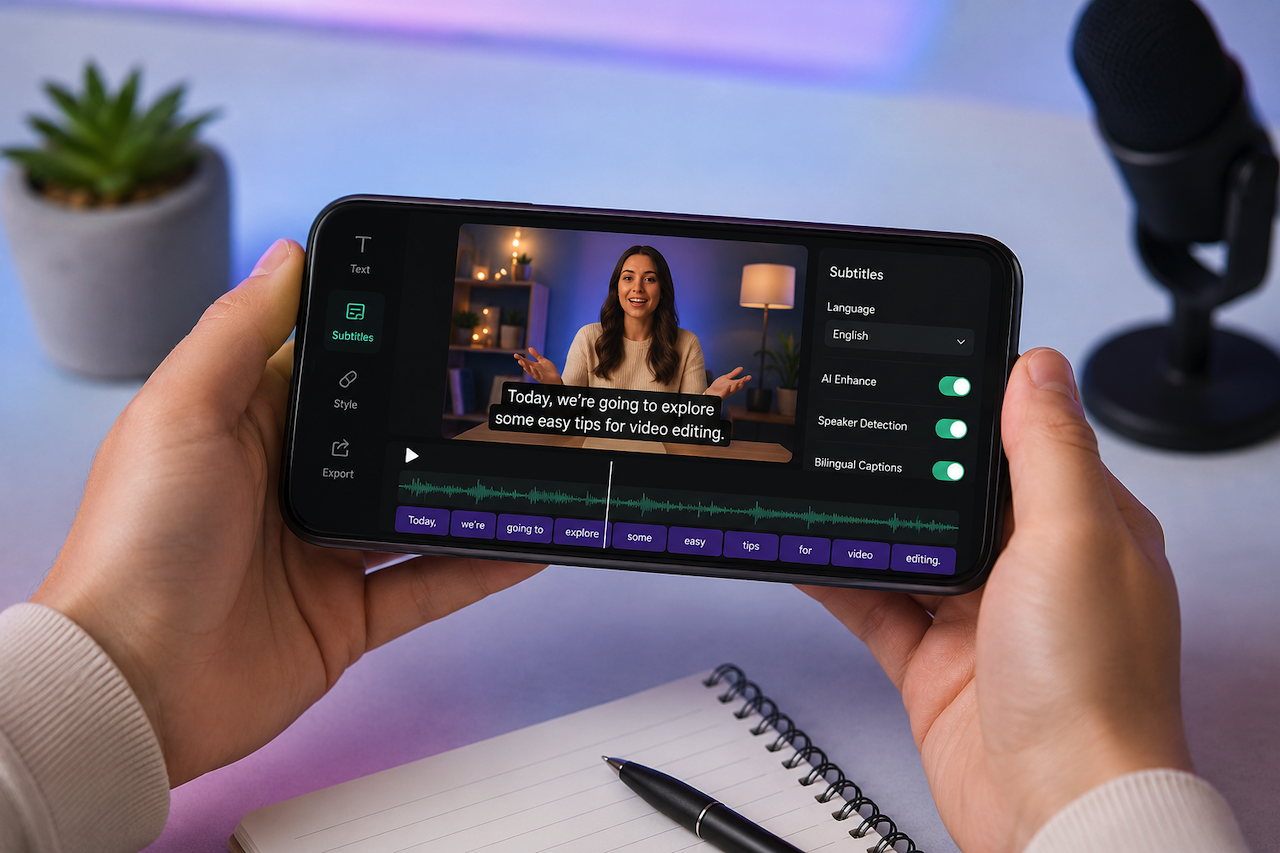
Can You Create AI Subtitles on Your Phone?
May 22, 2026
Creating video auto captions is no longer limited to desktop devices or professional editing software. AI-powered mobile applications have transformed video transcription by offering built-in subtitle generators directly on smartphones. Users can now caption social media clips, tutorials, interviews, and short-fo [...]
Learn moreHow QR Code Technology Improves Consumer Engagement and Product Transparency

May 21, 2026
Modern consumers expect more than basic branding and ingredient lists when interacting with products. People increasingly want instant access to product details, sustainability information, authenticity verification, tutorials, promotions, and brand stories directly from their smartphones. This shift has made QR [...]
Learn moreLeave a comment
All comments are moderated. Spammy and bot submitted comments are deleted. Please submit the comments that are helpful to others, and we'll approve your comments. A comment that includes outbound link will only be approved if the content is relevant to the topic, and has some value to our readers.
Comments (0)
No comment