

Top 10 Email Marketing Trends Companies Are Using to Stay Ahead in 2026
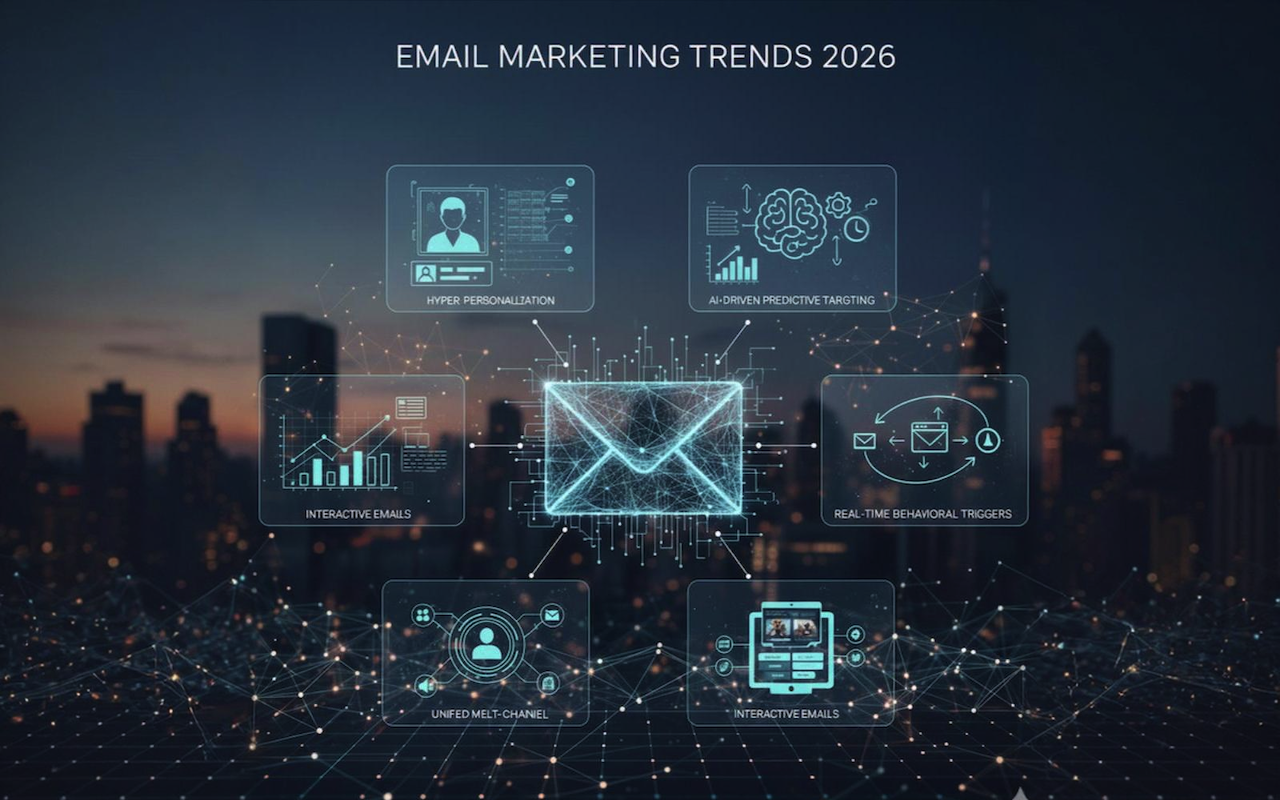
Email marketing continues to evolve as customer expectations shift. Today’s audiences expect messages that offer direct value, personalized guidance, and meaningful solutions. Companies in 2026 are adopting advanced, smarter strategies to remain competitive and meet rising engagement standards.
Modern marketing ecosystems now include automation, customer data platforms, AI-driven analytics, and real-time personalization tools. As customer behavior changes and technology becomes more intelligent, businesses are adjusting their outreach approaches to keep pace.
Below are the top 10 email marketing trends shaping the industry in 2026.
1. Hyper-Personalization With Rich Customer Profiles
Personalization is no longer limited to inserting a customer’s name into an email. It now involves tailoring messages based on interests, behavior, buying patterns, and real-time activity.
With unified customer data platforms becoming more widely used, marketers can:
- Create targeted campaigns for product recommendations
- Craft dynamic content that updates based on user activity
- Replace one-size-fits-all messaging with personalized, high-relevance emails
Hyper-personalized content builds stronger trust and increases engagement.
2. AI-Driven Predictive Email Targeting
Artificial Intelligence now plays a major role in identifying:
- Optimal email send times
- The offers most likely to convert
- User segments showing the strongest engagement
- Patterns behind unsubscribe behavior
AI helps marketers make informed decisions faster, reduce guesswork, and improve conversion rates across campaigns.
3. Real-Time Behavioral Triggers
Real-time trigger emails allow brands to send automated messages the moment a user performs a specific action, such as:
- Browsing a product
- Abandoning a cart
- Downloading a resource
- Opening an email without clicking
- Signing up for a trial or demo
These timely messages significantly increase engagement because they reach the user at the right moment.
Some platforms have leaned heavily into behavioral automation. For example, Flodesk reports that its abandoned cart emails average a 43% open rate and 23% click-through rate, while cart recovery messages sent within the first hour are often associated with higher conversion rates.
4. Advanced Email Automation Journeys
Modern marketing automation tools now support multi-step journeys that adapt to user intent. When a customer interacts with a website or email:
- The system identifies past behavior
- Predicts the next likely action
- Sends automated, context-aware messaging
This leads to smoother customer experiences and higher engagement rates.
5. Rise of Interactive Emails (AMP and Micro-Interactions)
Interactive email experiences are becoming a major trend. Users can now perform actions inside the email itself, such as:
- Browsing product carousels
- Completing surveys
- Adding items to a cart
- Booking appointments
- Exploring mini-microsites
These formats help brands boost engagement without requiring users to leave the inbox.
6. Privacy-Focused Email Strategies
With privacy laws such as GDPR and CCPA shaping data standards, companies must prioritize:
- Secure data handling
- Consent management
- Transparent opt-out options
- Minimizing risky data practices
Privacy-first strategies help businesses build trust and maintain long-term customer relationships.
7. Unified Multi-Channel Campaign Orchestration
Email alone is no longer enough to maintain engagement. Companies are connecting email campaigns with:
- SMS
- Push notifications
- Web personalization
- Social retargeting
- WhatsApp messaging
This integrated approach strengthens brand presence and ensures consistent communication across channels.
8. AI-Generated Email Content and Subject Lines
AI tools are increasingly used to generate:
- Compelling subject lines
- Personalized product descriptions
- Tailored messaging for user segments
- Dynamic email copy that adapts to context
These tools help marketers create high-performing content quickly while maintaining relevance and clarity.
9. Data Cleansing and High-Quality Segmentation
Email deliverability challenges are rising due to stricter inbox provider policies. To maintain performance, companies are focusing on:
- Removing invalid or outdated contacts
- Eliminating duplicates
- Maintaining accurate segmentation
- Using verified email lists
Clean data improves inbox placement, personalization accuracy, and campaign ROI. In some cases, marketers also rely on curated datasets, such as an industry-segmented Oracle customers list, to ensure their outreach targets relevant audiences more effectively.
10. Strong Focus on Customer Retention Over Acquisition
Retention-focused strategies are becoming essential. Companies now use email to nurture their existing customers by:
- Sending loyalty program updates
- Offering activity-based rewards
- Providing renewal reminders
- Delivering personalized retention messaging
This builds stronger long-term relationships and drives repeat revenue.
Why Companies Are Leading These Changes
Modern marketing tools offer advanced automation, unified customer data, cross-channel orchestration, and AI-powered insights. These capabilities help businesses deliver timely, meaningful communication and stay competitive.
Email marketing is becoming more dynamic and closely aligned with real customer journeys. Companies adopting these trends early gain measurable advantages in engagement and performance.
Final Thoughts
Email marketing in 2026 will deliver the best results to brands that embrace intelligent technology, real-time personalization, and seamless automation. Businesses that implement these 10 trends are better positioned to build trust, boost conversions, and stay ahead in a rapidly evolving digital landscape.
Featured Image generated by Google Gemini.
Related Articles
December 13, 2024
How To Choose Right Email Marketing Platform For Your Business
Do you feel restricted while choosing a proper email marketing platform for your business? Choosing the right platform is quite a challenge because there are so many options to mee...
Read More
June 20, 2024
Predictive Analytics in Email Marketing: How AI Can Forecast Customer Behavior
Predictive analytics is revolutionizing the world of email marketing. By harnessing the power of artificial intelligence (AI), businesses can anticipate customer behavior, making t...
Read More
March 18, 2024
Leveraging Generative-AI Tools for Email Marketing Excellence
Email marketing remains to be an indispensable tool for businesses aiming to connect with their audience effectively, even after all the changes and transitions in our modern world...
Read More
Comments
Comments are available to signed-in users and are moderated to keep the discussion useful and respectful. Spam, automated submissions, and low-value promotional comments are removed. Outbound links may be approved when they are relevant and genuinely helpful to readers, but they are displayed as plain text rather than clickable hyperlinks.
No comments have been published yet.
Please sign in to submit a comment.