
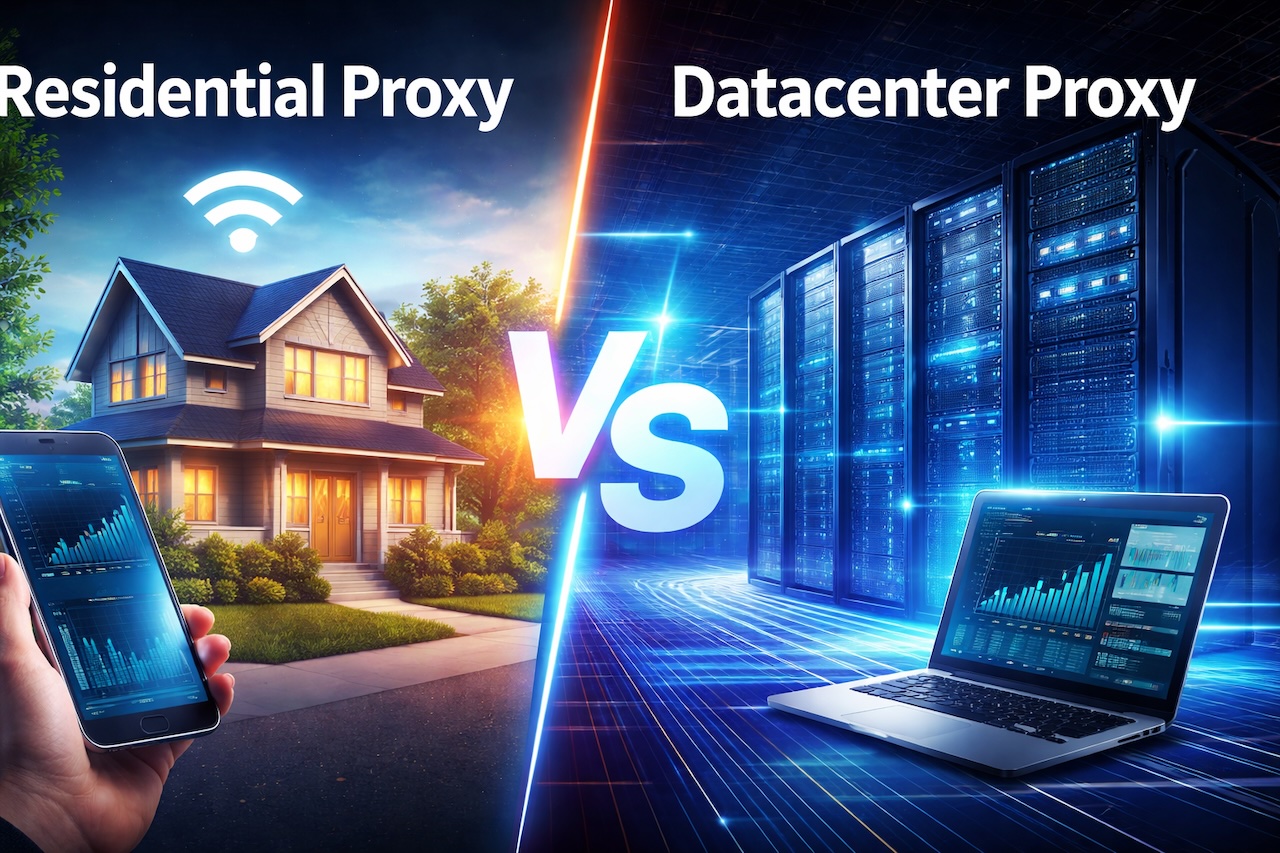
The "cheaper vs. better" debate is officially outdated. If you’re still choosing proxies based solely on the sticker price, you’re likely burning through your budget on failed requests and engineering hours.
In 2026, the real question isn't which proxy is cheaper; it's which proxy offers the best return on investment (ROI). With anti-bot systems like Cloudflare and DataDome becoming increasingly sophisticated, a "cheap" datacenter IP that gets blocked on the first attempt is significantly more expensive than a premium residential IP that delivers the data on the first try.
So let’s cut through the noise: residential proxy vs datacenter proxy for market data. The right choice depends on what you’re scraping, and I’m going to show you exactly how to decide, plus a smart hybrid strategy that top teams are already using to keep costs low and success rates high.
Datacenter vs. Residential Proxy: The Core Differences Explained
Think of proxies like two different types of phone numbers: one looks like it belongs to a huge corporate office, the other looks like it belongs to your neighbor down the street.
Datacenter proxies come from big server farms in data centers. They’re fast, super cheap, and you can spin up thousands of them in minutes. But websites see them as “non-human” traffic right away, so they get blocked faster than you can say “403 Forbidden.”
Residential proxies come from real home internet connections provided by ISPs. They’re assigned to actual people’s houses, so they carry the same trust score as a regular user browsing on their couch. That’s why they slip past even the toughest anti-bot walls.
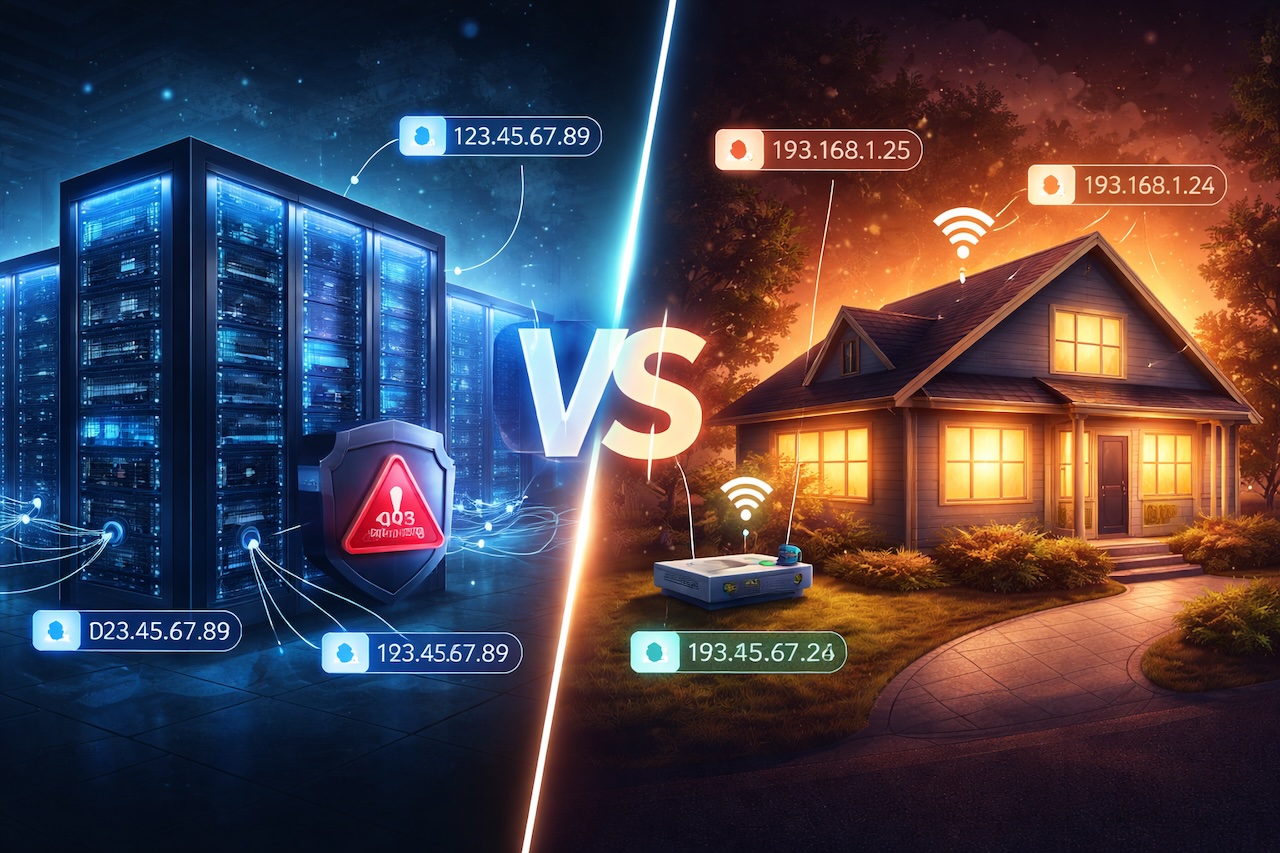
Here’s a quick side-by-side so you can see the difference at a glance:
| Feature | Datacenter Proxy | Residential Proxy |
|---|---|---|
| Where the IP comes from | Server farms in data centers | Real home internet connections |
| Looks like | Corporate or suspicious traffic | Regular person browsing from home |
| Speed | Lightning fast | Fast enough for most jobs |
| Cost | Very cheap | Comparable (starting from $0.68/GB at 9Proxy) |
| Success rate on protected sites | Low (easy to spot & block) | Very high |
| Best for | Public data, low-security sites | E-commerce, social media, price tracking |
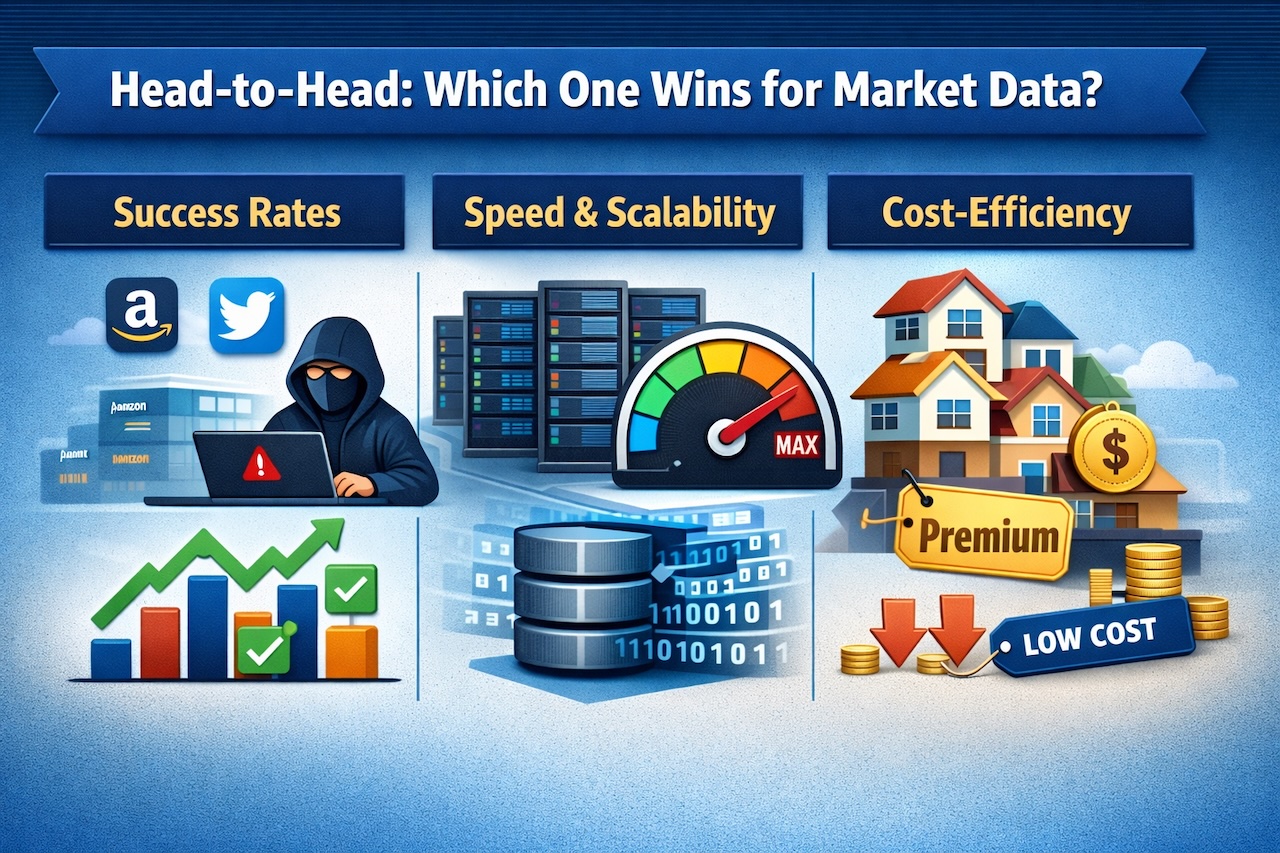
Head-to-Head: Which One Wins for Market Data?
There's no single winner; identifying the best residential proxy for your specific stack depends entirely on your target’s security layers and your required success rates.
Success Rates
If you're scraping e-commerce platforms like Amazon or Walmart, or pulling data from social media, residential proxies are effectively the industry standard. These platforms have multi-layered detection that can identify and block datacenter IPs in milliseconds. Residential proxies blend in with organic traffic, meaning fewer retries and significantly more reliable data pipelines.
Speed & Scalability
Datacenter proxies shine when speed is the priority. If you're pulling from public APIs, government databases, or open directories without aggressive protection, datacenter proxies provide incredible throughput at a very low cost.
Cost-Efficiency
You’ve likely been taught that residential proxies are the premium, "luxury" option, a necessary evil you pay extra for to bypass blocks.
But that assumption is now outdated.
Recently, the market shifted. If you are looking for the cheapest residential proxy options that don't sacrifice quality, providers like 9Proxy have restructured their pricing to start at just $0.68/GB. This means they now compete directly with the price points of traditional datacenter proxies, effectively removing the cost barrier to high-trust data collection.
This changes your entire ROI calculation. If you can get a high-trust residential IP for nearly the same price as a datacenter IP, the "datacenter-only" strategy for cost savings no longer holds water. You are essentially getting premium security and success rates for "datacenter-level" pricing.
When to Use Which: A Simple Decision Framework
The rule of thumb is simple: if the target site has any kind of login wall, rate limiting, or anti-bot layer, buy residential proxies. If it's an open, unprotected source, go datacenter.
| Use Case | Recommended Proxy | Why? |
|---|---|---|
| Public API / Unprotected | Datacenter | Maximum speed / lowest overhead |
| E-commerce / Price Monitoring | Residential | High trust, avoids blocks |
| Geo-localized Research | Residential | Authentic ISP presence |
| Social Media Scraping | Residential | Matches organic behavior |
Best Practices for 2026: The “Hybrid” Approach
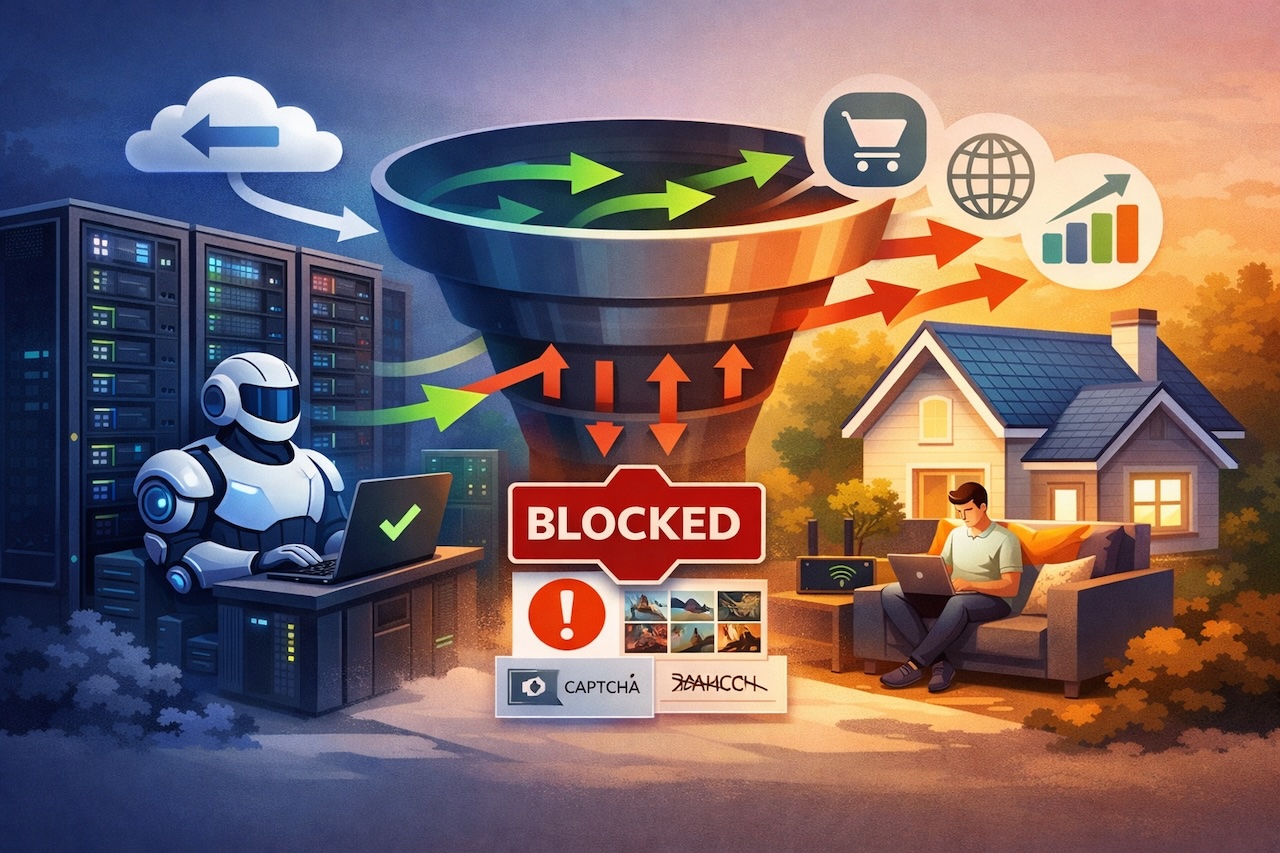
The smartest teams I’ve worked with use a hybrid setup. By using a smart-routing tool, they default to cheap datacenter IPs for the "easy" 70% of their work, and automatically fail-over to high-trust residential proxies the moment they hit a block or CAPTCHA.
With residential pricing now being so aggressive, this hybrid strategy is cheaper to implement than ever before. For example, using flexible bandwidth options like Residential Proxy GB plans allows teams to scale usage precisely when higher trust traffic is required, without overspending on every request.
Conclusion
The old “proxy wars” are over. In 2026 the winners focus on success rates and smart routing instead of raw speed or raw price.
Start with datacenter proxies for the easy stuff, switch to residential proxies when the going gets tough, and watch your market data collection become faster, cleaner, and way more profitable.
Ready to stop wasting budget on blocked requests? Test a hybrid setup this week, you’ll be surprised how much money and time you save.
 FAQs
FAQs
Datacenter proxies use IPs from server farms, they're fast and cheap but easy to detect. Residential proxies use IPs assigned by real ISPs to home users, they have much higher trust scores and are harder to block, but cost more per GB.
No. For public, unprotected data sources, datacenter proxies are faster and significantly cheaper. Residential proxies are only worth the extra cost when you're targeting sites with active bot detection, like major e-commerce platforms or social media.
Compare providers on four things: (1) cost per GB vs. your expected success rate on your specific targets, (2) pool size and geo coverage for your regions, (3) session management capabilities, and (4) ethical sourcing practices. Always test on your actual target before committing to a long-term plan.
A hybrid approach routes traffic through cheap datacenter proxies by default, then automatically switches to residential proxies when the target site returns a block signal (like a 403 or 429 error). This keeps overall costs low while maintaining high success rates on protected targets.
Legality depends on your jurisdiction, the target site's terms of service, and what you do with the data. Many businesses use proxies for legitimate competitive intelligence and price monitoring. Always review the site's terms of service and consult a legal advisor for your specific use case.
Images generated by ChatGPT.
Share this post
Leave a comment
All comments are moderated. Spammy and bot submitted comments are deleted. Please submit the comments that are helpful to others, and we'll approve your comments. A comment that includes outbound link will only be approved if the content is relevant to the topic, and has some value to our readers.
Comments (0)
No comment