
Datacenter proxies are vital for businesses and individuals looking to perform various online activities. From web scraping to cybersecurity and anonymous browsing, these proxies offer speed, scalability, and cost-efficiency, sacrificing some of the organic traffic resemblance offered by residential proxies.
Datacenter proxies route internet traffic through data centers – server facilities that provide high-speed connections. Unlike residential proxies originating from private devices like phones and PCs, datacenter proxies are not tied to internet service providers (ISPs). Instead, they use dedicated IP addresses provided by data centers, which lack some authenticity.
We have already reviewed the best residential proxy providers. This time, let’s examine what’s available in the datacenter proxy field.
Datacenter proxy types
Most commonly, datacenter proxies are split into two types – shared and dedicated – with dedicated having full functionality, while shared has limits to reduce price.
| Datacenter proxy type | Performance | Pricing | IP pool | Locations |
|---|---|---|---|---|
| Shared | Each user decreases performance | Per traffic | Usually limited, a smaller, separate pool | Traditionally limited to the most popular locales |
| Dedicated (private) | High | Per IP | Full size | All available locales |
Best Datacenter Proxy Providers to Consider in 2024
1. Oxylabs
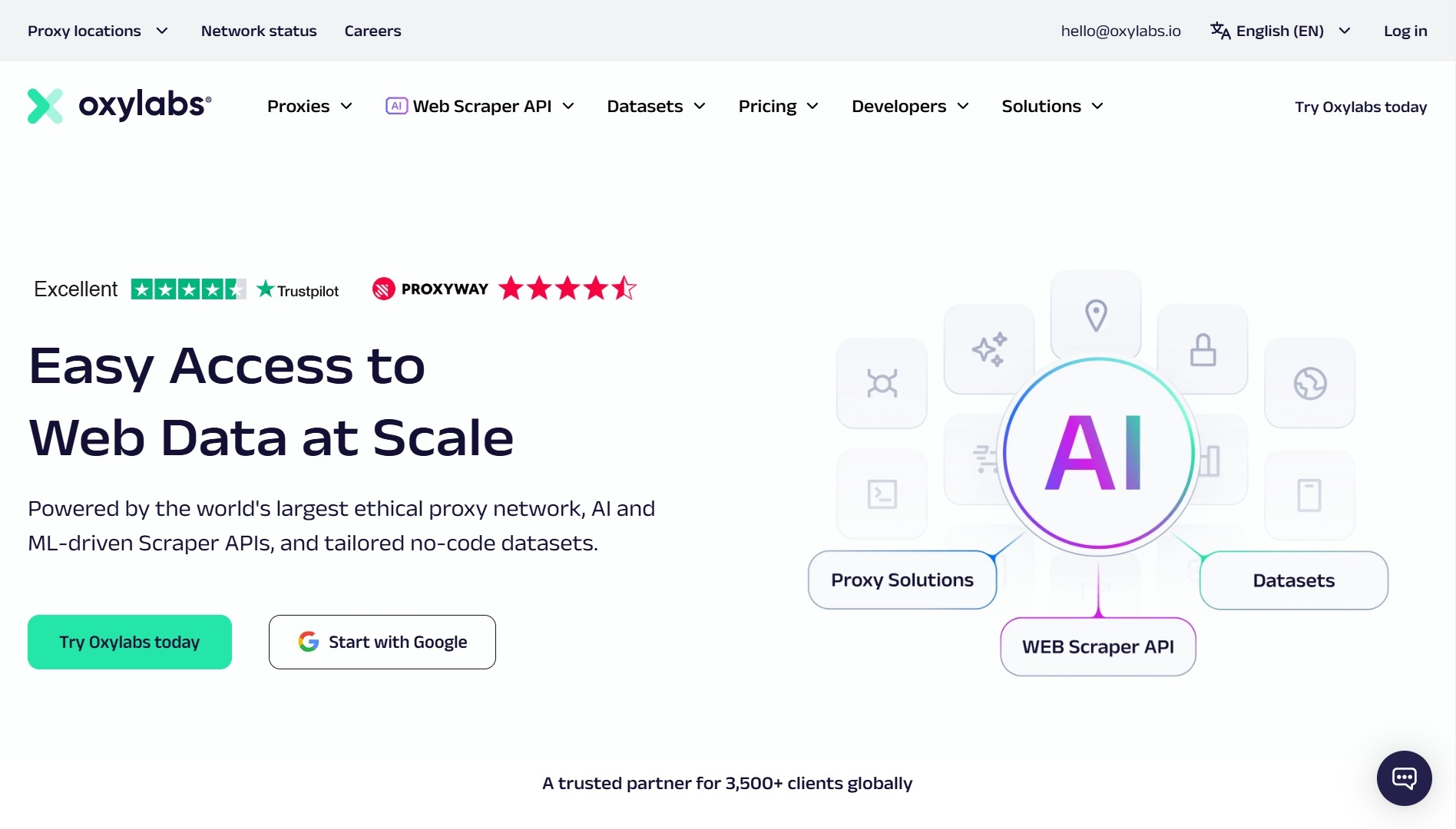
Oxylabs operates the market's largest datacenter proxy server network, featuring over 2 million IP addresses. IPs are available in 188 countries, and you can target specific cities. Their primary focus is on performance, delivering rapid average response times. As such, the risks of encountering ASN and subnet-related restrictions are greatly reduced.
Oxylabs primarily targets businesses offering a premium range of proxy solutions, including dedicated and shared datacenter proxies. While their datacenter proxies may be costly for individual or general use, they don’t really have any compromises.
Oxylabs' shared datacenter proxies comprise 22,000 IPs across 9 locations, including the U.S. and several European and Asian countries. You can rotate these proxies with each connection or establish sticky sessions for a desired duration.
Oxylabs provides a functional dashboard for self-service purchases and shared and dedicated IP monitoring. As a premium provider, Oxylabs can fine-tune the proxies based on your targets and requirements, including pay-per-IP and per-traffic options. You also receive an account manager and access to an IP replacement API. Lastly, their proxies have unlimited traffic, domains, connections, connection requests, and 24/7 live support.
2. Webshare
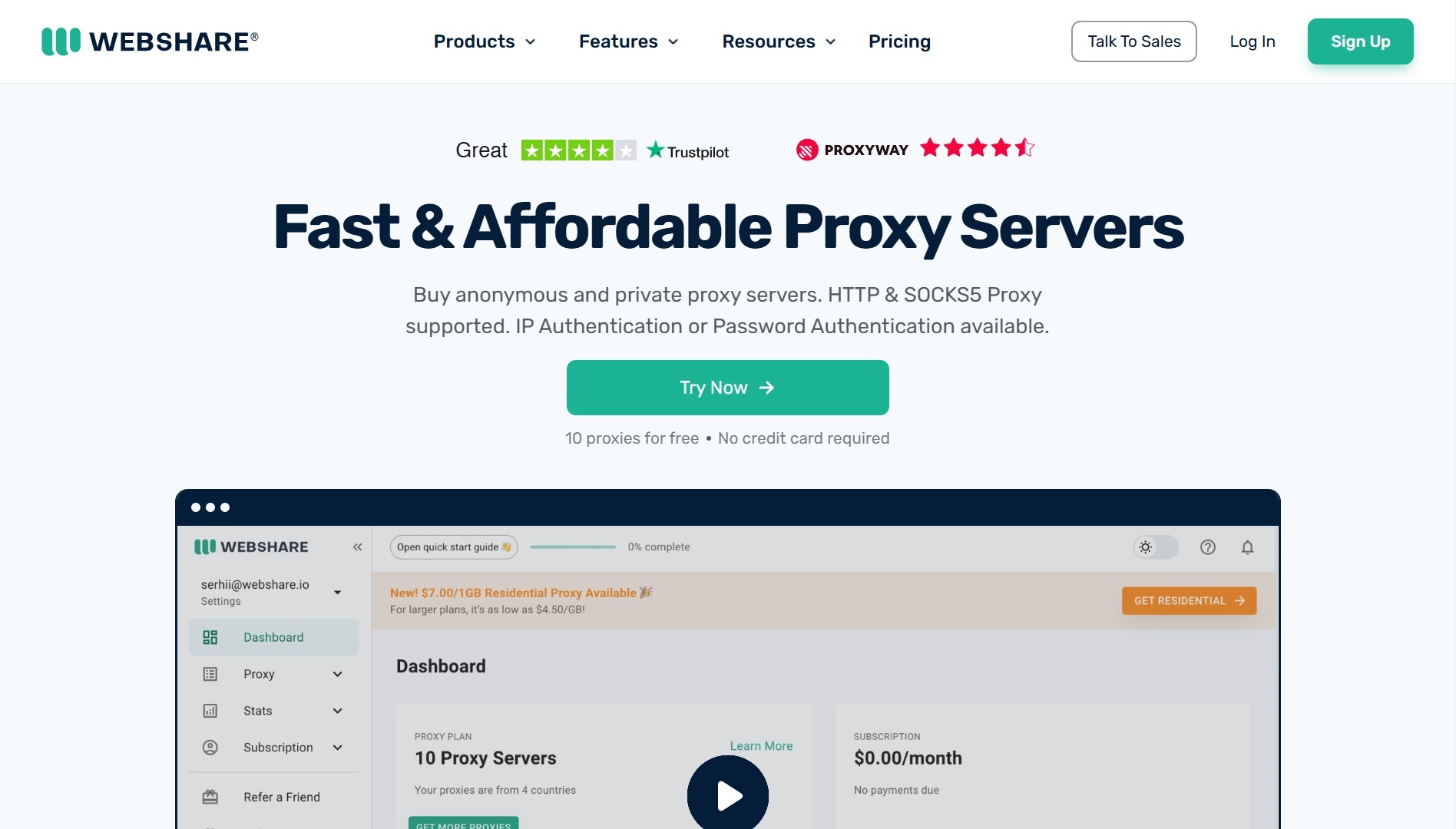
Known for its flexibility, Webshare provides highly customizable self-service options, allowing you to personalize proxy plans. You can select the number of proxies, set bandwidth limits, and adjust the number of threads. Additionally, you can choose the geolocation of your IPs and get IP refresh intervals ranging from five minutes to one month. The user-friendly dashboard ensures that even first-time users can easily navigate the platform.
Webshare offers three datacenter proxy types: shared (used by more than two users), private (shared with one or two users), and dedicated (exclusively allocated to you). The service supports HTTP and SOCKS5 protocols and provides IP coverage in over 50 countries worldwide.
Webshare has a free plan with 10 static IP addresses from four locations. You receive 1 GB of free data monthly and can run up to 50 concurrent threads. Your free proxy list becomes available automatically upon registration.
Aimed primarily at entry-level and mid-tier users, Webshare offers affordable pricing. For example, customer support is limited to email communication, as no live chat option is available.
3. Decodo
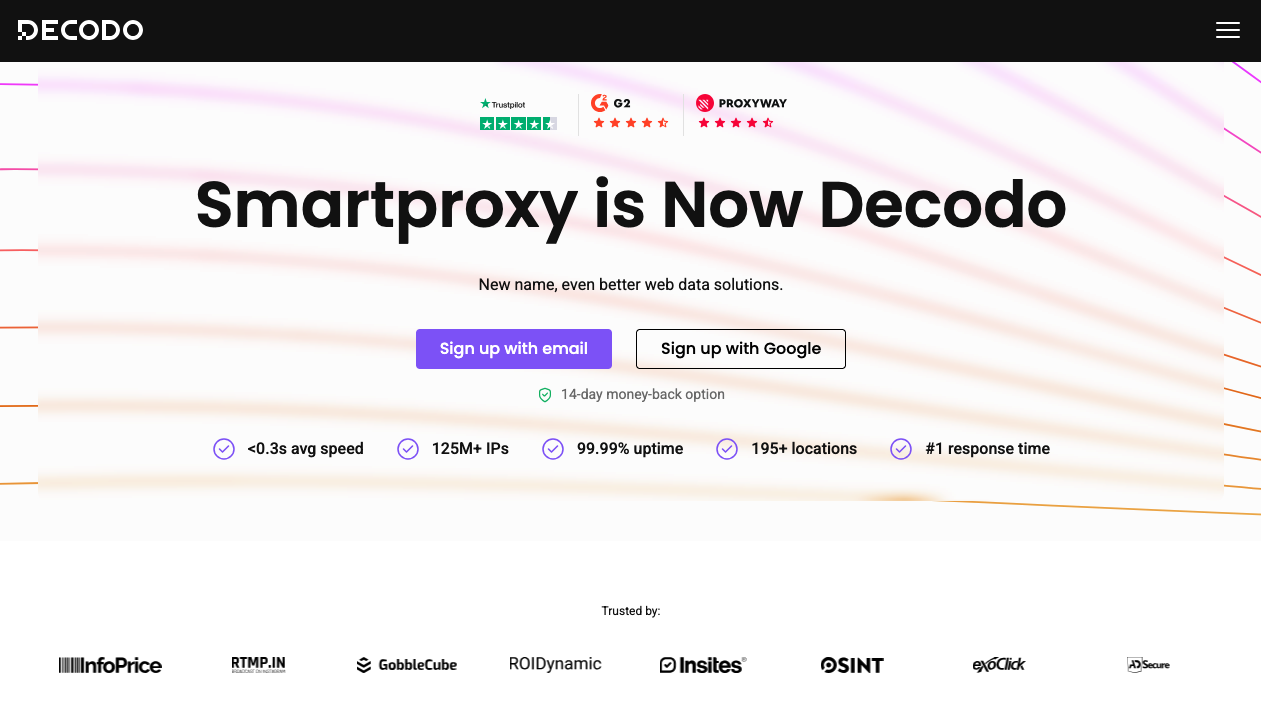
Decodo offers shared and dedicated datacenter proxies that are easy to use and backed by great customer service. The company distinguishes itself by balancing cost and performance, making it a popular choice among developers and small businesses.
Decodo maintains a pool of 500,000 datacenter proxy IPs in seven other countries, with over 400,000 in the United States alone. With pricing lower than premium-oriented competitors like Oxylabs and Bright Data, Decodo remains competitive among the top datacenter proxy providers.
The service is available under two pricing models: pay-per-GB and pay-per-IP. The dedicated plans feature unlimited traffic and unrestricted access to all domains without extra charges or hidden fees. You face no target limits and can establish unlimited parallel connections. Proxies rotate with each connection request but can be configured for 30-minute sticky sessions.
Decodo's dashboard allows you to choose between sequential or non-sequential IPs and select either SOCKS5 or HTTP(S) protocols. You can refresh your entire IP list or retain the same IPs upon subscription renewal.
Decodo delivers good value by providing high-performance proxies at affordable prices, albeit with fewer bells and whistles than the premium segment.
4. CyberYozh
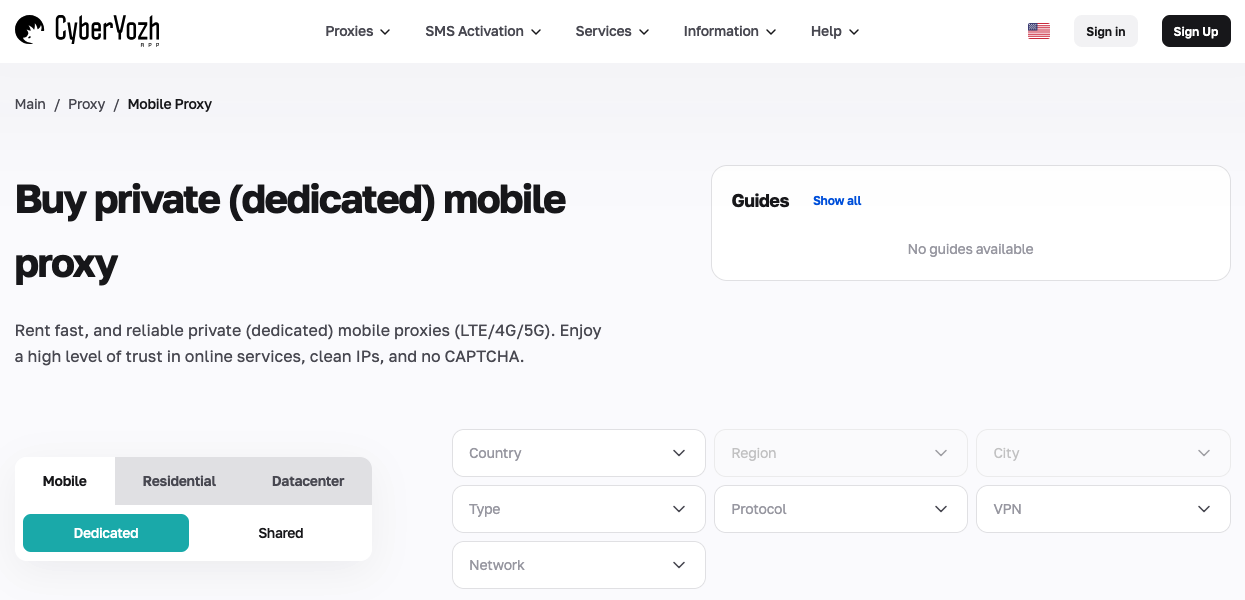
CyberYozh App Datacenter Proxies are built for performance, delivering high-speed, low-latency connections from premium data centers around the world. Designed for demanding workloads, they provide exceptional stability and throughput, making them ideal for large-scale scraping, data aggregation, or automation tasks where efficiency and speed matter most. Each proxy maintains dedicated, uncompromised connectivity with full protocol support, ensuring consistent uptime and predictable performance at scale. Combining industrial-grade infrastructure with competitive pricing, CyberYozh offers a datacenter proxy solution that balances power, control, and cost efficiency in one streamlined service.
How Data Center Proxies Are Priced
The pricing models and plans across providers aren’t alike and could take some time to figure out. Be especially careful when weighing and understanding pricing models per IP and per traffic. Also, the general rule is that the more you buy, the cheaper it gets per traffic or per IP.
Data center proxies are typically priced based on several factors, including the number of proxies, bandwidth usage, type of IP rotation, and additional features. Datacenter proxies are typically cheaper than residential proxies. Below is a breakdown of how data center proxies are priced:
- Per Proxy Pricing: Users pay a fixed cost for each proxy IP. This is common when purchasing dedicated proxies.
- Bandwidth-Based Pricing: Pricing is based on the amount of data transferred (e.g., per GB). This is typical for metered proxies.
- Subscription Plans: Providers offer monthly, quarterly, or annual plans based on the number of proxies or bandwidth.
- Pay-As-You-Go: Users are charged based on actual usage instead of a fixed plan.
Conclusion
Datacenter proxies are versatile tools for businesses seeking reliable online solutions. Choosing the right provider depends on your needs for scalability, speed, and cost-efficiency. Providers like Oxylabs and Bright Data offer premium services, while Webshare and Decodo provide affordable yet robust alternatives. Analyze your requirements carefully to select the best fit for your operations.
Share this post
Leave a comment
All comments are moderated. Spammy and bot submitted comments are deleted. Please submit the comments that are helpful to others, and we'll approve your comments. A comment that includes outbound link will only be approved if the content is relevant to the topic, and has some value to our readers.
Comments (0)
No comment