
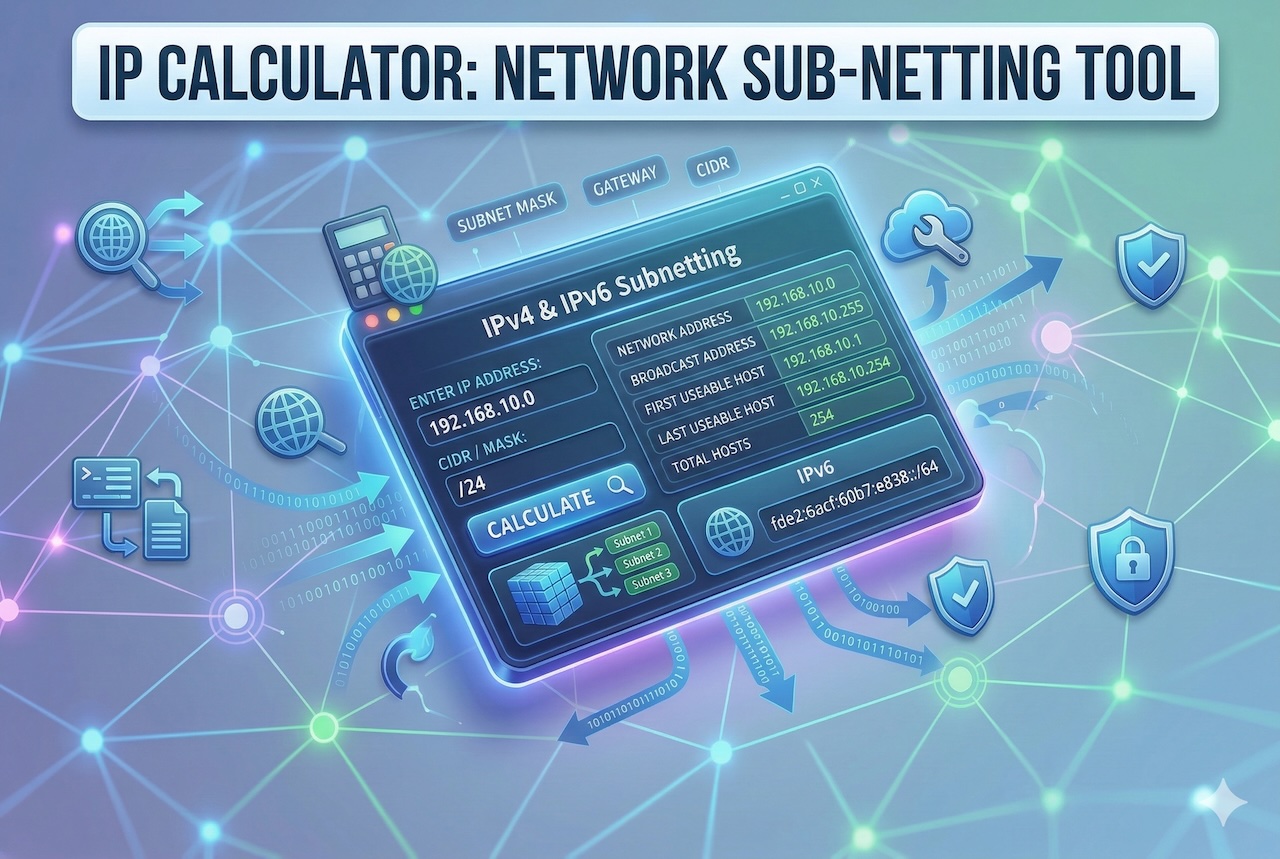
Simple network tools can help you plan smarter, troubleshoot faster, and understand how the internet infrastructure around you actually works.
Modern networks rely on careful planning and clear visibility. Yet many users still try to diagnose connectivity issues or configure systems using guesswork.
IP calculators make these tasks easier. They transform raw technical data into practical insights that help users understand addressing, performance limits, and infrastructure design.
Whether you manage a business network, run servers, or simply want to understand how the internet works, these tools help you make informed decisions about network performance and security.
IP calculators help users analyze network configurations, estimate bandwidth and transfer times, detect system bottlenecks, and plan infrastructure more efficiently. By converting technical network data into easy calculations, these tools support better troubleshooting, security awareness, and smarter decisions about connectivity, cloud resources, and device performance.
Why IP Calculators Matter for Network Planning
Strong networks begin with accurate planning. Address allocation, routing, and segmentation must be carefully structured to avoid conflicts and inefficiencies.
Tools like subnet calculator allow administrators and curious users to break larger IP ranges into manageable subnetworks. This process, called subnetting, improves network organization and helps isolate traffic between departments or systems.
According to the IETF Internet Protocol standards, proper IP address structure is essential for reliable routing and interoperability across the global internet.
Subnet calculations also reduce wasted addresses and help maintain clean network segmentation, which is important for both performance and security monitoring.
When networks grow without structured addressing, troubleshooting becomes significantly harder.
What Can IP Calculators Actually Help You Measure?
Many people associate IP tools only with networking professionals. In reality, they support a wide range of practical internet tasks.
An IP address lookup can reveal the public address your device uses to communicate online. This information is often useful when diagnosing VPN connections, identifying proxy usage, or verifying geolocation data.
Performance-related calculations are equally valuable. An internet speed calculator can translate bandwidth numbers into real expectations for downloads, streaming, or cloud backups.
Users who build or upgrade systems can also benefit from a bottleneck calculator, which estimates whether hardware components might limit overall system performance.
These tools provide quick insights without requiring deep networking knowledge.
Comparing Common Network Calculators
Different IP calculators focus on different aspects of networking and infrastructure planning. Some analyze addressing structures, while others estimate real-world performance.
| Calculator Type | Primary Purpose | Typical Use Case |
|---|---|---|
| Subnet calculators | Divide networks into smaller segments | Planning LAN architecture |
| IP lookup tools | Identify public IP information | Troubleshooting connectivity |
| Speed calculators | Convert bandwidth to expected performance | Internet troubleshooting |
| Bottleneck calculators | Compare hardware performance limits | System upgrade planning |
| Download estimators | Predict transfer duration | File transfer planning |
| Cloud cost estimators | Forecast infrastructure spending | Cloud deployment planning |
Each tool answers a different operational question. Together, they provide a clearer picture of how systems and networks behave.
How Do Calculators Improve Internet Troubleshooting?
Internet issues often feel unpredictable. Pages load slowly, downloads stall, or applications behave inconsistently.
Calculators help narrow down the possible causes.
A download time calculator estimates how long a file transfer should take based on your available bandwidth. If the real transfer time is much slower than the estimate, the problem may involve congestion, server limits, or routing issues.
These comparisons turn vague complaints into measurable diagnostics.
Another advantage is that calculators reduce guesswork during network testing. Instead of trying random changes, users can compare expected and actual performance.
This structured approach makes troubleshooting faster and more accurate.
IP Calculators for Performance and Capacity Planning
Beyond troubleshooting, calculators help users prepare for future demands.
Bandwidth planning is a good example. Businesses that rely on cloud services, remote work tools, or video conferencing need to estimate traffic requirements before upgrading infrastructure.
Many engineers and analysts rely on collections of technology calculators to quickly analyze performance constraints across networking, computing, and storage environments.
Cloud deployments introduce another layer of complexity. Services may scale dynamically, and costs depend heavily on resource usage.
Tools such as AWS calculator allow organizations to estimate cloud infrastructure expenses before launching workloads. This type of planning helps avoid unexpected costs and supports responsible cloud cost planning.
Without these estimates, companies may overprovision resources or underestimate their operational budget.
Coordinating Networks Across Time Zones
Modern infrastructure often spans multiple geographic regions. Teams deploy servers in different continents and collaborate across time zones.
While this may seem unrelated to networking, timing coordination is essential for maintenance windows, system updates, and incident response.
A reliable time zone lookup tool helps distributed teams align schedules for network maintenance or infrastructure changes.
When administrators know exactly when systems are updated, they can better monitor network performance and detect anomalies.
Operational coordination is a small but critical piece of network reliability.
A Simple Workflow for Using Network Calculators
Network tools work best when used together as part of a simple diagnostic process.
- Identify your public IP and connection details.
- Estimate realistic bandwidth performance.
- Compare expected download times with real transfers.
- Evaluate possible hardware limitations.
- Plan subnet structures before expanding networks.
This workflow transforms isolated tools into a structured approach for network troubleshooting and planning.
The result is better visibility and fewer surprises.
The Bigger Picture: From Curiosity to Infrastructure Awareness
IP calculators are not just technical toys. They serve as bridges between complex networking concepts and practical understanding.
For beginners, they explain how addressing, bandwidth, and infrastructure actually function.
For IT professionals and small business owners, they provide quick verification before making configuration changes or purchasing new equipment.
Even experienced engineers rely on quick calculations to validate assumptions.
Networks function best when decisions are based on data instead of guesswork.
Conclusion
The internet may seem invisible, but the infrastructure behind it follows precise rules. IP calculators reveal those rules in simple and accessible ways.
From subnet planning to bandwidth analysis and cloud cost forecasting, these tools support better network performance and stronger security awareness.
They help users measure what is happening inside their networks and prepare for what comes next.
Whether you run a home lab or manage business infrastructure, a few well chosen IP tools can dramatically improve how you understand and manage connectivity.
Featured Image generated by Google Gemini.
Share this post
Leave a comment
All comments are moderated. Spammy and bot submitted comments are deleted. Please submit the comments that are helpful to others, and we'll approve your comments. A comment that includes outbound link will only be approved if the content is relevant to the topic, and has some value to our readers.
Comments (0)
No comment