

According to the Resume Genius 2026 Hiring Insights Report, a survey of 1,000 U.S. hiring managers, 80% of them claim they can tell when AI wrote a resume. I keep hearing the same confidence from the founders I work with. "Oh, I can always tell." Maybe. But then they describe what happens next: they notice a resume feels off, can't quite articulate why, and end up spending twenty minutes Googling phrases from it to see if ChatGPT wrote them. Multiply that by fifty applications, and your Tuesday afternoon is gone.
The same Resume Genius data showed that 77% of hiring managers believe many of the resumes they receive are AI-generated. Yet 76% also said that overall resume quality has gone up. Read those two stats together. Applications look better than ever, but the people behind them are harder to evaluate. That's not a detection challenge. That's a broken workflow.
The Tells Are Subtler Than You'd Think
Forget the idea that AI resumes are robotic and easy to catch. Some are. The ones stuffed with "synergized cross-functional deliverables" are a dead giveaway. But most AI-assisted resumes in 2026 are polished enough to fool a quick scan.
What they share is an eerie smoothness. No rough edges. No weird phrasing that reveals how someone actually talks about their work. Everything is measured, balanced, and professional. Too professional. A human writing their own resume at 11 PM after a long day might say something slightly off, such as "managed the chaos of launching three products at once," and that awkwardness is actually a signal of authenticity. AI doesn't do that. Everything comes out balanced and tidy, like a brochure nobody asked for.
Then there's the achievement inflation problem. "Spearheaded cross-functional initiatives resulting in a 35% increase in operational efficiency." Could describe a VP of operations. Could describe someone who reorganized the office supply closet. AI-written achievements tend to be impressively vague, relying on big verbs, round percentages, and few details that would allow someone to verify the claim.
Buzzword density creeps up, too. "Data-driven," "stakeholder alignment," and "scalable solutions" appear on nearly every AI-assisted resume because the models learned that these terms correlate with callbacks. A few years ago, keyword stuffing helped people get past ATS filters. Now it just makes everyone sound identical.
A 2026 report from 180 Engineering, published by Hunt Scanlon Media, nailed the core issue: resumes that used to vary in style, tone, and even in how comfortable a candidate was writing in English have become weirdly uniform. That uniformity is tripping up both the software and the humans reviewing applications.
The Numbers Tell a Worse Story Than the Resumes Do
You'd expect that better-looking applications would make hiring faster. The opposite happened. SHRM reported in late 2025 that both cost-per-hire and time-to-hire increased over the past three years, the exact window when generative AI hit the job market on both sides. Candidates started mass-applying with tailored documents. Companies rolled out AI screening to keep up. And somehow, the whole machine got slower and more expensive.
Why? Because volume exploded without any corresponding rise in quality. The 180 Engineering report called it an "oversupply problem." Organizations aren't short on applications anymore. They're drowning in them. One open role can pull in hundreds of polished, keyword-optimized PDFs that all score well on ATS filters and all look roughly interchangeable to a human reviewer. Your team ends up spending three hours building a shortlist that took forty-five minutes five years ago.
For companies with a dedicated recruiting function, that's an annoying cost increase. For a fifteen-person startup where the CEO is reviewing resumes between investor calls, it's untenable. The old workflow of posting a job, reading incoming applications, and selecting the best-looking candidates was built for a talent pool with natural variation. That pool doesn't exist anymore.
So What Do You Actually Do?
Enough diagnosing. Here's what's working for teams I've seen handle this well.
First, and this is the big one, stop treating the resume as your main filter. Use it for a quick sanity check. Does this person have a plausible background? Good. Now move to something AI can't easily fake. A short take-home exercise. A few written screening questions specific to the role. Something that forces the candidate to demonstrate ability rather than describe it. The Resume Genius survey found that 60% of hiring managers already want to test or see proof of skills instead of trusting resume claims. The instinct is there. Most teams just haven't restructured their funnel to act on it.
Second, add an asynchronous video step. Have candidates record short answers to two or three questions. This doesn't need to be a scheduled call; a quick self-recorded response completed on their own time is often enough. You'd be amazed at how much you learn in ninety seconds of someone talking about their experience compared to a page of AI-optimized bullet points. Confidence, communication ability, and whether they actually understand what they claim to have done all come through on camera in a way that a document cannot convey. Candidate screening software can handle this without requiring applicants to create an account, which helps keep drop-off rates low. The point is to add a step where the person behind the resume has to show up.
Third, make your job postings do some of the filtering. The 180 Engineering study recommended including a short mandatory task or question in the application. It should be narrow and specific to the role. For example: "Describe one project where you built X from scratch and what broke along the way." A generic AI-generated answer won't survive a question like that. A real candidate's answer will be messy, specific, and useful.
And here's one that's more of a mental shift than a process change: stop equating good grammar with good candidates. For years, a clean, error-free resume was a reasonable proxy for professionalism. That shortcut doesn't hold anymore. The person with the most pristine formatting might be the one who spent an extra five minutes in ChatGPT. Read for substance. Read for specificity. Ignore the shine.
This Isn't Going Away
Somewhere between 40% and 80% of job applicants, depending on which survey you believe, are already using AI to write or enhance their applications. That number won't shrink next year or the year after.
The teams hiring well right now aren't the ones with some magical ability to detect AI text. They're the ones who've restructured their process so that a perfect resume is just the entry ticket, not the deciding factor. They've added steps that require showing, not telling. They've made the application itself into a lightweight skills test.
The resume as a reliable hiring signal has been permanently compromised. Hiring processes need to be built for that reality, not the one we had three years ago.
Conclusion
AI-generated resumes are making it harder to evaluate candidates based on documents alone. As applications become more polished and standardized, employers need screening processes that focus less on resume quality and more on demonstrated skills, communication ability, and real-world experience.
The organizations adapting most successfully are not trying to perfect AI detection. Instead, they are redesigning hiring workflows to verify capabilities through practical assessments, targeted questions, and direct candidate interaction. In an era of AI-assisted applications, the goal is no longer finding the best-looking resume but identifying the strongest candidate behind it.
Featured Image generated by ChatGPT.
Share this post
Author

Read the latest articles from Roberto Duran
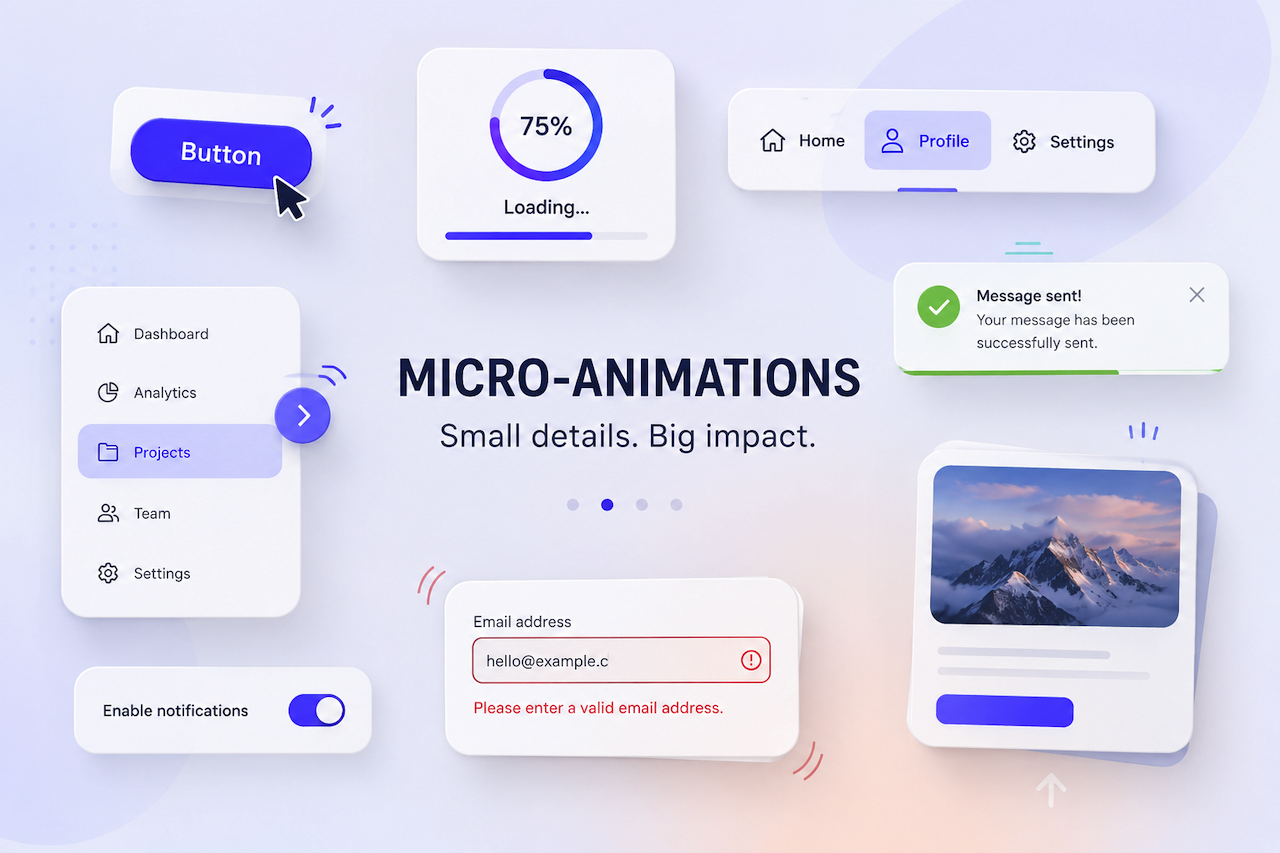
Micro-Animations in Web Design: How Small Details Can Improve UX
June 1, 2026
Micro-animations are the small visual moments that make an interface feel alive. Most users never consciously register them, but remove them and something feels off in a way that's hard to pinpoint. A button that resists slightly before clicking. A form field that gently signals an error. A page transitio [...]
Learn moreLeave a comment
All comments are moderated. Spammy and bot submitted comments are deleted. Please submit the comments that are helpful to others, and we'll approve your comments. A comment that includes outbound link will only be approved if the content is relevant to the topic, and has some value to our readers.
Comments (0)
No comment