

Running a successful e-commerce business today requires more than just a strong product and a Shopify store. The market has become increasingly competitive, advertising costs continue to rise, and new brands appear across multiple platforms every day. In this environment, relying solely on intuition is often not sufficient.
Many growing brands adopt data-informed strategies to guide decisions. Understanding competitors, identifying niches, evaluating products, and analyzing market trends have become important components of building a scalable online business. However, collecting and interpreting this information manually can be time-consuming.
This is where e-commerce intelligence SaaS platforms can play a role.
Tools such as TrendTrack are designed to help online entrepreneurs analyze their market, monitor competitors, and identify potential opportunities. Instead of relying entirely on manual research, users can access aggregated data to support product strategy, marketing decisions, and competitive positioning.
Some platforms focus specifically on the needs of e-commerce founders, including dropshippers and Shopify-based brands. These tools often centralize insights that would otherwise require multiple services.
For example, users may be able to analyze competitor traffic, review product trends, identify emerging competitors, and observe changes across online stores. This type of visibility can help provide a broader understanding of market activity.
Another potential benefit is time efficiency. Rather than manually gathering data from multiple sources, users can access structured insights that highlight key information for decision-making.
This article explores the types of features commonly found in e-commerce SaaS tools and the role of competitive intelligence in online retail.
What Features Should SaaS Tools for E-Merchants Offer?
The e-commerce ecosystem has become increasingly competitive. Every day, new brands launch online stores, new products appear on the market, and acquisition channels evolve rapidly. In this environment, e-merchants cannot rely on intuition alone. They need tools that provide clear insights, actionable data, and strategic visibility.
This is why choosing the right e-commerce SaaS platform is important. A SaaS tool should not only collect data but also support entrepreneurs in making more informed decisions. The goal is not simply to analyze numbers, but to uncover potential opportunities for growth.
One commonly expected feature in an e-commerce SaaS platform is competitive intelligence. This includes identifying competing stores, analyzing their strategies, and monitoring trends in the market.
Discovering competitors that are not immediately visible can provide a more complete view of a niche. Many stores operate without strong brand recognition while still generating meaningful traffic and revenue.
Traffic analysis is another key capability. Estimating how much traffic competitors generate can provide context about the size and potential of a market. Traffic trends may indicate whether a niche is growing, stable, or declining.
Visibility into product performance is also useful. Reviewing products that appear across multiple stores can help entrepreneurs evaluate potential opportunities and reduce reliance on trial-and-error approaches.
Some platforms also provide insights into store technology. This may include identifying Shopify themes, applications, and technical setups used by other stores. These observations can help inform improvements in user experience and site functionality.
Social commerce insights are becoming increasingly relevant. Platforms like TikTok Shop and social marketplaces play a growing role in product discovery and sales. SaaS tools may provide data on product trends, influencer activity, and content performance across these channels.
Market discovery is another useful feature. Instead of analyzing only known competitors, some platforms allow users to explore broader market activity, including new brands entering a niche and emerging product categories.
Ease of use is also important. Many analytics tools present large volumes of data in complex dashboards. Tools that organize data into clear, accessible insights can help users interpret information more efficiently.
Finally, many SaaS platforms aim to centralize multiple types of insights in a single interface. This can reduce the need to switch between tools and create a more unified view of the market.
Overall, these features are intended to support more structured analysis and informed decision-making in e-commerce.
In modern e-commerce, access to information has become an important component of long-term growth.
Why Competitive Intelligence Matters in E-Commerce
In the early days of e-commerce, launching an online store was relatively simple. Entrepreneurs could identify a product, launch a website, run a few advertising campaigns, and generate sales. Today, the landscape is more complex. Markets are more competitive, customer expectations are higher, and many brands compete for the same attention.
In this environment, decision-making often extends beyond intuition. Many businesses incorporate competitive intelligence to help guide their strategy.
Competitive intelligence refers to the process of analyzing competitors, market trends, and consumer behavior to support business decisions. Instead of relying solely on assumptions, e-commerce founders may study observable patterns in their market.
Understanding Your Market Landscape
Gaining a clear understanding of the market landscape is an important step in evaluating a niche.
Many entrepreneurs launch products without fully understanding how competitive their niche is. They may see a trending product or notice a few competitors, but this limited perspective may not reflect the full market.
Competitive intelligence tools can help identify a broader set of competitors, including established brands and emerging stores. This wider view may help e-merchants better understand market saturation, demand levels, and potential opportunities.
For example, if several competitors generate consistent traffic and sales, it may indicate demand. If visibility is limited across most stores, the market may be smaller or more difficult to enter.
Identifying Products and Trends
Competitive intelligence can also support product research and trend identification.
Product selection is often a challenging aspect of e-commerce. Some entrepreneurs test multiple products without clear signals of demand.
By reviewing competitors and their product offerings, businesses may identify patterns in what appears to perform well. This can provide additional context when evaluating potential products.
Monitoring trends across multiple stores and platforms may also help identify early-stage market shifts.
Optimizing Marketing and Acquisition Strategies
Competitive intelligence can extend to marketing strategy analysis.
By reviewing competitor traffic sources and acquisition channels, businesses may better understand how customers are reached within a niche.
For example, some markets rely more on organic search traffic, while others depend on paid advertising or social media platforms.
Recognizing these patterns may help businesses allocate resources more effectively.
Reducing Risk in Decision-Making
Launching products and scaling campaigns involves financial risk. Competitive intelligence can provide additional context by showing how similar businesses operate.
While it does not eliminate uncertainty, access to data may support more informed decisions over time.
For example, businesses may evaluate competitor traffic, product demand, and market activity before entering a niche.
Building a Long-Term Strategy
Ongoing market analysis can help businesses adapt to changes over time.
Rather than reacting after trends shift, companies that monitor competitors may identify changes earlier and adjust their strategies accordingly.
In competitive environments, this type of awareness can contribute to more sustainable growth.
E-commerce continues to evolve, and understanding the broader market context is becoming an increasingly important part of business planning.
How SaaS Tools Support Competitive Intelligence for E-Merchants
In today’s e-commerce landscape, having access to data is no longer enough. What matters is the ability to interpret that data and apply it to decision-making. Many online entrepreneurs recognize the importance of understanding competitors, but gathering and analyzing this information manually can take a significant amount of time.
E-commerce intelligence SaaS tools are designed to support this process.
These platforms help online store owners access information about their market, analyze competitors, and identify potential opportunities. Instead of relying entirely on manual research, users can work with centralized data to support product strategy, marketing decisions, and positioning.
One commonly offered feature is competitor traffic analysis. Estimating how much traffic a competitor receives can provide context about the size and activity level of a market. If multiple stores within a niche generate consistent traffic, it may indicate ongoing demand.
Traffic analysis can also help identify patterns, such as which competitors are growing or declining over time. Observing these trends may provide additional insight into market dynamics.
Another feature available in some platforms is competitor discovery. These tools may identify stores that are not immediately visible but still contribute to competition within a niche. This broader perspective can help provide a more complete view of the market.
Product analysis is another common capability. By reviewing products that appear across multiple stores, users can identify patterns in what may be performing well. This can support more structured product research.
Some SaaS tools also provide insights into the technical structure of competing stores, particularly for Shopify-based businesses. This may include information about themes, applications, and site configurations. These insights can help inform decisions related to store setup and user experience.
In addition, certain platforms offer data related to social commerce ecosystems, including channels such as TikTok Shop. Monitoring product trends and activity across social platforms can provide additional context about how products gain visibility.
A key characteristic of these tools is the ability to centralize multiple types of insights into a single interface. Without such platforms, entrepreneurs often rely on multiple services for traffic analysis, product research, and competitor monitoring, which can make the process more fragmented.
By consolidating these capabilities, SaaS tools can help streamline research and provide a more unified view of the market.
For e-merchants, access to structured insights may support more informed decision-making over time. Identifying trends, evaluating products, and monitoring competitors can contribute to a clearer understanding of market conditions.
Conclusion
As e-commerce continues to grow more competitive, access to reliable data and market insights has become increasingly important. While intuition and experimentation still play a role, many businesses now incorporate structured analysis to better understand their environment.
E-commerce SaaS platforms can support this process by centralizing data, providing visibility into competitors, and helping identify patterns across products, traffic, and market trends. These tools do not replace decision-making, but they can provide additional context that supports more informed strategies.
Ultimately, competitive intelligence is not a single solution but an ongoing process. Businesses that consistently monitor their market, evaluate new information, and adapt their approach may be better positioned to respond to changes over time.
As the digital commerce landscape evolves, the ability to interpret and apply data effectively is likely to remain an important part of long-term growth.
Featured Image generated by Google Gemini.
Share this post
Author

Read the latest articles from Shahid Latif
How to Restyle Short Video Clips with Video-to-Video AI

June 5, 2026
You come back from a shoot with footage that’s good enough to use. The lighting works, the movement feels natural, and a few clips could easily become social media teasers. Then you hit the usual wall: making them look anime-inspired, illustrated, or cinematic often means learning effect-heavy editing, testing [...]
Learn moreAI Video Enhancer: Your Videos Don’t Look Professional? Here’s the Fastest Fix
June 1, 2026
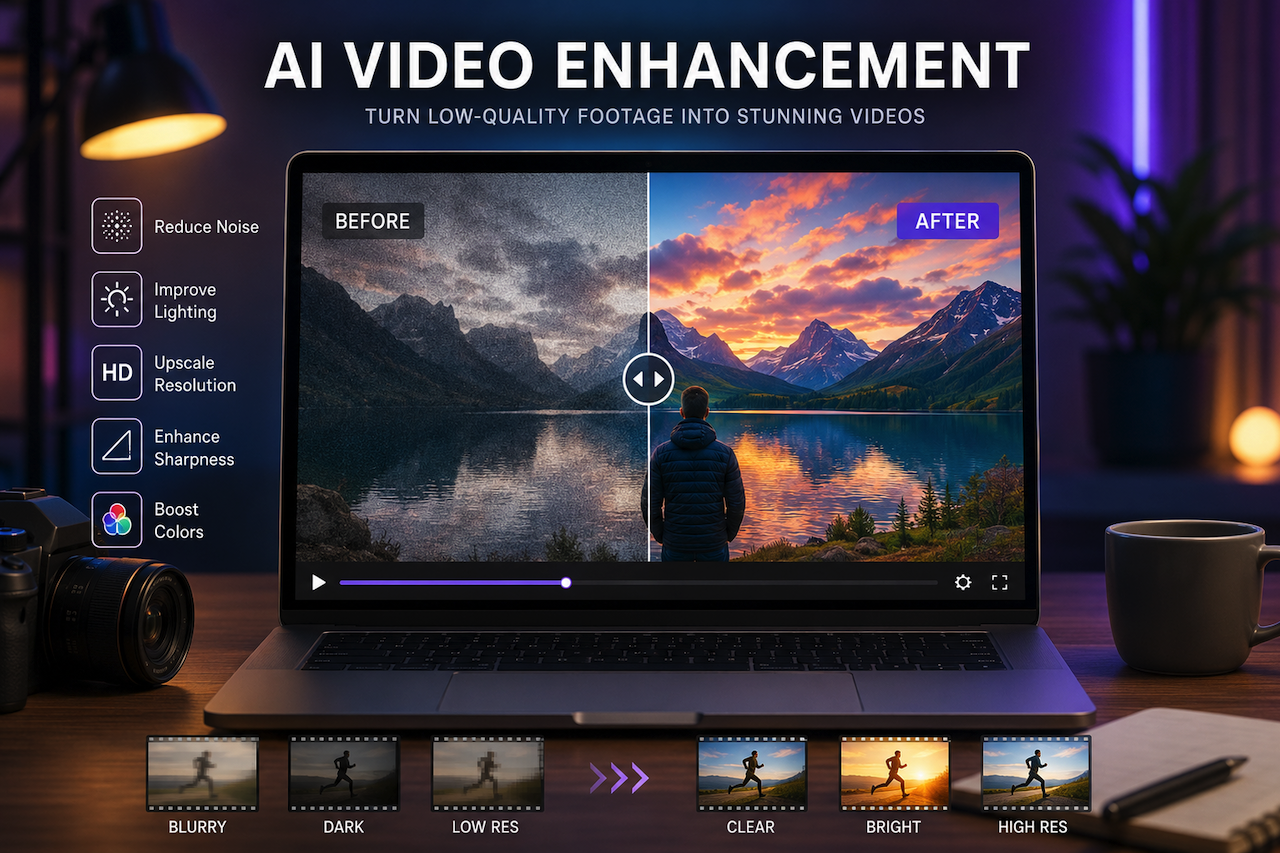
Ever invest hours into making a video only to upload and find it looks blurry, dull, or just… not professional?
Learn moreLeave a comment
All comments are moderated. Spammy and bot submitted comments are deleted. Please submit the comments that are helpful to others, and we'll approve your comments. A comment that includes outbound link will only be approved if the content is relevant to the topic, and has some value to our readers.
Comments (0)
No comment