

How Location Intelligence Is Driving E-Commerce Conversions
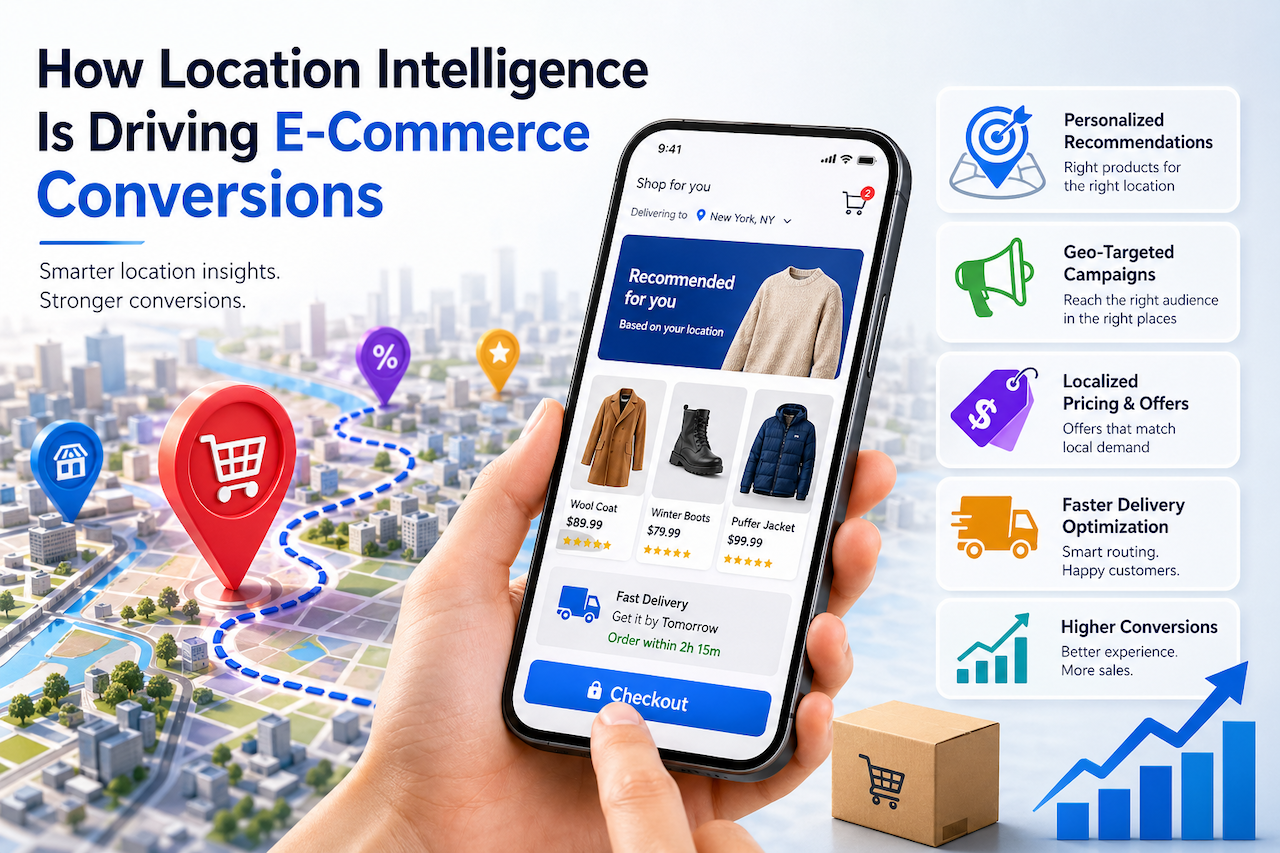
A big part of sales now depends on how well a business understands where the customer is and what they need at that moment. Location plays a much bigger role than most people notice.
When a store knows a customer’s location, it can show better products, faster delivery options, and more relevant offers. This makes the buying process feel smoother and more useful for the customer.
In this article, we’ll share how location-based insights are helping online businesses improve conversions and make better decisions.
Hyper-Personalized Product Recommendations
Location data helps online stores show products that match what people in a specific area are more likely to buy. Instead of showing the same items to everyone, platforms can adjust what appears based on where the customer is browsing from.
Ashley Durmo, CEO of Chalet, notes, “Personalization works best when product visibility reflects real-time customer context. When platforms adjust recommendations based on environment and behavior, decision-making becomes more intuitive for buyers. This also improves overall relevance across the shopping journey.”
This matters because buying habits are not the same everywhere. Weather, culture, and local demand all influence what people want. For example, clothing choices in colder regions are very different from warmer areas. When recommendations match these conditions, people are more likely to click and buy.
It also improves the overall shopping experience. Customers do not have to search too much because relevant products appear automatically. This saves time and reduces confusion during the buying process.
Businesses also benefit from better engagement. When users see items that feel relevant, they spend more time on the platform and are more likely to complete a purchase. This improves conversion rates without needing extra advertising spend.
Location-Based Retargeting and Repeat Conversions
Location-based retargeting helps businesses reconnect with customers based on where they are or where they have been. Instead of showing generic ads to everyone, brands can target users with messages that match their local context.
For example, if a customer visited a product page but did not complete the purchase, they can later see ads highlighting nearby availability, local discounts, or faster delivery options. This makes the reminder more relevant and increases the chance of return visits.
It also works well for physical stores. Customers who have been near a store location can be retargeted with offers that encourage them to visit again. This bridges the gap between online browsing and offline action.
Another advantage is timing. Location-based retargeting can adjust messages depending on the user’s routine or region. A lunchtime offer in a busy city area will perform differently than a late-evening promotion in a residential zone.
Michiel Meyer, CEO & Co-Founder at Workwize, notes, “Procurement strategy planning becomes far more effective when decisions are aligned with operational visibility and cost structure clarity. It works best when it connects planning with real-world execution signals.”
This method improves repeat conversions because it focuses on users who already showed interest.
Geo-Targeted Advertising Campaigns
Geo-targeting allows businesses to show ads based on a user’s location. Instead of running the same campaign everywhere, companies can focus their marketing on specific cities, regions, or even neighborhoods.
Ákos Doleschall, Managing Director at Hustler Marketing, said, “UGC Ad creatives perform better when they reflect real user environments and situations. When people see familiar contexts in ads, engagement becomes more natural and less forced. This is why localized creative direction improves response rates significantly.”
This helps improve ad performance because messages feel more relevant to the viewer. A promotion for a nearby store or local delivery option is more likely to get attention compared to a general ad with no location context.
It also reduces wasted spending. Businesses no longer need to show ads to audiences who cannot realistically buy or access the product. This makes marketing more efficient and cost-effective.
Another advantage is timing and context. Location data can help businesses promote offers during local events, weather changes, or seasonal needs. This increases the chance of immediate action from customers.
Localized Pricing and Offers
Tom Rockwell, CEO of Concrete Tools Direct, shared, “Location intelligence allows businesses to adjust prices and offers based on different regions. This means the same product can be promoted in different ways depending on local demand, income levels, or market competition.
This approach helps businesses stay competitive in multiple markets. Instead of using a fixed price for everyone, they can adapt to what works best in each area. In some regions, discounts may drive more sales, while in others, value-based pricing may work better.
Local offers also improve customer response. When people see promotions that feel relevant to their area, they are more likely to take action. This creates a stronger connection between the business and the customer.
It also helps with market expansion. Businesses can test different pricing strategies in new regions without changing their entire model. This reduces risk and improves decision-making over time.
Another benefit is improved conversion rates. When pricing feels fair and aligned with local expectations, customers are less likely to abandon their cart during checkout.”
Faster Delivery Optimization
Location data plays a major role in improving delivery speed and accuracy. When businesses know where customers are located, they can choose the closest warehouses, delivery partners, or stock points to fulfill orders faster.
According to Desmond Dorsey, Chief Marketing Officer at Bayside Home Improvement, “Delivery speed has become a defining factor in customer satisfaction. When fulfillment is optimized through location intelligence, it directly strengthens trust and repeat purchase behavior.”
This reduces waiting time and improves the overall shopping experience. Faster delivery often leads to higher customer satisfaction and repeat purchases, especially in competitive markets where speed matters.
It also helps reduce delivery costs. Instead of shipping products from far locations, businesses can optimize routes and use nearby fulfillment centers. This makes operations more efficient and cost-effective.
Another benefit is better delivery predictions. Customers can see more accurate timelines before placing an order, which reduces uncertainty and cart drop-offs.
Location-based logistics also help during high-demand periods. Businesses can shift stock or adjust delivery routes based on regional demand patterns, avoiding delays and stock issues.
Inventory Planning Based on Regional Demand
Location data helps businesses understand what products are needed in different areas. Instead of stocking the same items everywhere, companies can adjust inventory based on local buying patterns.
Edward Tian, CEO of GPTZero, adds, “Predictive systems that analyze regional demand allow businesses to move from reactive stocking to proactive planning. This reduces inefficiencies and improves overall supply chain accuracy over time.”
This reduces waste and improves efficiency. Products that sell more in certain regions can be stocked in higher quantities there, while slow-moving items can be reduced in areas with low demand.
It also helps avoid stockouts. When businesses know regional demand trends, they can plan ahead and make sure popular products are always available where they are needed most.
Seasonal differences also play a role. Some products perform better in specific climates or during certain times of the year. Location-based planning helps businesses respond to these changes more effectively.
Moss agate jewelry trends also show how localized preferences can influence demand patterns in niche product categories.
Store Locator and Omnichannel Integration
Location intelligence also improves how customers move between online and offline shopping. Many businesses now use store locator features that help users find the nearest physical store, pickup point, or service center based on their exact location.
Karen Noryko, Career Content Director at Jobtrees, says, “Omnichannel experiences only work when every touchpoint feels consistent and connected. When location data ties online and offline journeys together, it creates smoother transitions and stronger customer confidence.”
This makes the buying journey more flexible. A customer can check product availability online and then choose to visit a nearby store instead of waiting for delivery. It also helps reduce hesitation because people feel more confident when they know a real location is available if needed.
Omnichannel integration connects all touchpoints into one system. A customer might discover a product online, check it in-store, and complete the purchase through a mobile app. Location data keeps all of this connected and smooth.
It also improves trust. When customers see nearby store options or pickup locations, it adds a sense of reliability to the brand. This is especially useful for high-value or urgent purchases.
Local Search and SEO Optimization
Location intelligence plays a big role in how businesses appear in search results. When users search for products or services with phrases like “near me” or include a city name, search engines use location data to show the most relevant results.
Rameez Ghayas Usmani, Award-Winning HARO Link Builder & CEO of HARO Link Building, says, “Local authority is built through consistent presence across trusted platforms. Search visibility improves when a business earns repeated mentions in relevant contexts rather than relying on isolated exposure.”
This helps businesses attract high-intent customers who are already close to making a purchase. These users are actively looking for something nearby, which increases the chance of conversion.
Local SEO also improves visibility on platforms like Google Maps and business listings. When a business is properly optimized, it can appear in top local results, which drives more traffic without paid ads.
Reviews, location tags, and consistent business information also support better rankings. All of these signals help search engines understand where a business operates and who it should show it to.
Real-Time Behavioral Targeting
Real-time location data allows businesses to adjust marketing messages based on where a user is at that exact moment. This makes communication more immediate and relevant.
For example, if a user is near a store location, they might receive a time-limited offer or reminder about nearby availability. This type of targeting increases the chance of quick action because the message matches their current situation.
It also helps online platforms understand movement patterns. Businesses can see where users are most active and adjust campaigns based on high-performing regions or hotspots.
In some cases, timing combined with location creates stronger results. A promotion shown during peak hours in a busy area often performs better than a general ad shown at random times.
Pompano beach dumpster rental campaigns are often used as an example of hyper-local targeting, where proximity-based offers significantly increase immediate response rates.
This approach also reduces irrelevant messaging. Instead of sending the same offer to everyone, businesses can focus only on users who are in a position to respond immediately.
Delivery ETA Personalization and Cart Conversion Impact
“Delivery timing has a direct effect on whether a customer completes a purchase. Location intelligence helps businesses show accurate delivery estimates based on where the customer is placing the order from and where the product is stored”, says Nicky Zhu, AI Interaction Product Manager at Dymesty.
When shoppers see a clear and realistic delivery time, they feel more confident about buying. Uncertainty often leads to cart abandonment, especially when delivery speed is unclear.
It also helps businesses offer different delivery options based on distance. A nearby customer might see same-day or next-day delivery, while a distant customer may see standard shipping options.
Another advantage is expectation management. When customers know exactly when their order will arrive, there are fewer complaints and support issues.
Businesses also use delivery data to highlight faster options at checkout. Showing “fastest delivery available” based on location can push customers toward completing the order sooner.
Final Thoughts
Location intelligence is becoming a strong part of how online stores improve sales. It helps businesses show better products, plan faster delivery, and reach customers with more relevant messages.
When offers and content match a person’s location, people respond more easily because it feels useful at that moment. It also helps reduce delays, improve planning, and bring more clarity to the buying process. Customers get a smoother experience from search to checkout, which makes them more likely to complete a purchase.
For businesses, it means better use of data and fewer missed chances. As online shopping grows, using location in the right way helps stores stay more accurate in how they connect with people and turn visits into actual sales.
Featured Image generated by ChatGPT.
Related Articles

May 11, 2026
Navigating Digital Marketing in 2026: Key Trends Driving Innovation, Growth, and Human Connection
The digital marketing landscape in 2026 looks nothing like it did even two years ago. What once revolved around clicks, impressions, and basic targeting has evolved into a soph...
Read More
March 3, 2025
PPC Marketing for E-Commerce
Running PPC ads yourself? That’s like driving a car without a GPS. You might eventually reach your destination, but you'll likely waste time and resources taking wrong turns along...
Read More
March 10, 2021
How to track offline conversions?
Doing business online doesn't necessarily mean selling products online, but also includes lead generation which leads to sales. Companies that sell mortgages, insurances, and o...
Read More
Comments
Comments are available to signed-in users and are moderated to keep the discussion useful and respectful. Spam, automated submissions, and low-value promotional comments are removed. Outbound links may be approved when they are relevant and genuinely helpful to readers, but they are displayed as plain text rather than clickable hyperlinks.
No comments have been published yet.
Please sign in to submit a comment.