
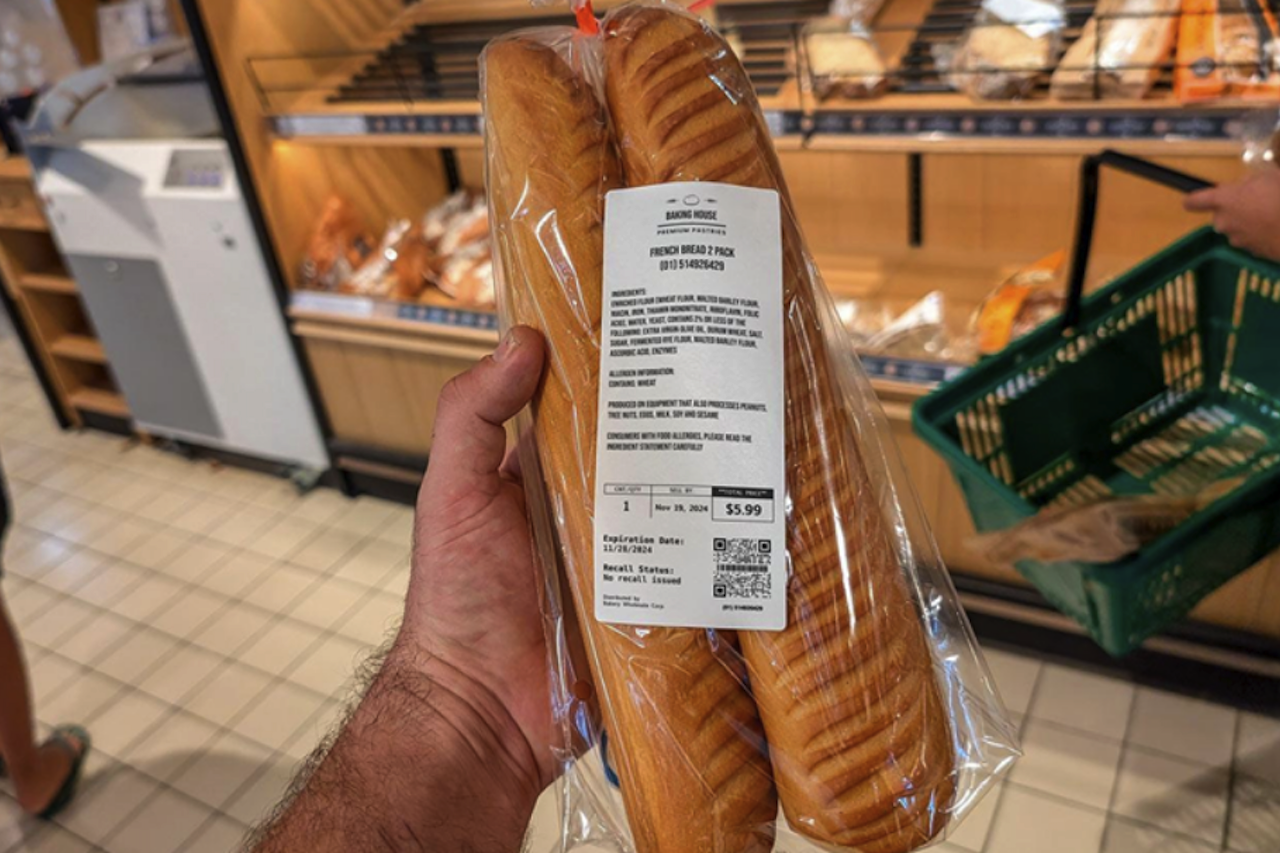
Managing expiration dates and handling recalls can help prevent health risks and build consumer trust, making them important procedures for every food business. It has become easier as businesses use GS1 QR codes to track food expiration dates and recalls. By using these QR codes, companies can store essential information about each food product, accurately track freshness, and respond to recalls instantly. This helps to keep unsafe products off shelves, all accessible with a quick scan. Learn how GS1 digital link QR code standards safeguard food safety and mitigate food-related health risks.
Shelf Life vs. Expiration Date
When it comes to food labeling, the terms shelf life and expiration date often confuse consumers, which is why it’s important to clarify their meanings first.
Shelf Life
Shelf life refers to the period during which a product maintains its best quality when stored under recommended conditions before it is opened. During this time, the food maintains its quality and appeal, offering the best experience for consumers. However, even after the shelf life ends, the product may still be safe to consume, though it might have lost some freshness, flavor, or texture.
Expiration Date
An expiration date is a hard cut-off for food safety. This date signals when a product should no longer be consumed, as it may pose health risks. After the expiration date, perishable items such as dairy, meat, and pharmaceuticals can develop harmful bacteria or lose potency, making them unsafe. Unlike shelf life, which is about maintaining peak quality, the expiration date is about ensuring safety. Keeping track of these dates is important, especially for products prone to spoilage or contamination.
Why Ingesting Expired Food Products Is a Serious Health Risk
According to a report from Food Dive, over 46% of people eat food past its expiration date. This is due to the growing preference for less expensive food, largely driven by inflation. While it has become common for consumers to buy food items that are close to expiring and for businesses to discount these items to reduce waste, this practice is not without consequences. Food poisoning, for instance, is the most common health problem that can occur from eating expired food. While some cases can be cured without any medication, it’s an illness that no one should ignore. The World Health Organization (WHO) reports that approximately 600 million people fall ill after eating contaminated food and drinking contaminated water (e.g., raw, undercooked, spoiled food and dirty water). 420,000 of these patients die every year. In the long run, this norm and the foodborne illnesses they create for the public become a serious socioeconomic issue affecting all sectors of society.
Why Food Recalls Happen and Why It Should Matter
Food recalls happen for various reasons, often linked to safety and quality concerns. Here are some of the most common causes of food recalls:
- Contamination by pathogens: Bacterial contamination, especially from pathogens like Salmonella, E. coli, and Listeria, is a leading cause of recalls. These bacteria are present in raw or improperly handled foods and pose serious health risks to consumers.
- Undeclared allergens: Foods containing allergens such as nuts, dairy, soy, or gluten must be clearly labeled, as these ingredients can cause severe reactions in people. If a product is found to contain an allergen that isn’t disclosed on the label, it is often recalled to protect consumers.
- Improper labeling or packaging: Sometimes, incorrect labels or packaging errors can cause confusion and safety concerns. This may include issues like incorrect expiration dates or misleading nutritional information.
- Quality issues or spoilage: Recalls can also be initiated if products have spoilage issues before expiration. It is often due to improper storage, handling, or production errors that affect the product’s shelf life.
With expired items still being shipped and sold in the market for short-term profitability, food recalls should be taken more seriously toward the long-term goal of food safety.
How Does the GS1 QR Code for Food Expiration and Recalls Ensure Food Safety?
In the food industry, ensuring the safety and quality of products is essential, especially as consumers want transparency on how food is handled and how fresh it is. Statista reports that the FDA (Food and Drug Administration) issues recalls affecting nearly 100 million food units each quarter. Additionally, mismanaging expired or unsafe products can damage a company’s reputation and, more critically, risk consumer health. To address and mitigate these challenges, the GS1 QR code for food expiration and recalls offers businesses a way to track and manage product freshness and recall status. The GS1 2D barcode encodes a product identifier such as a GTIN and can link to detailed product data, including expiration dates, batch numbers, and recall information. For instance, a store associate can check if a product is approaching its expiration date, ensuring only fresh products are available to customers. Studies show that barcode-driven inventory management is up to 40% more efficient than manual checks. This shows how important it is for companies to adopt GS1 Digital Link technology to achieve a faster supply chain.
Benefits of Using QR Code Technology for Tracking Food Expiration and Recalls
With consumer expectations at an all-time high, food producers and retailers need tools to track, manage, and communicate important information quickly and accurately. Here are some benefits of using GS1 digital link QR code technology to track expiration dates and manage the removal of expired food products:
Better Tracking for Every Step in the Food Supply Chain
QR codes make tracking and managing food products easier for everyone in the supply chain—from farm to processing, packaging, distribution, and retail. In a recent survey, 90% of respondents agreed that traceability improves food recalls, and 80% agreed that it helps reduce costs as well. With a quick scan, food companies and retailers can see all the important details, like the batch number, production date, and location history of the product. This enables faster and more precise tracking, ensuring food items meet quality standards at each stage.
Quicker and Easier Food Recalls
In food safety, speed is crucial. If a contaminated product reaches consumers, it can pose health risks and lead to costly lawsuits. GS1 QR code for expiration date and recalls makes the process faster and more focused. Instead of recalling entire product lines, companies can identify the batches at risk. QR technology has the potential to cut supply chain costs by as much as 15%. This allows companies to reinvest resources into improving food safety.
Reduced Food Waste and Better Stock Management
Food waste costs the global economy over $1 trillion annually. To overcome this problem, companies now use GS1 barcodes to manage expiration dates more effectively. With easy access to product data, stores can quickly identify items nearing their expiration dates and put them on sale to prevent waste. This helps retailers avoid financial loss from spoiled products and ensures customers receive fresher food. For example, products with GS1 digital link codes can be sorted and managed to sell older items first, improving stock rotation and reducing waste.
More Transparency for Consumers
Consumers today want to know where their food comes from and that it’s safe. According to a survey, 75.5% of consumers fully rely on brand reviews before deciding what to buy. But how is this related to QR technology? It allows shoppers to scan the package and view the product’s origin details. This transparency gives consumers peace of mind, as they know they have accurate information. With an S1-standardized QR code for recalls, brands can build trust by demonstrating their commitment to transparency.
Food Safety Improvements Through GS1 QR Codes
Incorporating GS1 QR codes for food expiration dates and recalls can significantly improve food safety, traceability, and consumer trust. As GS1 Sunrise 2027 — the industry transition toward 2D barcodes in retail — approaches, businesses are expected to adopt GS1-powered QR codes to help identify, manage, and remove expired or unsafe food products more efficiently.
Share this post
Author

Read the latest articles from Thomas Lore
Nano Banana Pro API Integration Guide for Image Editing and Generation
April 23, 2026
Image workflows become difficult to maintain when editing and generation remain disconnected from the rest of the production process. Many teams can test an endpoint once, get a result, and call that success. Real integration starts later, when image requests repeat, output has to move through review, and the wor [...]
Learn moreTurning Raw IP Logs into Insights

April 16, 2026
Every second, servers across the internet generate millions of log entries—cryptic lines of text documenting every connection, request, and error. For network administrators, security analysts, and digital forensics investigators, these IP logs contain invaluable intelligence about traffic patterns, security th [...]
Learn moreLeave a comment
All comments are moderated. Spammy and bot submitted comments are deleted. Please submit the comments that are helpful to others, and we'll approve your comments. A comment that includes outbound link will only be approved if the content is relevant to the topic, and has some value to our readers.
Comments (0)
No comment