
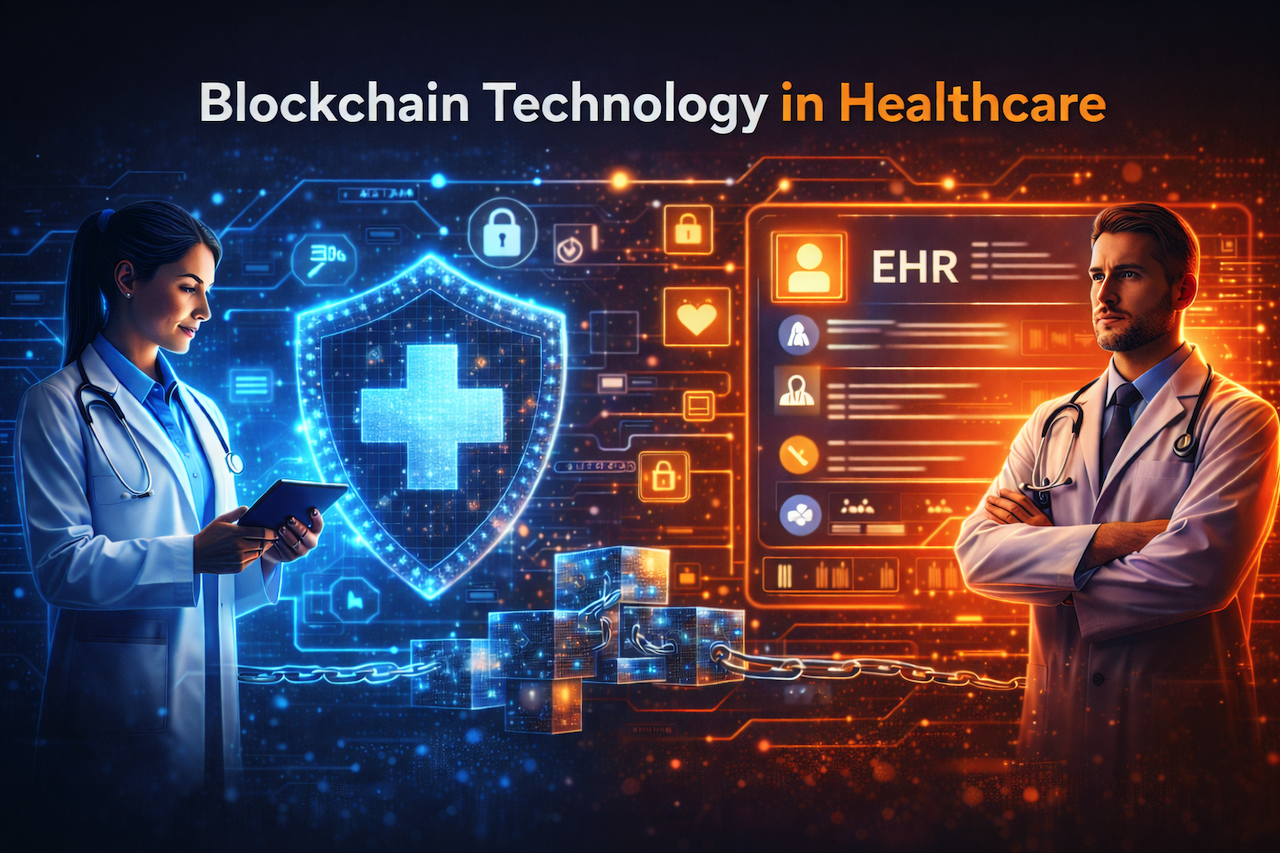
Healthcare organizations handle a large volume of sensitive data, which is shared across hospitals, labs, insurers, and external partners. Because these traditional systems operate independently, data is often scattered across departments. This also means records become fragmented, making them hard to manage, share, and audit. Privacy and HIPAA compliance are key issues medical institutions face, which lead to delayed clinical decision-making, increased breach risk, and operational complexity.
This is where modern technologies, such as blockchain, offer healthcare institutions a meaningful solution. It addresses these gaps by storing data using the hash function. This means they are stored in linked blocks using cryptography. This technology enables data to be recorded in a way that can’t be altered later. Additionally, this change helps build trust and transparency among the medical staff and patients. By ensuring data is secure, reliable, and accessible globally, blockchain sets the stage for better care and smoother hospital operations.
Implementing blockchain in healthcare requires the design of a modern, blockchain-embedded system framework. This often involves specialized expertise in areas such as blockchain mobile app development, system architecture, and data governance. From a technical standpoint, such expertise supports the creation of next-generation systems that strengthen electronic health record (EHR) security, improve interoperability across platforms, and enable more reliable data tracking. When implemented correctly, these systems help maintain compliance requirements and preserve data accuracy without disrupting existing healthcare workflows.
This article examines how blockchain technology helps medical companies improve data sharing and system compliance.
Understanding Blockchain in Healthcare
With blockchain in the background, the healthcare industry has significantly improved how it manages data sharing and transactions. Not only does this make clinical records more secure and tamper-proof, but it also increases users' trust in the system.
This section aims to understand the dynamics of blockchain in the healthcare sector.
Immutable Records
Simply put, this implies that the blockchain technology frameworks highly support data accuracy. This means that once an entry is recorded, it cannot be easily altered. In the event of a change, the system will create a new traceable entry. It implies that electronic health records (EHRs) are automatically more secure and audit-ready. In this case, any member of the medical staff, including unauthorized personnel, cannot alter records without it becoming noticeable.
Decentralization
This means blockchain technology supports decentralized data storage, in which no single organization controls the records. Instead, a synchronized copy of the EHR is maintained across different systems. As a result, this creates a framework in which medical records cannot be altered by any single entity. And in case a change is made, it will be traceable to its source. This ensures that healthcare data accessed by patients through mobile app solutions is consistent, accurate, and verifiable.
Controlled Access of Records
EHR records are sensitive because they contain a patient's complete medical history. This is why companies trust blockchain to ensure data integrity and protect medical records. Access is managed using role-based controls. This primarily governs the audit trail, including who accessed the data, when, and for what purpose. Sensitive information is well protected by a filter that determines who needs to know it when accessed through web and mobile app solutions.
Ensuring Transparency and Interoperability
As we know, the healthcare ecosystem values audits and HIPAA compliance reporting. Blockchain provides an immutable record of each access, update, and event, with timestamps. This creates a verifiable record of how patient data is used across systems and stakeholders. Blockchain also integrates with EHR systems to access data records in real time. This means data can be securely exchanged across institutions via APIs without migrating or rebuilding core systems. It supports interoperability without disrupting the EHR records. It also keeps data safe and secure from evolving cyber risks.
How Blockchain Strengthens Data Security and Compliance in Healthcare
The modern healthcare industry is undergoing a dynamic transformation. And leaders are reassessing whether their existing architecture is sufficient to support long-term scalability and governance. The obvious answer is that medical systems need to be more secure to protect patients' medical records. This is why blockchain can be trusted to bring in this much-needed change.
This section explores how blockchain is revolutionizing the healthcare space, improving how data is shared, accessed, and managed among stakeholders.
Safeguarding Patient Privacy
First and foremost, let us understand how the healthcare sector has improved data privacy through blockchain technology. In essence, this is a result of enhanced traceability in EHRs. With access strictly managed, healthcare institutions are now better aligned with their legal and compliance requirements. From the healthcare institutions’ standpoint, there is limited data exposure, enabled by role-based access controls. Overall, this also prevents unauthorized data access, helping maintain stronger data privacy and compliance across the system.
Smart Fraud Prevention
Since blockchain maintains a consistent record of healthcare data interactions, fraudulent behavior and unauthorized access are quickly detected. Any suspicious behavior that results in record manipulation can be traced to its source, as all transactions are time-stamped and recorded. For businesses, this helps in the following:
- Improving accountability across providers, insurers, and third-party vendors
- Reducing the occurrence of fraud through reliable audit data
Intelligent fraud detection and prevention position the systems as more secure and trustworthy to patients.
Improved Data Sharing with Patients
Now, let’s examine how blockchain improves data visibility and sharing for medical staff and patients. Beyond ensuring security, the medical records can be accessed and shared with patients easily. This improves their trust and allows better care and attention towards their critical concerns. From a business viewpoint, this also contributes towards the following:
- Enables patients to manage their consent where necessary
- Improves the patient engagement multi-fold
Additionally, blockchain helps reduce the risk of security breaches. This is because sensitive records cannot be replicated across systems, even when shared among trusted stakeholders.
Advancement in Medical Research
Finally, blockchain enables healthcare professionals to review critical patient cases that can help the healthcare sector advance. Here, patent anonymity is also preserved, and the framework transparently tracks data usage.
For businesses, this means the following:
- Enhanced support in ethical data practices and the advancement of medicine
- Ensuring that the patient consent is taken, which is also auditable
Additionally, this brings about a considerable improvement in data reliability and the trustworthiness of medical research outcomes.
Blockchain addresses key concerns and pressing challenges in traditional healthcare systems. These added privacy, security, and accountability are embedded in the workflows to achieve a sustainable healthcare ecosystem.
Final Thoughts
In summary, blockchain supports healthcare systems in becoming more secure and scalable without compromising compliance, data integrity, or patient trust.
While traditional systems struggled with security and interoperability demands, the modern framework offers a better approach to data management and governance. This is supported by blockchain technology, which helps in improving the system’s transparency and risk management.
For healthcare leaders, integrating this technology to maintain the privacy and governance of EHRs can be a business-friendly move. Blockchain can be a key enabler of modern, growth-oriented healthcare ecosystems.
Featured Image generated by ChatGPT.
Share this post
Author

Read the latest articles from Aliona Miller
How can UX design influence adoption rates?
March 24, 2026
The insurance sector faces many persistent challenges in 2026, and the question usually boils down to increasing an app’s acceptance, trust, and adoption among users. With this key concern in mind, many leaders brainstorm how this digital paradox can be re-evaluated and improved.
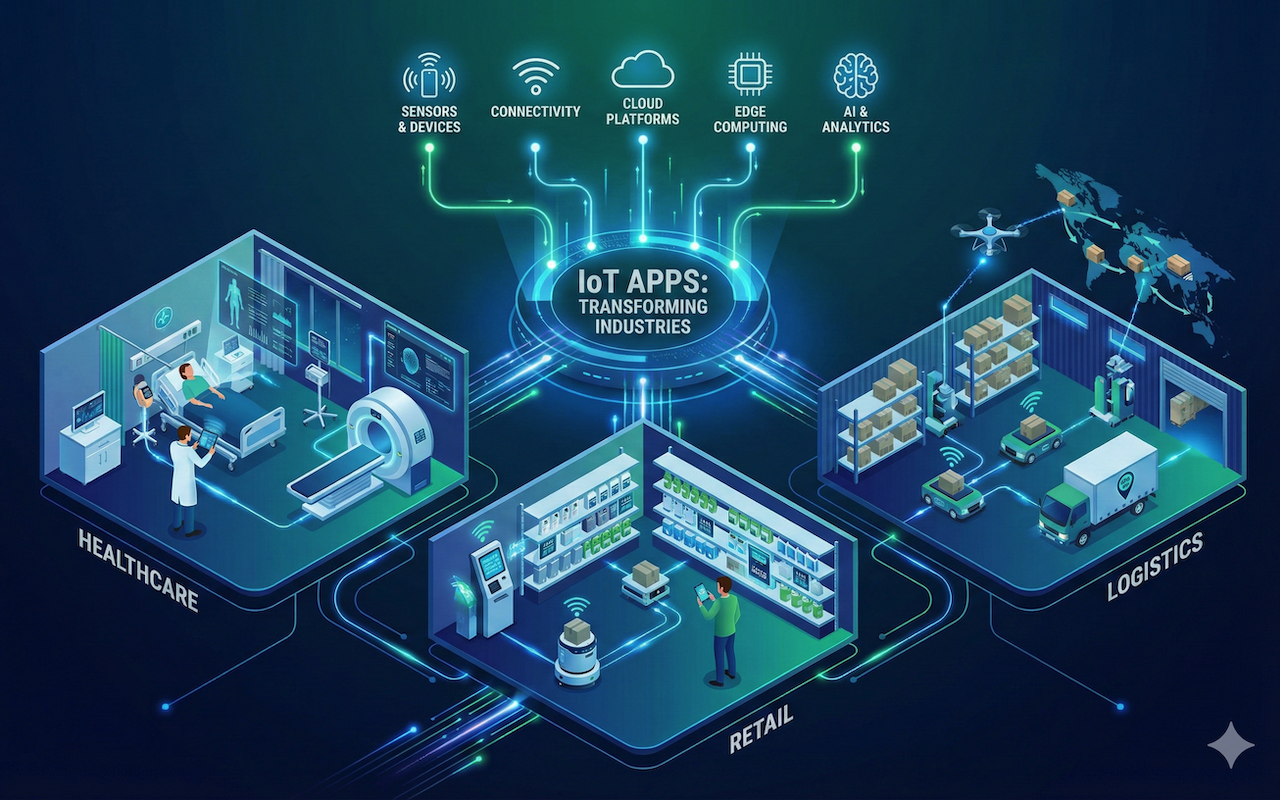
Learn moreHow Are IoT Apps Transforming Industries?
December 8, 2025
IoT technology is becoming a cornerstone achievement of the IT sector. It enables the connection of devices across the internet, which allows leaders to make smarter choices.
Learn moreLeave a comment
All comments are moderated. Spammy and bot submitted comments are deleted. Please submit the comments that are helpful to others, and we'll approve your comments. A comment that includes outbound link will only be approved if the content is relevant to the topic, and has some value to our readers.
Comments (0)
No comment