
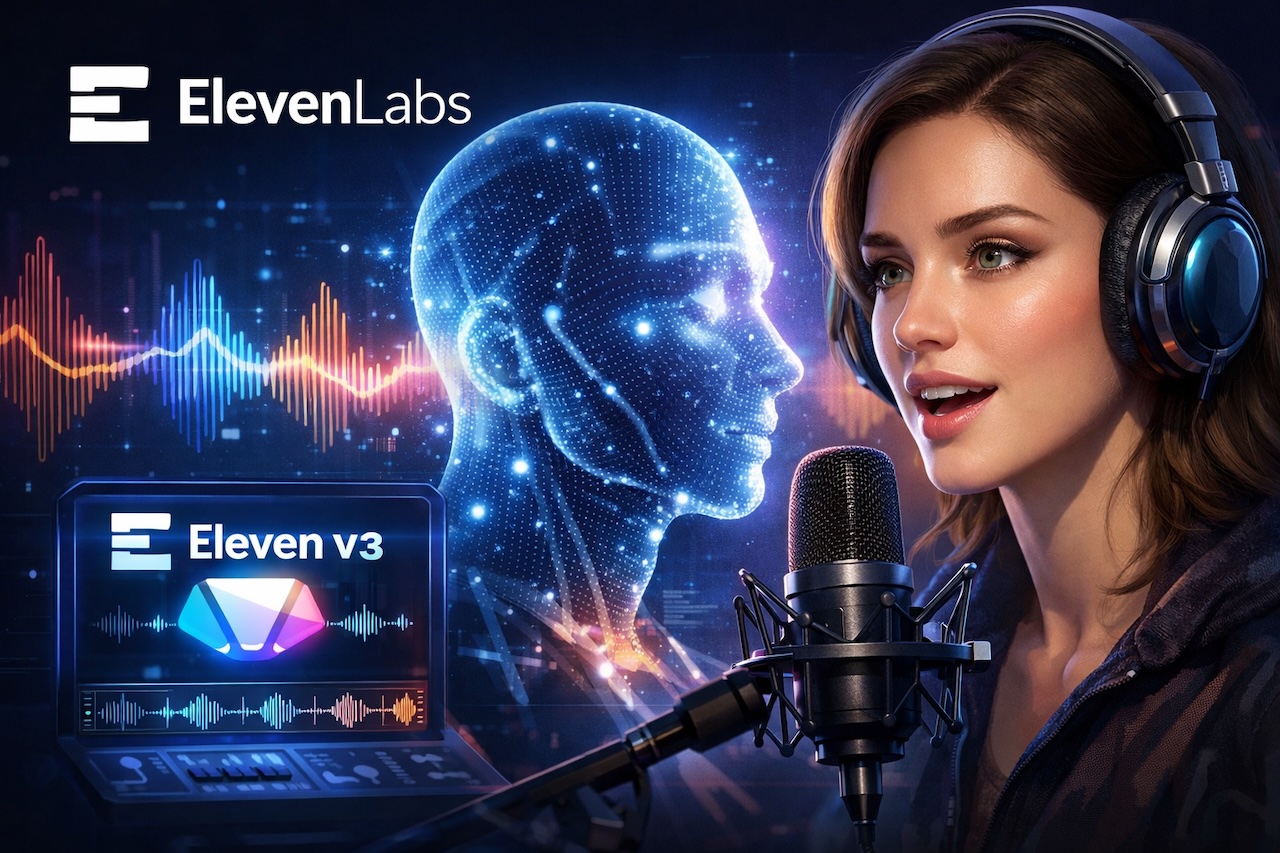
AI voice generation is no longer just about sounding human. The real challenge now is sounding intentional. Can a model whisper naturally, handle emotional shifts, follow dramatic cues, and make dialogue feel alive instead of merely read out loud?
That is the space ElevenLabs is aiming for with Eleven v3, its latest flagship speech model. Positioned as the company’s most expressive text-to-speech system so far, Eleven v3 brings 70+ language support, inline audio tags for emotional control, and a Text-to-Dialogue workflow designed for more natural multi-speaker output.
For creators, developers, and media teams, that makes Eleven v3 more than a routine model refresh. It is a shift from standard AI narration toward something closer to AI-directed performance.
What Is Eleven v3?
Eleven v3 is ElevenLabs’ newest high-end speech synthesis model, built for more emotional, expressive, and context-aware voice generation than the company’s earlier TTS options. In the current documentation, ElevenLabs presents it as its most advanced speech model, with support for lifelike speech generation in 70+ languages and built-in compatibility with both standard text-to-speech and Text-to-Dialogue workflows.
That positioning matters because ElevenLabs already had a strong reputation in AI voice. The platform was known for natural-sounding voices, voice cloning, and broad creator appeal. With v3, the company is pushing into a more ambitious category: speech that can sound not just realistic, but performed.
The Biggest Upgrade: More Control Over Delivery
What makes Eleven v3 stand out is control. Instead of relying only on a voice preset and hoping the model interprets the line correctly, users can shape delivery with inline audio tags such as [excited], [whispering], [sighs], and similar cues. ElevenLabs says these tags can control tone, pacing, emotion, and even non-verbal reactions.
That changes the creative workflow in a meaningful way. Many AI voice tools can produce clean narration, but far fewer can follow dramatic direction well. Eleven v3 is built to interpret emotional cues from script structure, punctuation, and audio tags, making it better suited to character scenes, cinematic voiceovers, story-led content, and ad reads that need shifts in energy or mood.
In other words, Eleven v3 feels less like a passive TTS engine and more like a voice model you can direct.
Why Dialogue Feels Like a Real Differentiator
Another major piece of the v3 story is Text-to-Dialogue. According to ElevenLabs’ documentation, the model can generate natural-sounding exchanges with multiple speakers, using contextual understanding and audio tags to shape interruptions, transitions, and emotional flow. It also supports non-speech audio events and broader scene-direction cues inside dialogue prompts.
This is where Eleven v3 starts to move beyond the typical AI voice-generator category. Most TTS tools are still strongest when reading one speaker’s script. Eleven v3 appears much more comfortable with back-and-forth conversational performance, which opens the door for fictional scenes, podcasts, character-driven videos, training simulations, and interactive media experiences.
For users building voice-first creative content, that is a meaningful leap.
Where Eleven v3 Feels Strongest
ElevenLabs’ own model guide points to use cases such as audiobook production, emotional dialogue, and character interactions, and that framing feels accurate. Eleven v3 looks especially well suited to projects where delivery matters as much as pronunciation.
That includes:
- audiobooks with dramatic passages
- social videos needing a more cinematic voiceover
- games and narrative apps with character exchanges
- branded content with tonal variation
- media tools that want voice to feel like part of the product experience rather than a utility layer
It also helps that Eleven v3 supports 70+ languages, which gives global teams more room to use one expressive model across multiple markets instead of switching between separate tools for English performance and multilingual coverage.
The Tradeoff: Power Comes With More Prompting
The biggest weakness of Eleven v3 is also part of its appeal: it asks more from the user.
ElevenLabs says v3 requires more prompt engineering than earlier models, and its best-practices guide makes clear that results depend heavily on voice choice, punctuation, text structure, and the way audio tags are used. The docs also note that v3 does not use SSML break tags in the usual way, instead encouraging users to guide pacing with tags, ellipses, and script formatting.
That means v3 is not necessarily the most beginner-friendly voice model for someone who just wants instant, perfectly controlled output with no experimentation. When it works, it can sound strikingly expressive. But it is not as plug-and-play as a simpler narration-focused model.
Not the Best Choice for Every Workflow
As impressive as Eleven v3 is, it is not the universal default.
ElevenLabs has repeatedly distinguished v3 from its lower-latency models, recommending faster options such as Flash or Turbo-style models for real-time and conversational use cases. The company also notes that v3 has historically come with higher latency and that stability can vary depending on settings and prompt style. In the best-practices docs, the “Creative” setting is described as more expressive but more prone to hallucinations, while “Robust” is more stable but less responsive to directional prompts.
That makes Eleven v3 best understood as a premium expressive model, not the right answer for every chatbot, live assistant, or transactional voice workflow.
How Pricing and Workflow Fit Into the Picture
One reason Eleven v3 remains attractive is that it sits inside a relatively accessible broader platform. ElevenLabs’ pricing page currently shows a free tier, followed by Starter at $5 per month, Creator at $11 per month after a first-month discount, Pro at $99, and Scale at $330. Multilingual v2/v3 access appears in the plan comparisons, while higher tiers unlock benefits such as better audio quality and expanded Eleven v3 API output options.
Studio support also strengthens the overall package. ElevenLabs’ Studio documentation shows that users can build projects on a timeline, add captions, layer music and sound effects, work with video tracks, and export finished audio or video. That makes Eleven v3 more useful in real production workflows, especially for teams handling voiceovers, audiobooks, or content collaboration.
Final Verdict
Eleven v3 is one of the more interesting AI voice releases because it pushes the category beyond “realistic narration” and toward directable performance.
It is not the fastest model. It is not the simplest. And it is not the one to choose when your top priority is low-latency, highly standardized speech generation. But for creators and teams who care about emotion, pacing, tone shifts, and dialogue that feels more alive, Eleven v3 looks like one of the strongest options currently available.
The simplest way to think about it is this: if you want AI speech that merely reads, other models may be enough. If you want AI speech that performs, Eleven v3 is where ElevenLabs becomes much more compelling.
Featured Image generated by Google Gemini.
Share this post
Author

Read the latest articles from DaVid Christophe
Kling 3.0 Review: A More Structured AI Video Tool, but Not a Fully Solved Workflow
March 11, 2026
AI video tools have improved quickly over the past year. However, many still feel strongest in short demo-style use cases: generate one visually impressive clip, then start over when you need a second shot with the same character, style, or pacing.
Learn moreLeave a comment
All comments are moderated. Spammy and bot submitted comments are deleted. Please submit the comments that are helpful to others, and we'll approve your comments. A comment that includes outbound link will only be approved if the content is relevant to the topic, and has some value to our readers.
Comments (0)
No comment