
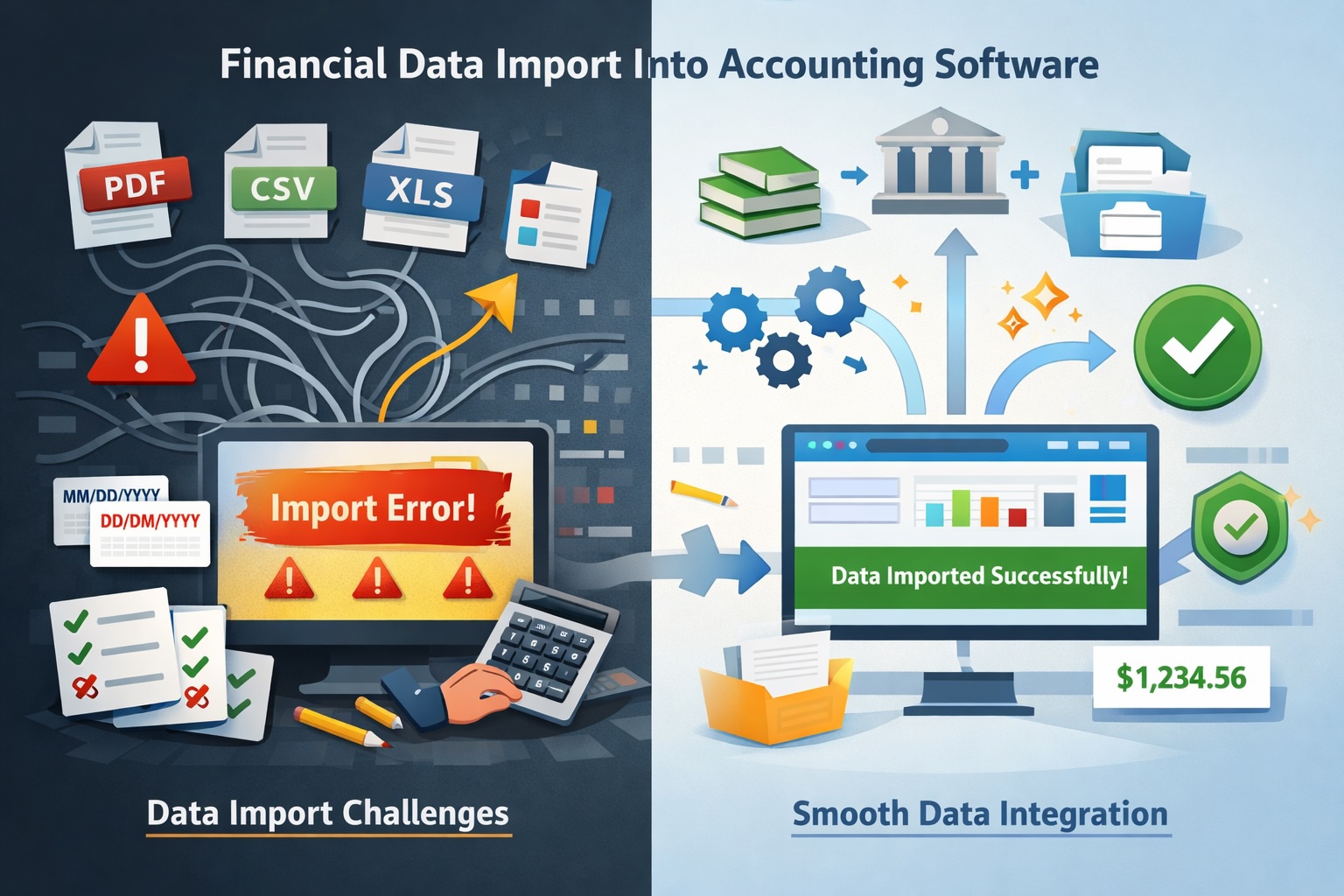
In today’s world, where business processes are automated to a great extent, one would expect that the task of feeding financial data into accounting software would be a smooth procedure. However, many companies are experiencing problems when transferring information from external databases into their internal financial accounting systems.
Despite the appearance of this task being relatively easy, it often proves to be a complicated process requiring data processing, which not only wastes precious time but can also cause problems. It is therefore necessary to analyze the causes of this problem.
The Growing Dependence on Accounting Software
The modern business world has come to rely heavily on the use of accounting software that will enable the management of the business's transactions, reporting activities, and help with compliance. Regardless of whether they are large corporations or smaller start-up firms, the use of these systems has become essential in helping maintain their financial well-being.
As these businesses expand and grow, there is an enormous amount of financial information that requires proper handling. This is made possible through the process of data imports from a variety of sources.
Why Financial Data Import Is More Complex Than It Looks
Importing financial data appears to be an uncomplicated matter on the surface. On closer inspection, it is a complex process that involves numerous factors, such as the formatting, structuring, and verification of information.
1. Inconsistent File Formats (PDF, CSV, Excel)
One of the common challenges is the challenge of data being in different formats. The data can exist in different forms, for instance, in PDF form, in CSV form, and also in Excel. Although CSV and Excel have some flexibility, the two tend to have different formats and layouts. There might be a difficulty in uploading the data into the system without ensuring that the format is uniform. PDF data cannot be easily interpreted by the data manipulation program. For Quicken, we have to convert pdf bank statement to qif to import the data accurately, not these CSV or Excel formats.
2. Data Structure Mismatches Between Systems
Financial data is presented by each system in their own way. In other words, one system may present data based on the account type, whereas another system will have its own unique way of organizing the financial data. As a result, during data imports, there might be misallocations due to the disparity between the two systems, where the values assigned are mismatched.
3. Missing or Incomplete Transaction Data
Data that is missing from financial documents is another common issue. The absence of transaction dates, details about the transaction, or amounts could lead to an import failure or erroneous allocation of data within the system.
4. Duplicate Entries During Import
The problem of duplicate transactions arises in cases where there are multiple imports of the same information or the system does not differentiate between old and new entries. Such duplicates may lead to the distortion of financial statements and cause additional costs by inflating revenues or expenses, as well as complicating the audit process.
5. Formatting Issues with Dates, Amounts, and Currency
The problem of formatting is the most common source of errors. The format that is used for representing dates, numbers, and currencies differs between nations and systems. As such, while one program employs the format MM/DD/YYYY for representing dates, the second program that uses DD/MM/YYYY will misinterpret the data. This will only be complicated by differences in separators.
6. Errors Caused by Manual Data Preparation
Data needs to be prepared and cleaned by the user before the import takes place. Preparing data involves eliminating unwanted columns, fixing errors, among others. Though this might be an essential part of the importation process, preparing data manually provides room for making mistakes. Small mistakes made during the preparation stage might result in erroneous data importation, and this might cause the process to take even longer.
7. Compatibility Issues with Different Accounting Platforms
Compatibility problems could occur between accounting software and data sources. Different file types, structures, and integration might make compatibility difficult when trying to integrate with some accounting programs. There could be situations where some applications for proper importation require special templates.
If there are many compatibility issues, I think before we import them, first we should use any bank statement converter to get clean data from messy bank statement PDFs. This saves a lot of hours.
How These Challenges Affect Accuracy and Reporting
Problems related to the importing of financial data may also affect the accuracy of financial records and reports. Errors arising from importing financial data could affect balance calculations, incorrect classification of transactions, and incorrect insights.
Best Practices for Smooth Financial Data Import
To avoid these problems, businesses need to embrace the best practices in dealing with imported financial data. To start with, standardizing the format of the incoming financial data is an essential practice. Checking for validation during the process is another approach that may help prevent importing faulty financial data. Businesses can utilize templates when handling imported financial data. They also need to maintain accurate documentation of the criteria used in importing financial data.
The Shift Toward Automated Data Preparation
As the shortcomings of manual processes are becoming clearer, organizations opt for automation to make the process of data preparation and import easier. Automatic software is able to gather, structure, and format the data without requiring significant assistance from a user. Such software may offer a wide variety of features, including intelligent mapping, duplicate detection, and real-time validation. Although such an approach requires a certain amount of money to be initially spent, the overall results justify the expense.
Conclusion
Financial data importation into accounting software continues to remain a difficult endeavor, even with technological advances. As seen, there are several challenges to overcome while dealing with such information, starting from various formatting problems. Knowing about the problems and employing the correct measures helps minimize the risk of mistakes when working with financial data in accounting software.
Featured Image generated by ChatGPT.
Share this post
Author

Read the latest articles from Ryan Dawal
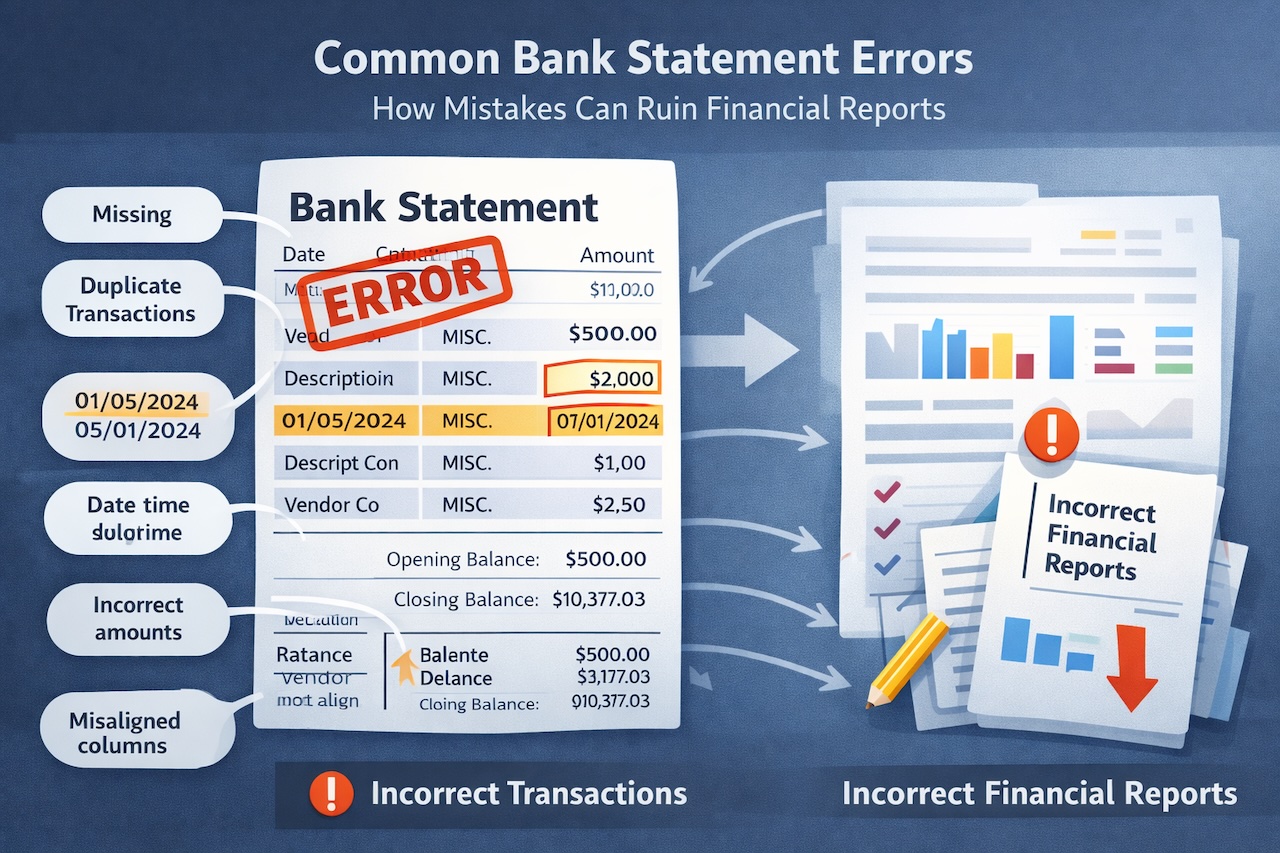
Common Bank Statement Errors That Ruin Financial Reports
April 18, 2026
Bank statements have been regarded as trustworthy sources of information on financial transactions, serving as the cornerstone of the entire process of accounting and reporting. Nevertheless, even minor mistakes in bank statements may lead to major problems, such as misrepresentation of finances or incorrect deci [...]
Learn moreAltStore PAL & How to Install Delta Emulator with AltStore PAL.

June 25, 2024
You probably already know that Delta Emulator is being used if you enjoy playing classic iPhone games like Mario, Super Mario, and others. Delta Emulator is the most renowned brand in flawless and flawless iPhone emulation of NES, SNES, N64, and Game Boy games.
Learn moreLeave a comment
All comments are moderated. Spammy and bot submitted comments are deleted. Please submit the comments that are helpful to others, and we'll approve your comments. A comment that includes outbound link will only be approved if the content is relevant to the topic, and has some value to our readers.
Comments (0)
No comment