Blog Category


IP Geolocation

IP geolocation plays a crucial role for businesses wanting to understand their online audiences. As organizations handle more data in the cloud, the security framework surrounding IP-based insights becomes just as important as accuracy. When geolocation relies on cloud-driven systems, the emphasis naturally shifts toward protecting data, securing access points, and ensuring the integrity of location information.


Geolocation Data

Businesses operate online, but geography continues to shape customer behavior, market demand, and operational efficiency. Companies that understand where their users move, connect, or shop often outperform competitors that rely only on generic analytics. Recent studies show that organizations using advanced location insights grow revenue 15–20 percent faster than those that do not. This shift marks a new phase: geo-intelligence at scale, where location data analytics, automated pattern recognition, and flexible AI systems reveal opportunities that were invisible only a few years ago. Some insights appear obvious; others emerge only when enormous datasets are processed by smart models.

E-Commerce Conversion Rates

Any visitor is important in the modern world of the global online marketplace. But not all visitors behave the same, and successful e-commerce brands understand that personalization leads to performance. The internet retailer can use geolocation technology to see the origin of the online user in real time and modify the shopping experience based on it. Location-based optimization can increase conversion rates several times over, since it can be used to display the correct currency, propose neighboring shipping services, and more.

Geolocation Intelligence

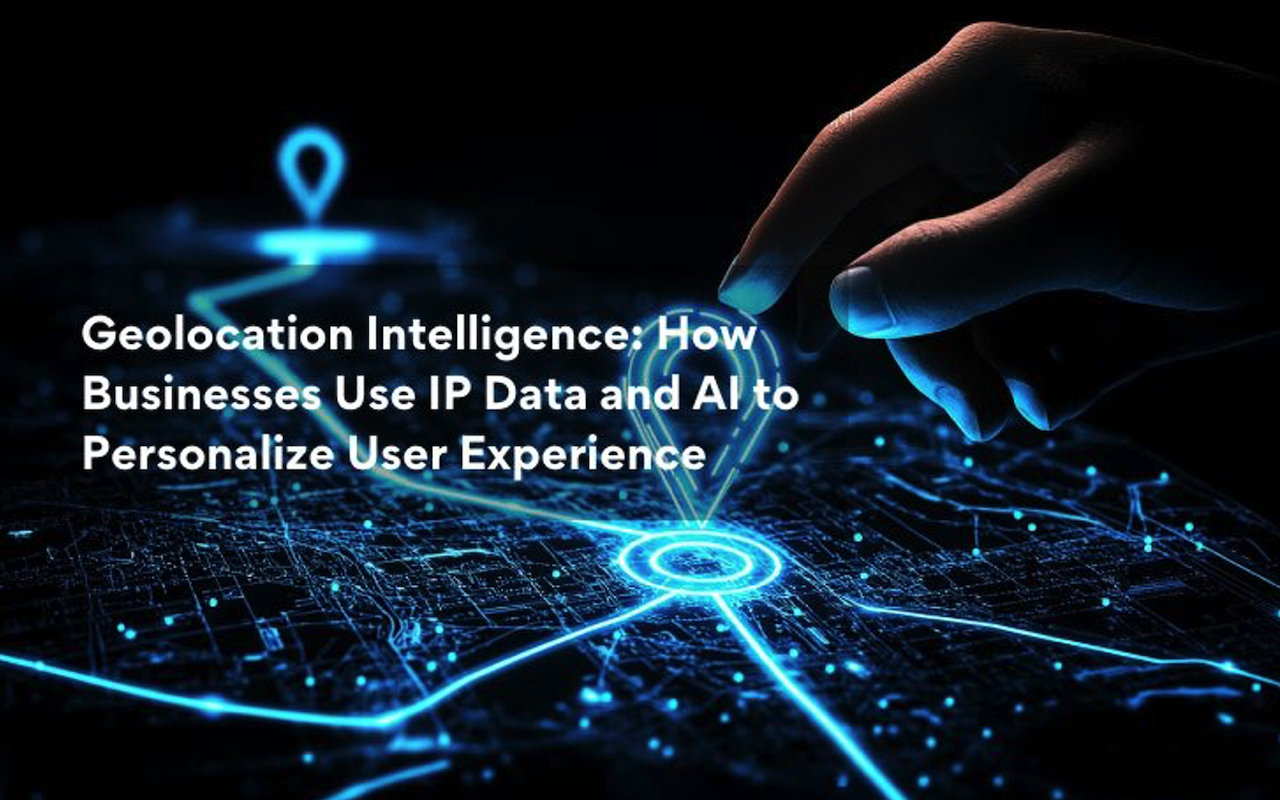
In today's digital-centric environment, anticipate experiences that are customized to their needs and surroundings. Businesses have no choice but to personalize everything from product suggestions to the layout of a website. To achieve this, companies are increasingly integrating geolocation intelligence, which is a mix of IP data and Artificial Intelligence (AI), to create customer experiences that appear to be personal, timely, and relevant.

Construction plans

Construction is no longer defined only by cranes and concrete. Today, project managers discuss GPS accuracy, IP tracking, and cloud dashboards as often as they talk about steel reinforcement. According to a McKinsey report on construction productivity, digital adoption can reduce project delays by up to 30%. Geolocation software and IP analytics are central to this shift, helping companies track resources, improve safety, and streamline operations.

Location Data

At first glance, location data seems simple. On a basic level, it includes your business name, address, phone number, and a few listings on Google or Yelp. However, beneath the surface, there is a complex web of data connections spanning dozens of platforms, directories, and apps. Each listing acts like a small node in a huge, distributed database.

IP location

In our digital world, every device connected to the internet has an IP address — a unique string of numbers that identifies your device on the network. But did you know that this IP address also reveals the geographical location of your device? This is called IP Location, and it plays a big role in how websites, services, and apps deliver content to you.

Geolocation

Geolocation isn’t just a buzzword; it’s the backbone of personalized, place-aware experiences online. By mapping IP data to location, brands can localize content, surface nearby inventory, and route traffic efficiently. Mobile plays a key role here: on-the-go interactions depend on reliable devices, and accessories like iPhone 15 Pro MagSafe cases can support seamless usage by helping devices stay secure, accessible, and ready for use.