
Understanding the Dual-Stack Approach
For many years, the dual-stack approach-running IPv4 and IPv6 protocols simultaneously-has been the cornerstone strategy for organizations transitioning to the next generation of internet addressing. This method allowed businesses to maintain compatibility with legacy IPv4 systems while gradually adopting IPv6, providing a bridge to the future internet landscape. By enabling devices to communicate over both protocols, dual-stack offered a practical solution to the complex challenge of Internet Protocol migration.
However, as the digital ecosystem evolves rapidly and the number of connected devices skyrockets, relying solely on dual-stack is increasingly inadequate. The method requires network devices and infrastructure to support both protocols simultaneously, which often increases complexity and operational costs. Maintaining two parallel protocol stacks means double the configuration, monitoring, and troubleshooting efforts, which can strain IT resources and budgets.
Moreover, the dual-stack approach introduces inherent inefficiencies. Networks must manage routing tables for both IPv4 and IPv6, which can lead to potential conflicts and suboptimal routing paths. This complexity becomes a bottleneck as organizations scale their infrastructure to accommodate growing traffic demands and emerging technologies like the Internet of Things (IoT) and 5G.
Some organizations work with specialized network infrastructure teams, such as radius180, to help evaluate modernization strategies and manage the complexities associated with transitioning beyond traditional dual-stack environments. These types of services may support network architecture planning, IPv6 migration, scalability improvements, and long-term infrastructure optimization.
Limitations of the Dual-Stack Model
One of the most significant challenges with the dual-stack approach is the operational overhead it introduces. Running two protocol stacks in parallel essentially doubles the amount of configuration, monitoring, and troubleshooting required. Network administrators must maintain security policies, firewall rules, and access controls separately for IPv4 and IPv6, increasing the risk of misconfigurations and security gaps.
This complexity can lead to vulnerabilities, as each protocol stack presents its own attack surface. Cyber attackers often exploit inconsistencies between IPv4 and IPv6 configurations to gain unauthorized access or launch denial-of-service attacks. Furthermore, many security tools and appliances have historically been designed with IPv4 in mind and may lack full IPv6 support, creating blind spots in dual-stack environments.
Additionally, many network devices and infrastructure components are not optimized for dual-stack performance, which can lead to latency and inefficient routing. This inefficiency is particularly problematic for organizations with high traffic volumes or those operating in latency-sensitive industries such as finance, healthcare, or real-time communications.
Statistics underscore the urgency for change: According to a 2023 report by APNIC, IPv6 adoption worldwide reached 35% of users, up from just 25% two years earlier. This significant increase means that the dual-stack approach, originally designed for a gradual transition, is now straining to keep up with real-time demands and the scale of modern internet traffic.
Furthermore, the exhaustion of IPv4 addresses has forced many organizations to rely on Network Address Translation (NAT) to extend IPv4 usability, adding another layer of complexity and potential points of failure. This reliance on NAT alongside dual-stack can degrade network performance and complicate troubleshooting efforts.
Some organizations also work with experienced network service teams, such as Titan Solutions, when evaluating scalable and secure alternatives to traditional dual-stack network architectures. These types of providers may assist with infrastructure assessments, IPv6 transition planning, and long-term network modernization strategies.
The Rise of IPv6-Only Networks and Transition Technologies
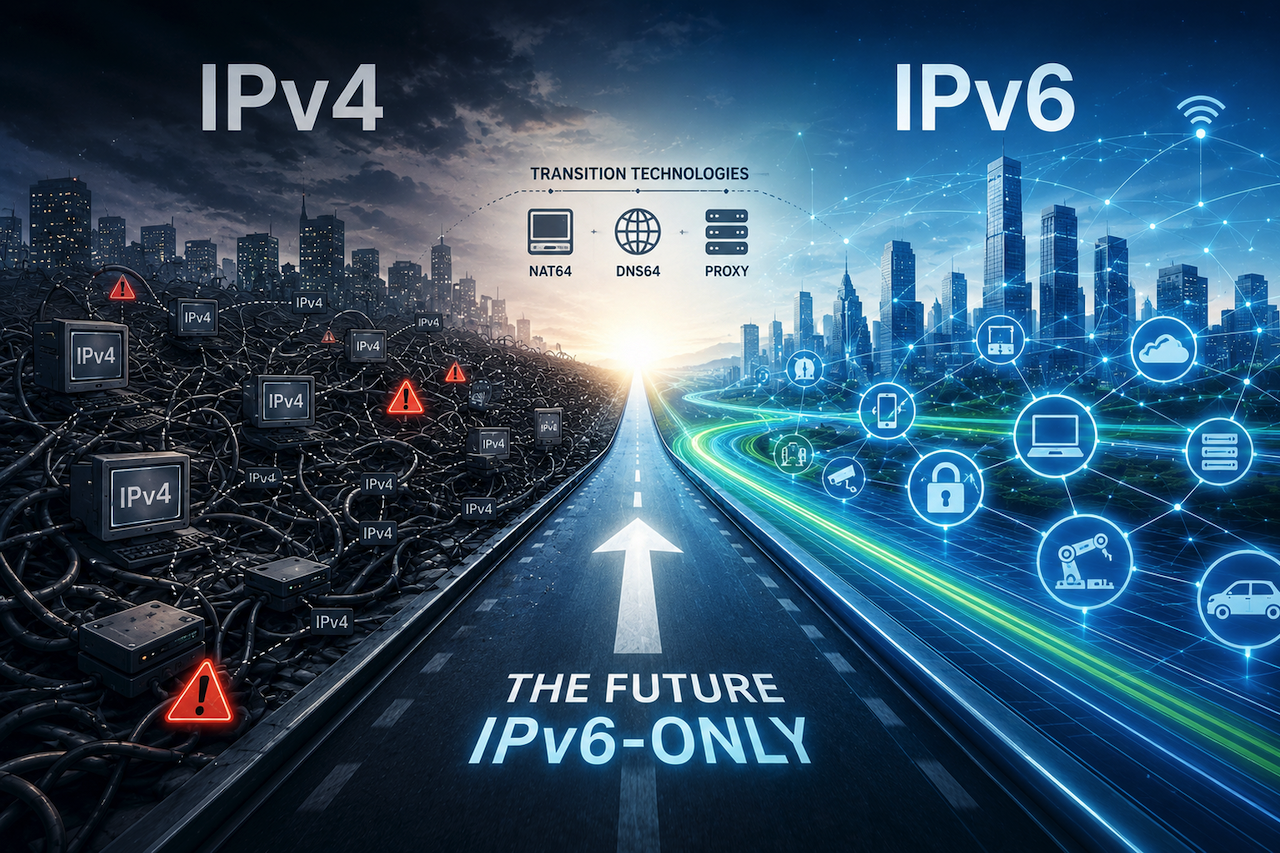
As IPv6 adoption continues to rise, many organizations are exploring IPv6-only network architectures, supplemented by transition technologies, to maintain connectivity with IPv4-only devices. This approach reduces the overhead associated with running two protocols simultaneously and simplifies network management.
Transition technologies such as Network Address Translation 64 (NAT64), DNS64, and proxy mechanisms enable IPv6-only networks to access IPv4 content seamlessly. These tools allow enterprises to phase out IPv4 infrastructure more aggressively without disrupting user experience or business operations. By eliminating the need to maintain dual protocol stacks, organizations can reduce complexity, improve security posture, and optimize network performance.
The shift towards IPv6-only networks is supported by data showing that, in some regions, IPv6 traffic accounts for over 50% of total internet traffic. For example, Google’s IPv6 statistics report that IPv6 adoption in the United States hovers around 48% as of early 2024. This trend is mirrored globally, with countries like Belgium, India, and Germany reporting IPv6 adoption rates exceeding 50%.
Moreover, the rise of mobile networks and Internet of Things (IoT) devices, which require vast address spaces, has accelerated the transition to IPv6. IPv6-only networks simplify addressing and routing for billions of connected devices, paving the way for innovations in smart cities, autonomous vehicles, and industrial automation.
Security Implications Beyond Dual-Stack
Maintaining dual-stack networks can inadvertently increase security risks. Each protocol stack requires its own set of security policies and controls. Overlapping configurations may lead to gaps that attackers can exploit, especially if security teams lack expertise in IPv6 security nuances.
Conversely, IPv6-only networks can be designed with a more streamlined security posture, reducing complexity and potential vulnerabilities. IPv6 includes improved features such as mandatory support for IPsec, which can enhance end-to-end security by enabling encrypted and authenticated communication at the network layer. However, these benefits are only fully realized when networks move beyond dual-stack and embrace IPv6-native architectures.
Organizations must also consider that many legacy security appliances and software may not fully support IPv6, resulting in a dual-stack environment that is a patchwork of old and new technologies. This inconsistency can lead to blind spots in network defense, increasing the risk of cyberattacks.
Additionally, IPv6’s vast address space complicates traditional network scanning and monitoring techniques, requiring updated security tools and methodologies. By adopting IPv6-only strategies, organizations can implement uniform security policies and leverage modern tools designed specifically for IPv6 environments, enhancing overall network resilience.
Preparing for the Future: Strategies Beyond Dual-Stack
To move past the limitations of dual-stack, organizations should prioritize comprehensive strategies that embrace IPv6-native designs and robust transition mechanisms. Key steps include:
- IPv6-Only Network Design: Begin building infrastructure that natively supports IPv6 while using transition technologies such as NAT64 and DNS64 to handle IPv4 legacy systems. This approach simplifies network management and reduces operational overhead.
- Comprehensive Training: Equip IT teams with the skills needed to manage IPv6 environments effectively. Many network professionals are more familiar with IPv4, so targeted training is essential for smooth adoption and ongoing support.
- Security Overhaul: Update security frameworks to support IPv6 features and eliminate dual-stack vulnerabilities. This includes deploying IPv6-capable firewalls, intrusion detection systems, and security information and event management (SIEM) tools.
- Vendor Collaboration: Work closely with network vendors and service providers who understand the complexities of modern IP transition strategies. Ensure that hardware and software solutions are IPv6-ready and optimized for performance.
- Phased Migration Plans: Develop detailed migration roadmaps that prioritize critical systems and services for IPv6 transition while minimizing disruption to business operations.
As the internet landscape shifts, businesses can no longer afford to view dual-stack as a long-term solution. Embracing IPv6-native designs combined with robust transition mechanisms will ensure scalability, security, and performance. Organizations that proactively adopt these strategies will be better positioned to capitalize on emerging technologies and maintain a competitive advantage.
Conclusion
The dual-stack approach served as a valuable stepping stone toward IPv6 adoption, but it is no longer sufficient for the demands of today’s connected world. Increased complexity, security risks, and operational inefficiencies make it clear that organizations must adopt more forward-thinking strategies.
Investing in IPv6-only architectures and comprehensive transition technologies is essential for future-proofing networks and maintaining a competitive advantage in an increasingly digital economy. Organizations that proactively modernize their network infrastructure will be better positioned to support long-term scalability, security, and performance.
The transition beyond dual-stack is not merely a technical upgrade; it is a strategic imperative. Organizations that embrace this change will unlock greater network efficiency, enhanced security, and the flexibility needed to support the innovation-driven demands of tomorrow’s internet.
Featured Image generated by ChatGPT.
Share this post
Leave a comment
All comments are moderated. Spammy and bot submitted comments are deleted. Please submit the comments that are helpful to others, and we'll approve your comments. A comment that includes outbound link will only be approved if the content is relevant to the topic, and has some value to our readers.
Comments (0)
No comment