
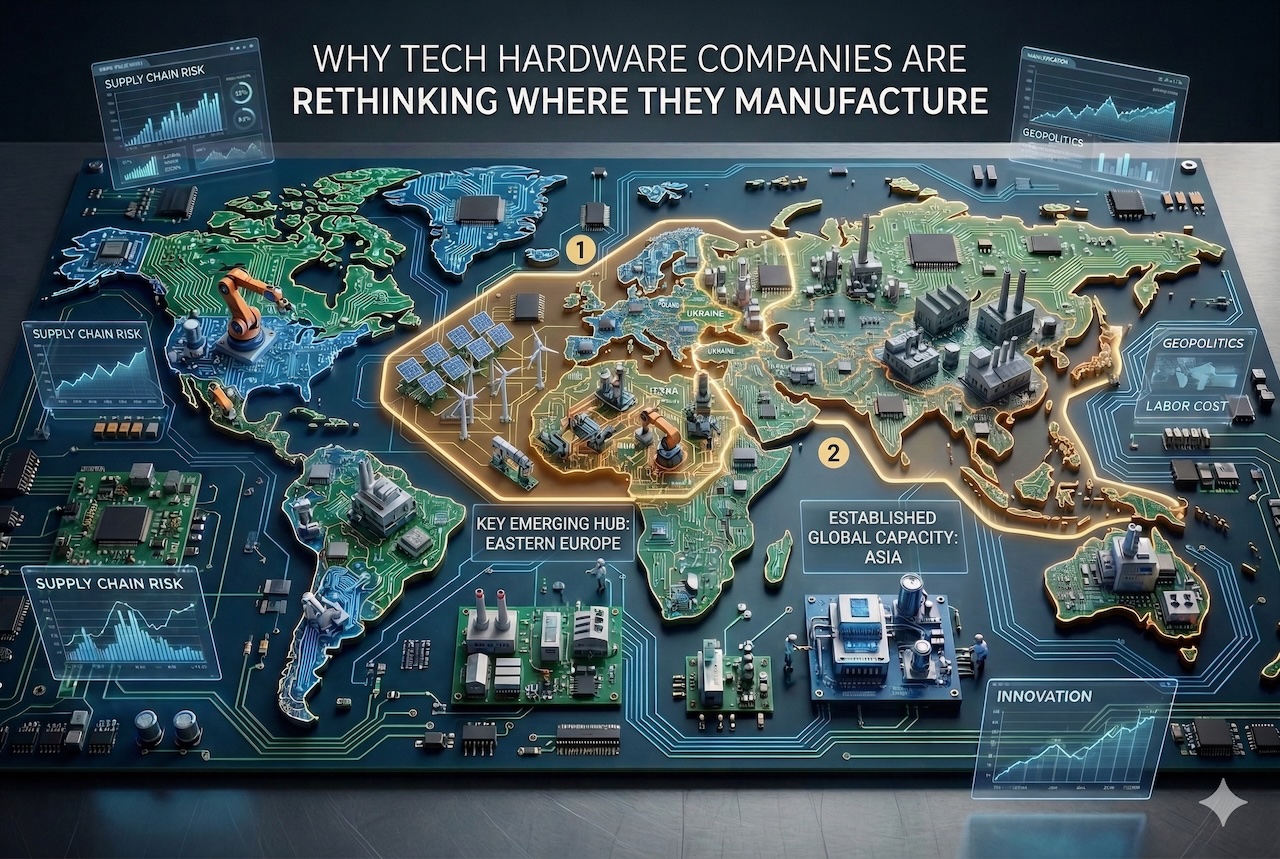
It is a quiet shift occurring in the global electronics supply chain—and Eastern Europe is at the center of it. While much of the conversation around hardware manufacturing has traditionally pointed to Asia, more firms are considering their own countries as a source of production. Or at least still nearer to their European headquarters. And what they are discovering is a territory that is punching far above its weight.
So what's driving this shift? It's not just one thing. It is a combination of things that, when combined, make a real compelling case.
Talented Employees at Competitive Prices
Eastern Europe has been known to have a culture of engineering. There are good university systems in countries such as Romania, Lithuania, Poland and Hungary that have a strong educational background of technical education.
- Skilled Labor Pool: These schools produce electrical engineers, embedded systems developers, and precision manufacturing specialists who are ready to work.
- Cost Efficiency: They work in such numbers as still allow Western European countries to support cost structures that they are merely unable to compete with.
For companies sourcing custom wiring harnesses, this matters a lot. The assembly and design of harnesses is manual. It involves care of detail, skilled technicians and quality management. Eastern Europe provides all three and usually at a quarter of the price of outsourcing to Western vendors, or having to cut Asian supply chains with long lead times.
Geography That Actually Works in Your Favor
Distance is not the only logistics issue, but a risk factor. When you manufacture in the other half of the globe you are subjected to the congestion in the ports, delays in shipping, challenges in customs, and even a hundred other factors that can foil a product launch.
Most of the countries in Eastern Europe are in the single market structure of the EU, and even those that are not EU members, due to the well established trade corridors, the movement of goods in the region is predictable. To businesses based in Germany, France, the Netherlands, or the UK, the time that it takes to ship goods is not measured in weeks, but rather in days.
Such responsiveness has an impact on:
- The way that you plan inventory.
- The way you respond to last-minute engineering changes.
- The way the company responds to surges in demand on the client side.
A Region Built for Electronics Manufacturing
It is worth knowing that it is not a new story. Eastern European countries have been developing the electronics manufacturing capacity over the decades. It is only the magnitude, the complexity and the ecosystem surrounding it that has changed.
PCB Assembly in Romania
Take PCB assembly in Romania as an example. Romanian manufacturers have invested a lot in automated SMT lines, cleanroom facilities and testing facilities that are of high quality standards meeting the strictest of European quality standards such as ISO certifications and IPC standards. You end up with a production quality that is relatively on par with the best work in Asian plants, and even the additional benefit of EU control and lessened travel time to audit quality.
PCB Assembly in Lithuania
Similarly, PCB assembly in Lithuania has emerged as a hub for high-mix, low-to-medium volume production—the kind that's often tricky to run cost-effectively in mass-production-oriented Asian facilities. The manufacturers of Lithuania are generally agile, talkative, and knowledgeable of the demands of European customers, who appreciate transparency and flexibility equally to its price.
Supply Chain Depth and Component Availability
The level of the supporting infrastructure is one of the things that do not receive as much attention. It's not just about assembly. It is in terms of what is done before and after:
- Component sourcing
- Component kiting
- Warehousing and testing
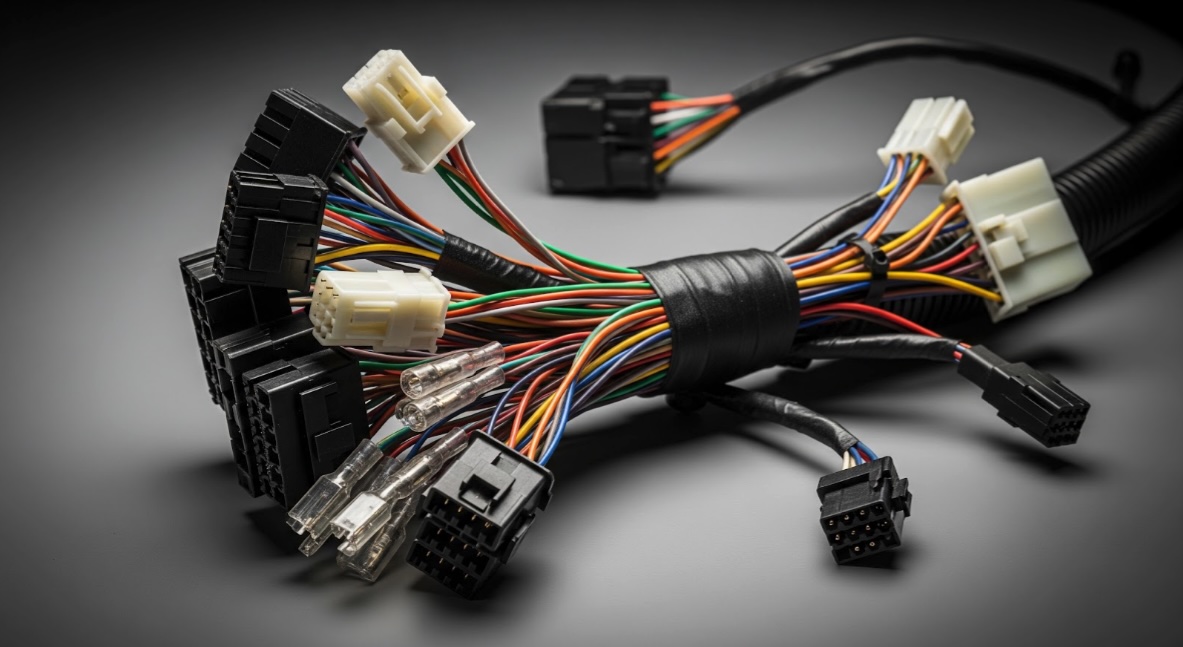
This is where wire harness manufacturing operations across the region really shine. Several of these facilities provide end-to-end design review, component procurement, production, and delivery under a single workflow. In addition to traditional harness production, some manufacturers also support advanced robotic wiring systems, including cable assemblies for robots used in industrial automation and smart manufacturing environments.
And on the component side, SMD stocking—maintaining ready inventory of surface-mount devices—has become a standard offering at many facilities in the region. In a market where parts are either the end or the be all of a timetable, having a partner who stocks early and also makes plans ahead is worth more than that may appear.
European Standards and Quality Culture
Something more difficult to measure here, but to be named, is the culture of quality. European manufacturers (be it at Stuttgart or Krakow) were more likely to run in a system where compliance, documentation and traceability are the norms that clients in controlled industries have grown to rely on.
This is not optional in the case of industries such as:
- Medical equipment
- Automotive electronics
- Industrial controls
- Aerospace
The collaboration with manufacturers of Eastern Europe implies collaboration within a common regulatory language. Not foreign concepts are CE marking, RoHS compliance, and REACH regulations. They are expectations of the bottom line.
A Smart Strategic Move, Not a Compromise
The previous assumption was that the decision between Eastern Europe and Asia was associated with trade-offs, perhaps reduced volume capacity, or less access to some components. That calculus has changed. The region has matured. Automation, talent improvement, and supply chain infrastructure investment have reduced those gaps significantly, whereas geographic and regulatory advantages have only become stronger.
For hardware companies designing and producing in Europe, Eastern Europe increasingly isn’t a plan B. It is a truly intelligent plan A—especially when it comes to runs that need flexibility, quality checks and having a manufacturing partner who can be contacted in case of a change of heart by your roadmap.
Wrapping Up
The emergence of Eastern Europe as a tech hardware manufacturer is indicative of something: a region that has developed and developed real capacity over the years, combined with structural benefits that simply unitarize the European-oriented supply chains. There is PCB assembly, wiring harness, SMD components, and complete system, the infrastructure is present. The talent is there. And increasingly, so are the companies who’ve figured this out ahead of the curve.
When you are considering manufacturing partners and you have not taken serious consideration to Eastern Europe, then it is worthwhile. This is because you may discover that what you believed to be a regional option is the best among them all globally.
Featured Image generated by Google Gemini.
Share this post
Leave a comment
All comments are moderated. Spammy and bot submitted comments are deleted. Please submit the comments that are helpful to others, and we'll approve your comments. A comment that includes outbound link will only be approved if the content is relevant to the topic, and has some value to our readers.
Comments (0)
No comment