
The Rising Threat to Residential Businesses
In recent years, Distributed Denial of Service (DDoS) attacks have undergone a notable evolution in their targets. While large corporations and enterprises were once the primary targets, attackers have increasingly shifted their focus to residential businesses. This change reflects a growing recognition among cybercriminals that smaller, home-based operations often present easier targets due to their comparatively weaker cybersecurity defenses. Residential businesses encompass a broad spectrum of ventures, including freelancers, consultants, small online retailers, and service teams operating from home. These entities are now prime targets for attackers seeking to disrupt operations, steal sensitive data, or extort ransom payments.
The surge in attacks against smaller businesses is alarming. Recent data indicates that the frequency of DDoS attacks targeting small and medium-sized businesses (SMBs) has increased by over 60% in the past two years. This sharp rise underscores the urgent need for residential businesses to strengthen their cybersecurity posture. Some businesses work with managed service teams such as T3 MSP to help support areas like threat monitoring, network protection, and incident response planning.
Why Residential Businesses Are Vulnerable
Several factors contribute to the heightened vulnerability of residential businesses to DDoS attacks. First and foremost, many of these businesses rely on consumer-grade internet connections and networking equipment. Unlike commercial-grade systems, consumer devices often lack advanced security features such as intrusion detection, traffic filtering, and automated threat mitigation. This deficiency leaves residential businesses exposed to a wide range of cyber threats.
Another critical vulnerability stems from the decentralized and informal nature of many home-based operations. Owners and employees frequently use personal devices and home networks, which may not be adequately secured or monitored. The use of shared devices, unsecured Wi-Fi, and outdated software opens multiple entry points for attackers. Moreover, residential businesses often operate within tight budget constraints, limiting their ability to invest in sophisticated cybersecurity infrastructure or hire dedicated IT personnel.
Given these circumstances, expert support often becomes necessary for residential businesses with limited internal IT resources. Some organizations work with teams such as 24x7 IT Solutions to help manage areas like cybersecurity monitoring, network protection, and ongoing IT support related to DDoS and other cyber threats.
The Impact of DDoS Attacks on Residential Businesses
Understanding the consequences of DDoS attacks is vital for residential businesses. These attacks function by overwhelming a network or website with an excessive volume of internet traffic, effectively rendering services unavailable to legitimate users. Even brief periods of downtime can have severe repercussions for home-based businesses, causing financial losses, damaging reputation, and driving away customers.
According to research, the average cost of downtime resulting from DDoS attacks for small businesses can exceed $100,000 per incident. Furthermore, nearly 43% of small businesses that experience a cyberattack never fully recover, often closing within six months. These statistics highlight the existential threat that DDoS attacks pose to residential businesses and underscore the importance of proactive cybersecurity measures.
Beyond immediate financial losses, DDoS incidents can erode customer trust and damage brand reputation. For businesses that rely heavily on their online presence, such as e-commerce retailers or service teams, extended outages can result in lost sales and long-term customer attrition. Additionally, the costs associated with incident response, forensic investigations, and regulatory compliance can further strain limited resources.
Emerging Trends in DDoS Attacks Targeting Residential Businesses
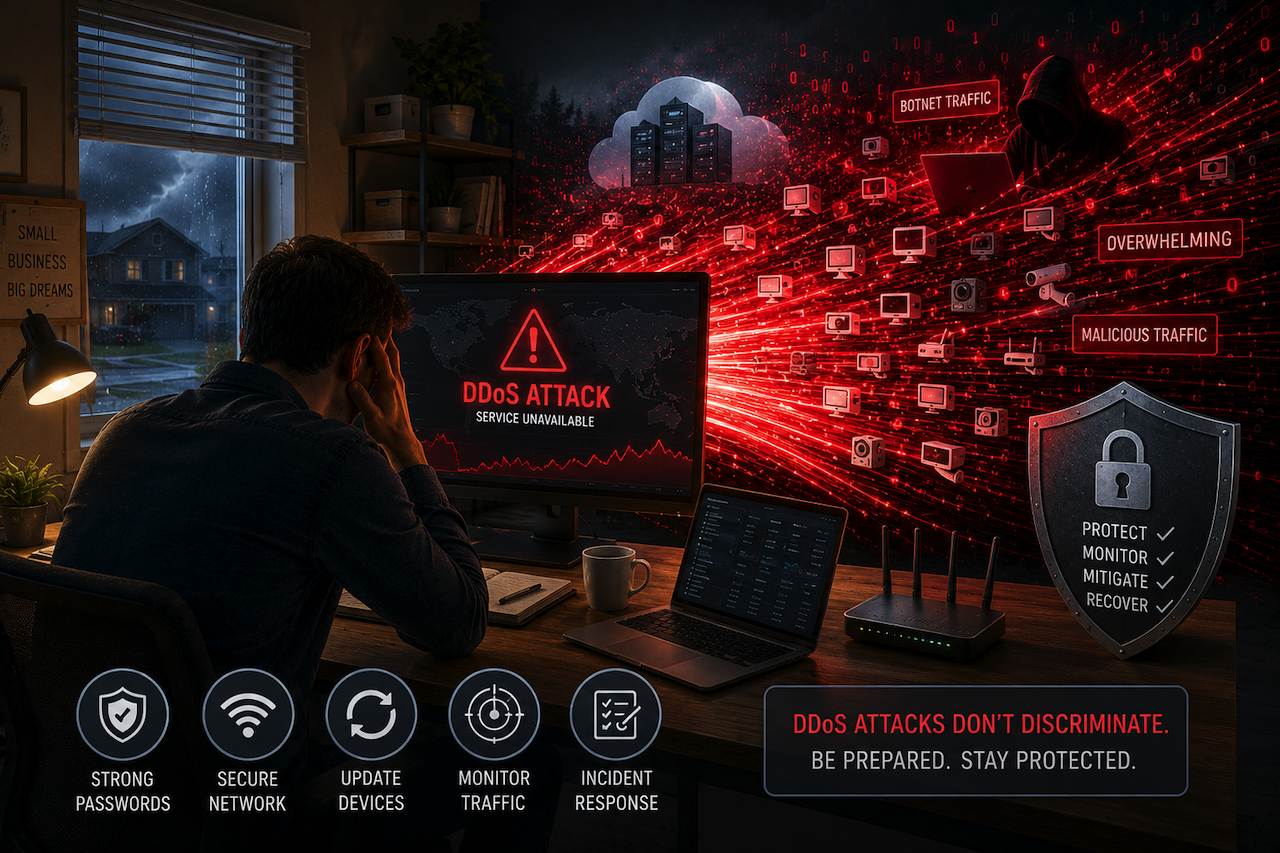
Cybercriminals continuously refine their tactics to exploit the specific vulnerabilities of residential businesses. One notable trend is the increasing use of botnets composed of Internet of Things (IoT) devices commonly found in homes. These include smart cameras, thermostats, routers, and other connected gadgets. Many such devices are shipped with default passwords or run outdated firmware, making them easy targets for hijacking. Once compromised, these devices can be leveraged to launch large-scale, coordinated DDoS attacks that overwhelm the victim’s network.
Another emerging trend involves targeting cloud-based services widely adopted by residential businesses for hosting websites, applications, and data storage. Attackers recognize that many small businesses depend heavily on cloud platforms for their day-to-day operations and aim to disrupt these critical services. By incapacitating cloud resources, cybercriminals can cause widespread operational disruption without directly breaching the business’s local network.
To counter these sophisticated and evolving threats, residential businesses must adopt multi-layered defense strategies. These include continuous network monitoring to detect unusual traffic patterns, traffic filtering to block malicious requests, and rapid incident response to minimize downtime. Implementing these measures can help businesses strengthen their defenses against DDoS attacks without requiring large-scale in-house infrastructure investments.
Proactive Measures for Residential Businesses
Preventing and mitigating DDoS attacks requires a combination of technological solutions, policy implementation, and user education. Residential businesses should begin by ensuring that all devices connected to their networks, especially IoT gadgets, have the latest firmware updates installed and are protected by strong, unique passwords. Default credentials should be changed immediately to reduce the risk of compromise.
Regular security assessments and vulnerability scans can help identify potential weaknesses before attackers exploit them. Implementing traffic filtering and rate limiting at the network perimeter can reduce the volume of malicious traffic, thereby mitigating the impact of an attack. Additionally, establishing a clear incident response plan is crucial for minimizing operational disruption and facilitating a swift recovery in the event of an attack.
Access to resources such as continuous monitoring, real-time threat intelligence, and rapid mitigation support can help residential businesses strengthen their cybersecurity posture. These capabilities enable smaller businesses to utilize security technologies and expertise that may otherwise be too costly or complex to manage internally.
The Role of Education and Awareness
In addition to technological defenses, fostering a culture of cybersecurity awareness among business owners and employees is essential. Many DDoS attacks exploit human factors such as weak passwords, phishing, or inadvertent exposure of network credentials. Training residential business operators on cybersecurity best practices, including recognizing suspicious emails, securing home networks, and adopting secure authentication methods, can significantly reduce the risk of successful attacks.
Moreover, staying informed about emerging threats and new attack vectors enables businesses to adapt their security strategies proactively. Industry reports, cybersecurity news outlets, and government advisories are valuable sources of information that can help residential businesses maintain vigilance in an ever-changing threat landscape.
Looking Ahead: The Future of Cybersecurity for Residential Businesses
As the digital landscape continues to evolve, so too will the tactics employed by cybercriminals. The proliferation of connected devices, increasing reliance on cloud services, and the growing sophistication of attack tools will continue to challenge residential businesses. To keep pace, these businesses must remain vigilant and adaptable, embracing emerging technologies such as artificial intelligence and machine learning. These tools can enhance threat detection, automate response actions, and provide predictive insights to preempt attacks.
Investment in cybersecurity is no longer a luxury for residential businesses; it is a necessity for survival and growth in an interconnected world. By understanding the risks, adopting industry best practices, and leveraging expert support, residential businesses can effectively defend against the growing threat of DDoS attacks and other cyber incidents.
Conclusion
In conclusion, the rise of residential businesses as primary targets for DDoS attacks reflects broader shifts in the cyber threat landscape. Awareness, preparedness, and proactive defense are essential to safeguarding these vital components of the modern economy. Maintaining an ongoing commitment to cybersecurity and implementing strong defensive measures can help residential businesses operate more securely despite the growing challenges posed by cyber threats.
Featured Image generated by ChatGPT.
Share this post
Leave a comment
All comments are moderated. Spammy and bot submitted comments are deleted. Please submit the comments that are helpful to others, and we'll approve your comments. A comment that includes outbound link will only be approved if the content is relevant to the topic, and has some value to our readers.
Comments (0)
No comment