
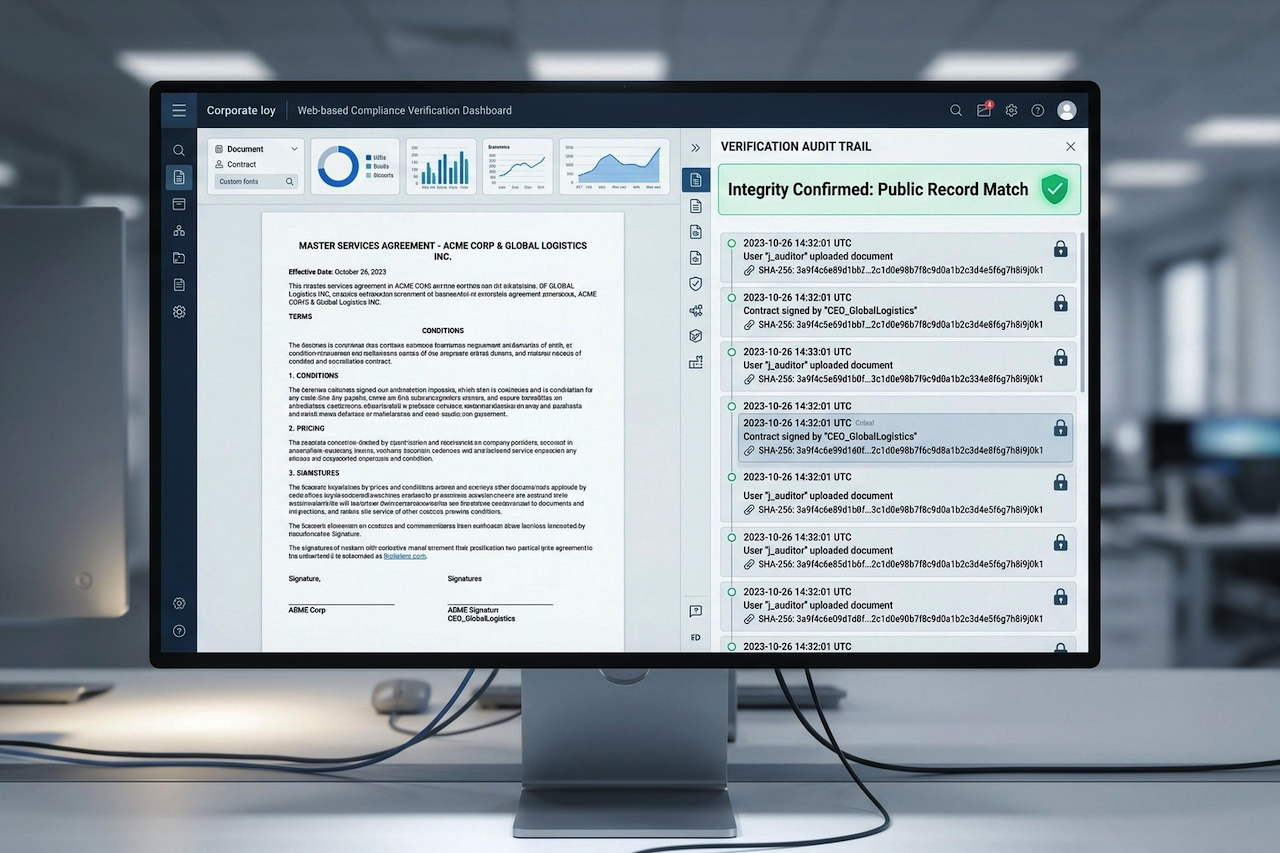
Most organizations verify a signed PDF the same way they have for more than a decade. They open it in Adobe Acrobat, see a green checkmark, and move on to routine paperwork; that is fine. For anything that has to survive an audit, a regulator's review, or a courtroom, the habit quietly concentrates a great deal of trust in one company's software. The verification is only ever as reliable as your continued access to that single application and your willingness to take its word for the result.
The Growing Risk of Document Fraud
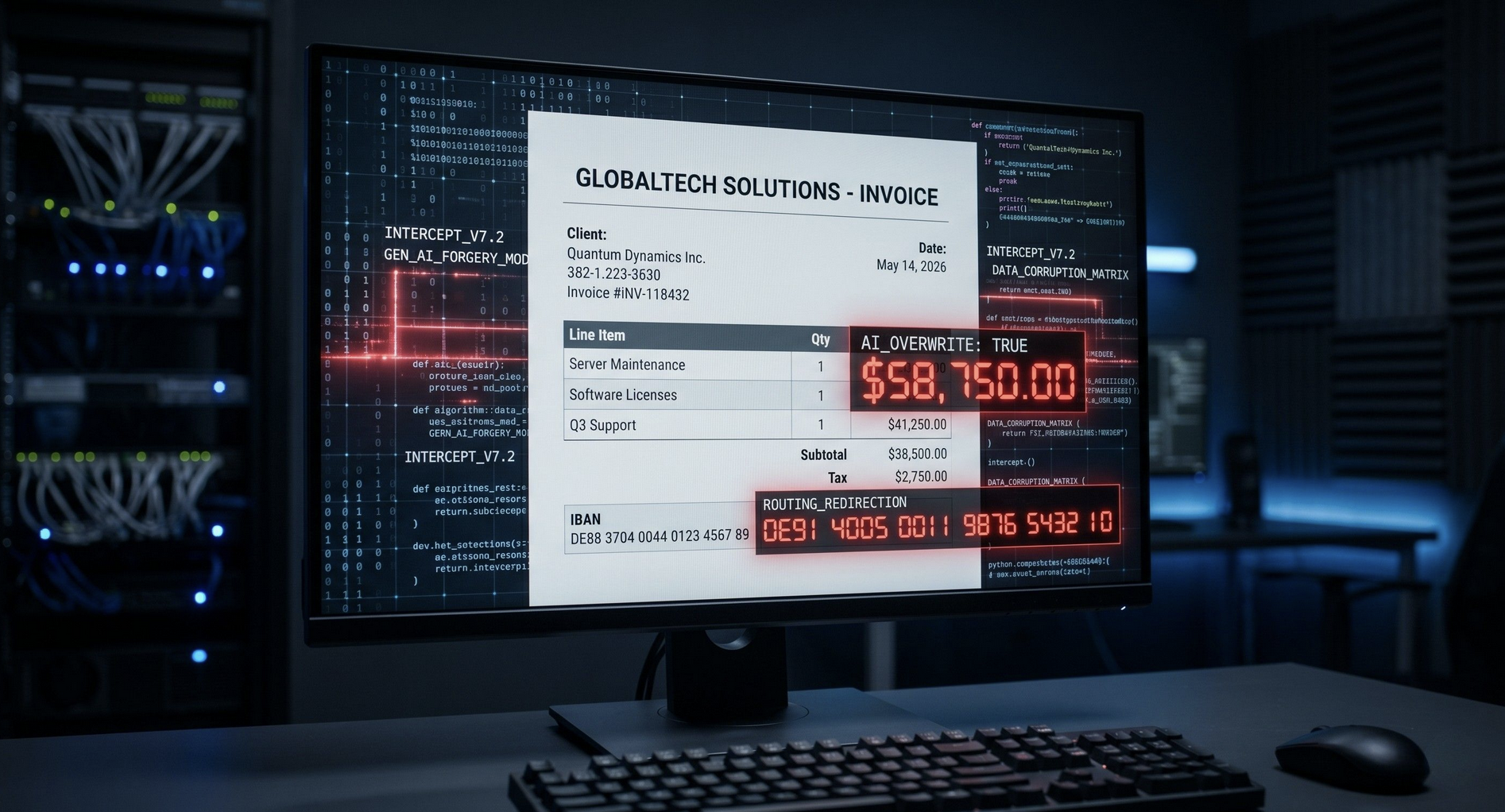
That assumption is getting more expensive to hold because the documents themselves are under sustained attack. The Association of Financial Professionals, cited in the Better Business Bureau's 2025 business scam study, found that business email compromise, which typically relies on a forged or altered invoice, accounted for 65% of the fraud reports it received. Losses reported to the FBI's Internet Crime Complaint Center reached a record $20.9 billion in 2025, a 26% rise on the year before. The threat is not theoretical, and it is not shrinking.
What has changed is how cheap it has become to forge convincingly. Fraud analysts at Persona and Inscribe report that generative AI has made document tampering routine. Real bank statements and invoices are altered by inserting transactions, changing totals, and swapping names, then submitted as authentic. Metadata that might once have given the edit away is wiped or rewritten, and a statement supposedly issued in 2024 turns out to have been created in 2025. Confirming that a document is what it claims to be is no longer a clerical step. It is an adversarial one.
The scale of that shift is now measurable. Sumsub reported that synthetic identity-document fraud rose more than 300% in 2025 compared with the first quarter of 2024, while deepfake fraud attempts jumped by an order of magnitude. Researchers generated a synthetic passport using a mainstream AI model in under five minutes, making it visually indistinguishable from a genuine one. More than one in ten companies now report encountering deepfake or AI-generated documents in fraud attempts, and such fakes already account for roughly one in twenty identity-verification failures. The telltale signs that a trained eye once relied on are gone.
How Modern PDF Signature Verification Works
The encouraging part is that the standards behind open PDF signature verification already exist. Modern digital signature standards can embed the signing certificate, timestamp, and revocation data directly within a PDF file. A document signed this way remains readable in standard PDF viewers and can be validated years later without relying on an external service. The cryptographic methods used to verify who signed a document and whether it has been modified after signing are mature, widely adopted, and well documented.
Digital signatures are commonly implemented at different assurance levels. Basic signatures may be as simple as an electronic acknowledgment, while higher-assurance signatures are uniquely linked to both the signer and the document and are supported by trusted certificates. These higher-assurance signatures are particularly valuable in situations involving contracts, regulatory compliance, financial transactions, and other scenarios where independent verification and document integrity are critical.
Why Traditional Verification Falls Short
The weak point, then, is not the mathematics. It is where the checking happens. If verification occurs only within a single vendor's product, every party seeking assurance must trust that product and have access to it. An external auditor, a counterparty's legal team, or a regulator should each be able to confirm a signature on their own terms. A control that cannot be reproduced without a specific paid application is closer to a dependency than a control, and dependencies fail at the worst possible moments.
The Need for Independent Verification
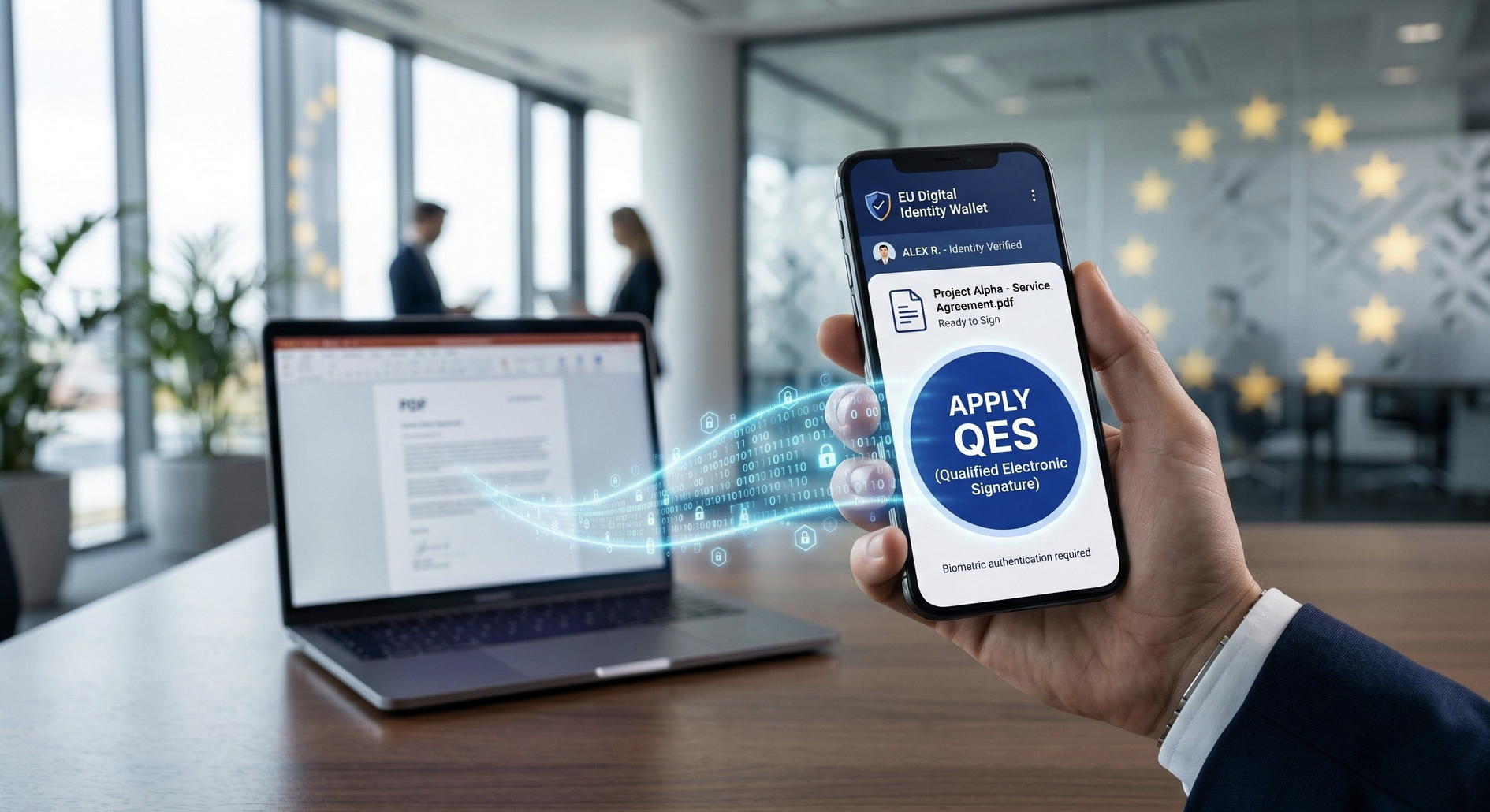
The ways in which digital signatures are created and used continue to expand, making a single-application verification approach increasingly difficult to justify. Organizations now rely on a variety of signing methods, including cloud-based signature platforms, mobile devices, digital identity solutions, and traditional certificate-based systems. As digital signature adoption grows across industries, multiple signing technologies and workflows are often used simultaneously. As a result, the ability to independently verify signatures across different platforms and environments is becoming increasingly important.
Approaches to Independent Document Verification
There are several approaches organizations can use to support independent document verification without replacing their existing signing workflows. Some platforms, such as Chaindoc, use cryptographic hashes, timestamping mechanisms, and publicly verifiable records to help demonstrate document integrity over time. In these models, authorized parties can verify that a document has not been altered since signing without necessarily relying on a specific software application or private database. The goal is to make verification more transparent, portable, and reproducible across different systems and stakeholders.
In practice, independence shows up in the unglamorous moments. A procurement lead forwards a signed master agreement to an external auditor, who checks the hash against the public record and confirms within seconds that the file has not changed since signing, without installing anything or requesting access from the vendor. A bank's risk team validates a counterparty's signature without raising a support ticket. None of these parties has to trust the platform that produced the signature, because the proof travels with the document and can be checked by anyone who holds it. That is the gap between a verifiable record and a vendor's assurance.
Questions Compliance Teams Should Ask
For compliance teams deciding what "verified" should mean in 2026, a few questions separate a durable process from a fragile one. Can a third party confirm a signature without using our software or logging into our account? Does the proof survive the vendor changing its terms, raising its prices, or shutting down? If a regulator asks us to show that a contract was not altered after signing, can we produce evidence that they can independently reproduce, or only a screenshot of a checkmark? Can the verification outlive the version of the application that produced it?
Building Verification Into Compliance Workflows
The cheapest place to apply this is at intake, before a loss is on the books. A forged invoice caught when it enters accounts payable costs nothing; the same invoice caught after the wire has left costs the whole payment plus the investigation. Building verification into the moment documents arrive, in vendor onboarding, KYC, and contract intake, turns it from a forensic exercise after the fact into a control that runs by default.
Those questions are not academic. The cost of getting verification wrong is not the price of the software; it is the contract that cannot be enforced, the audit finding that cannot be answered, and the fraudulent invoice that cleared because a checkmark looked right. A verification stack that fails any of the questions above is carrying a hidden dependency exactly where it believes it has a safeguard.
Conclusion
None of this means ripping Acrobat out of the building. It means recognizing that closed verification is a single point of failure, and that the standards and infrastructure to remove it are now in place. The organizations that treat independent verifiability as a requirement rather than a convenience will be the ones that can still prove what they signed when it actually matters.
Disclaimer
This article is provided for informational and educational purposes only and should not be construed as legal, financial, compliance, or professional advice. Any references to third-party products, services, platforms, or websites are included solely for informational purposes and do not constitute an endorsement or recommendation by IPLocation.net. Readers should conduct their own research and consult qualified professionals where appropriate before making decisions based on the information presented. IPLocation.net is not responsible for the content, accuracy, availability, security, policies, or practices of any third-party websites linked from this article. Accessing and using external websites is done at the reader's own risk.
Featured Image generated by ChatGPT.
Share this post
Leave a comment
All comments are moderated. Spammy and bot submitted comments are deleted. Please submit the comments that are helpful to others, and we'll approve your comments. A comment that includes outbound link will only be approved if the content is relevant to the topic, and has some value to our readers.
Comments (0)
No comment