
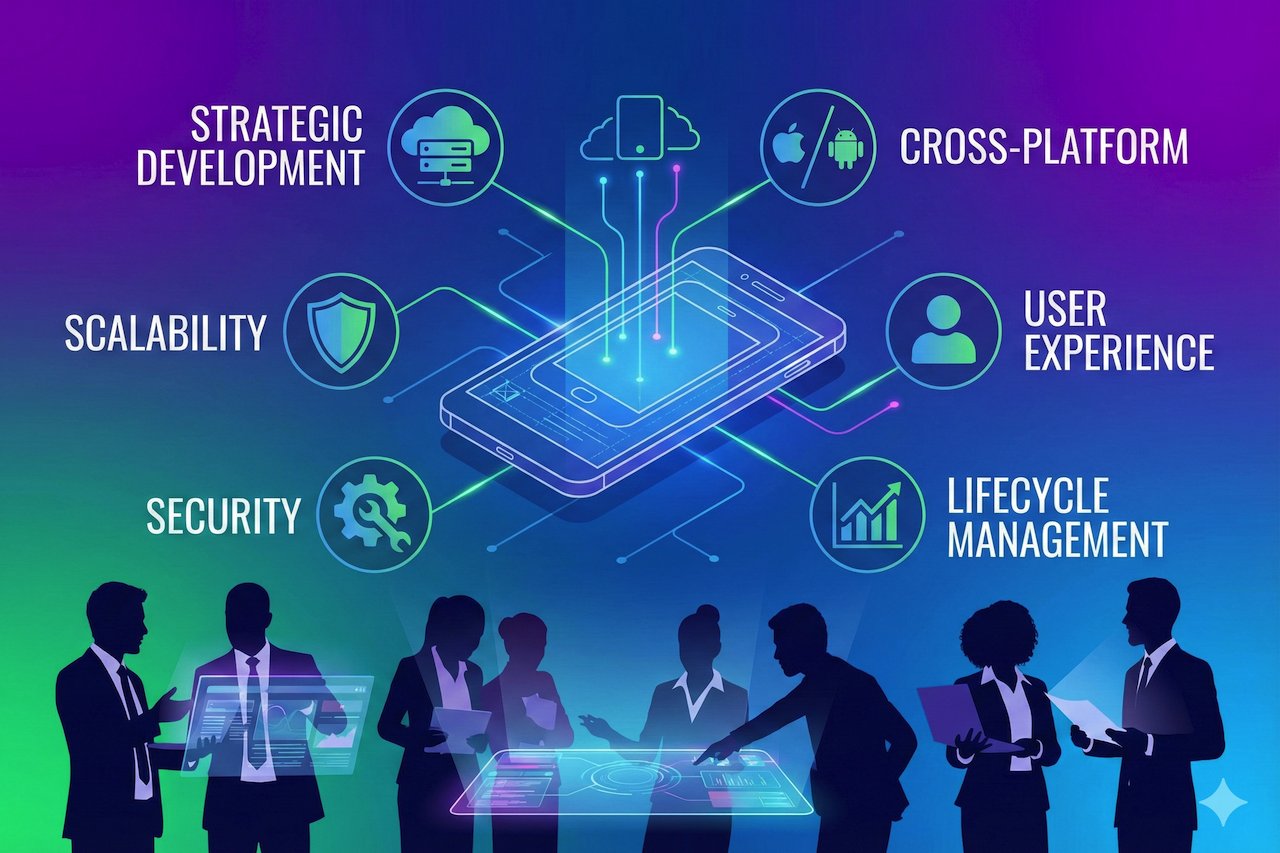
Across industries, apps are used to engage users, streamline workflows, and support digital services. As a result, decisions around mobile app development, often involving collaboration with a mobile app development company, are no longer treated as isolated technical tasks but as long-term strategic choices.
Rather than focusing solely on launch timelines, businesses now evaluate how applications will scale, adapt, and remain secure over time. This shift has led to a more thoughtful approach to development, emphasizing sustainability, usability, and alignment with broader business goals.
What Modern Mobile App Development Involves
Mobile app development today extends beyond writing functional code. It involves coordinating multiple disciplines, including system architecture, user experience design, performance optimization, and long-term maintenance planning.
Key considerations often include:
- Clear definition of user needs and workflows
- Scalable technical foundations
- Maintainable codebases
- Ongoing compatibility with platform updates
Applications that are built with these principles in mind tend to perform more reliably as usage grows.
The Importance of Developer Expertise
Effective mobile applications are shaped by developers who understand both technical constraints and real-world usage patterns. Beyond platform knowledge, experienced developers anticipate issues related to performance, security, and maintainability.
Industry Awareness
Different sectors introduce different requirements, such as regulatory constraints, data sensitivity, or high availability demands. Development decisions that account for these factors early often reduce rework and operational risk later.
Development Practices That Support Long-Term Success
Modern Technology Choices
Current development environments favor modular architectures, cloud-based services, and well-supported frameworks. These choices help applications evolve without requiring extensive redesigns as requirements change.
Iterative and Transparent Workflows
Iterative development models support incremental progress and early feedback. This reduces the risk of late-stage changes and helps ensure the application aligns with intended outcomes throughout development.
Platform Considerations: iOS and Android
Supporting multiple platforms requires thoughtful planning rather than identical implementations.
iOS Development Considerations
iOS environments prioritize consistency, security, and performance. Applications benefit from strict testing and careful adherence to platform guidelines to ensure stability over time.
Android Development Considerations
Android ecosystems involve a wider range of devices and configurations. Development approaches often emphasize adaptability, performance optimization, and extensive compatibility testing.
End-to-End Development Thinking
Many organizations favor a holistic view of app development that accounts for the full lifecycle, including:
- Initial planning and technical feasibility
- Interface and experience design
- Development and testing
- Deployment and ongoing updates
This lifecycle perspective reduces fragmentation and supports continuity as applications mature.
Security, Stability, and Quality Assurance
Security and data integrity are foundational expectations for modern applications. Consistent testing, secure data handling, and proactive monitoring help protect users and maintain trust.
Quality assurance processes also support long-term stability by identifying performance issues and compatibility risks before they affect users.
How Businesses Evaluate Mobile App Development Efforts
Rather than focusing on speed alone, organizations increasingly evaluate success based on:
- Reliability and uptime
- Ease of future enhancements
- User satisfaction and engagement
- Predictable maintenance requirements
These factors often determine whether an application remains valuable beyond its initial release.
Conclusion
Mobile applications are now core operational assets rather than optional tools. Their effectiveness depends on thoughtful planning, sound technical decisions, and a clear understanding of how applications evolve over time. Whether teams work in-house or in collaboration with a mobile app development agency, prioritizing scalability, usability, and maintainability throughout the development process helps businesses build solutions that remain relevant and resilient as technology and user expectations continue to change.
Featured Image generated by Google Gemini.
Share this post
Leave a comment
All comments are moderated. Spammy and bot submitted comments are deleted. Please submit the comments that are helpful to others, and we'll approve your comments. A comment that includes outbound link will only be approved if the content is relevant to the topic, and has some value to our readers.
Comments (0)
No comment