
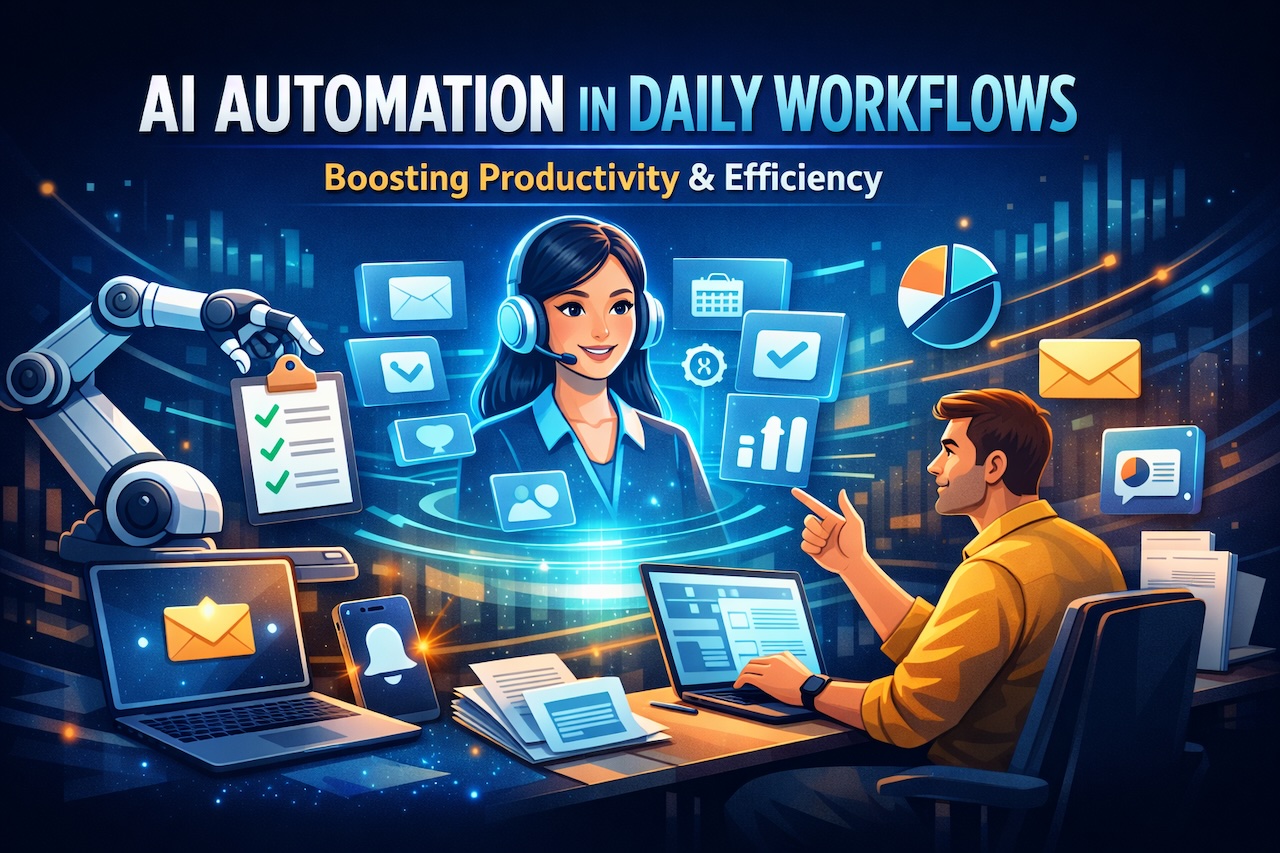
Artificial intelligence is gradually becoming part of everyday work. Instead of being limited to large systems or technical teams, AI is now used by individuals to manage tasks, organize information, and improve efficiency. One of the most practical developments is the use of AI agents and personal AI assistants.
Platforms are helping users bring AI into their daily routines without complex setups. The focus is simple: reduce manual effort and make workflows easier to manage.
Understanding AI Agents in Simple Terms
An AI agent is a system designed to perform tasks on behalf of a user. It can process input, make decisions, and execute actions based on defined goals.
Unlike traditional automation tools that follow fixed rules, AI agents can adapt based on context. This makes them useful for tasks such as:
- Managing repetitive actions
- Sorting and organizing data
- Handling communication tasks
- Monitoring workflows
- Assisting with decision-making
For someone managing multiple responsibilities, an AI agent acts like a support system that works in the background.
What Makes a Personal AI Assistant Useful
A personal AI assistant goes beyond task execution. It helps manage daily work in a more connected way. Instead of switching between tools, users can rely on a single system to handle different types of tasks.
A personal AI assistant can:
- Keep track of tasks and deadlines
- Summarize information quickly
- Organize files or notes
- Provide insights from data
- Help manage communication
This type of support becomes more valuable as workloads increase. It reduces the need to manually track everything.
How AI Tools Support Automation in Daily Workflows
Modern AI tools are designed to make automation accessible for everyday users. They allow individuals and teams to create workflows where routine tasks are handled automatically, without requiring complex setup or technical expertise.
Instead of spending time on repetitive work, users can implement systems that run in the background. For example, an AI agent can help organize data, respond to basic queries, and track ongoing processes with minimal manual input.
This approach reduces workload, improves efficiency, and ensures that processes remain consistent over time.
Real-World Applications of AI Automation
AI agents are flexible and can be used in different types of work environments. Here are some practical examples:
- Workflow Management
AI can track tasks, set reminders, and organize priorities. This helps users stay on schedule without constant manual updates. - Content and Information Handling
For writers, researchers, or marketers, AI can summarize content, organize ideas, and manage large amounts of information efficiently. - Communication Support
AI agents can handle basic responses, filter messages, and manage communication workflows. This saves time and improves response consistency. - Data Organization
Handling data manually can take time. AI can sort, analyze, and present data in a structured way, making it easier to use.
These use cases show how AI automation is becoming part of regular work rather than a separate process.
Benefits of Using AI in Daily Tasks
AI automation provides several practical advantages:
- Reduced manual effort: Routine tasks are handled automatically
- Better organization: Tasks and data are structured clearly
- Improved consistency: Processes follow the same logic every time
- Time efficiency: More time is available for important work
These benefits are especially useful for freelancers, remote workers, and small teams managing multiple tasks.
Why AI Automation Is Relevant for Modern Users
Many AI tools still require technical knowledge or complex setup, which can create a barrier for users looking for simple, practical solutions.
Modern AI solutions are increasingly focused on usability. They allow users to set up automation without advanced skills and are designed to integrate into existing workflows rather than replace them entirely.
If you are managing multiple tasks, using a personal AI assistant can help you stay organized, reduce manual effort, and streamline daily operations.
Getting Started with AI Automation
If you are new to AI tools, it’s best to start with small steps:
- Identify repetitive tasks in your workflow
- Choose one process to automate
- Monitor the results and adjust as needed
- Gradually expand automation to other areas
This approach helps you understand how AI fits into your work without overwhelming changes.
The Growing Role of AI in Everyday Work
AI is not replacing work; it is changing how work is managed. Instead of focusing on repetitive tasks, users can spend more time on planning, creativity, and decision-making.
AI agents and personal assistants are becoming tools that support productivity rather than replace it. As more people adopt these systems, workflows will continue to evolve.
Platforms reflect this shift by offering simple ways to integrate AI into daily routines.
Conclusion
AI automation is becoming a practical part of modern work. By using AI agents and personal AI assistants, users can manage tasks more efficiently and reduce manual effort.
Modern AI tools make it easier to bring these capabilities into everyday workflows without unnecessary complexity. Whether you are handling data, managing tasks, or organizing communication, AI can support and streamline your processes.
As technology continues to improve, using AI for daily work will become more common. Starting early with these tools can help build a more efficient, organized, and scalable workflow.
Featured Image generated by ChatGPT.
Share this post
Leave a comment
All comments are moderated. Spammy and bot submitted comments are deleted. Please submit the comments that are helpful to others, and we'll approve your comments. A comment that includes outbound link will only be approved if the content is relevant to the topic, and has some value to our readers.
Comments (0)
No comment