
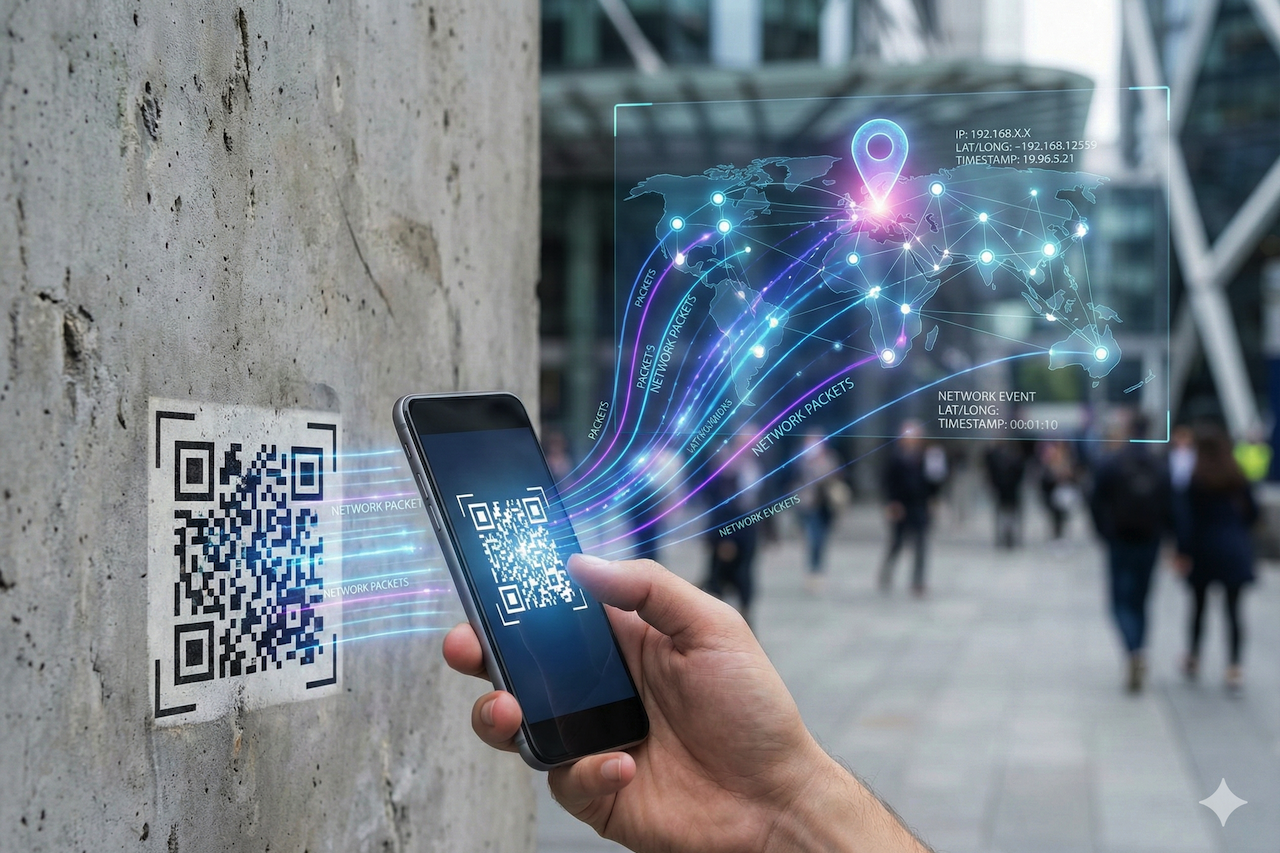
IP-based location data is most often discussed in the context of web traffic, APIs, and network diagnostics. Yet a growing share of meaningful location signals originates outside traditional browsing behavior, specifically from QR code scans that bridge physical environments and digital systems.
When QR codes are generated using a QR code generator and deployed across physical assets, signage, packaging, or documentation, each scan produces a small but valuable network event. For analysts working with IP and geolocation data, these events offer a distinct class of signals that differ from standard page visits in both intent and context.
This article examines QR scan data from a location and network-analysis perspective, focusing on what can and cannot be inferred responsibly.
QR Scans as Network Events
A QR scan typically results in:
- A DNS lookup
- An HTTP(S) request
- An IP address exposure
- A device/browser signature
From a networking standpoint, this is indistinguishable from many web requests. What makes it different is how the request is triggered.
Unlike background traffic or automated crawlers, QR scans represent:
- Deliberate physical interaction
- Proximity to a specific object or location
- Real-world timing aligned to human behavior
This makes QR-originated requests unusually high-signal.
Geolocation Characteristics of QR Traffic
QR scan traffic tends to show patterns distinct from typical web sessions:
1. Higher Spatial Precision
Because scans occur near the physical QR placement, coarse IP-based geolocation (city/region-level) often maps more closely to the real-world location than generic browsing traffic. This is especially relevant in:
- Retail environments
- Events and venues
- Logistics hubs
- Educational or industrial settings
2. Strong Temporal Correlation
QR scans frequently cluster around:
- Working hours
- Shift changes
- Event schedules
- Store opening times
From a time-series perspective, this improves signal alignment between human activity and network events.
3. Lower Bot Noise
QR scans are predominantly human-initiated. Bot traffic, prefetching, and automated crawlers play a much smaller role compared to standard web analytics datasets. This reduces the need for aggressive filtering and anomaly removal.
What IP Data Can (and Cannot) Tell You
From QR scan traffic, analysts can responsibly infer:
- Approximate geographic distribution
- ISP or network category
- Device class prevalence
- Regional engagement differences
However, essential limitations apply.
IP geolocation:
- Is approximate, not exact
- Should not be treated as identity
- Varies with mobile carriers and NAT
- Can be obscured by VPNs or proxies
QR scan data should therefore be interpreted statistically, not deterministically.
Privacy-Respectful Location Insights
One advantage of QR scan data is that it can remain privacy-preserving by design. When handled correctly:
- No personal identifiers are required
- No persistent tracking is needed
- No cross-site correlation occurs
This aligns well with modern regulatory expectations while still allowing meaningful analysis at aggregate levels. For location analysis, resolution should stop where identification begins.
Use Cases for Location-Aware QR Analytics
Regional Interaction Analysis
Compare scan frequency by country or city to identify:
- Regional adoption patterns
- Distribution effectiveness
- Physical placement performance
Network-Level Diagnostics
IP and ASN data from scans can help detect:
- Unusual routing paths
- Connectivity issues by region
- Mobile vs fixed-line differences
Event and Venue Monitoring
QR scans at events provide a clear geographic context with firm temporal boundaries, making them ideal for:
- Attendance validation
- Flow analysis
- Schedule impact measurement
Operational Attribution
In logistics or asset-heavy environments, QR scans can confirm:
- Presence at a location
- Interaction with physical assets
- Timing of operational steps
Without relying on invasive tracking.
Handling QR Location Data Securely
From a network and security standpoint, QR-derived IP data should be:
- Logged centrally
- Retained for defined periods
- Access-controlled
- Anonymized where possible
Correlation with other datasets should be deliberate and justified, not automatic. As with all telemetry, less is often more.
Dynamic Routing and Location Context
When QR destinations are dynamic, location context can be used to:
- Route users to regional resources
- Serve location-appropriate content
- Prevent cross-region access where required
This must be implemented server-side to avoid exposing logic or rules to the client.
Interpretation Requires Context
A QR scan in one city may represent:
- A customer interaction
- A technician's task
- A student accessing materials
- A traveler navigating signage
IP data alone cannot explain intent. It must be interpreted alongside physical placement, timing, and operational context.
Conclusion
QR scan data occupies a unique position in the location analytics landscape. It blends physical proximity with digital telemetry, producing network events that are both intentional and contextual.
For analysts working with IP and geolocation data, QR-originated traffic offers:
- Cleaner human signals
- Tighter spatial relevance
- Lower background noise
When handled responsibly, it becomes a valuable supplement to traditional web and network analytics, bridging the gap between where people are and what they do. The key is not collecting more data, but understanding which signals matter, and why.
Featured Image generated by Google Gemini.
Share this post
Leave a comment
All comments are moderated. Spammy and bot submitted comments are deleted. Please submit the comments that are helpful to others, and we'll approve your comments. A comment that includes outbound link will only be approved if the content is relevant to the topic, and has some value to our readers.
Comments (0)
No comment