
If you've ever received a copyright warning from your internet provider, seen content removed from a website, or wondered how creators protect their work online, you've encountered the DMCA in action. But what exactly does this acronym mean, and why does it matter so much in our digital world? Whether you're a content creator looking to protect your work, a website owner handling copyright complaints, or simply curious about digital copyright law, this guide will explain everything you need to know about the DMCA.
What Does DMCA Stand For?
DMCA stands for the Digital Millennium Copyright Act. It's a United States copyright law passed in 1998 that addresses the unique challenges of protecting copyrighted content in the digital age. Before the internet, protecting copyrighted material was relatively straightforward. If someone copied your book, you could see the physical copies. But digital content can be copied infinitely and distributed globally in seconds. The DMCA was created to address this new reality. Although it's a U.S. law, the DMCA has a global impact. Most major platforms, such as YouTube, Instagram, Facebook, and many others, are based in the United States and must comply with DMCA requirements. This means the law effectively protects content creators worldwide.
How Does the DMCA Work?
The DMCA operates on a system known as "notice and takedown." This framework involves three key players: the copyright holder (the owner of the content), the service provider (the website or platform hosting the content), and the alleged infringer (the person who uploaded the content without permission).
The Notice and Takedown Process
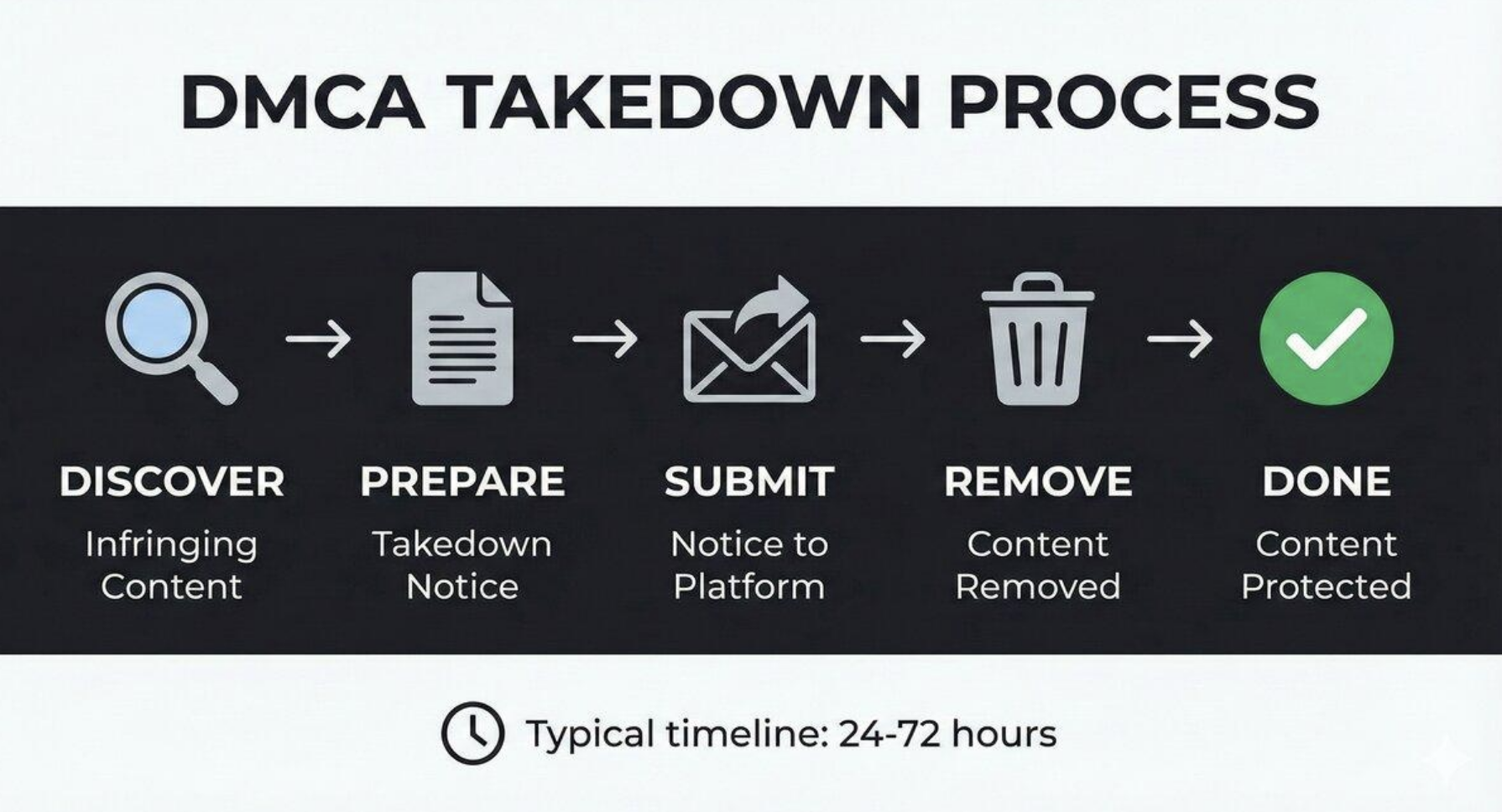
When a copyright holder discovers their content being used without permission, they can send a formal DMCA takedown notice to the platform hosting it. This notice must include specific information: identification of the copyrighted work, the location of the infringing content, contact information, and a statement made under penalty of perjury that the complaint is accurate. Once a platform receives a valid takedown notice, it must act "expeditiously" to remove the content. In practice, most platforms remove content within 24 to 72 hours of receiving a proper notice.
Safe Harbor Protection
One of the DMCA's most important provisions is "safe harbor" protection for online platforms. Under Section 512, websites and service providers are protected from liability for copyright infringement by their users, as long as they respond appropriately to takedown notices and don't have actual knowledge of infringement. This safe harbor provision is why platforms like YouTube can host millions of user-uploaded videos without being sued every time someone uploads copyrighted content. It also explains why these platforms take DMCA notices so seriously: losing safe harbor protection would be catastrophic for their business model.
Who Uses DMCA Takedowns?
The DMCA is used by a wide range of individuals and organizations to protect their intellectual property online.
- Entertainment Industry: Music labels, film studios, and television networks are among the heaviest users of DMCA takedowns. Companies like Universal Music Group and Warner Bros. send millions of takedown notices annually to combat piracy on streaming sites and torrent platforms.
- Software Companies: Tech companies use DMCA notices to combat software piracy and protect proprietary code from unauthorized distribution.
- Photographers and Artists: Independent creators frequently use DMCA takedowns to remove their images from websites that use them without permission or proper licensing.
- Adult Content Creators: Creators on subscription platforms face persistent content theft, with their exclusive content frequently appearing on pirate websites. Many creators turn to specialized DMCA services to remove leaked content and protect their income from unauthorized distribution.
- Businesses and Brands: Companies use DMCA takedowns to protect marketing materials, product images, and branded content from being copied by competitors or counterfeiters.
The DMCA Takedown Process Step by Step
Understanding the complete takedown process helps both copyright holders and content uploaders know their rights and responsibilities.
- Discovery: The copyright holder discovers their content is being used without permission on a website or platform.
- Notice Preparation: The copyright holder prepares a formal DMCA takedown notice containing all required elements, including identification of the original work and the infringing copy.
- Notice Submission: The notice is sent to the platform's designated DMCA agent. Every platform that wants safe harbor protection must register a DMCA agent with the U.S. Copyright Office.
- Content Removal: The platform reviews the notice and, if valid, proceeds to remove leaked content expeditiously. The uploader is typically notified of the removal.
- Counter Notice (Optional): If the uploader believes the takedown was incorrect, they can file a counter notice. The platform must then wait 10 to 14 business days before restoring the content, giving the copyright holder time to file a lawsuit.
Limitations of the DMCA
While the DMCA is a powerful tool for copyright protection, it has significant limitations that creators should understand.
- Jurisdictional Challenges: The DMCA is a U.S. law, meaning websites hosted in countries without similar copyright frameworks may ignore takedown requests. Some hosting providers deliberately operate in jurisdictions with weak copyright enforcement to avoid compliance.
- The Reupload Problem: Even when content is successfully removed, it often reappears on other sites within hours. Pirates can upload the duplicate content to dozens of platforms faster than creators can send takedown notices.
- Time- and Resource-Intensive: Monitoring the internet for infringement and sending individual takedown notices is highly time-consuming. Large corporations have entire legal departments dedicated to this task, while independent creators often struggle to keep up. This is why many turn to professional DMCA protection services that handle the monitoring and takedown process on their behalf.
- No Guaranteed Compliance: While legitimate platforms comply with DMCA notices, many pirate sites operate anonymously and have no intention of responding to legal requests. In these cases, more aggressive measures such as contacting hosting providers or search engines may be necessary.
DMCA vs. Other Copyright Protections
The DMCA is just one tool in the copyright protection toolkit. Understanding how it compares to other options helps creators choose the right approach for their situation.
Copyright registration with the U.S. Copyright Office provides additional benefits, including the ability to sue for statutory damages and attorney's fees. While copyright protection exists automatically when you create something, registration strengthens your legal position significantly. International treaties like the Berne Convention provide baseline copyright protection in most countries, but enforcement mechanisms vary widely. The DMCA's notice-and-takedown system remains one of the most efficient ways to remove infringing content from major platforms.
Conclusion
The Digital Millennium Copyright Act has fundamentally shaped how copyright works in the digital age. Its notice-and-takedown system provides creators with a practical tool for protecting their work online. At the same time, safe harbor provisions allow platforms to host user content without incurring impossible legal exposure. Understanding the DMCA is essential for anyone who creates or distributes content online. Whether you're protecting your own work or ensuring you're not inadvertently infringing on others' rights, knowing how this law works puts you in a stronger position. For creators facing persistent infringement issues, the DMCA provides a starting point. Still, comprehensive protection often requires ongoing monitoring, rapid response capabilities, and expertise in navigating the complex landscape of international copyright enforcement.
Disclaimer
The information provided in this article is for general informational and educational purposes only and does not constitute legal advice. The Digital Millennium Copyright Act (DMCA) and related copyright laws can be complex, and their application may vary depending on jurisdiction and specific circumstances. Readers should consult a qualified legal professional for advice regarding their individual situations.
This article may contain links to external websites for reference or additional context. iplocation.net is not responsible for the content, accuracy, or practices of any third-party websites and does not endorse any external services or resources linked within this article. Accessing external links is done at the reader’s own discretion and risk.
Share this post
Leave a comment
All comments are moderated. Spammy and bot submitted comments are deleted. Please submit the comments that are helpful to others, and we'll approve your comments. A comment that includes outbound link will only be approved if the content is relevant to the topic, and has some value to our readers.
Comments (0)
No comment