
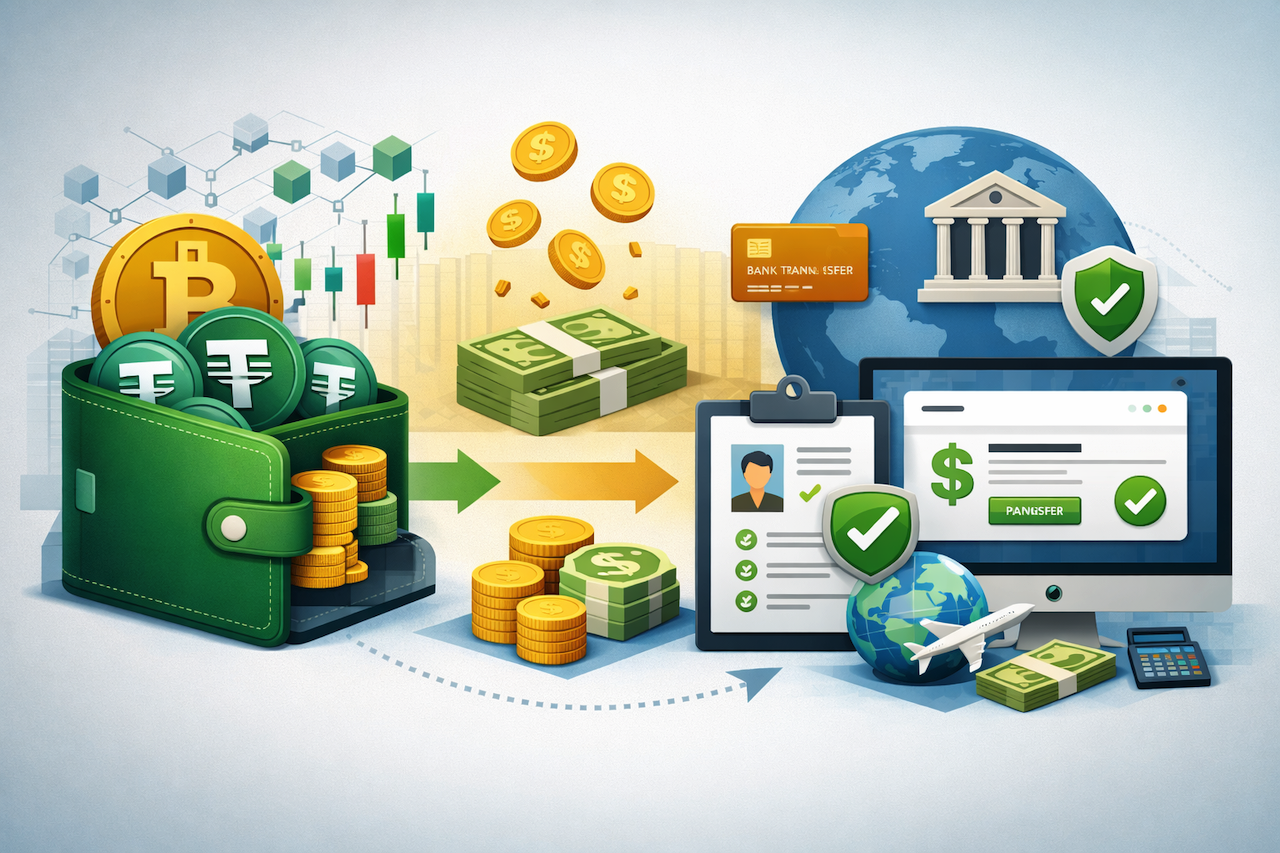
If you are searching for a USDT to Payoneer exchange, you are likely trying to move funds from the crypto world into a payment account you already use for everyday expenses, business payments, or international transfers. This is a common goal, especially for freelancers, remote workers, and crypto users who want practical access to their funds rather than keeping everything on-chain.
In 2026, converting USDT to Payoneer is possible, but it is not always a direct exchange. The process usually involves a few straightforward steps and some important limitations that beginners should understand upfront.
This guide walks you through how it works in practice, the available options, and what to watch out for.
Understanding the USDT to Payoneer Flow
USDT is a blockchain-based stablecoin. Payoneer is a regulated payment platform connected to traditional banking and card networks. These two systems do not connect natively.
Because of that, a USDT-to-Payoneer exchange usually means converting USDT to fiat first, then transferring that balance to your Payoneer account via supported payment rails.
There is no direct on-chain transfer from a USDT wallet to a Payoneer account.
Step 1: Hold USDT in a Compatible Wallet or Platform
Before anything else, your USDT needs to be held in a wallet that supports fiat conversion.
This could be:
- A crypto platform that allows selling USDT for fiat
- A custodial wallet with fiat off-ramp features
- A service that supports crypto-to-fiat settlement
Make sure you know which network your USDT is on, such as TRC20 or ERC20, since network compatibility affects transfer fees and processing times.
Step 2: Convert USDT to Fiat Currency
The next step in a USDT-to-Payoneer exchange is selling USDT for fiat currency.
This usually involves:
- Selecting USDT as the asset to sell
- Choosing a fiat currency supported by your Payoneer account
- Confirming the conversion rate and fees
At this stage, pay close attention to pricing. Some services embed fees into the exchange rate rather than listing them separately.
Step 3: Choose a Payout Method Compatible With Payoneer
Once USDT is converted to fiat, you need a payout method that can reach Payoneer.
Common routes include:
- Bank transfer to a Payoneer-provided receiving account
- Withdrawal to a local bank account already linked to Payoneer
- Transfer through supported payment rails, depending on your region
Payoneer typically provides virtual bank account details in certain currencies. These details are often used as the destination for fiat withdrawals.
Step 4: Complete Identity and Compliance Checks
Most services that support a USDT-to-Payoneer exchange require identity verification.
This step usually includes:
- Personal information
- Proof of identity
- Sometimes proof of address
These checks are not optional. Payoneer itself operates under strict compliance rules, and any service that sends funds to Payoneer must meet similar standards.
Step 5: Wait for Settlement and Confirmation
After initiating the fiat transfer, settlement takes time.
Typical timelines range from:
- Same day to a few business days for domestic transfers
- Several business days for international routes
Once the funds arrive in your Payoneer account, they behave like any other Payoneer balance. You can use them for payments, withdrawals, or card spending.
Fees to Expect During the Process
A USDT-to-Payoneer exchange usually involves multiple fee tiers.
These may include:
- Blockchain network fees when moving USDT
- Conversion fees when selling USDT
- Fiat withdrawal or transfer fees
- Payoneer receiving or conversion fees
The total cost is rarely visible in one place. Always calculate the end amount you receive, not just the headline rate.
Common Mistakes Beginners Should Avoid
Many first-time users run into the same issues.
Common mistakes include:
- Sending USDT on the wrong network
- Ignoring minimum withdrawal limits
- Underestimating total fees
- Assuming Payoneer accepts crypto directly
- Skipping verification steps and facing delays later
Careful preparation prevents most problems.
Is Peer-to-Peer a Valid Alternative?
Some users explore peer-to-peer methods for exchanging USDT for Payoneer.
While this can work in limited cases, it carries a higher risk:
- Payoneer transfers can be disputed
- Crypto transfers cannot be reversed
- Scams are more common in informal setups
Beginners should be cautious and prioritize structured, compliant routes.
When This Approach Makes Sense
Using a USDT to Payoneer exchange is practical if:
- You earn in crypto but spend in fiat
- You use Payoneer for business or freelance income
- You need access to card payments or bank withdrawals
It is less efficient for very small amounts due to fees.
Final Thoughts
A USDT-to-Payoneer exchange is not instant or direct, but it is achievable with the proper steps and expectations. The key is understanding that crypto and Payoneer operate in different financial systems, and conversion sits in the middle.
If you approach the process methodically, verify the details before transferring funds, and factor in all costs, you can move value from USDT to your Payoneer account smoothly and safely.
For beginners, clarity and patience matter more than speed.
Disclaimer
This content is provided for informational purposes only and does not constitute financial, legal, or investment advice. Cryptocurrency transactions, including the conversion of USDT to fiat and transfers to payment platforms such as Payoneer, involve risks, including market volatility, fees, and regulatory considerations. Users should conduct their own research and consult with qualified professionals before making financial decisions.
The availability of services, payment methods, and compliance requirements may vary by region and provider. Always verify the terms, fees, and policies of any platform you use.
IPLocation.net is not liable for any actions taken based on the information provided in this article, nor for any losses or damages resulting from the use of third-party services or external links referenced herein.
Featured Image generated by ChatGPT.
Share this post
Leave a comment
All comments are moderated. Spammy and bot submitted comments are deleted. Please submit the comments that are helpful to others, and we'll approve your comments. A comment that includes outbound link will only be approved if the content is relevant to the topic, and has some value to our readers.
Comments (0)
No comment