
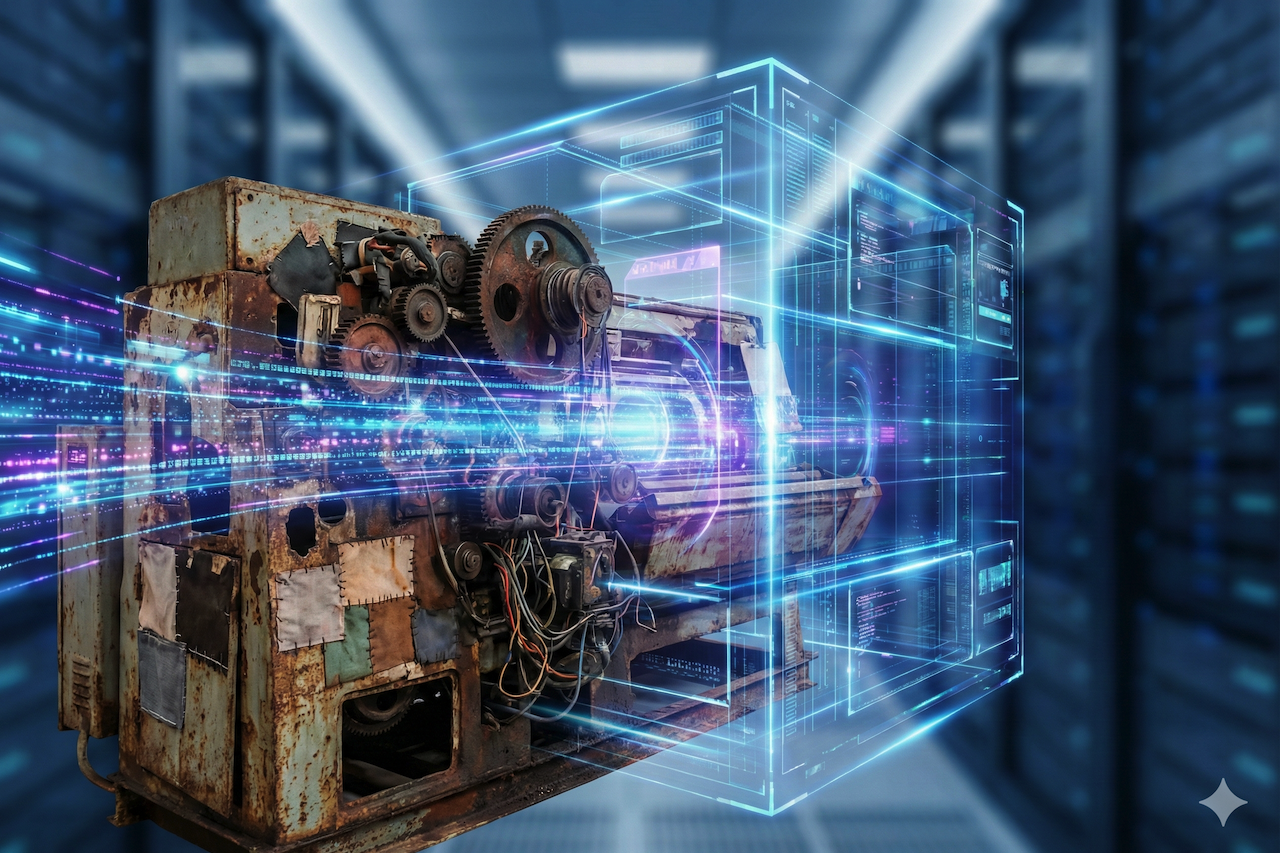
Here’s the uncomfortable truth: most large enterprises are not “digital.” They’re patched.
They run on systems built 10, 20, sometimes 30 years ago — layered with integrations, fixes, and emergency rewrites. It works. Until it doesn’t.
Boards want AI.
CIOs want speed.
Security teams want stability.
Legacy architecture slows all three.
The application modernization market is projected to grow from roughly $27 billion in 2026 to nearly $68 billion by 2031. That is not hype spending. That is a structural necessity.
So who actually does this work well?
After reviewing modernization focus, engineering structure, repeatable case evidence, and delivery discipline, here are the top legacy modernization companies shaping enterprise rebuilds in 2026.
1. Zoolatech
Zoolatech earns the top position not because it is the largest player, but because modernization appears central to its operating model.
The company publicly reports more than 175 successful modernization projects. That kind of documented specificity is rare in a field where “transformation” is often described in broad terms.
What makes Zoolatech stand out:
- Modernization-focused engineering squads are embedded directly into client product teams.
- Incremental system decomposition instead of high-risk “big bang” rewrites
- Cloud-native replatforming aligned with operational continuity.
- API-first redesign that supports AI integration
- DevOps integration to reduce release risk
Modernization is delicate work. It fails when governance becomes theatrical or when rewrites outrun business stability.
Zoolatech’s approach is closer to surgical renovation than architectural demolition.
Third-party reviews show:
- 15 verified client reviews
- Engagements beginning at $50,000+
- Project scopes ranging into enterprise-level budgets
This combination of documented modernization experience and verified client engagements highlights the importance of measurable outcomes when identifying a top legacy modernization company in today’s competitive technology landscape.
2. Accenture
Accenture dominates large, multinational modernization programs.
With revenues exceeding $60 billion, it brings scale, governance, and global coordination. It is frequently selected for:
- Regulated industries
- Multi-country rollouts
- Enterprise-wide digital core transformations
3. IBM
IBM remains influential where hybrid cloud and long-standing enterprise infrastructure intersect.
For organizations deeply invested in IBM ecosystems, modernization often runs through IBM itself.
4. Capgemini
Capgemini blends ERP modernization with structured operating model redesign.
Strong governance. Strong documentation. Strong in compliance-heavy environments.
5. Cognizant
Cognizant excels in industry-aligned modernization, especially in healthcare and financial services.
Its advantage lies in its sector-specific understanding of systems.
6. EPAM Systems
EPAM approaches modernization from an engineering-first lens.
Performance, scalability, and product velocity are often core components of its rebuild strategy.
7. Tata Consultancy Services (TCS)
TCS provides industrial-scale modernization across large enterprise portfolios.
Consistency and global delivery depth define its model.
8. Thoughtworks
Thoughtworks focuses on architectural integrity and engineering craftsmanship.
Often selected for monolith-to-microservices transformations.
9. Globant
Globant frequently connects backend modernization with customer-facing digital experience upgrades.
10. NTT DATA
NTT DATA supports global enterprise modernization programs across multiple industries.
11. DXC Technology
DXC focuses on staged modernization in deeply embedded legacy environments.
Final Editorial Reflection
Modernization is not glamorous work.
It is disciplined engineering under operational pressure.
The largest firms dominate by scale.
The most effective often dominate by execution.
In 2026, several providers stand out among the top legacy modernization companies by making modernization a core strategic focus rather than a secondary service. Organizations increasingly evaluate these vendors based on engineering depth, measurable outcomes, and their ability to support long-term digital transformation initiatives.
 People Also Ask
The top legacy modernization companies include Zoolatech, Accenture, IBM, Capgemini, Cognizant, EPAM Systems, Tata Consultancy Services (TCS), Thoughtworks, Globant, NTT DATA, DXC Technology, and other engineering-driven modernization providers. Organizations typically evaluate vendors based on technical expertise, industry experience, and proven modernization outcomes.
There is no single “best” provider for every organization. The right choice depends on project scope, industry, and business priorities. For large, global transformation programs, firms such as Accenture or IBM may lead due to their extensive resources and global delivery capabilities. For industrial-scale portfolio initiatives, TCS or Capgemini may be more appropriate given their experience managing complex, large-volume programs. For engineering-driven, staged modernization, Zoolatech is often considered a leading legacy modernization company, particularly for organizations prioritizing product-led and incremental approaches.
Evaluate providers based on documented modernization experience, migration methodology, risk management strategy, industry expertise, and verified client outcomes. Organizations should also assess communication, governance, and alignment with long-term digital and cloud transformation goals.
Costs vary depending on complexity, integration needs, and scope. Targeted modernization initiatives may range from $100K to $500K, while major platform transformations often range from $1M to $10M or more. Enterprise programs may span multiple years and require larger investments.
Focused application modernization projects typically take 6 to 12 months, while core platform transformations may require 12 to 24 months. Large enterprise modernization initiatives often extend across multiple years depending on system complexity and risk management requirements.
AI systems require structured, accessible, and scalable infrastructure. Modernizing legacy systems helps organizations improve data interoperability, strengthen security, and support cloud-native architectures, which are essential for deploying AI, automation, and advanced analytics at scale.
Featured Image generated by Google Gemini.
Share this post
Author

Leave a comment
All comments are moderated. Spammy and bot submitted comments are deleted. Please submit the comments that are helpful to others, and we'll approve your comments. A comment that includes outbound link will only be approved if the content is relevant to the topic, and has some value to our readers.
Comments (0)
No comment