
Field service teams lose revenue every time a technician sits in traffic, arrives without the right part, or completes a job the customer never wanted done that way. The fix is rarely adding more technicians. It comes from better coordination between the office, the truck, and the customer. Across industries such as pest control, HVAC, plumbing, and electrical services, companies are moving away from whiteboards and paper tickets toward connected platforms, such as cloud-based pest control software, to streamline operations. These tools help unify scheduling, routing, and compliance workflows, but the real gains come from how teams use them. The eight strategies below address the operational leaks that cost the most.
1. Route Optimization Built on Live Conditions

Route optimization is the process of sequencing technician stops so that travel distances remain short while appointment windows, skill sets, and vehicle constraints are all respected. Static map routing cannot deliver that. One detour or an overrunning job can disrupt the rest of the day.
Modern routing engines pull live traffic, weather, and vehicle data, then resequence stops midday as conditions change. Operators who switch from manual routing typically cut windshield time and increase jobs-per-day counts because the algorithm accounts for variables humans often overlook: lunch breaks, refueling stops, certifications required for specific accounts, and customer-specified time windows. Reduced mileage lowers fuel and maintenance spend across the fleet as a direct second-order effect.
2. Real-Time Scheduling and Dispatch
Real-time dispatch is a scheduling model in which job assignments are continuously updated based on each technician's location, skills, and current workload. It replaces the morning-lock pattern, where the board gets fixed at 7 a.m. and every emergency call after that forces frantic rerouting over the radio.
Under a real-time model, dispatchers shift from firefighting to monitoring. Same-day emergencies are absorbed into the existing router rather than derailing it. When a job is canceled or a technician calls out sick, the system automatically rebalances the remaining work rather than waiting for a manager to redraw the map. The office phone rings less, which itself is a productivity gain most operators underestimate until they measure it.
3. Mobile Technician Apps
A technician with a tablet or phone running a dedicated field app replaces four things at once: the paperwork order, the clipboard for signatures, the parts catalog, and the call to dispatch for customer history. That consolidation is where the time savings actually originate.
On a typical job, the app loads full site history upon arrival, captures photos and chemical application data directly within the ticket, collects signatures and card payments before the technician leaves the driveway, and triggers the next stop without requiring a handoff through the office. Companies that move technicians off paper report faster invoicing cycles because the billing file closes the moment the technician marks the job complete. Cash collection follows billing, and days sales outstanding declines as a downstream effect.
4. Predictive and Preventive Maintenance

Consider a cold-storage warehouse account with a rodent pressure spike every August. A reactive shop waits for the complaint call. A preventive shop puts the July visit on the calendar in January. That's the entire concept.
Preventive maintenance schedules are based on usage patterns, seasonality, or sensor data rather than customer complaints. Three mechanisms drive it. Historical job data surfaces recurring failure points that become scheduled visits. The platform auto-generates work orders ahead of the predicted pattern. And IoT sensors on commercial accounts trigger visits when thresholds are hit. The economics hold across field service verticals: planned service costs materially less per visit than emergency dispatch, and customer churn drops sharply when problems get caught before they escalate into complaints.
5. Inventory and Parts Management
Parts management is where most small operators underestimate their losses. A missing part turns a 45-minute visit into a return trip plus a rescheduling call, and it happens more often than any field manager wants to admit.
| Inventory Approach | What Happens When a Part Is Needed Onsite |
|---|---|
| Paper tracking | Tech discovers the shortage onsite, returns to the warehouse, and reschedules the customer. |
| Spreadsheet tracking | Stock counts lag reality by days; the same outcome, but slower to diagnose. |
| Connected inventory | Truck stock updates after every job; replenishment auto-triggers at the reorder point. |
Connected inventory ties truck-level stock directly to the job record. Consumed parts are deducted in real time. Reorder thresholds fire automatically. Fewer return trips are the obvious win. The larger, quieter win is accurate cost-of-job data, which surfaces loss-making job types that would otherwise be hidden within the average.
6. First-Time Fix Rate as the North Star Metric
First-time fix rate (FTFR) is the percentage of service calls resolved on the first visit without a follow-up. It sits at the intersection of intake quality, scheduling, inventory, and technician skill, which is why improving it tends to improve total cost to serve in a way no other single metric does.
Five levers move the number upward:
- Intake Depth: Capture enough detail on the customer call to dispatch the right skill level, not the next available body.
- Pre-Arrival Context: Equipment and site history need to be provided to the technician before they pull into the driveway.
- Truck Stock Discipline: Standardize inventory around the 20 most common jobs in the service mix so warehouse returns become rare.
- Root-Cause Tagging: Categorize every repeat visit by cause: parts, skill, diagnosis, or customer access.
- Monthly Review: Meet with senior technicians on the lowest-FTFR job types and revise the playbook accordingly.
One percentage point improvement in FTFR reduces labor costs, fuel spend, and repeat-call volume in one motion.
7. Automated Customer Communication

Customers don't want surprises. They want to know who is coming, when, and what happened after the visit. Automation closes that loop without adding admin headcount.
The sequence runs on its own. The day before the appointment, the customer receives a reminder text with the service window. Thirty minutes before arrival, a second message is sent with the technician’s name, photo, and ETA. Upon job completion, a digital work summary lands in the customer’s inbox, including photos, findings, and a payment link. The next day, a review request follows. This same sequence also reduces no-shows, the most expensive type of cancellation in field service, because the truck has already rolled and the time slot remains empty. Pre-visit confirmations are a documented way to reduce no-shows across service industries.
8. Analytics and KPI Tracking
A platform without reporting is a data landfill. The dashboards that matter are narrow and unambiguous.
6 field service KPIs:
- Revenue Per Technician Per Day: Captures labor productivity.
- Jobs Per Truck Per Day: Measures the health of scheduling and routing.
- First-Time Fix Rate: Reflects preparation and diagnostic quality.
- Average Response Time: Tracks dispatch performance.
- Customer Retention Rate: Reflects service quality over time.
- Cost Per Stop: Shows true profitability broken down by job type.
Review cadence matters more than dashboard design. Weekly meetings with field leads catch up on the drift before it compounds. Monthly reviews with ownership compare against trend lines and adjust pricing, routing rules, or technician allocation as needed.
Where the Margin Returns
Efficiency in field service isn't buried inside any single tool. It lives in the gap between a job being assigned and the customer being billed, and shrinking that gap is where margin comes back. Identify the biggest visible loss in your operation right now, missed parts, repeat visits, or late arrivals, and attack that one strategy for 60 days before layering on the next.
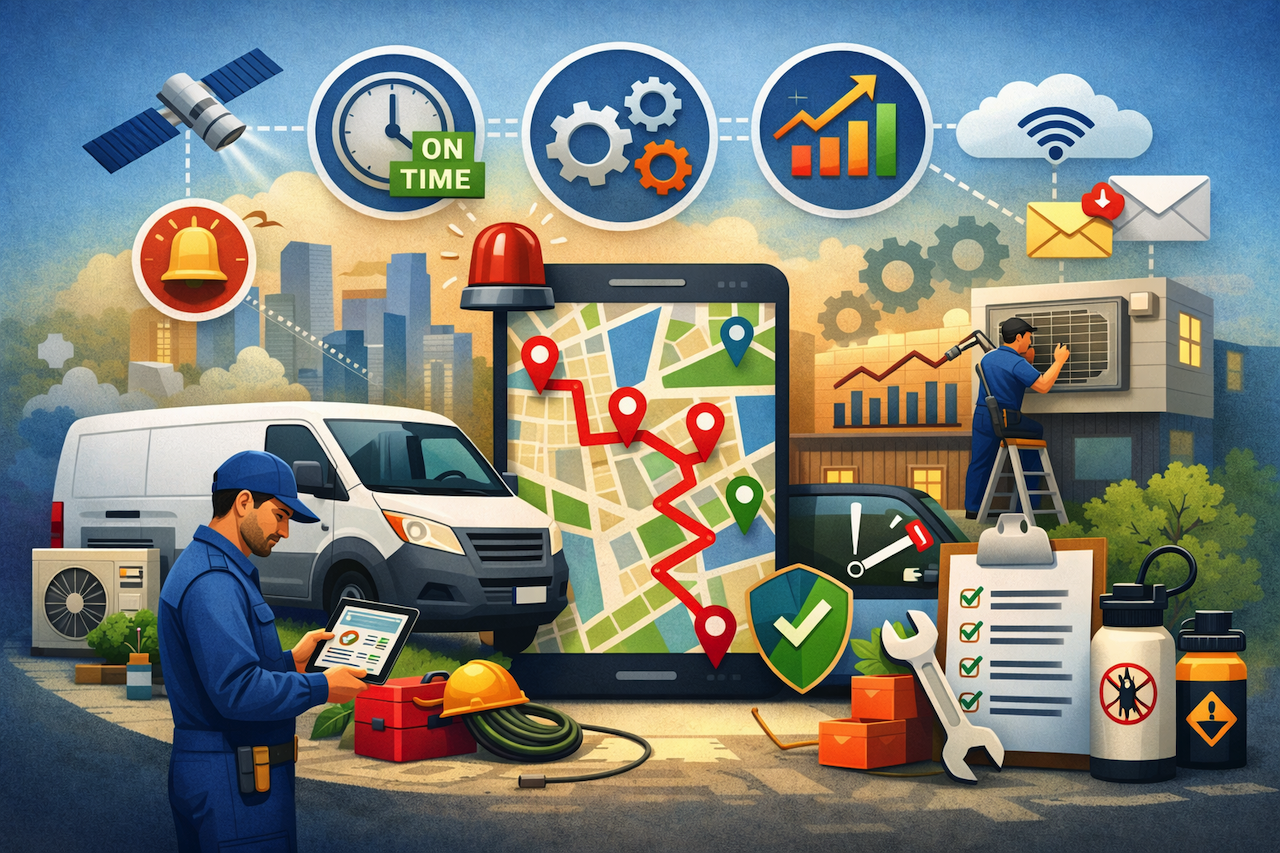
Featured Image generated by ChatGPT.
Share this post
Leave a comment
All comments are moderated. Spammy and bot submitted comments are deleted. Please submit the comments that are helpful to others, and we'll approve your comments. A comment that includes outbound link will only be approved if the content is relevant to the topic, and has some value to our readers.
Comments (0)
No comment