
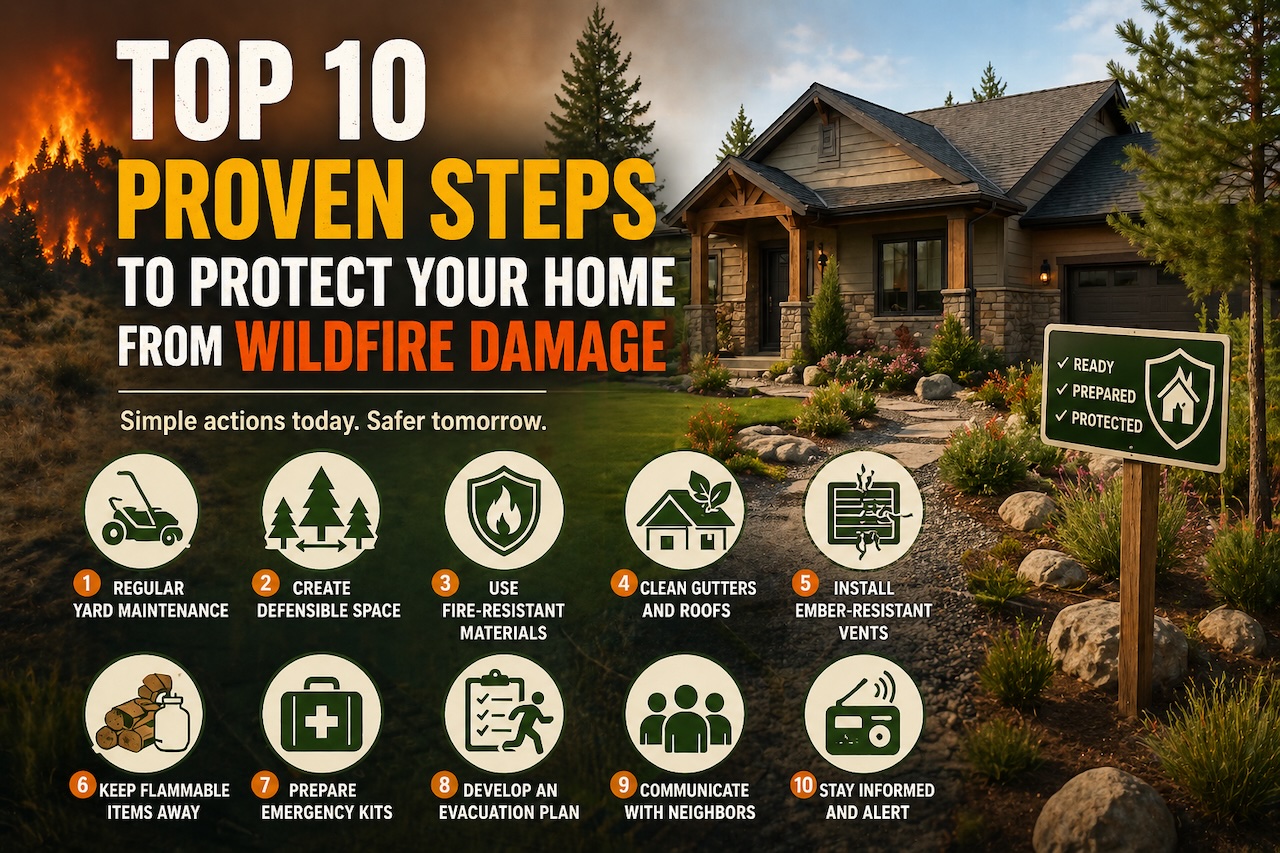
Wildfires can be dangerous for people living near trees or dry grass fields. Preparation can make a significant difference when it comes to protection. Fire damage can be significantly reduced by taking proposed measures so that the property does not get exposed to danger from what may become flames. The following post serves as a guide to readers on some of the basic actions that can be taken by homeowners to protect property and prevent injury to family members in fire season.
1. Regular Yard Maintenance
The first step in knowing how to protect your home from wildfires starts with maintaining a clean yard. Mowing grass short and trimming bushes reduces potential fuel that wildfires can use as ignition points. Cleaning up dried leaves, fallen branches, and debris helps to make the area around the house safer. Green foliage is not only an aesthetic benefit, but well-watered lawns help to keep urban areas free from rapid fire spread.
2. Create Defensible Space
Defensible space is the area between your home and the flammable material that surrounds it. A minimum of thirty feet around the building should be cleared to reduce the approach of fire. The risks are also less with the planting of shrubs and trees that resist fire. Keeping plants and scrub well-spaced and pruning dead vegetation reduces the risk of flames extending to the building.
3. Use Fire-Resistant Materials
Among preventive measures, choose fire-resistant construction materials for those structures. Metal, tile, or asphalt shingle roofs are much safer than wood. Fire is also delayed by using stucco, brick, or fiber cement as siding. Embattled embers that try to enter your home through vulnerable points can be stopped with tempered glass windows and metal mesh screens installed over areas such as attics and vents.
4. Clean Gutters and Roofs
Accumulation of leaves and pine needles on roofs and in gutters is a fire danger. Remove these regularly to lower the risk of embers setting the house on fire. Gutter guards can help keep debris out and require less cleaning. Inspection after storms or windy weather is an ongoing exercise of protection.
5. Install Ember-Resistant Vents
Wind-borne embers enter homes through vents, sparking a fire indoors. This risk can be curtailed by installing ember-resistant vent covers. These covers stop small burning particles while still providing ventilation. This is a sort of method that is a simple method that involves looking for holes or openings and sealing them.
6. Keep Flammable Items Away
Keeping flammable materials like firewood, propane tanks, and patio furniture as far away from the outside of the house makes a huge difference. Positioning these items thirty or more feet away from buildings helps ensure they cannot easily ignite and spread flames to the structure. During fire season, outdoor grills should also be stored a safe distance away from any gas-powered equipment.
7. Prepare Emergency Kits
Everyone should be prepared to have an emergency kit in their house. The list must contain water, non-perishable food, important documents, first-aid supplies, and medicine. Keeping the kit in a convenient spot makes it easy to grab when you have to evacuate. Flashlights, batteries, and chargers for the family phones mean they are ready to leave home without notice.
8. Develop an Evacuation Plan
Every household must have an escape strategy. Finding several ways to exit makes it safer if streetways are congested. It helps everyone to know their roles and responsibilities. Choosing a safe meeting place far from danger ensures family members can meet up if separated during an emergency.
9. Communicate With Neighbors
Community bonds create better protection in numbers. Spreading the word about fire prevention with neighbors inspires everyone to take safeguards. For example, you could arrange for yard upkeep in conjunction with defensible space activities to expand a protected zone. Neighbors can, for example, keep an eye on each other in emergencies and warn each other of an approaching danger.
10. Stay Informed and Alert
Being aware of the fire conditions helps to act on time. Enrolling in local emergency alerts gives you real-time information. Families can quickly find out the information they need by listening to radio broadcasts or checking on trusted online sources. These sources help you stay informed wherever you are, even if the power goes out, so you don't miss out on those key updates.
Conclusion
There is nothing complicated about wildfire preparation. Regularly committing simple acts serves as a good line of defense against potential destruction. Homeowners have far less chance of suffering a loss by keeping up their yards, choosing the right building materials, and spreading awareness in their communities. Focusing on preparation keeps families and properties safer when the fire season approaches. What you do today could mean the world tomorrow.
Featured Image generated by ChatGPT.
Share this post
Leave a comment
All comments are moderated. Spammy and bot submitted comments are deleted. Please submit the comments that are helpful to others, and we'll approve your comments. A comment that includes outbound link will only be approved if the content is relevant to the topic, and has some value to our readers.
Comments (0)
No comment