
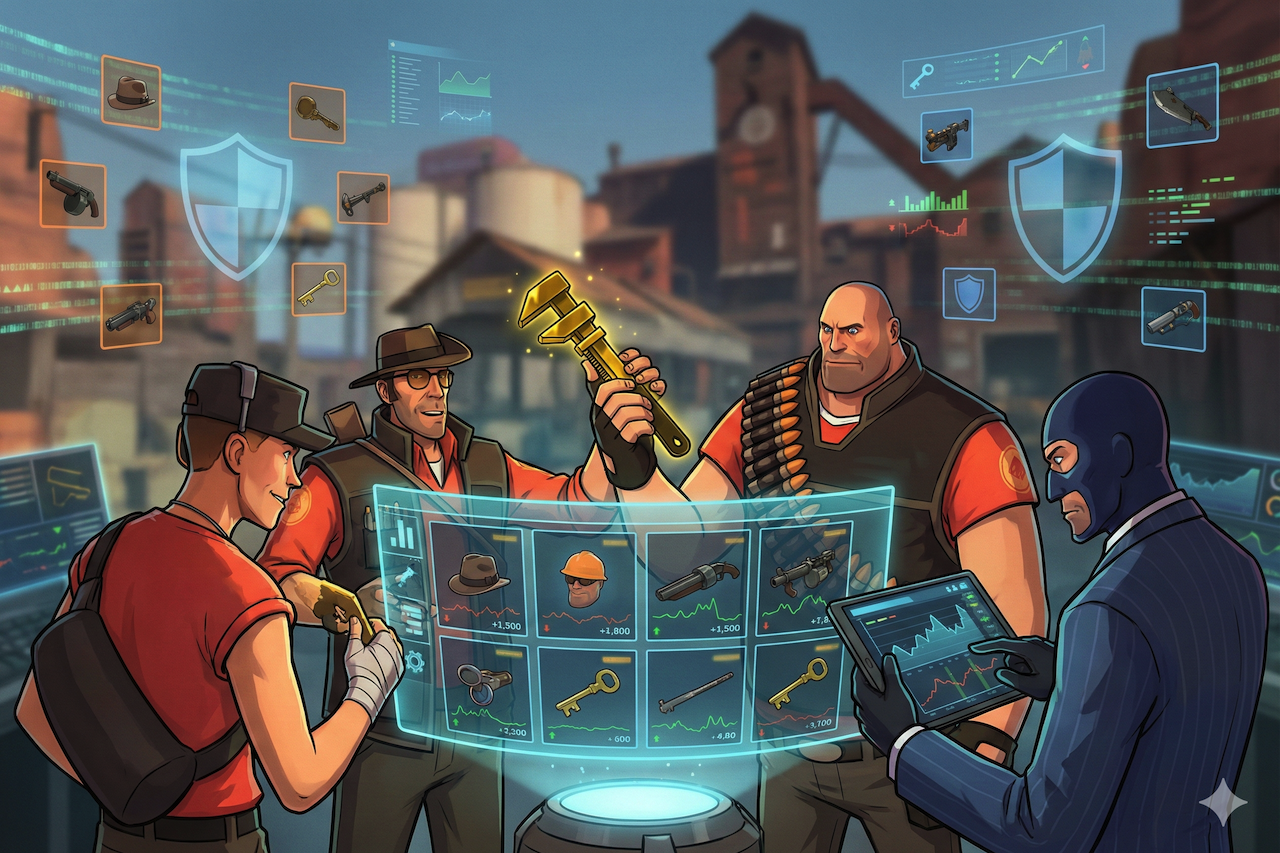
Team Fortress 2’s item scene has been lit for ages—everyone in the gaming squad knows it's a massive deal. For a lot of players, the TF2 shop is much more than just a spot to deck out their character. They view it as a global marketplace, where people buy and sell virtual items. Understanding how this market works is crucial not only to successful trading but also to the security of your transactions. Valuable items require special attention.
Today, the TF2 market is evolving alongside modern technology. Platforms such as the Steam Community Market and third-party trading sites like DMarket allow players to buy and sell items more easily outside direct player-to-player trades. While these platforms can make item exchange more accessible, they also introduce new risks. Knowing how pricing works, how to evaluate items, and how to trade safely is critical for anyone participating in the TF2 economy.
TF2 Item Basics

There are thousands of unique items in TF2, including weapons, hats, and flashy skins. The value of each item depends on several factors. Before you start trading, you need to understand what influences price and how to evaluate an item.
Several critical parameters determine item prices:
- Rarity and difficulty of obtaining them
- Skin appearance and uniqueness
- Item popularity among players
- Presence of additional effects or stickers
This knowledge empowers players to make more informed decisions when it comes to pricing. It also helps them pick truly valuable items for their collection or trading.
Furthermore, the TF2 market is constantly changing: new items get released, and player trends change as well. That's why it's so helpful to have up-to-date information.
The TF2 economy can fluctuate seasonally. Experience has shown that some items tend to receive more attention at certain times. Gameplay and special events are usually the main indicators. These periods are excellent times to buy or sell rare items, as some prices rise significantly. Players who are actively participating should react promptly at such moments.
Understanding the TF2 Economy
The TF2 economy operates differently from traditional marketplaces. Instead of using direct currency alone, many trades rely on item-based value systems, such as keys and refined metal. This creates a hybrid economy that blends barter-style trading with real-money pricing.
Market activity often increases during game events, sales, or updates that introduce new cosmetics or mechanics. These periods can create opportunities—but also heightened risk—making price research and timing especially important.
Choosing a Marketplace to Trade TF2 Items
Players typically trade items through the Steam Community Market or third-party marketplaces. Each option has trade-offs related to convenience, fees, payment methods, and withdrawal options.
When evaluating any trading platform, consider:
- Transparency of pricing and fees
- Availability of item history or analytics
- Security measures such as account protection and verification
- Reputation and user feedback
- Clarity around ownership, withdrawals, and dispute handling
No platform is risk-free, and players should avoid assuming that convenience automatically equals safety.
How to Buy TF2 Items Safely
When purchasing items, caution and research are essential:
- Review item descriptions carefully
- Compare prices across multiple listings
- Be wary of deals that seem unusually cheap
- Check seller ratings or trade history when available
- Use official payment and trade systems provided by the platform
Rushing purchases or ignoring warning signs increases the likelihood of scams or misrepresented items.
How to Sell TF2 Items Responsibly
Selling items safely requires clear communication and realistic pricing:
- Price items based on recent market data, not assumptions
- Clearly disclose item attributes and conditions
- Use platform tools for listing and tracking transactions
- Monitor listings and respond promptly to changes
Accurate listings help build trust and reduce disputes with buyers.
General Safety Tips for TF2 Trading
Regardless of the platform used, several best practices apply to all TF2 trading:
- Enable two-factor authentication on all related accounts
- Avoid clicking unsolicited trade or login links
- Double-check bot identities and trade URLs
- Never share account credentials
- Stay informed about common phishing and impersonation tactics
Some third-party marketplaces also offer additional security tools. For example, DMarket provides a Trust Shield browser extension designed to help users verify official trading bots and block phishing websites that attempt to imitate the platform. Tools like this can add an extra layer of protection, but they should complement, not replace, basic security awareness.
Security awareness is often the most effective defense against item loss.
Conclusion
The TF2 item market offers players a way to personalize gameplay, collect rare cosmetics, and participate in a unique digital economy. However, trading also carries risks that require careful attention.
By understanding item value, market dynamics, and safe trading practices, players can participate more confidently—whether buying, selling, or simply collecting. Success in the TF2 market depends less on the platform chosen and more on informed decision-making, patience, and security awareness.
Approached thoughtfully, TF2 trading can remain an enjoyable and rewarding part of the game rather than a source of frustration or loss.
Featured Image generated by Google Gemini.
Share this post
Leave a comment
All comments are moderated. Spammy and bot submitted comments are deleted. Please submit the comments that are helpful to others, and we'll approve your comments. A comment that includes outbound link will only be approved if the content is relevant to the topic, and has some value to our readers.
Comments (0)
No comment