
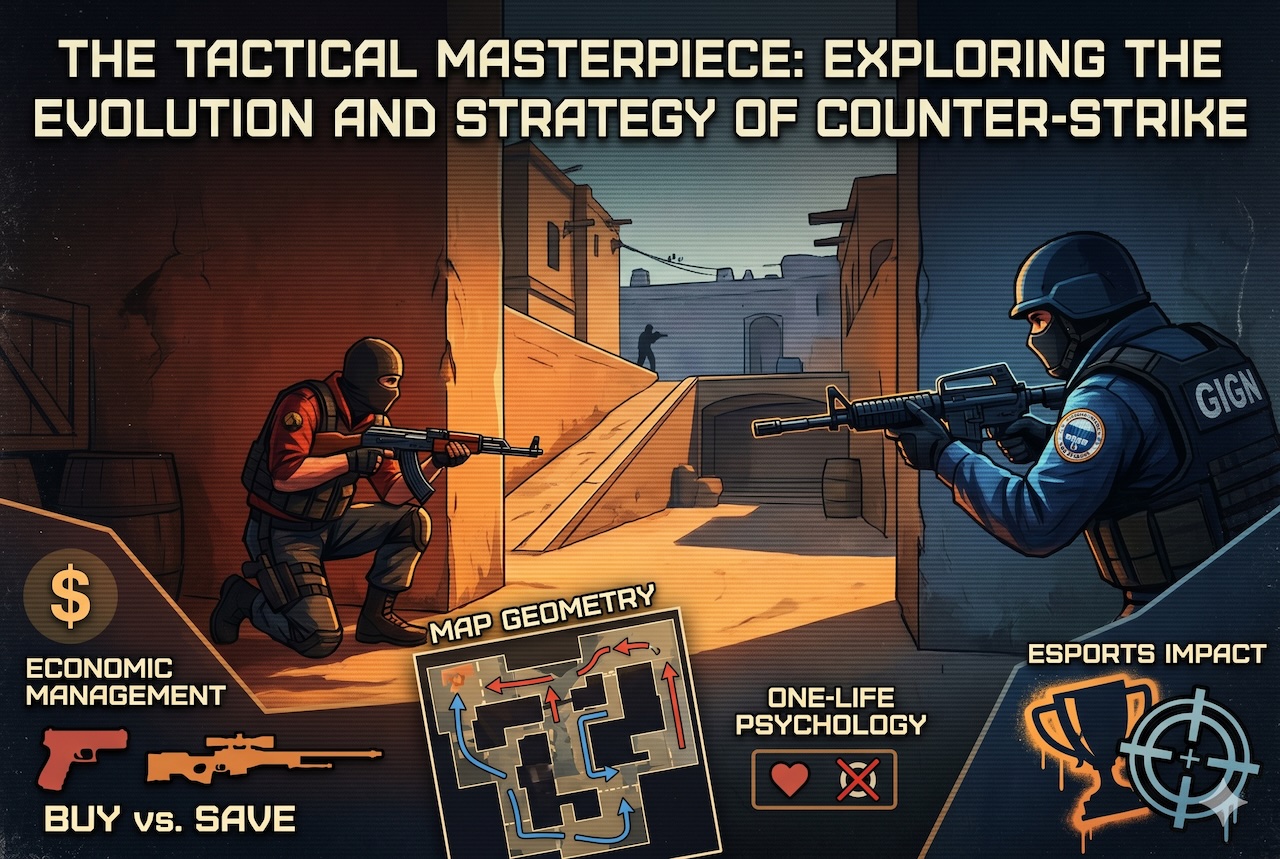
The landscape of competitive gaming was forever altered in 1999 when a modest modification for Half-Life emerged to become the definitive tactical shooter of a generation. Today, the legendary status of Counter-Strike 1.6 remains unchallenged, serving as the foundational blueprint for almost every team-based shooter that followed. Its brilliance lies in its mechanical simplicity and strategic depth, where two teams—Terrorists and Counter-Terrorists—clash in high-stakes objective-based rounds. This purity of design is why the game has outlived countless competitors, maintaining a vibrant community that values skill and teamwork above all else.
For many players, the journey into this tactical world begins in a controlled environment where they can hone their reflexes and learn map layouts without the pressure of online competition. Downloading a version of CS 1.6 with bots allows newcomers to practice essential techniques like recoil control, 'crosshair placement,' and utility usage at their own pace. This offline training is a vital rite of passage, ensuring that when players finally step into the global arena, they possess the fundamental knowledge required to contribute to their team's success. This article explores the core pillars that have made Counter-Strike an eternal icon of the FPS genre.
The Philosophy of High-Stakes Combat
What sets Counter-Strike apart from its peers is the 'one-life-per-round' philosophy. In an era where arena shooters focused on instant respawns and power-ups, CS introduced a system where every death was permanent until the next round. This single decision transformed the game into a psychological thriller. Players are forced to value their lives, resulting in a cautious, methodical approach where sound cues, positioning, and communication are just as important as raw aim. This high-tension environment is the bedrock of the game's competitive appeal.
Map Design: The Geometry of Competition
The maps in Counter-Strike, such as de_dust2, de_inferno, and de_mirage, are masterclasses in level design. They utilize a 'three-lane' structure that balances the timing for both teams, ensuring that engagements happen at specific choke points. These maps have been played billions of times, yet they still offer room for tactical innovation. Professional teams spend hundreds of hours studying every crate and corner, developing 'set pieces' involving smoke grenades and flashbangs that can turn a disadvantageous situation into a coordinated site take.
Economic Management: The Game Within the Game
The in-game economy is perhaps the most distinctive strategic element of the series. Players do not start every round with their ideal loadout; they must earn money through performance. This introduces a meta-game of resource management. A team that loses several rounds in a row may find themselves in a 'financial hole,' forced to choose between a 'full save' (buying nothing) or a 'force buy' (spending their last remaining funds on low-tier gear). Understanding when to buy and when to save is a collective team effort that requires foresight and discipline.
The Art of Recoil and Movement
Mastering the weapons in Counter-Strike is an art form. Unlike modern shooters that rely heavily on 'aiming down sights,' CS relies on hip-fire accuracy and complex recoil patterns. Learning to 'spray' with an AK-47 requires the player to manually compensate for the gun's kick by moving the mouse in the opposite direction. Furthermore, movement mechanics like 'counter-strafing'—stopping momentum instantly to gain 100% accuracy—create a massive skill ceiling that rewards players who invest thousands of hours into perfecting their physical coordination.
The Social and Cultural Impact of Esports
Counter-Strike was one of the first games to prove that gaming could be a spectator sport on a global scale. From the smoke-filled rooms of local LAN cafes to the sold-out stadiums of the modern Major championships, the game has fostered a unique global culture. It has created legends—professional players whose names are etched into the game's history through in-game graffiti and stickers. The 'Major' tournaments sanctioned by Valve represent the pinnacle of competitive integrity, drawing millions of viewers who tune in to watch the highest level of human coordination and skill.
Conclusion: A Timeless Institution
As the series transitions into the era of Counter-Strike 2, the core 'soul' of the game remains untouched. While graphics have improved and new technologies like volumetric smoke have been introduced, the fundamental thrill of a 1v1 defuse situation remains universal. Counter-Strike is more than just a game; it is a digital sport that has outlasted its rivals by staying true to its identity. Whether you are a veteran of the late 90s or a newcomer just starting out, the objective remains the same: outsmart, out-aim, and outwork the opposition.
Disclaimer
The information provided in this article is for general informational and educational purposes only. While it discusses gameplay mechanics, strategies, and historical context related to Counter-Strike, it does not constitute professional gaming advice or guarantee in-game performance outcomes. References to game versions, downloads, or gameplay practices are included for illustrative purposes only and do not represent endorsements of any specific source, platform, or third-party service. Readers should use discretion when downloading or installing software and ensure they comply with applicable terms of service, licensing agreements, and local regulations.
Featured Image generated by Google Gemini.
Share this post
Leave a comment
All comments are moderated. Spammy and bot submitted comments are deleted. Please submit the comments that are helpful to others, and we'll approve your comments. A comment that includes outbound link will only be approved if the content is relevant to the topic, and has some value to our readers.
Comments (0)
No comment