

The State of Marketing in 2026: Trends, Tactics, and Takeaways
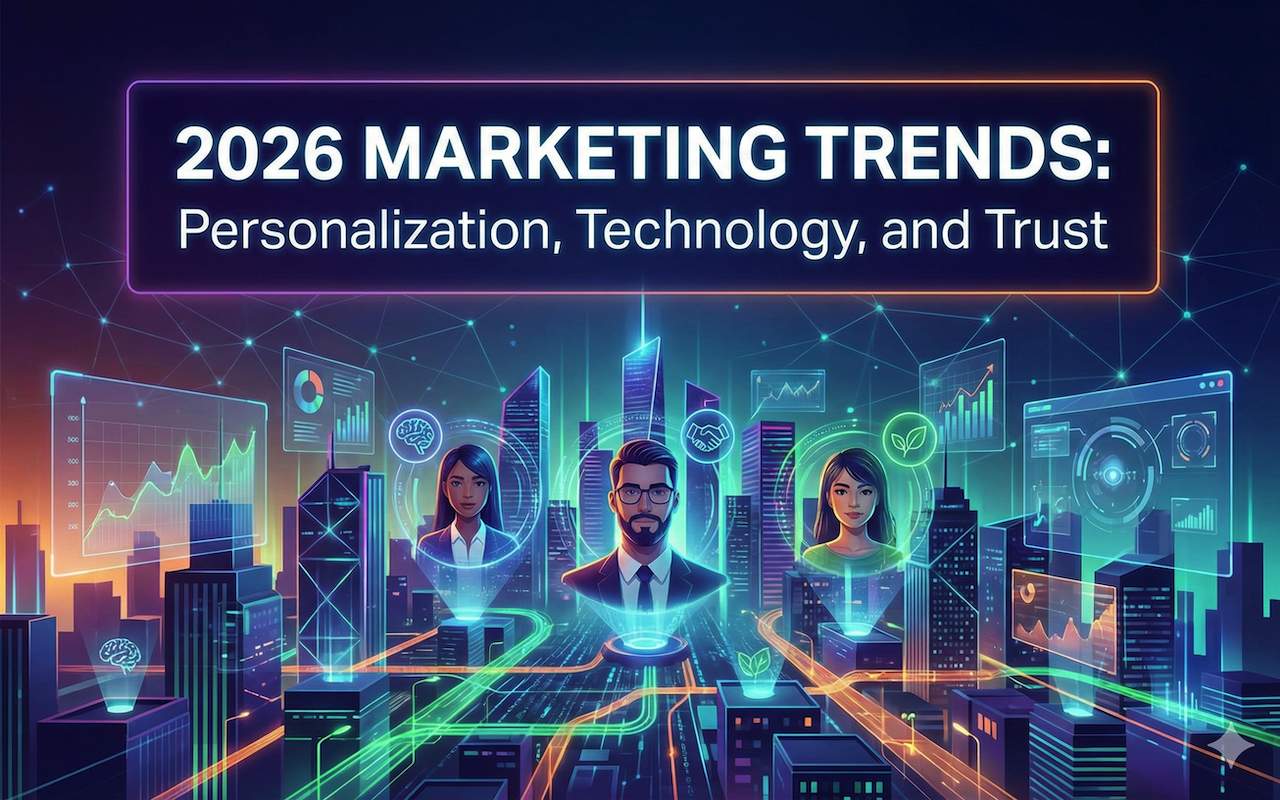
Marketing in 2026 is characterized by personalization, technology, and trust. Brands are reconsidering how they reach people through AI-driven content and sustainable campaigns.
This blog post will discuss the major marketing trends, technologies, and consumer insights in 2026.
Top Marketing Trends Defining 2026
AI-Driven Personalization and Predictive Analytics
Hyper-personalized campaigns are still driven by artificial intelligence. Predictive analytics helps marketers anticipate customer behavior before it occurs, whether it's purchase intent or churn likelihood.
The Rise of Voice and Visual Search Optimization
As the number of smart gadgets has increased, voice and image search optimization is a necessity.
Privacy-First Marketing and Zero-Party Data
Consumers increasingly want control over their personal information. As a result, marketers are focusing on zero-party data, information that users intentionally and voluntarily share, to build trust and transparency.
Content Repurposing and Short-Form Video Dominance
Social media feeds are ruled by micro-videos under 60 seconds. Recycling long-form content into consumable clips will keep brands visible across multiple platforms.
Sustainable and Ethical Brand Storytelling
The environmental responsibility aspect remains influential in purchase decisions. Gen Z audiences respond to brands in a purposeful, transparent way.
Marketing Tactics That Deliver Results in 2026
Omnichannel Campaigns Across Digital and Physical Touchpoints
Consumers demand a whole experience. A combination of web, mobile, and in-store platforms, such as digital signage, with the advantage of real-time updates, provides a seamless user experience.
Experiential Marketing and Hybrid Events
Experiential campaigns enable customers to relate to brands and experience. Digital signage software can support these moments by delivering dynamic visuals, live schedules, and interactive content during in-person and hybrid events. Virtual extensions, when combined with face-to-face events, increase availability and retention.
Community-Based Marketing and Brand Advocacy
Cultivated communities lead to natural expansion. Promote user-created content (UC) and word-of-mouth marketing to increase brand credibility.
Influencer Collaborations and Creator Partnerships
Micro-influencers are still strong allies in niche marketing. They favor openness and connection with their audiences rather than polished production.
Data-Driven Email and Automation Workflows
Email performance metrics are being transformed with intelligent segmentation, triggered workflows, and AI-driven subject lines.
Emerging Technologies Transforming Marketing
Generative AI in Content and Ad Creation
The AI can now help with creative output, whether that is writing ad copy or editing videos, so marketers can scale faster and maintain a consistent campaign output.
AR/VR for Immersive Brand Experiences
The use of augmented and virtual reality provides more emotional appeal. Customers can view products in 3D or take a virtual tour of a showroom.
Blockchain and Smart Contracts in Loyalty Programs
Blockchain makes rewards programs transparent and traceable. It is transforming the process in which customers can earn and redeem loyalty points safely.
Marketers are also considering IP-based targeting tools to identify users' approximate location and gain insights into regions to market their products more effectively.
Consumer Behavior Insights for 2026
In 2026, shoppers are value-driven rather than discount shoppers. They desire brands that align with their ethics, are sustainable, and demonstrate genuine concern for social and environmental problems. Price will never be the same, but purpose will get attention and be trusted.
Social proof has remained a decisive decision-maker, and 9 out of 10 online purchases are affected by reviews and recommendations. The likelihood of consumers purchasing increases when they see genuine user reviews, testimonials, or real-life demonstrations from people they identify with.
Consumers in the era of instant communication demand that brands respond within 24 hours. Quick, transparent communication builds trust and maintains buyers' interest. That is where digital signage benefits companies, since it enables them to add real-time updates, show customer stories, and strengthen trust at the point of contact.
Modern buyers also desire emotional storytelling. Brands that emphasize transparency, shared values, and authenticity build stronger loyalty. Emotional marketing with dynamic display technology helps companies visually appeal to their audiences and stay top of mind, even in a saturated market.
Challenges Marketers Face in 2026
Balancing Automation with Human Creativity
Artificial intelligence enables the marketing efforts to multiply, yet creativity remains one of the powerful drivers of connection. It isn't easy to combine data insights with authentic storytelling.
Ad Fatigue and Consumer Attention Decline
Limited attention durations imply that campaigns should get attention within a few seconds. This necessitates brief messaging and pictorial narrations.
Measuring ROI in Multichannel Ecosystems
The attribution of social, email, and physical touchpoints is complex yet crucial to proper performance analysis.
Key Takeaways for Future-Ready Marketers
- Invest in AI tools for data-driven decision-making: Apply predictive insights to personalize customer journeys and optimize campaigns in real time.
- Focus on transparency and ethical storytelling: Truthfulness is rewarded, and open brand communication builds long-term trust and advocacy.
- Diversify content formats and prioritize personalization: From video to interactive screens, customize each touchpoint to audience needs.
- Balance automation with creativity to maintain authenticity: Use technology to enhance your message, not replace the human element.
- Embrace agility through continuous testing and optimization: Flexibility helps brands adapt more quickly to new platforms and emerging trends.
- Leverage digital signage to enhance interaction: Strengthen engagement across physical and online environments while supporting brand consistency and the customer journey.
How Can Brands Build a Resilient Marketing Strategy for 2026 and Beyond?
Resilience is the real distinguishing factor in an era in which technology changes more rapidly than campaigns. The marketer who remains flexible, takes the time to learn, and knows their audience will succeed. Strategy is not only about forecasting, but it is also about planning.
Featured Image generated by Google Gemini.
Related Articles
May 11, 2026
Navigating Digital Marketing in 2026: Key Trends Driving Innovation, Growth, and Human Connection
The digital marketing landscape in 2026 looks nothing like it did even two years ago. What once revolved around clicks, impressions, and basic targeting has evolved into a soph...
Read More
March 2, 2026
Top Digital Marketing Trends to Watch in 2026
Digital marketing is shifting at a pace that can feel dizzying. What worked last year might already feel outdated, and audiences today are no longer satisfied with passive cont...
Read More
July 21, 2025
Digital Marketing Tactics You Need to Adopt in 2025
Most digital plans don't last very long. Things that worked in 2022 might still work for some time. However, these strategies are obsolete now in 2025. Algorithms are changing. Use...
Read More
Comments
Comments are available to signed-in users and are moderated to keep the discussion useful and respectful. Spam, automated submissions, and low-value promotional comments are removed. Outbound links may be approved when they are relevant and genuinely helpful to readers, but they are displayed as plain text rather than clickable hyperlinks.
No comments have been published yet.
Please sign in to submit a comment.