
Maintenance is no longer a team that you call when something goes wrong with the machine. In current industrial activities, it serves as a central catalyst to total profitability. The industry is undergoing a colossal transformation, moving away from reactive, run-to-failure design and toward a proactive, data-driven approach to reliability. The key to this transformation is the Computerized Maintenance Management System (CMMS) technology that helps facilities forecast, plan, and optimize their operations.
Maintenance teams are subject to a lot of pressure daily. Planned downtime is very expensive in terms of revenue loss. When paper trails, whiteboards, or patchwork spreadsheets are used to manage work orders, it results in lost requests and wasted labor. The poor asset-tracking system causes plant heads to, at best, guess at the health of the machines, as maintenance costs continue to be cut directly from the bottom line.
This guide is the ultimate resource for the winding process of CMMS selection. We will dissect ways to prevent costly buying errors, ways to assess solutions methodically, and a platform that literally changes your operations and delivers a palpable Return on Investment (ROI).
Uncovering the True ROI of a CMMS
Investing software requires justification. A properly implemented Computerized Maintenance Management System (CMMS) pays for itself by directly attacking the most expensive inefficiencies on the plant floor.
Eradicating Unplanned Downtime
Each minute a critical asset is idle, production stops, and profit is lost. CMMS shifts your team's paradigm from firefighting to fire prevention. Technicians will be able to keep equipment in good condition by automatically scheduling preventive maintenance based on meter readings or calendar dates, before small amounts of wear lead to disastrous failure. The resulting increase in machine availability is typically the largest individual contributor to CMMS ROI.
Optimizing Labor and Work Order Flow
Manual work order management is notoriously slow. This is all being computerized in a CMMS. The technicians are notified instantly on their mobile phones, including priority levels, digital manuals, and required safety procedures. They do not have to spend a lot of time walking to and from the parts room or maintenance office to turn off a wrench.
Extending Asset Lifespan
The cost of industrial machinery is very high. Selling a failing asset off-prematurely is a high capital charge. A CMMS carefully records the repair history, part usage, and the labor invested in each machine. Historical data provides plant heads with the precise lifecycle cost of an asset, making it easy to determine whether it is more cost-effective to repair or replace a piece of equipment.

The Strategic Framework for CMMS Selection
The above ROI will be achieved through the appropriate software selection. The choice of a CMMS is not an IT choice but more of an operational one. Use this outline to ensure you are aligned with your facility's objectives.
1. Assess Current Practices
Assess the internal reality before evaluating external software. Know exactly where your existing process is failing. Do technicians take excessive time to obtain spare parts? Do preventive maintenance activities often get overlooked? Recording these bottlenecks gives you a clear point of reference for measuring future success.
2. Define Clear Requirements
Do not get distracted by features you do not actually need. Clearly separate essential requirements from optional additions.
- Must-Haves: Mobile accessibility for technicians, automated preventive maintenance scheduling, effective inventory tracking, and custom reporting dashboards.
- Future-Ready Additions: Integration with ERP (Enterprise Resource Planning) systems and the ability to connect with IoT (Internet of Things) sensors for predictive maintenance.
3. Systematic Vendor Evaluation
Prioritize usability and rollout strategy above all else. Evaluate vendors based on these critical factors:
- User Experience (UX): Technicians should be able to log hours, check inventory, and complete work orders within seconds using a mobile device. If the software is difficult to use, adoption will fail and ROI will drop.
- Implementation Support: A successful CMMS depends on accurate data. Vendors should provide strong onboarding support, including training and data migration, to ensure a smooth implementation.
Driving Success Through Implementation
Buying the software is just the beginning. Execution is entirely what matters to the actualization of your ROI.
Data migration should be done accurately. With garbage in, you have garbage out. The majority of asset hierarchies and inventory lists should be cleaned up and then uploaded into the new system.
Focus on change management. Present the technology to your technicians, not to control them in a micromanagement manner, but to be able to facilitate their daily tasks, make them safer, and reduce chaos. Intensive training programs will make the team feel at ease with using the digital workflow.
With a correct assessment of your needs, a vendor choice made with care, and a focus on user adoption, you position your facility to enjoy the significant financial and operational payoff that a contemporary CMMS provides.
Conclusion
The reactive chaos-to-proactive reliability transformation needs to be based on a strong technological foundation. CMMS is much more than an online filing cabinet of work orders; it is a strategic investment that will redefine operational efficiency. The leadership of the plants will enjoy a significant payoff by rigorously evaluating internal requirements, selecting a suitable platform, and being determined to pursue a deliberate implementation strategy. The final effect is a strong maintenance team, extended asset lifespans, and a near absence of profit-killing downtime. The institutions that will dominate the market in the current industrial operations are those that use data to provide reliability.
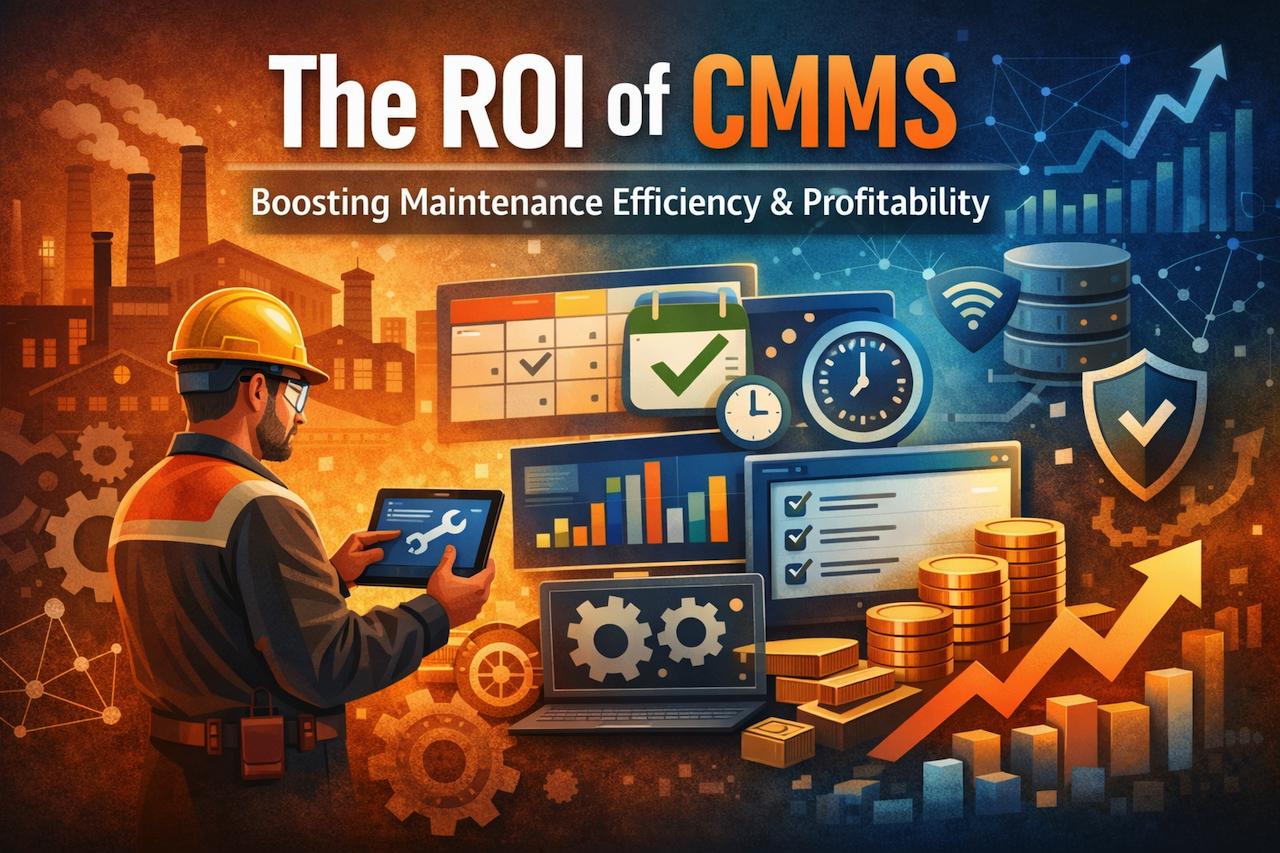
Featured Image generated by ChatGPT.
Share this post
Leave a comment
All comments are moderated. Spammy and bot submitted comments are deleted. Please submit the comments that are helpful to others, and we'll approve your comments. A comment that includes outbound link will only be approved if the content is relevant to the topic, and has some value to our readers.
Comments (0)
No comment