
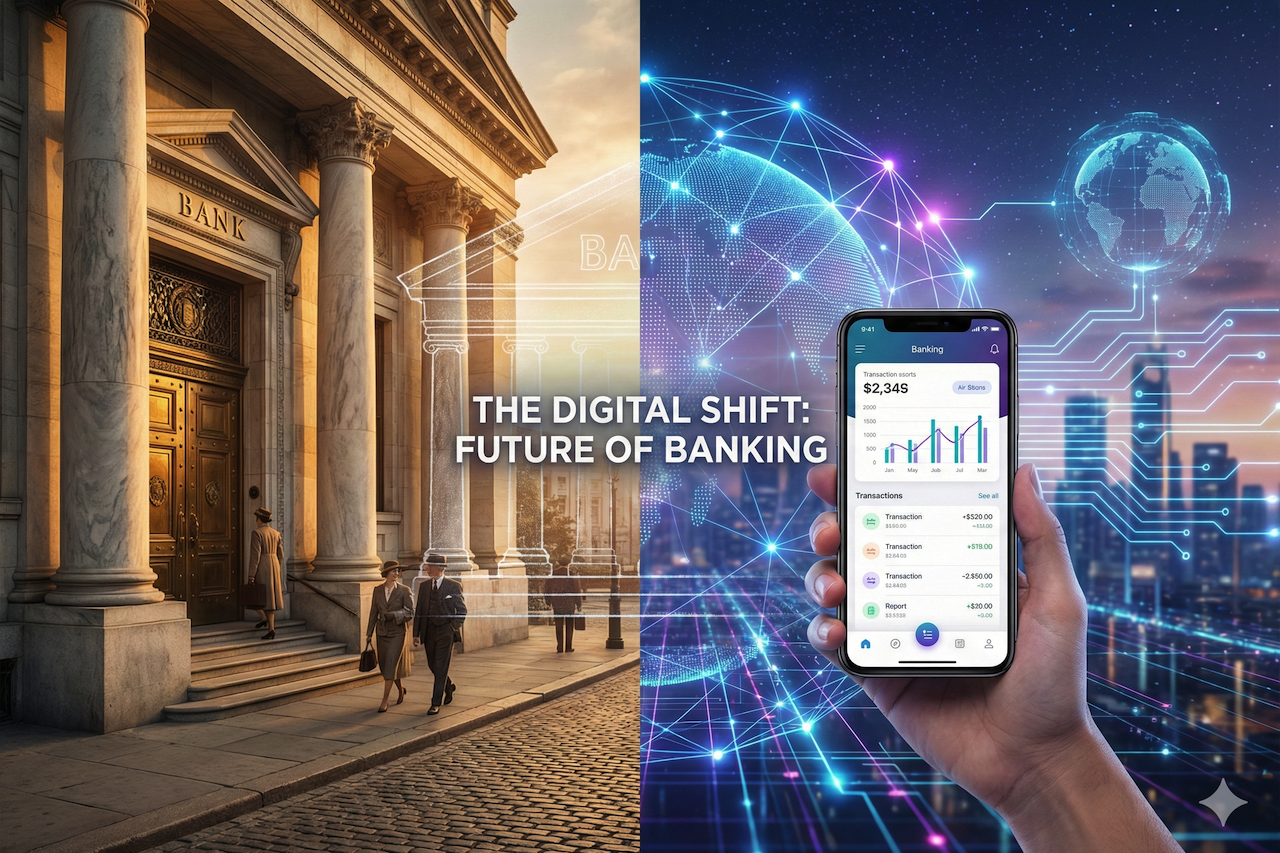
There was a time, not so long ago, when the local bank branch was the center of our financial lives. You knew the person behind the counter, and honestly, they likely knew your name too. It was a physical relationship defined by marble floors, heavy doors, and those particular, limited business hours. Today, that physical footprint is shrinking. A complex and invisible network of digital infrastructure is replacing it. This shift isn’t just about convenience. It is fundamentally changing the way we think about, access, and manage our money.
But does a bank even need a front door anymore?
When we talk about digital infrastructure in banking, we are looking at the invisible wires and protocols that make modern life possible. It includes high-speed internet, secure cloud storage, and APIs that enable different software programs to communicate. For the average person, this means that the bank is no longer a place you go. It is an app on your phone, a chip in your card, and a seamless part of your daily routine. You know, like checking the weather or scrolling through news before your first cup of coffee.
Breaking Down the Barriers of Geography
Perhaps the most significant change is the death of distance. In the past, your choice of bank was primarily determined by which branch was closest to your home or office. If you moved to a rural area or a different city, you might have to close your accounts and start over.
It was a tether we just accepted.
Digital infrastructure has erased those lines for good. Today, a person living in a remote mountain town has access to the same financial tools as someone living in the heart of a central financial district. This democratization of access is a powerful force for financial inclusion. It allows people who traditional institutions previously underserved to enter the formal economy. All you really need is a reliable internet connection and a mobile device. Because of this level of connectivity, it’s now incredibly easy to research banking options. And honestly, why should your zip code dictate your financial potential? It shouldn't.
Speed as the New Standard
Digital infrastructure has reshaped expectations for how quickly everyday banking tasks should be completed. In the past, even basic actions like opening a checking account required appointments, paperwork, and days of waiting. Today, those delays feel increasingly out of place. What once involved in-person visits and manual steps can now be handled through streamlined digital processes, making it far easier for people to apply for a bank account online without rearranging their schedules or navigating unnecessary friction. This shift isn’t just about saving time; it reduces uncertainty and makes personal banking feel more responsive, accessible, and in step with modern life.
Security in the Digital Age
One of the biggest hurdles to the adoption of digital banking was the fear of security. How could a digital system be as safe as a locked vault? The irony is that modern digital infrastructure is often much more secure than the paper-based systems of the past.
Encryption protocols, multi-factor authentication, and biometric security, such as fingerprint and facial recognition, have created layers of protection that were previously impossible. Furthermore, digital systems allow for real-time monitoring. Banks can now detect suspicious activity the moment it happens and alert you immediately.
The system never sleeps.
Instead of finding out about a fraudulent charge when your monthly statement arrives, you get a notification on your phone before you’ve even left the store. So, is the digital vault actually stronger than the physical one? In almost every measurable way, the answer is yes. It feels safer because you’re actually in the loop.
The Rise of Personalization
Because digital infrastructure collects and analyzes vast amounts of data, banks can now offer a level of personalization that was once reserved for the ultra-wealthy. AI-driven insights can look at your spending patterns and offer tailored advice. Maybe it is a nudge to put more into your savings account because you have a surplus this month, or a warning that a recurring subscription price has gone up.
This shift moves the bank from being a passive vault to an active partner in your financial health. The interface of your banking app can be customized to show you precisely what you need to see, when you need to see it. It makes the experience feel less like a transaction and more like a service tailored to you.
Challenges and the Human Element
While the benefits are clear, the transition to a purely digital infrastructure isn't without its growing pains. There is a risk of leaving behind those who are less tech-savvy or who live in areas with poor internet connectivity. The digital divide is a genuine concern that requires ongoing investment in public infrastructure.
There is also the question of trust. In a world where you never meet your banker face to face, building a lasting relationship requires a different approach. Banks must prove their reliability through transparency and consistent performance. They need to ensure that their automated systems are fair and that there is always a way for a human to step in when things get complicated. Sometimes you need to talk to a person, maybe even just to hear a voice on the other end.
Looking Toward the Future
As we look ahead, the role of digital infrastructure will only continue to grow. We are already seeing the integration of blockchain for even faster settlements and the use of edge computing to make mobile transactions more responsive. The boundaries between banking and other parts of our lives are blurring as embedded finance becomes the norm.
The way we access personal banking has changed forever. We have traded the physical handshake for a digital one, but the core goals remain the same. We want security, we want growth, and we want a partner that understands our needs.
And that is the point.
As long as the infrastructure continues to evolve with the user in mind, the future of personal banking looks brighter and more accessible than ever. It's a journey we're all on together, one tap at a time.
Disclaimer
This article is provided for informational and educational purposes only and should not be considered financial, legal, or professional advice. The views expressed are those of the author and do not constitute recommendations or endorsements of any financial products, services, or institutions.
References or links to third-party websites are provided for convenience and informational purposes only. iplocation.net does not control, endorse, or assume responsibility for the content, accuracy, or availability of external sites and is not liable for any losses or damages arising from their use.
Featured Image generated by Google Gemini.
Share this post
Leave a comment
All comments are moderated. Spammy and bot submitted comments are deleted. Please submit the comments that are helpful to others, and we'll approve your comments. A comment that includes outbound link will only be approved if the content is relevant to the topic, and has some value to our readers.
Comments (0)
No comment