
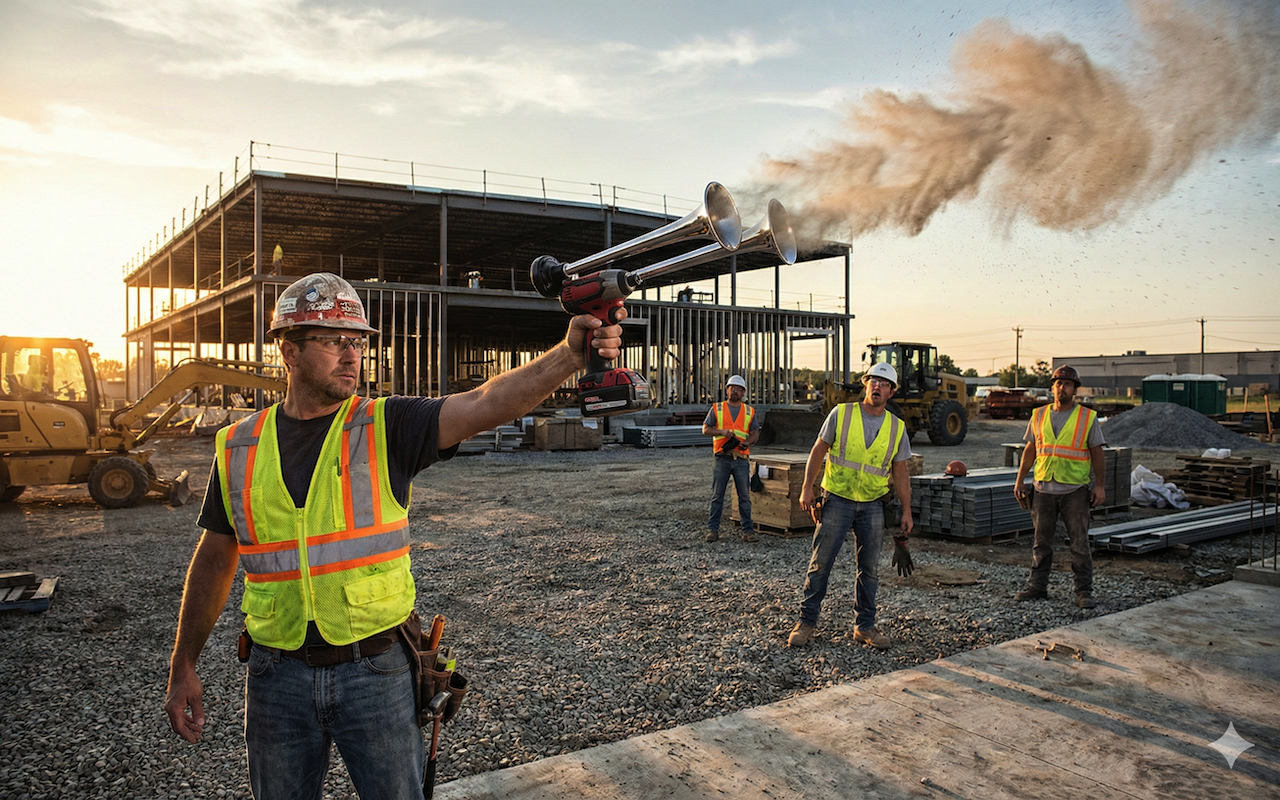
At 6:45 AM, the construction site is a symphony of low-level grumbling. Coffee is being chugged from battered thermoses, boots are crunching on gravel, and the generator is just starting its rhythmic, deafening hum. The foreman, a man whose voice usually carries over the sound of a circular saw, checks his watch.
It’s time to start the day. But instead of yelling, he reaches into the cab of his truck and pulls out a modified impact driver fitted with dual chrome trumpets. He points it skyward and squeezes the trigger of the Milwaukee train horn.
HOOOOOOOOOONK.
The sound is instant and absolute. It cuts through the diesel idling, the wind, and the lingering grogginess of the morning. Heads snap up. The new guy drops his gloves. The day has officially begun.
On job sites across the country, the train horn tool is rapidly replacing the whistle and the shout as the preferred method of communication. What started as a viral internet novelty has found a genuine home among the framing crews, concrete pourers, and steelworkers who keep the world building. Here is how this 150-decibel beast became the unofficial alarm clock of the trade.
The “Lunch Whistle” 2.0
Construction sites are loud environments. Between pneumatic nail guns, grinding rebar, and the constant beep-beep-beep of backing machinery, the human voice doesn’t stand a chance.
“We used to yell ‘Lunch!’ and hope the guys on the roof heard us,” says Mike, a framing lead. “Half the time, the guys in the back wouldn’t come down for ten minutes because they couldn’t hear over the compressor. Now? When I hit the horn, everybody stops. You can feel it in your chest.”
At noon, the horn serves a sacred purpose. Two short blasts mean tools down. It is the Pavlovian signal that sandwiches are waiting. The efficiency is undeniable—no confusion, no stragglers, and no excuse for missing the break.
The Prank War Nuclear Option
Of course, you can’t hand a group of bored, tired men a device that sounds like a freight train without expecting some mischief. Job-site culture thrives on pranks—greasing door handles, hiding tools, and the classic “go get the board stretcher.” The train horn has escalated these wars to new heights.
The most common target is the “sleeper.” Every crew has one guy who tries to sneak a nap in the work van's cab during a rain delay.
The setup is simple: The sleeper is dozing peacefully, perhaps dreaming of overtime pay. The prankster creeps up to the open window, positions the trumpets (safely away from the ear, but close enough to matter), and lets it rip. The result is a flailing, coffee-spilling awakening that usually ends with the entire crew doubling over in laughter. It is cruel, it is loud, and on a job site, it is a sign of affection.
The End-of-Day Salute
There is a specific feeling when Friday afternoon hits. The sun is lowering, the muscles are aching, and the weekend is visible on the horizon. The cleanup is done. The tools are packed.
This is the train horn’s finest hour.
As the last truck rolls out of the mud and hits the pavement, a long, sustained blast echoes off the unfinished skeleton of the building. It’s a victory lap in sonic form. It signals to the neighborhood, the crew, and the world at large that the work is done.
For the guys in the trucks, that sound is better than music. It means freedom.
More Than Just Noise
Critics might see the train horn tool as just another obnoxious toy, but for the crew, it fits perfectly into the job-site ecosystem. It’s battery-powered, rugged, and built on the chassis of the tools they already use daily. And most importantly, it matches the energy of the work.
Construction is loud, heavy, and dangerous work. It requires loud, heavy gear. A polite whistle doesn’t fit the vibe of pouring ten tons of concrete. A train horn does.
Conclusion
So if you drive past a job site and hear the distinct roar of a locomotive where there are no tracks, don’t panic. It’s just the boys letting off steam, signaling lunch, or waking up the apprentice. It’s the heartbeat of the job, broadcast at 150 decibels.
Featured Image generated by Google Gemini.
Share this post
Leave a comment
All comments are moderated. Spammy and bot submitted comments are deleted. Please submit the comments that are helpful to others, and we'll approve your comments. A comment that includes outbound link will only be approved if the content is relevant to the topic, and has some value to our readers.
Comments (0)
No comment