
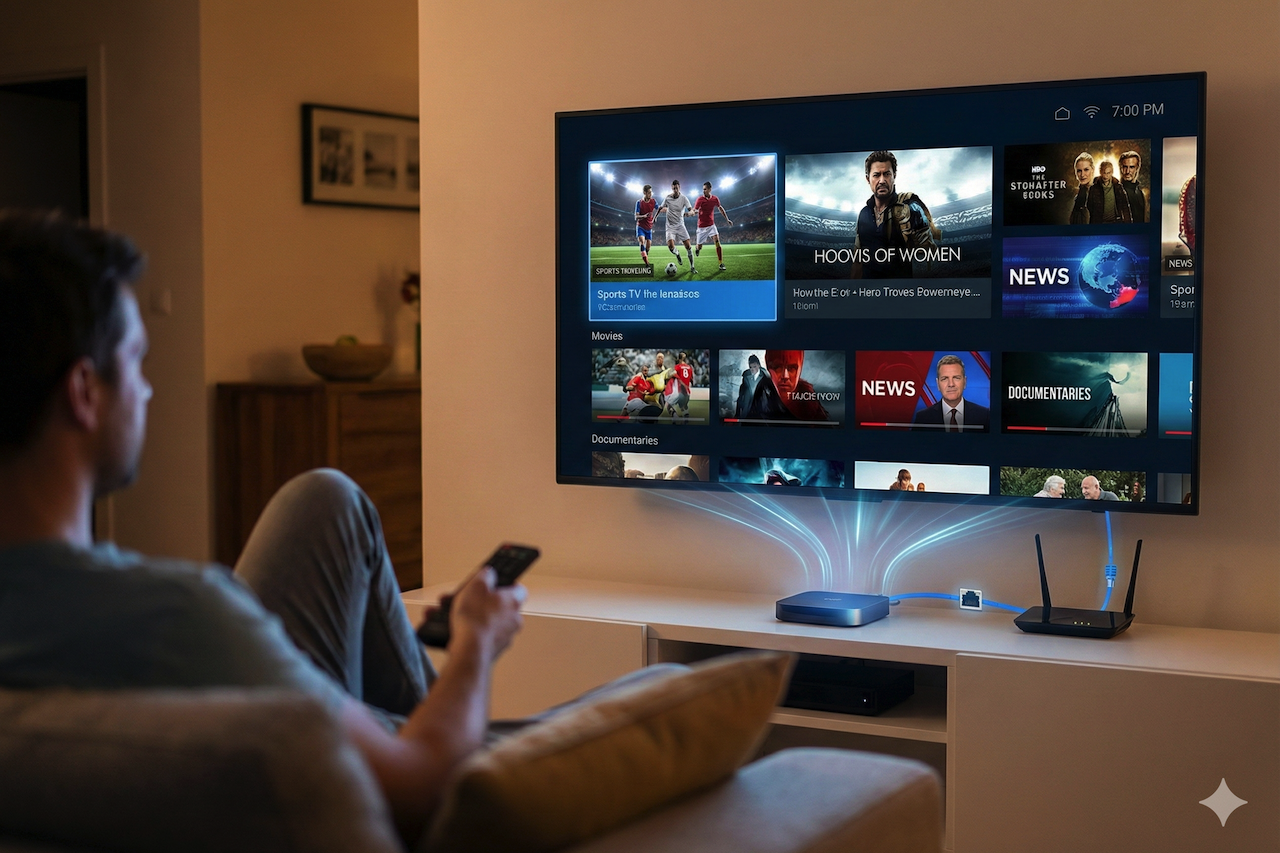
Let’s be honest: the way we watch TV has changed forever. The days of being tied to a bulky cable box with a long-term contract feel increasingly outdated. Today, most viewers are looking for more freedom, better variety, and stronger value. This shift is exactly why IPTV has moved from a niche option for tech enthusiasts to a widely discussed alternative across online communities, workplaces, and everyday conversations.
That said, while the idea of “TV over the internet” sounds simple in theory, the reality can be more complicated. Anyone who has settled in to watch a high-stakes live event only to see the screen freeze at the worst possible moment understands the frustration of a poorly optimized setup. Moving from a frustrating viewing experience to smooth, reliable streaming requires more than just switching services; it requires a plan. This isn’t only about saving money; it’s about building a home media setup that respects your time and attention.
1. Finding Your Digital Partner: More Than Just a List of Channels
The first step isn’t the hardware; it’s the service itself. Choosing a reliable IPTV subscription is similar to choosing any long-term digital service. Price matters, but consistency, quality, and support matter more.
In 2026, the streaming market is crowded with offers that promise massive channel counts at extremely low prices. These deals often look appealing, but many cut corners on infrastructure, maintenance, or customer support. A sustainable service requires ongoing investment in servers, security updates, and technical reliability.
A quality subscription should feel seamless. Channel switching should be quick, the electronic program guide should be accurate and easy to navigate, and streams should remain stable even during major live events when viewership spikes. When you find the right IPTV provider, you’re not just purchasing access to content; you’re buying reliability. Trial periods, clear communication channels, and support for modern video formats are all signs of a service built for long-term use.
2. Why Your Connection Is the “Secret Sauce” of Success
Even the best streaming service will struggle if your home network isn’t stable. This is where many users encounter problems. Internet connections that feel fast enough for browsing or social media may still fall short for live, high-definition streaming.
Live video is unforgiving. Unlike on-demand content that can buffer ahead of time, live broadcasts must be delivered in real time. Any interruption—even a brief one—becomes visible immediately.
One of the most common sources of streaming issues is wireless connectivity. Wi-Fi is convenient, but it’s vulnerable to interference from walls, appliances, and neighboring networks. For viewers seeking the most reliable experience, a wired Ethernet connection remains the gold standard. Connecting your streaming device directly to the router creates a stable, high-speed pathway for data and can eliminate a large percentage of buffering and stuttering issues. It’s a small, one-time change that often delivers noticeable results.
3. Network Routing, Traffic Management, and Privacy
Streaming performance is also affected by how data travels across the internet. Traffic doesn’t always take the shortest or fastest route between a provider and your device. Routing decisions, congestion, and network management policies can all introduce latency, especially during peak usage periods.
Using diagnostic tools such as an IP address lookup can help reveal how your traffic is being routed and whether delays may be occurring along the way. In some cases, high-bandwidth video traffic may be deprioritized during busy hours.
For this reason, some viewers choose to use a VPN. By encrypting traffic, a VPN can reduce the visibility of streaming activity to intermediaries and sometimes improve consistency. In addition to potential performance benefits, it also adds a layer of privacy by limiting how much viewing data is exposed during transmission.
4. Don’t Settle for “Good Enough” Hardware
The device powering your streaming experience plays a major role in overall performance. While built-in smart TV apps are convenient, they are often constrained by limited processing power and infrequent software updates. This can lead to slow menus, crashes, and inconsistent playback.
Dedicated streaming devices are designed specifically for handling modern video formats, high bitrates, and advanced codecs. With stronger processors and more memory, they offer faster navigation, smoother playback, and better long-term stability. When paired with capable player software, channel surfing can feel instant and responsive, comparable to traditional television, but with far greater flexibility and content choice.
5. Setting the Stage for the Future
For some, optimizing a home media setup becomes a hobby. For most people, it’s simply about reducing friction. After a long day, the goal is to sit down and watch content without troubleshooting menus, buffering screens, or dropped streams.
By taking a few proactive steps—selecting a reputable IPTV service, optimizing your network with a wired connection, and investing in reliable hardware—you can build a setup that works quietly in the background. This approach moves you away from rigid, one-size-fits-all television models and toward an experience where you decide what to watch, when to watch it, and how much complexity you’re willing to tolerate.
Conclusion
In 2026, digital entertainment continues to evolve rapidly. A thoughtfully optimized IPTV setup offers flexibility, consistency, and control—allowing you to focus less on technical issues and more on enjoying the content itself.
Featured Image generated by Google Gemini.
Share this post
Author

Read the latest articles from Shahid Latif
How to Restyle Short Video Clips with Video-to-Video AI
June 5, 2026
You come back from a shoot with footage that’s good enough to use. The lighting works, the movement feels natural, and a few clips could easily become social media teasers. Then you hit the usual wall: making them look anime-inspired, illustrated, or cinematic often means learning effect-heavy editing, testing [...]
Learn moreAI Video Enhancer: Your Videos Don’t Look Professional? Here’s the Fastest Fix
June 1, 2026
Ever invest hours into making a video only to upload and find it looks blurry, dull, or just… not professional?
Learn moreLeave a comment
All comments are moderated. Spammy and bot submitted comments are deleted. Please submit the comments that are helpful to others, and we'll approve your comments. A comment that includes outbound link will only be approved if the content is relevant to the topic, and has some value to our readers.
Comments (0)
No comment