
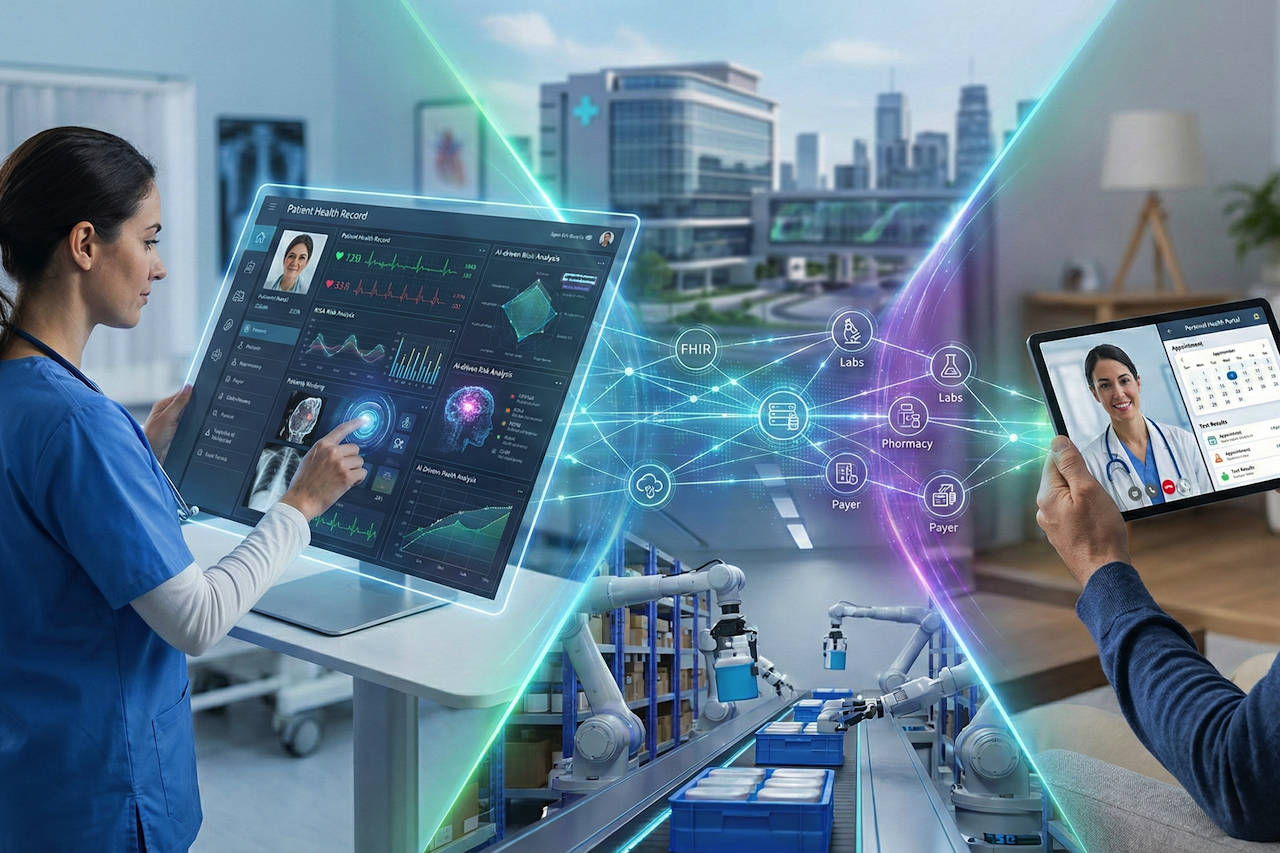
The healthcare industry has changed enormously over the past decade, and much of that change has happened not in operating rooms or research labs, but in the software powering the entire ecosystem. From how clinicians document patient visits to how hospitals manage supply chains, technology has become inseparable from care delivery. Modern healthcare platforms and the vendors that develop them now extend far beyond simple digital record-keeping, offering integrated capabilities that support clinical, operational, and administrative functions. Understanding how these systems work and how different vendors approach innovation is essential for any healthcare organization thinking seriously about its long-term technology strategy.
Electronic Health Records: Still the Foundation, But Far More Capable
Electronic health records remain the centerpiece of healthcare technology infrastructure, but their functionality has evolved significantly. Contemporary EHR platforms are increasingly built around interoperability, enabling the secure exchange of information across health systems, laboratories, pharmacies, and insurance networks through standardized protocols such as HL7 FHIR. This progress allows clinicians to access more complete patient histories and improves coordination across care settings.
Beyond documentation, modern EHRs include clinical decision support tools that alert providers to potential drug interactions, flag abnormal lab values, and surface evidence-based treatment protocols at the point of care. Some systems also incorporate machine learning models that analyze patient data in real time to identify individuals at elevated risk of complications such as sepsis, readmission, or clinical deterioration.
Patient Portals and Consumer Engagement
Digital tools now extend beyond clinical environments through patient portals and mobile health applications. These technologies allow patients to schedule appointments, review test results, request prescription refills, and communicate directly with care teams. The growing emphasis on usability, accessibility, and health literacy reflects the broader shift toward consumer-centered healthcare experiences.
Revenue Cycle and Financial Operations
Healthcare organizations operate within a highly complex billing environment, navigating evolving payer rules, regulatory requirements, and reimbursement models. Technology has helped automate and streamline many of these processes, from patient eligibility verification and prior authorization to claims submission and payment reconciliation.
Automation and analytics now play a central role. Intelligent tools review claims before submission, identify potential errors, and support denial prevention. Data-driven insights also help organizations improve financial performance while reducing administrative burdens and operational inefficiencies.
Price Transparency and Patient Financial Experience
Regulatory developments around price transparency have encouraged the adoption of tools that generate cost estimates and provide clearer financial expectations. Features such as payment planning, cost modeling, and financial counseling support both compliance and patient satisfaction.
Telehealth and Virtual Care
The rapid expansion of telehealth accelerated during the COVID-19 pandemic and continues to shape healthcare delivery. What began as basic video consultation has evolved into comprehensive virtual care models that include asynchronous messaging, remote monitoring, and hybrid care pathways.
Virtual care is now often integrated into clinical workflows, reducing documentation friction and improving continuity. This integration enables providers to conduct visits, review records, document care, and manage prescriptions within unified systems.
Interoperability and Data Exchange
Interoperability has become a central priority across the healthcare ecosystem. Regulatory initiatives such as the 21st Century Cures Act have driven increased transparency and data accessibility. Open application programming interfaces allow third-party innovation and create broader digital health ecosystems that enhance care coordination.
Health information exchanges and population health programs rely on these data-sharing capabilities to provide more complete patient insights and support value-based care models.
AI and Predictive Analytics
Artificial intelligence is increasingly embedded within healthcare technology. Ambient documentation tools help reduce clinician burnout by automatically generating structured notes. Predictive analytics supports scheduling, staffing, and resource planning, while diagnostic tools assist in identifying clinical patterns more consistently.
Although regulatory pathways remain complex, the number of validated and approved solutions continues to grow, expanding real-world applications across clinical and operational domains.
Practice Management and Operational Efficiency
Operational technology plays a critical role in supporting healthcare organizations. Scheduling, patient registration, reporting, and workflow automation help streamline administrative processes and reduce friction in daily operations.
Workforce management and staffing optimization have also become essential, particularly as healthcare systems navigate ongoing workforce challenges and changing care demands.
Specialty-Specific Digital Solutions
Different clinical specialties require tailored workflows, documentation standards, and regulatory compliance. Specialized systems are designed to address the unique needs of areas such as oncology, behavioral health, long-term care, and home health.
For example, behavioral health technology must support complex consent frameworks, patient privacy requirements, and measurement-based care models that track outcomes over time.
Key Considerations for Healthcare Technology Strategy
Given the breadth of available capabilities, selecting and implementing healthcare technology requires careful planning. Interoperability, scalability, security, and usability remain central considerations. Long-term adaptability is also critical as healthcare delivery models continue to evolve.
Collaboration, continuous improvement, and user-centered design often play a larger role in successful adoption than any single feature or tool.
Conclusion
Healthcare technology has become an essential foundation for modern care delivery. Integrated platforms now connect clinical documentation, financial operations, patient engagement, virtual care, and analytics in ways that support both better outcomes and more sustainable healthcare systems. As innovation continues, the focus is shifting toward interoperability, intelligent automation, and improved patient and clinician experiences. For healthcare organizations, building a flexible and resilient digital ecosystem is no longer optional—it is a strategic priority that directly influences the future of care.
Featured Image generated by Google Gemini.
Share this post
Leave a comment
All comments are moderated. Spammy and bot submitted comments are deleted. Please submit the comments that are helpful to others, and we'll approve your comments. A comment that includes outbound link will only be approved if the content is relevant to the topic, and has some value to our readers.
Comments (0)
No comment