
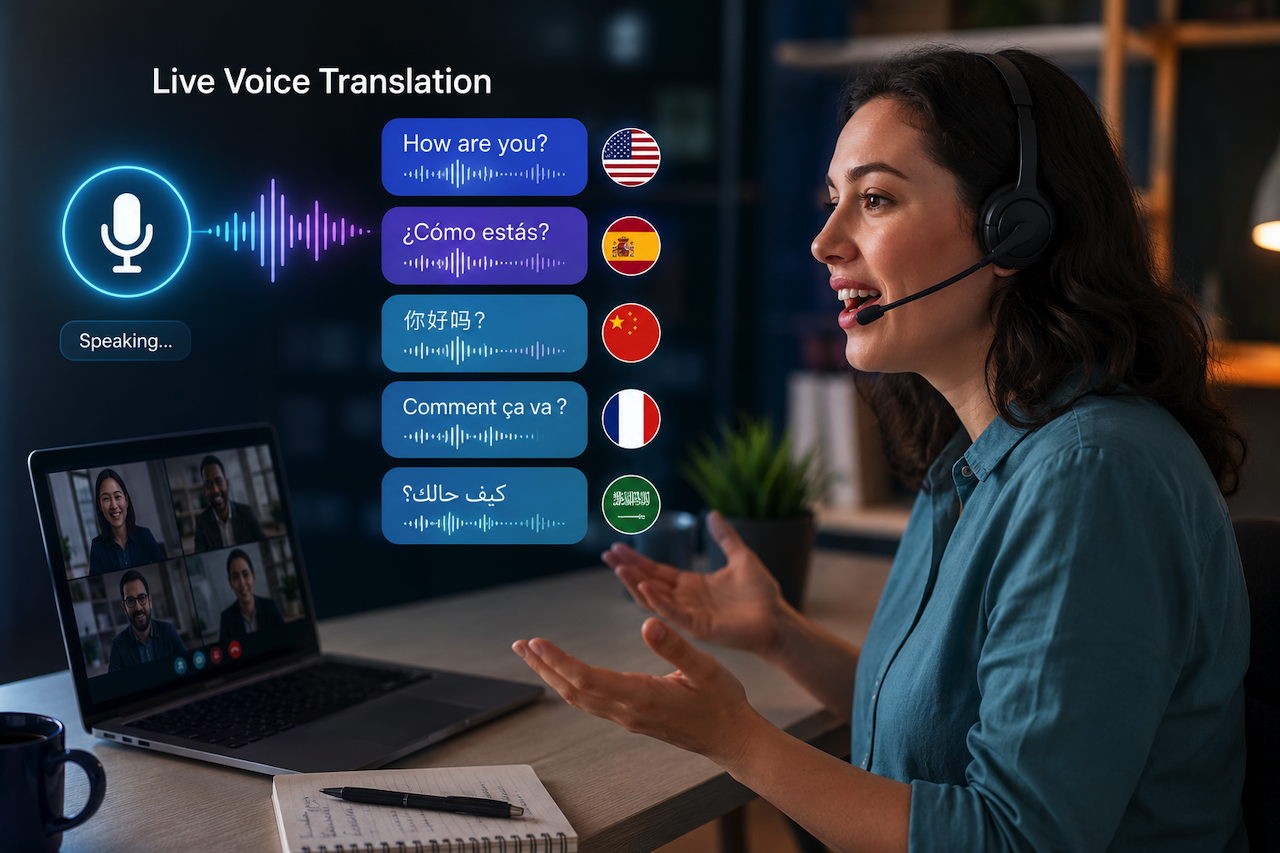
Live voice translation has become one of the most practical AI tools in 2026 because people increasingly want to communicate naturally across languages without waiting for subtitles or post-edited audio. It is especially useful in calls, webinars, travel, classrooms, and live events where timing matters as much as translation accuracy. A growing category of platforms now focuses on real-time speech translation across multiple languages.
Why Live Voice Translation Matters
A live voice translator has a more demanding task than a standard text translator. It must listen, understand context, translate, and generate spoken output almost instantly while the conversation is still moving. If the output is delayed or sounds overly robotic, the experience can quickly become difficult to follow.
That is why live voice translation tools differ from conventional translation apps. Many modern platforms are designed for continuous speech and real-time interaction rather than isolated text phrases or static translations. Palabra.ai, for example, is designed around live communication workflows rather than text-only translation.
Popular Live Voice Translator Apps
Several platforms currently operate in the live voice translation space:
- Palabra.ai: Focused on real-time speech translation, multilingual meetings, and live communication workflows.
- Maestra AI: Commonly used for captions, multilingual meetings, and content production workflows.
- Wordly: Often used for conferences, multilingual events, and live captioning environments.
- DeepL Voice: Known for translation quality in text-oriented workflows and expanding voice capabilities.
- Microsoft Translator: Widely used for everyday multilingual communication and business collaboration.
Different tools serve different priorities, including live speech translation, captioning, localization, conferencing, or enterprise communication.
Real-Time Translation and Voice Quality
One of the biggest challenges in live voice translation is maintaining natural conversation flow. Modern systems attempt to reduce latency while preserving speech clarity and contextual accuracy. Some platforms also incorporate voice synthesis or voice-cloning technologies to make translated speech sound more natural and easier to follow.
Real-time translation platforms are increasingly being integrated into:
- Zoom and Google Meet sessions
- webinars and virtual training
- livestreams and conferences
- multilingual customer support
- travel and conversational communication
The overall effectiveness of these systems depends on several factors, including language support, translation accuracy, response time, audio quality, and compatibility with existing communication tools.
Where Different Platforms Differ
Each platform tends to emphasize different strengths.
- Palabra.ai is positioned more directly around speech-to-speech translation and live multilingual interaction.
- Maestra AI focuses heavily on captions, dubbing, and content localization workflows.
- Wordly is commonly associated with conference and event translation environments.
- DeepL Voice is recognized for translation quality and text-first workflows.
- Microsoft Translator is often used for general communication and collaborative business settings.
As the market evolves, many of these tools continue expanding beyond their original use cases.
Common Use Cases
Live voice translation tools are increasingly used for:
- International business meetings
- Webinars and training sessions
- Multilingual livestreams
- Conference translation
- Customer support interactions
- Travel conversations
- Cross-border collaboration
These environments all require systems that can keep pace with natural speech while minimizing interruptions.
The Growing Role of Real-Time Translation
Live voice translation is becoming less about simple word replacement and more about preserving conversational flow and accessibility across languages. Businesses, educators, creators, and global teams are increasingly adopting live voice translator app platforms to support real-time communication without relying entirely on subtitles or human interpreters.
As speech AI continues to improve, live voice translator apps are expected to deliver lower latency, broader language support, and more natural-sounding multilingual interactions across professional and everyday communication environments.
Featured Image generated by ChatGPT.
Share this post
Author

Read the latest articles from Alice Thomas
PetroSky.io Review (2026): Is This VPS Provider Worth It?
May 8, 2026
PetroSky is a cloud VPS (Virtual Private Server) hosting provider that markets itself as a VPS provider focused on non-oversold infrastructure. Unlike many budget hosting companies that oversell server capacity, the company states that VPS resources are dedicated and not oversold.
Learn moreLeave a comment
All comments are moderated. Spammy and bot submitted comments are deleted. Please submit the comments that are helpful to others, and we'll approve your comments. A comment that includes outbound link will only be approved if the content is relevant to the topic, and has some value to our readers.
Comments (0)
No comment