
The best EOR for an SMB in 2026 is the provider that gives you fewer handoffs, stronger controls, cleaner compliance ownership, and less room for expensive human error. That matters because payroll, HR, and contractor management tools are adding AI features faster than most small businesses can properly evaluate the associated data risks.
The six options below stand out because they show real security signals, not just generic claims, and each one fits a slightly different operating style. Native Teams comes first because it is a practical fit for SMBs seeking secure contractor payments and compliant employment in one place, without jumping straight into enterprise-grade complexity.
1. Native Teams
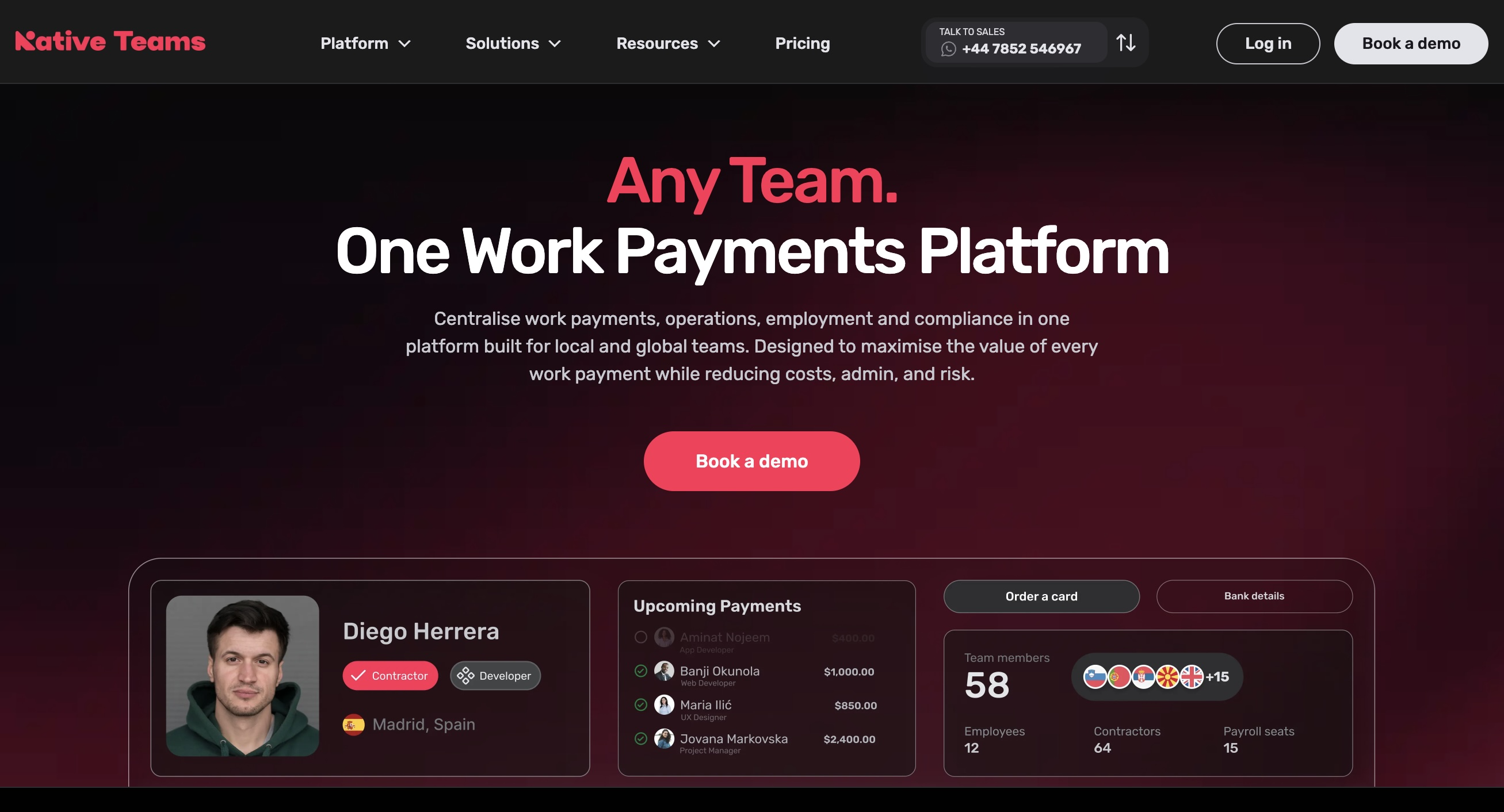
With its published materials showing an ISO 27001-certified information security management system that explicitly covers EOR services, Native Teams combines contractor payments, global payroll, and employer-of-record support in a way that feels built for smaller companies.
The safest setup is often the one with fewer moving parts: if the same platform helps you pay contractors, move workers into formal employment, manage country-specific payroll calculations, and keep documentation in one workflow, you reduce the manual handoffs where mistakes and data exposure usually happen.
It is compelling if your team is contractor-heavy today and likely to convert a few high performers into employees later, because that transition is where SMBs often create compliance risk by stitching together separate tools. Many smaller businesses need a platform that solves real international payroll pain without forcing them into a bloated implementation.
2. Deel
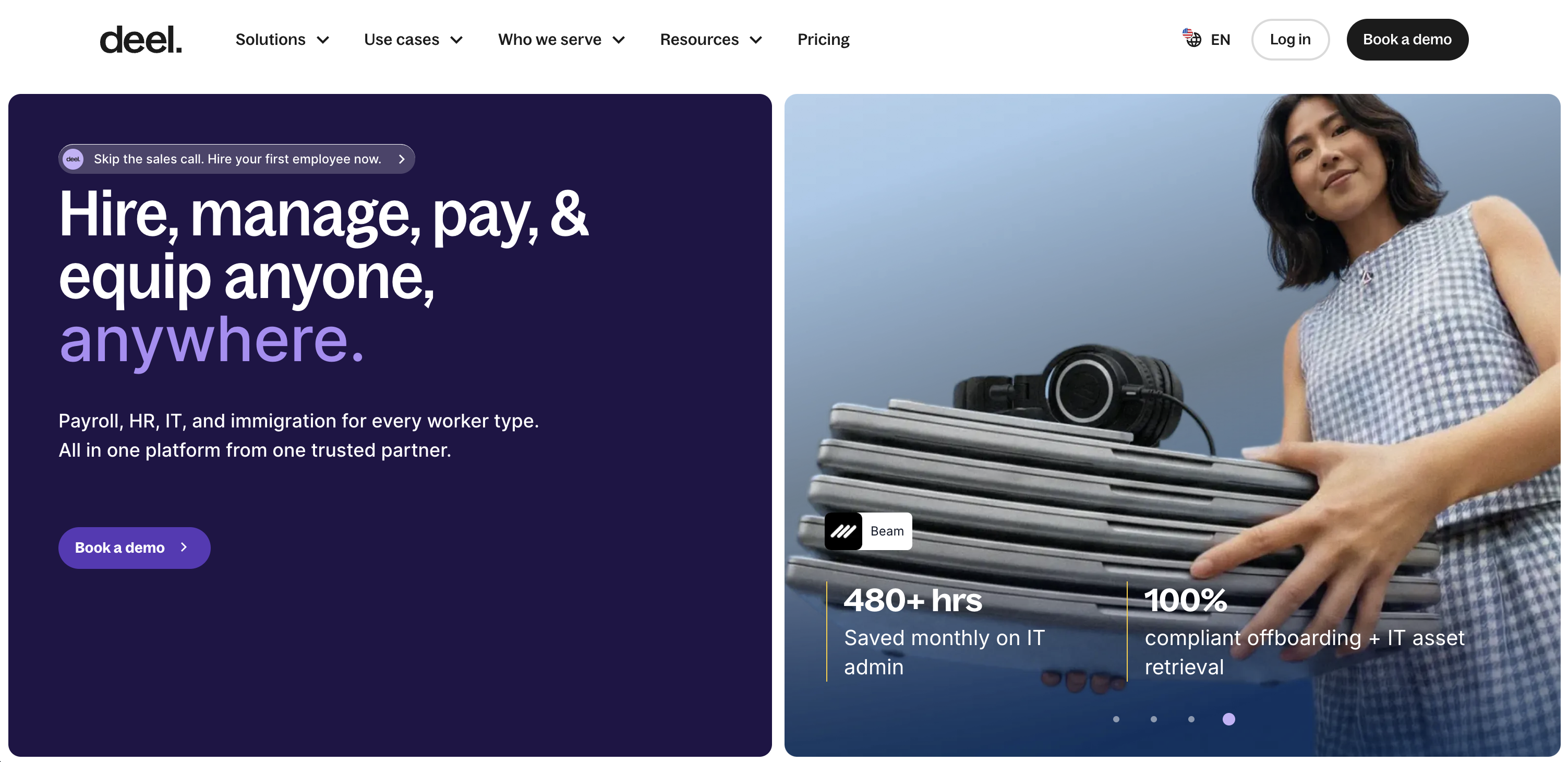
Because Deel openly declares GDPR compliance, SOC 2 Type II and ISO 27001 certification, extensive worldwide coverage, and a clear position that customer and staff data is one of the easiest suppliers to defend when security is your first filter.
If you want a single system for contractors, EOR workers, payroll, HR, and associated processes, that combination is important since managing permissions, reporting, and audit readiness across nations gets easier the more you consolidate without compromising controls.
Deel's security power is unquestionable, but its greatest match is often an SMB that anticipates true international expansion. If you are a smaller organisation with a straightforward recruiting strategy, it may feel wider than you need.
3. Remote
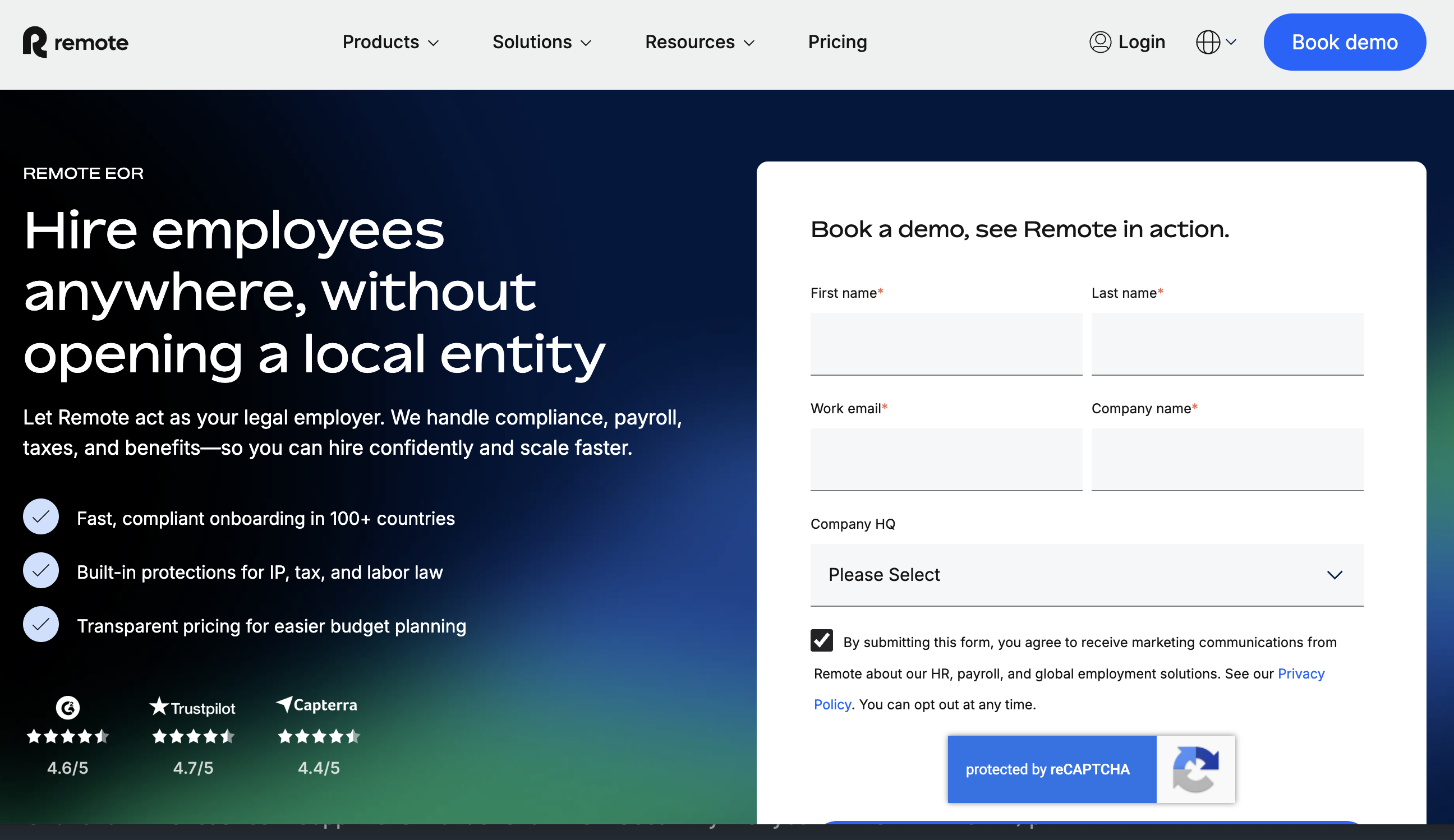
If you care about IP protection, consistent onboarding, and fewer legal handoffs, the Remote owned-entity model deserves more attention than many buyers give it, because every outsourced layer between you and the legal employer creates another place where communication, process discipline, or document control can weaken.
Remote is a good choice when your hiring mix is shifting away from pure contractors and toward long-term employees. That clarity can save you money later, even when an employment issue, statutory update, or termination question turns into a legal and payroll problem at the same time.
Remote is often the safest default for an SMB that wants to hire internationally without becoming an expert in cross-border employment operations, even if not always the cheapest path on paper.
4. Oyster
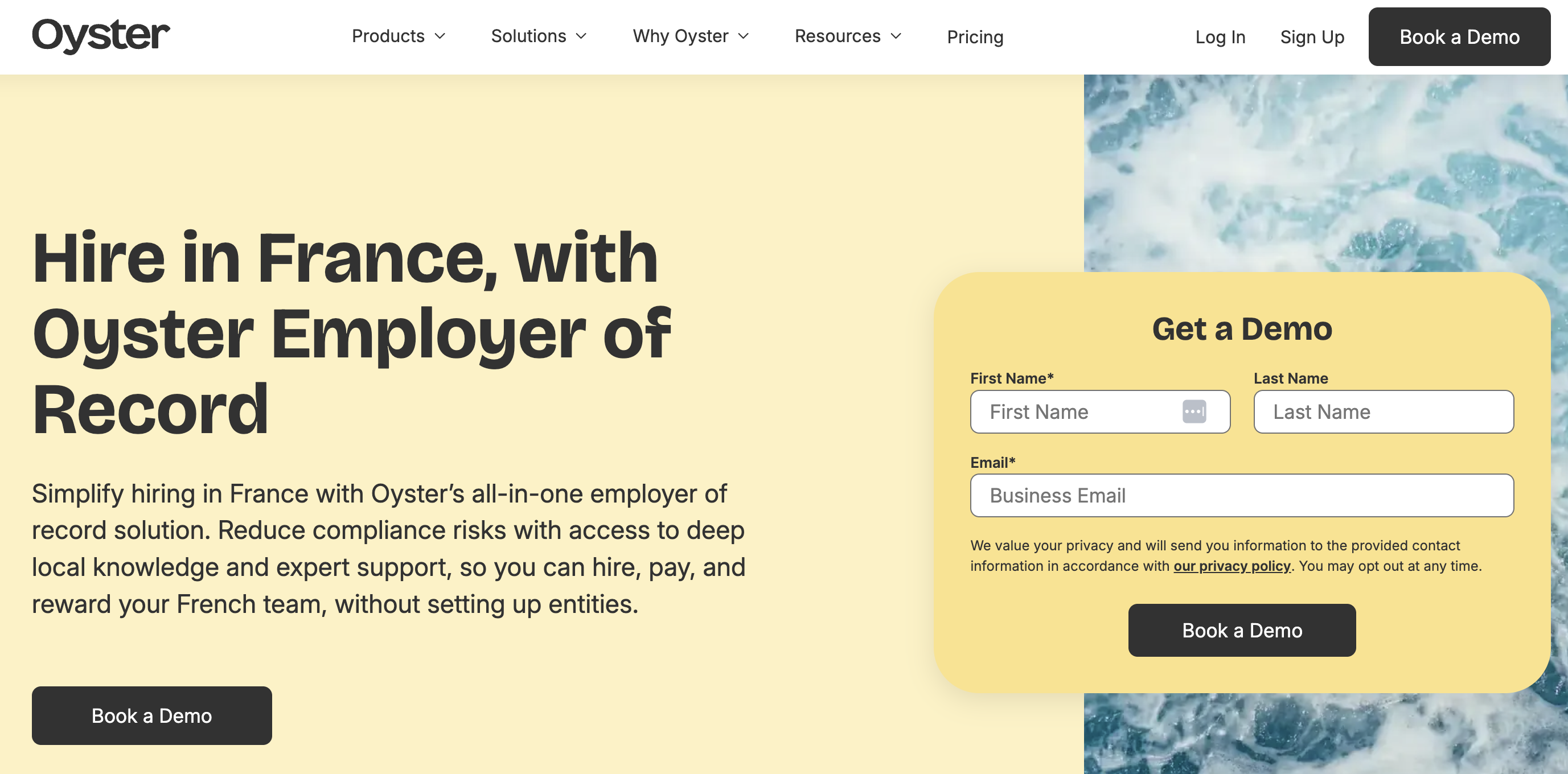
Oyster belongs on this list because it combines a strong global reach with a security posture that is more visible than many mid-market buyers realise, including SOC 2 Type II, a dedicated security page, and support for stronger access control through SSO-linked two-factor authentication.
Oyster’s appeal is in day-to-day usability: a secure platform is only useful if managers, finance leads, and employees can actually find agreements, payslips, time-off records, and local hiring details without creating workaround chaos in email and spreadsheets.
Oyster tends to make sense for distributed SMBs that care about employee experience as much as payroll execution, particularly when you want a provider that feels modern and global rather than legalistic and rigid. That balance is valuable because a platform that people actually use correctly is often safer in practice than one with more controls on paper.
5. Atlas HXM
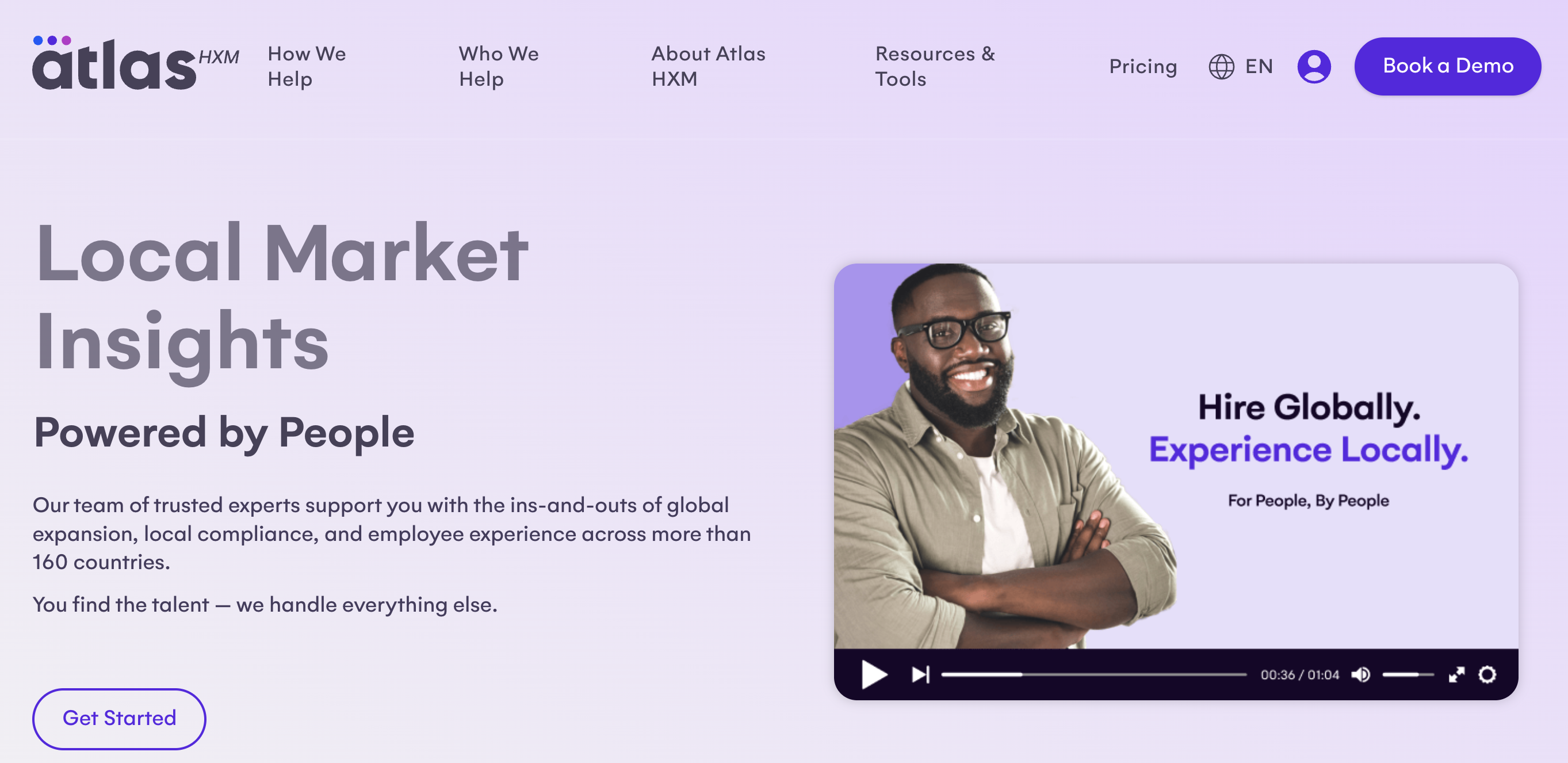
Atlas HXM is a serious option when security and compliance depth matter more to you than flashy product simplicity, because it emphasises a direct EOR model with fully owned entities in 160+ countries and publishes ISO 27001, ISO 27017, and ISO 27018 certifications alongside GDPR-benchmarked controls.
Atlas is credible for businesses hiring into regulated markets, building a more permanent international footprint, or dealing with immigration and country compliance. Atlas often feels less like a lightweight startup tool and more like a provider designed to reduce operational ambiguity at scale.
It also stands out for buyers who think beyond next quarter and want to avoid switching providers once hiring becomes more structured, policy-heavy, and sensitive. The downside is that some SMBs will find it heavier than they need, so it is strongest when your risk profile is complex enough to justify a more compliance-forward partner from the start.
6. Rippling
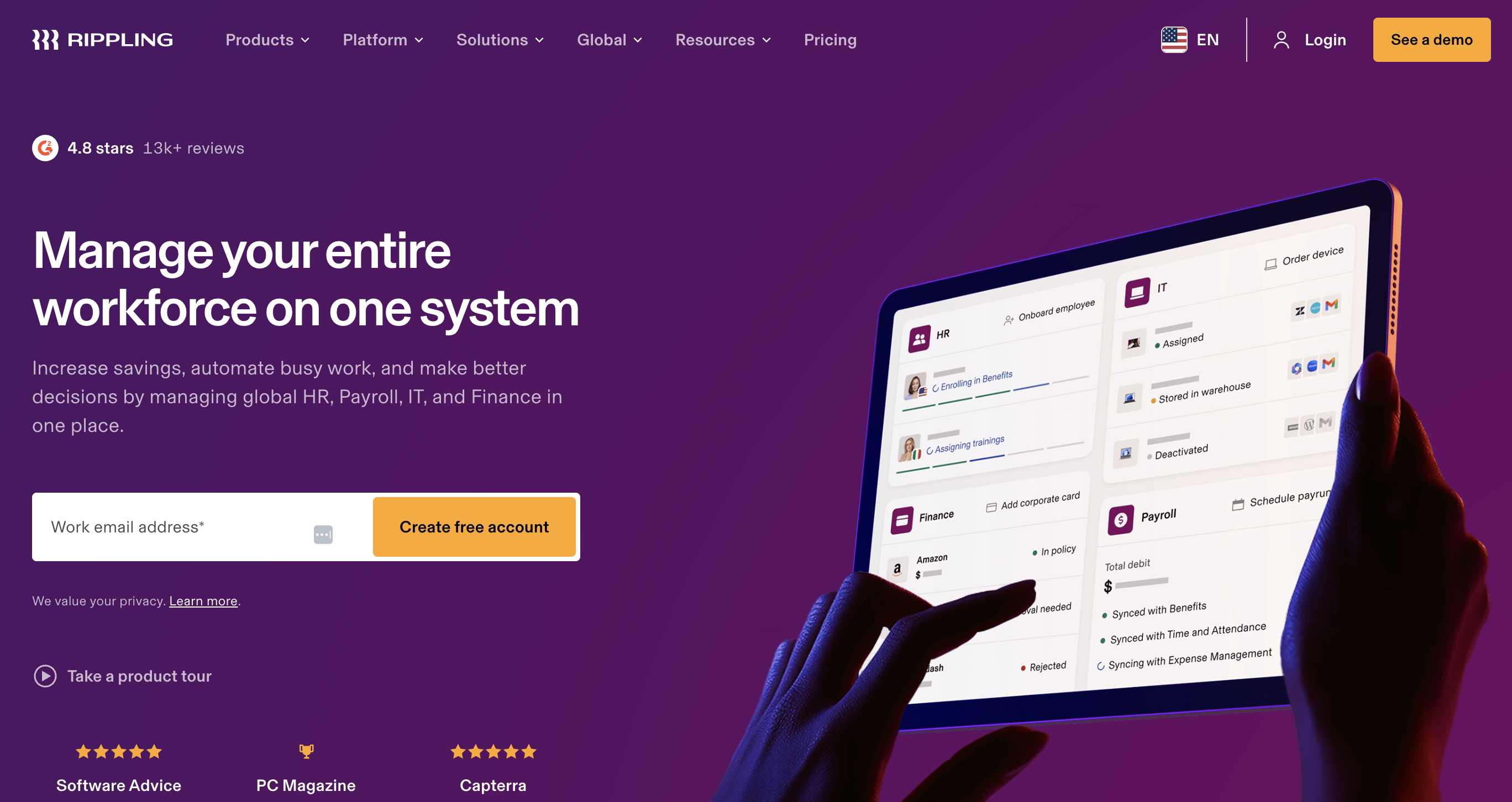
Rippling product sits inside a broader platform that connects HR, payroll, identity, app access, device management, and audit data, supported by certifications and attestations that include SOC 2 Type II, ISO 27001, ISO 27018, and ISO 42001. You can tie hiring, payroll, access provisioning, and offboarding much more tightly together.
Rippling deserves a higher rank than many standard EOR roundups give it because secure operations are rarely just about the employment contract - they are about whether your company can connect payroll, identity, and device controls without a maze of integrations.
If your business already worries about shadow IT, inconsistent offboarding, or too many apps with payroll-related access, Rippling’s model can look less like a nice extra and more like a direct answer to a real security weakness.
How to Choose a Provider
Do not stop at a sales call and promise that the platform is secure. Ask for the specific controls that matter in 2026: SOC 2 Type II or equivalent audit evidence, ISO 27001 at minimum, GDPR posture, SSO or SAML support, MFA, role-based permissions, audit logs, and a clean answer on whether workforce data is used to train AI features.
If a vendor cannot show you those basics quickly, treat that hesitation as a signal, not an inconvenience. You are trusting that provider with some of the most sensitive information your company will ever store, so vague answers should lower its rank immediately.
Understand The Employment Model
The most secure EOR is often the one that creates the shortest chain of accountability between your company, the legal employer, and the system holding payroll and HR data. That is why owned entities matter, why partner-dependent models deserve extra scrutiny, and why you should ask exactly who handles contracts, statutory filings, and benefits administration.
Security is not only about encryption - it is also about whether responsibility becomes fuzzy the moment something goes wrong. If a provider cannot clearly explain who is accountable country by country, you are probably looking at future friction disguised as flexibility.
Match The Platform To Your Operating Style
Native Teams might be a better fit than an enterprise-heavy stack if your immediate issue is paying international contractors securely. Deel is hard to ignore if you want the broadest all-in-one reach. Remote and Atlas deserve extra weight if owned entities and accountability are important, and Rippling is strong if security automation across apps and devices is crucial.
The right answer is the provider that lowers both compliance risk and operational friction for the team you actually have right now. A secure platform should make your process simpler and more disciplined, not force you to create side spreadsheets, manual approvals, and workaround habits that weaken control.
Test The Support Before You Commit
Security and compliance only look good on a comparison page until you need a fast answer on a payroll cutoff, contract amendment, worker classification issue, or local termination rule. You should test response quality during the buying process by asking detailed questions and noticing whether the provider gives precise, country-specific answers.
For an SMB, poor support creates delays, internal confusion, and extra risk at the exact moments when you need confidence. A provider that answers clearly before you sign is far more likely to be dependable when a real issue lands on your desk.
Conclusion
If you are searching for secure EOR providers for an SMB, the real decision lies in choosing the provider whose controls, entity model, and workflow design best match the way you hire, pay, and offboard people across borders. The strongest providers on this list do that in different ways.
Because Native Teams manages the contractor-to-employee journey, it's a wise place to start. Rippling is the best option for operational security, Atlas is a choice when compliance depth is more important, Deel is great when you want size and breadth, Remote is good when you care most about owned organisations, and Oyster is powerful when employee experience counts.
The safest choice is the one that makes your global hiring operation easier to control six months from now, not just easier to buy this week. When you evaluate providers through that lens, you are far more likely to choose an EOR partner that protects both your people and your business as you grow.
Featured Image generated by ChatGPT.
Share this post
Author

Read the latest articles from Jana Radojcic
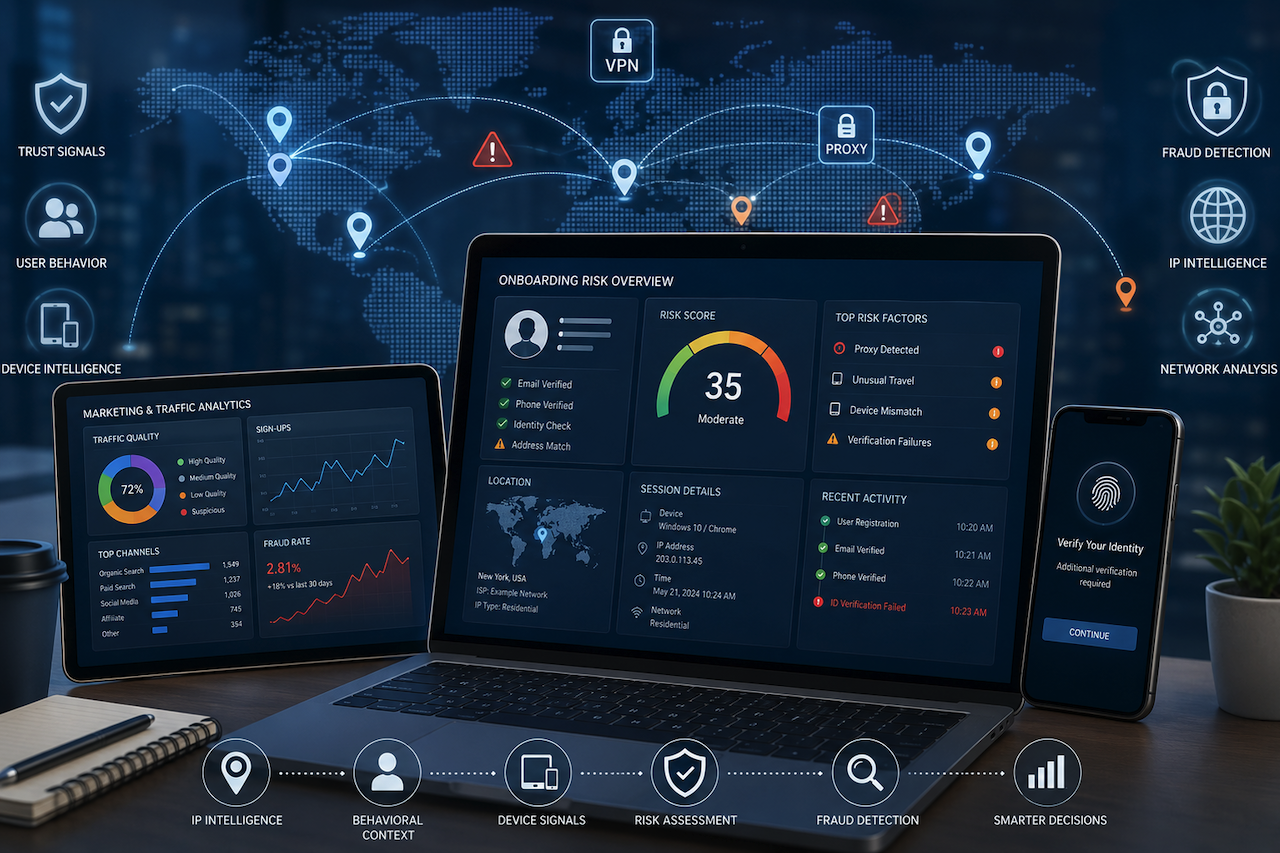
How IP Intelligence, Fraud Context, and Trust Signals Shape Digital Onboarding and Marketing Analytics
May 29, 2026
Strong fraud controls, accurate marketing data, efficient onboarding, and clear customer journeys are all important, but each additional verification step can introduce friction for legitimate users. Because of this challenge, IP intelligence, combined with behavioral context, device signals, and risk-bas [...]
Learn moreLeave a comment
All comments are moderated. Spammy and bot submitted comments are deleted. Please submit the comments that are helpful to others, and we'll approve your comments. A comment that includes outbound link will only be approved if the content is relevant to the topic, and has some value to our readers.
Comments (0)
No comment