
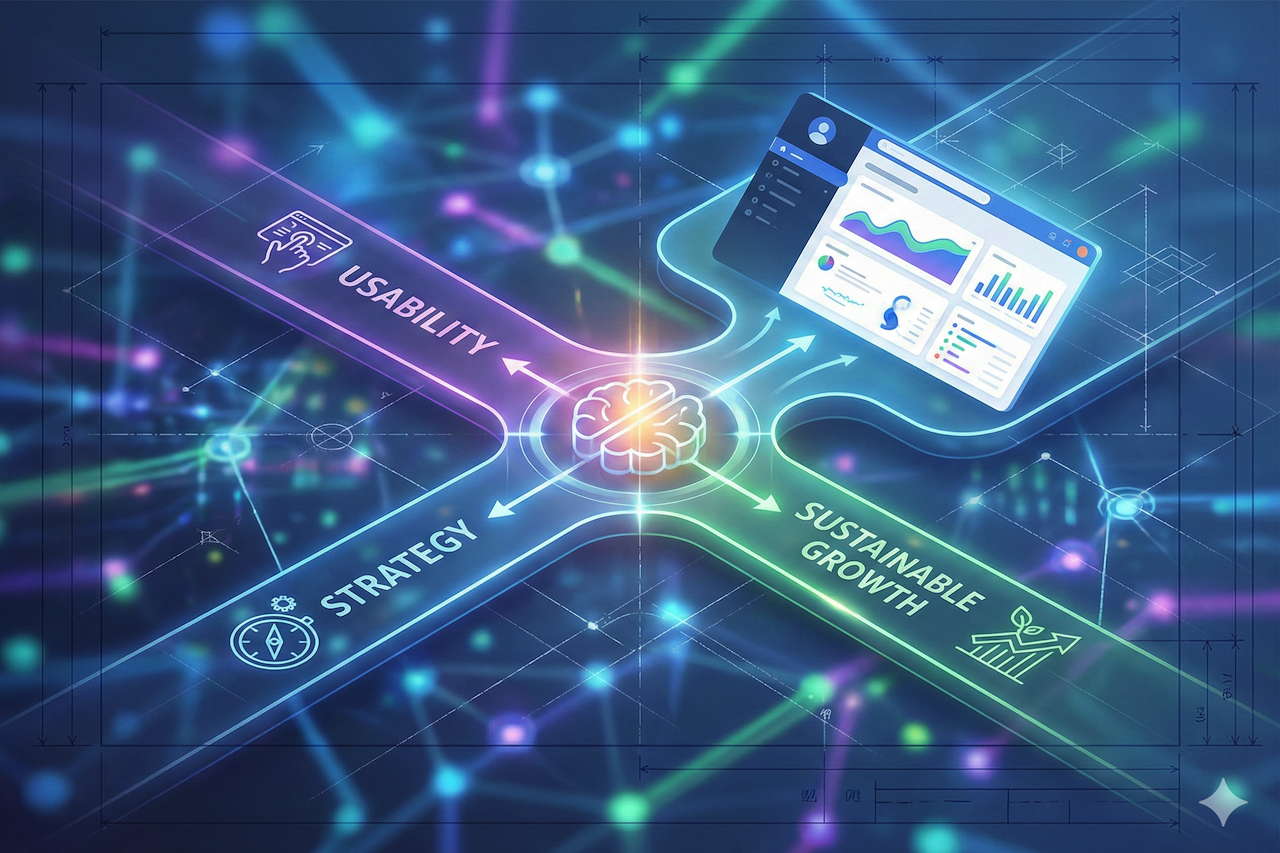
Most software doesn’t fail loudly. It ships on time. It looks polished. Then adoption slows. Users hesitate during onboarding. Features sit untouched. At that point, teams often realize the issue wasn’t engineering velocity; it was product clarity. That’s where software product design matters most: at the intersection of usability, strategy, and sustainable growth.
Software Product Design That Drives Adoption
Modern product teams move fast. An idea feels solid. Engineering builds an MVP. The roadmap fills up.
Then friction appears.
Users drop off mid-flow. Support tickets increase around simple actions. Internal debates about “what to fix” replace direct user insight.
This is usually where product design shifts from secondary consideration to strategic priority.
Design is no longer about screens. It’s about structure.
Why Product Design Matters Earlier Than Expected
Design is often treated as a surface layer, something that improves visual polish.
In reality, design defines how users think inside the product.
A founder once said, “We built what we planned. It just wasn’t what users needed.” That gap almost always traces back to unclear problem framing or rushed interaction mapping.
This is where structured product design thinking, often formalized through software product design services, can address the disconnect early, before development solidifies assumptions.
What Software Product Design Actually Covers
The term suggests visuals. The reality is broader.
User Research and Validation
Clarity begins with understanding user intent. What job are they trying to accomplish? What constraints shape their decisions? What alternatives already exist?
Testing assumptions early prevents expensive engineering commitments later.
Product Architecture and Experience Mapping
Mapping user journeys reveals friction across workflows, roles, and dependencies. Many product failures aren’t feature failures; they’re coordination failures inside the interface.
Interaction and UX Logic
Interface design is decision architecture. Where actions sit, how workflows unfold, and how information is surfaced determine success rates more than aesthetic detail.
Rapid Prototyping and Iteration
Testing ideas in prototype form allows teams to gather feedback before code locks everything in. Early iterations reduce costly refactoring later.
Design Systems for Scalability
As SaaS platforms expand, consistency becomes critical. Design systems unify components, interactions, and visual patterns so new features integrate smoothly.
Thoughtful product design creates these foundations before scale exposes inconsistencies.
When Product Design Becomes Critical
Not every product struggles with clarity from day one. But certain signals tend to repeat:
- Adoption plateaus
- Feature complexity grows
- Onboarding metrics stall
- Internal teams argue about direction
At this stage, revisiting product design helps reconnect user behavior with business intent.
Where Design Drives Measurable Impact
Early-Stage MVP Validation
Clear workflows prevent teams from building unnecessary features.
Enterprise SaaS Platforms
Multi-role systems require structured permission logic and intuitive task routing.
Legacy Modernization
Updating user experience without disrupting existing users demands thoughtful evolution.
Scaling Products
Consistency across dashboards, modules, and workflows increases usability as product complexity grows.
Cross-Platform Ecosystems
Web, mobile, and desktop environments benefit from unified interaction models.
Building Sustainable Design Capability
Product design should not be isolated from product strategy. Whether embedded within internal teams or supported by external expertise, design must influence decisions early, before technical constraints harden them.
What doesn’t scale well is treating design as a final polish step.
Risks Teams Often Underestimate
Feature Accumulation
Capabilities pile up without restructuring workflows.
Design Debt
Inconsistent patterns reduce confidence and increase cognitive load.
Late Validation Cycles
Testing after engineering commits limits flexibility.
Onboarding Neglect
First impressions shape retention more than most roadmap features.
How Software Product Design Is Evolving
Design decisions are increasingly data-informed. Behavioral analytics complement qualitative research. Experimentation frameworks allow controlled iteration.
AI-assisted prototyping speeds up concept validation, but it doesn’t replace clarity. Intent still matters more than tooling.
Modern product design now sits at the intersection of user experience, analytics, and business performance.
How to Evaluate Product Design Maturity
Strong product teams start with user problems, not interface mockups.
They ask about business goals before visual identity. They focus on flows before pixels.
If conversations revolve primarily around aesthetic direction, structure may be missing. Sustainable design depends on clear interaction logic and strategic alignment.
Closing Thoughts
Software product design isn’t about improving how software looks. It’s about improving how software makes sense.
When design is intentional, development becomes more predictable. Users move through products without hesitation. Teams make decisions with shared clarity.
And growth feels deliberate, not accidental.
Featured Image generated by Google Gemini.
Share this post
Leave a comment
All comments are moderated. Spammy and bot submitted comments are deleted. Please submit the comments that are helpful to others, and we'll approve your comments. A comment that includes outbound link will only be approved if the content is relevant to the topic, and has some value to our readers.
Comments (0)
No comment