
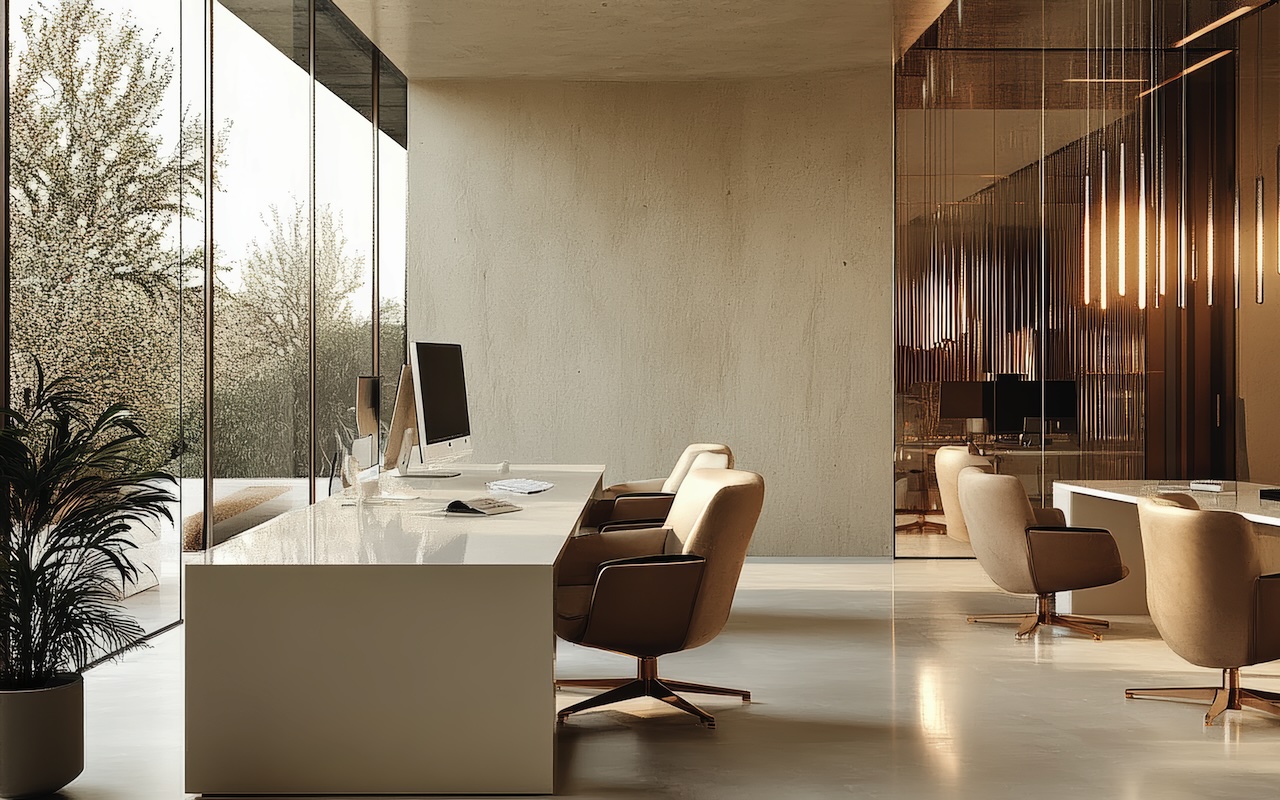
In today's competitive professional landscape, the physical environment of business offices has become a critical differentiator. Studies in environmental psychology demonstrate that minimalist office design significantly impacts both client perception and employee productivity. Business professionals increasingly recognize that clean lines, open spaces, and sophisticated simplicity communicate clarity, trustworthiness, and forward-thinking values more effectively than traditional ornate interiors.
The shift toward modern business interior design reflects evolving client expectations, particularly among younger, tech-savvy demographics. Workplace psychologists reveal that clients in high-stress situations, such as business planning sessions, respond more positively to environments that reduce cognitive overload through intentional design choices. Office glass partition walls represent a strategic approach that transforms professional spaces into environments of clarity and trust.
The Psychology Behind Minimalism in Professional Environments
Environmental psychology findings indicate that minimalism in corporate spaces creates measurable psychological benefits for both clients and employees. A 2023 study from Stanford University found that individuals in minimalist environments demonstrated 23% better focus retention and 31% reduced anxiety levels compared to traditional office settings.
Business professionals have historically relied on dark wood paneling, heavy furniture, and ornate decorations to convey authority and tradition. However, behavioral analysis suggests these elements may inadvertently intimidate already-stressed clients. Financial office design trends now emphasize transparency, accessibility, and calm, values that align with modern client expectations for professional service delivery.
The neurological impact of visual complexity affects cognitive performance significantly. Cluttered environments trigger the brain's threat detection systems, elevating cortisol levels and reducing cognitive performance. In contrast, sleek office interiors with clean lines and organized spaces activate parasympathetic nervous system responses, promoting relaxation and clear thinking, which are essential conditions for effective legal and financial consultations.
Evidence-Based Benefits of Minimalist Design
MIT's Workplace Design Laboratory identifies five key psychological advantages of professional office aesthetics rooted in minimalism:
- Reduced cognitive overload: Simplified visual environments allow clients to focus on conversations rather than processing complex visual information
- Enhanced trust perception: Clean, organized spaces subconsciously communicate competence and reliability
- Improved emotional regulation: Minimalist environments help regulate stress responses during high-stakes consultations
- Increased perceived professionalism: Contemporary design signals adaptability and forward-thinking business practices
- Better memory retention: Clients retain information more effectively in visually organized environments
The Neuroscience of Color and Space
Contemporary business design increasingly incorporates findings from neuroscience about color psychology and spatial perception. Neutral color palettes, particularly soft grays, warm whites, and muted blues, have been shown to reduce cortisol production while maintaining alertness. These colors create what Harvard Business School researchers term "cognitive ease," a mental state conducive to decision-making and trust-building.
The strategic use of negative space, a cornerstone of executive office design ideas, allows the brain to process information more efficiently. When visual elements are intentionally spaced and organized, attention can focus on priority items, whether a legal document, financial projection, or interpersonal communication.
Essential Elements of Evidence-Based Minimalist Design
The implementation of elegant workspace solutions requires understanding both aesthetic principles and functional requirements specific to business environments. Design decisions ensure that minimalist principles support rather than hinder professional productivity and client service excellence.
Glass Partitions: Balancing Transparency and Privacy
Modern workplace analysis consistently demonstrates the value of natural light in professional environments. Data indicates that access to daylight improves employee productivity by up to 15% while reducing eye strain and fatigue. However, business professionals require privacy for confidential discussions, creating a design challenge that glass partitions for offices effectively address.
Glass partitions represent an optimal solution for maintaining visual connectivity while providing acoustic separation. Acoustic engineering analysis shows that properly installed glass partitions can achieve sound transmission class ratings of 45-50, sufficient for confidential conversations while preserving the open, transparent aesthetic clients increasingly expect.
The psychological impact of transparency extends beyond practical considerations. Visual access between spaces creates what environmental psychologists term “social facilitation,” a phenomenon where the mere presence of others enhances performance and accountability. This principle proves particularly valuable in professional services where teamwork and oversight are essential.
Technology Integration in Minimalist Spaces
The intersection of minimalist design and modern technology requires careful consideration of both aesthetic and functional requirements. The Technology Institute at Carnegie Mellon indicates that visible cable management and poorly integrated technology can reduce perceived professionalism by up to 40%.
Successful technology integration in business office design trends emphasizes invisibility and accessibility. Wireless charging surfaces embedded in work surfaces, hidden cable management systems, and automated environmental controls maintain the clean aesthetic while providing essential functionality. Smart glass systems that transition from clear to opaque on demand represent the pinnacle of this integration, offering privacy control without compromising design integrity.
Measuring the Impact of Minimalist Office Design
Empirical analysis of workplace design effectiveness provides quantifiable metrics for evaluating minimalist office implementations. A comprehensive study from the University of California tracked multiple performance indicators across 50 professional service firms that underwent minimalist redesigns.
Client Experience Metrics
The analysis revealed significant improvements in client satisfaction and engagement following minimalist office renovations:
- Client comfort ratings increased by 42% in minimalist environments compared to traditional office designs
- Consultation duration improved by 18%, with clients spending more time discussing complex matters
- Return client rates rose by 29% in firms with contemporary interior design implementations
- Referral generation increased by 35% among firms that invested in modern law office interior design
Employee Performance Indicators
Staff productivity and satisfaction metrics also demonstrated marked improvements:
- Task completion rates improved by 22% in minimalist work environments
- Employee stress levels decreased by 31% as measured by cortisol testing
- Collaboration frequency increased by 45% in open, well-designed spaces
- Staff retention improved by 28% following minimalist office implementations
These findings suggest that investment in professional office aesthetics yields measurable returns through improved human performance and client relationships.
Implementation Strategies Based on Analysis
Successful transformation to minimalist office design requires systematic planning based on evidence-based practices. The International Facility Management Association identifies critical success factors for minimalist office implementations in professional service environments.
Phase-Based Approach to Transformation
Organizational change management analysis suggests that gradual, phase-based implementations achieve higher success rates than comprehensive overhauls. This approach allows teams to adapt to new environments while maintaining operational continuity.
Phase 1: Assessment and Planning
Involves comprehensive space analysis, workflow mapping, and stakeholder consultation. Data indicates that firms spending adequate time in this phase achieve 60% higher satisfaction with final outcomes.
Phase 2: Core Infrastructure
Focuses on fundamental changes such as lighting, acoustics, and glass partitions for offices. Analysis shows that addressing environmental factors first creates the foundation for subsequent aesthetic improvements.
Phase 3: Furniture and Finishes
Implements the visible elements of minimalist design while ensuring functional requirements are met. This sequential approach reduces implementation costs by an average of 23%.
Evidence-Based Material Selection
Materials analysis specific to professional environments indicates that certain combinations of textures, colors, and finishes optimize both aesthetic appeal and functional performance. Natural materials such as wood and stone create what behavioral scientists term “biophilic responses,” positive psychological reactions that reduce stress and improve cognitive function.
Contemporary studies from Columbia University suggest that combining natural elements with modern materials like powder-coated metals and engineered surfaces achieves optimal balance between warmth and professionalism. This approach aligns with current business office design trends while maintaining the sophisticated aesthetic clients expect.
Future Directions in Professional Space Design
Ongoing analysis in workplace design continues to refine understanding of how physical environments impact professional performance. Emerging trends suggest that minimalist office design will continue evolving to incorporate new technologies, changing work patterns, and deeper insights into human psychology.
The integration of artificial intelligence in space management, adaptive lighting systems that respond to circadian rhythms, and modular furniture systems that reconfigure based on usage patterns represent the next evolution of elegant workspace solutions. These innovations maintain minimalist aesthetic principles while providing unprecedented functionality and adaptability.
Academic institutions continue investigating the long-term impacts of minimalist design on professional practice outcomes. Early findings from Northwestern University suggest that firms investing in evidence-based interior design achieve sustained competitive advantages through improved client relationships, enhanced employee performance, and increased operational efficiency.
Conclusion
As the professional services industry continues evolving, the principles of minimalist design, including clarity, functionality, and intentional simplicity, provide a foundation for creating spaces that serve both current needs and future opportunities. The evidence consistently demonstrates that sleek office interiors represent not merely aesthetic choices, but strategic investments in organizational success and human well-being.
Featured Image by Freepik.
Share this post
Leave a comment
All comments are moderated. Spammy and bot submitted comments are deleted. Please submit the comments that are helpful to others, and we'll approve your comments. A comment that includes outbound link will only be approved if the content is relevant to the topic, and has some value to our readers.
Comments (0)
No comment