
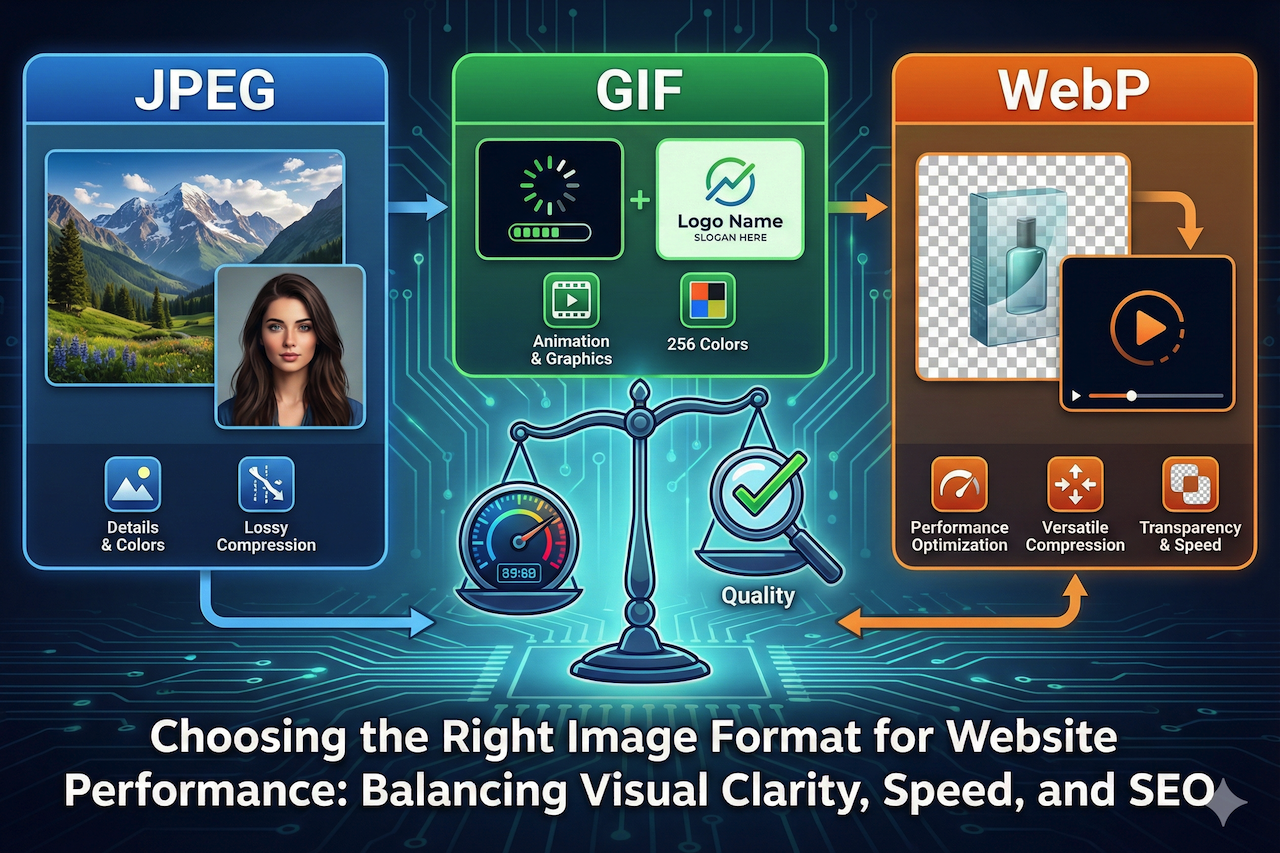
Focusing on and finally choosing the correct image file format is a quiet decision that might have an outsized impact on the website's performance. The images impact visual clarity, load speed, search visibility, and branding consistency. A stable, solid website can balance visual appeal with image optimization and technical effectiveness at the intersection.
Every image format has trade-offs. Few prioritize speed, while others assist animation and transparency. On the other hand, some preserve details even at the cost of file size. Having a clear understanding of all these differences can help make a wise decision, which ultimately supports both performance goals and user experience.
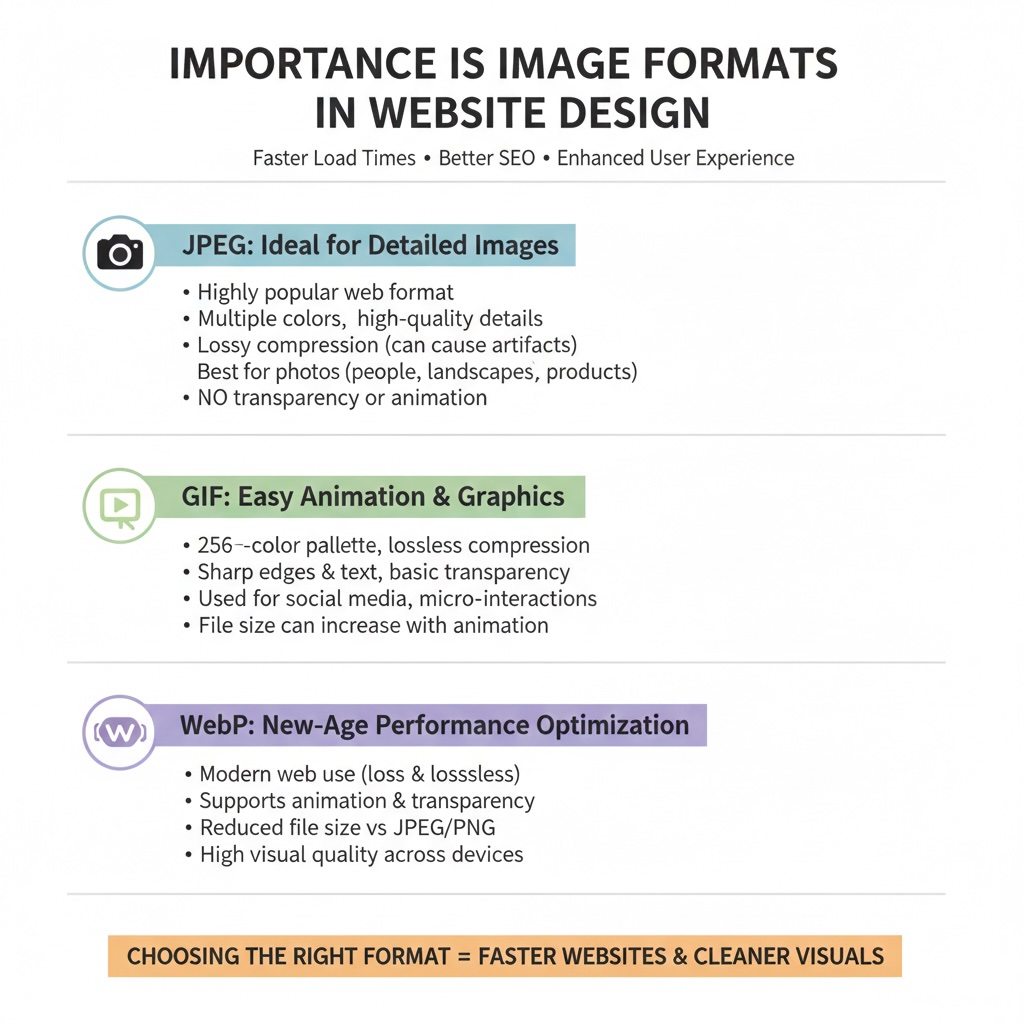
Importance of Image Formats in Website Design
In effective website design, images serve more than a purely decorative role. From the perspective of a website design company, visuals help guide user attention, reinforce brand identity, and communicate product quality and trust. Using inappropriate image formats can negatively impact site performance, leading to slower load times, higher abandonment rates, and reduced search engine optimization effectiveness.
Modern users demand fast web experiences that deliver clean visual designs. Search engines share this requirement. The correct image format choice enables fast page loading while maintaining full visual quality across all display screens and devices.
JPEG Is Ideal for Detailed Images
The JPEG format serves as a highly popular web image format. It enables websites to display images in multiple colors while maintaining high-quality details through its lossy compression method. This format works best for photos of people, landscapes, or product imagery where color depth matters more than sharp edges. The JPEG format does not support transparent images or animated content, but its high compression rate can cause visual artifacts that affect text and straight lines.
GIF Is Apt for Easy Animation and Graphics
The GIF format provides a basic solution for displaying animated graphical content. The GIF format supports basic graphics, logos, and short animated sequences because it uses a 256-color palette with lossless compression to display sharp edges and text more effectively than JPEGs. People use animated GIFs for social media and micro-interactions because of their animation features, yet these GIFs can increase in file size when used. The system provides limited transparency support, creating design constraints that limit creative options.
WebP Is Apt for New-Age Performance Optimization
The WebP format, developed from modern web use, supports various compression methods, including lossy and lossless. The format enables users to create animated content while maintaining transparency and reducing file size compared to JPEG and PNG formats, without losing visual quality.
WebP functions as a versatile option that performs well across various types of performance-oriented websites. WebP has become a common standard because most browsers now support it, though some older browsers still require alternative image formats. Digital brands often recommend WebP as part of a broader image optimization strategy that balances speed, quality, and compatibility.
Summing It Up
To sum it up, there isn't a single ideal image format that's suitable for all situations. You need to select the format depending on the image, your performance objectives, and the role it will play on the website page. By having a clear understanding of the benefits and limitations of JPEG, GIF, and WebP formats, you can make a well-informed decision that enhances load times, improves visual quality, and delivers a more potent, complete website experience.
Featured Image generated by Google Gemini.
Share this post
Leave a comment
All comments are moderated. Spammy and bot submitted comments are deleted. Please submit the comments that are helpful to others, and we'll approve your comments. A comment that includes outbound link will only be approved if the content is relevant to the topic, and has some value to our readers.
Comments (0)
No comment