
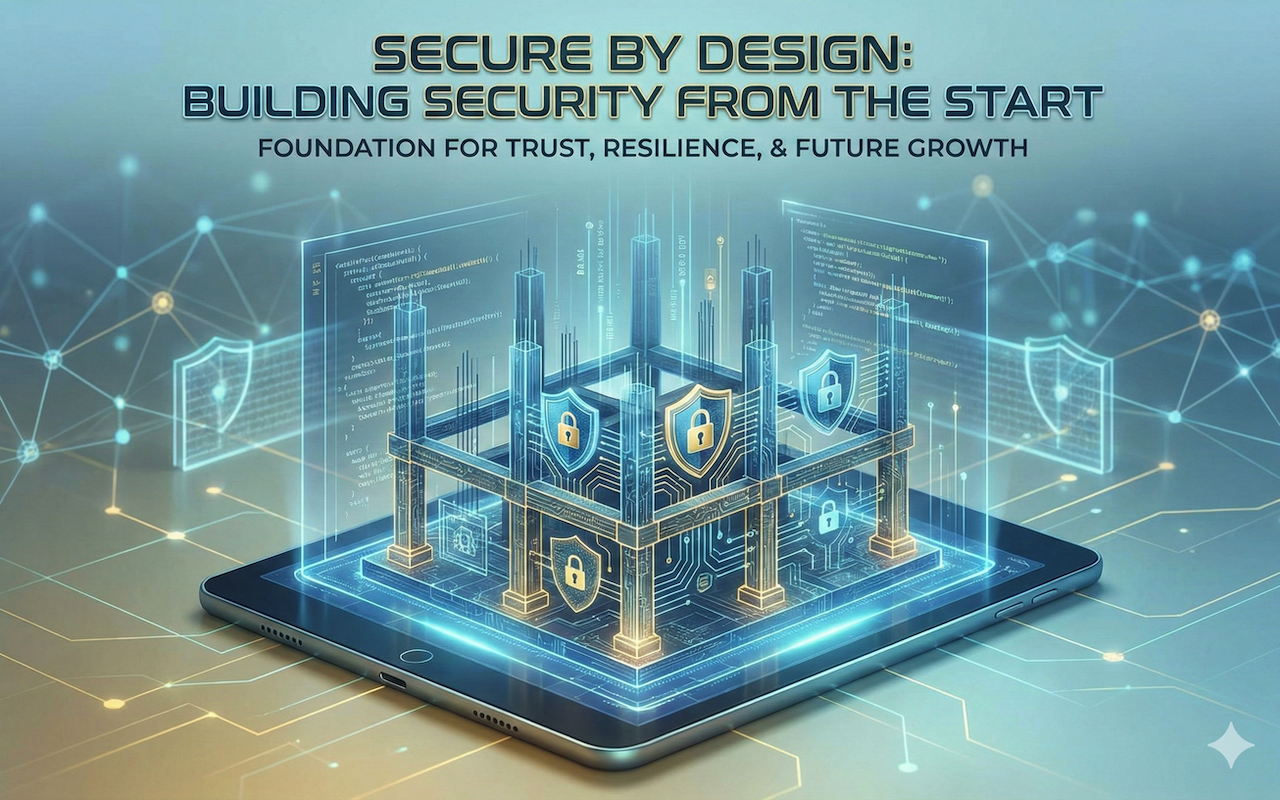
Cyberattacks are no longer rare events. They happen daily and affect businesses of all sizes. From data leaks to ransomware, security failures often begin with a straightforward issue: security was added too late. But this is precisely why secure-by-design software has really come into its own as a must-have standard in development today.
Instead of treating security as a final checklist item, secure-by-design ensures that protection is built into the software from day one. This method supports teams in early vulnerability avoidance, long-term cost reduction, and better protection of their users.
In the era of tighter regulations and more privacy-conscious users, it is no longer optional but a must-have to build secure systems.
What Is Secure by Design?
To understand what is secure by design, think of security as a foundation, not a patch. Secure by design means software is planned, designed, built, tested, and maintained with security built into every stage.
Rather than reacting to threats after deployment, teams anticipate risks early and design systems to reduce them by default. This approach is widely recognized in secure-by-design cybersecurity frameworks promoted by global security organizations.
According to Wikipedia, secure by design focuses on minimizing attack surfaces and reducing the impact of successful attacks by default behavior rather than user action.
Importance of Security in Software Development
Security failures are expensive. A single breach can lead to financial loss, legal penalties, and reputational damage that takes years to repair.
By adopting secure-by-design software development principles, companies can:
- Reduce vulnerabilities before code reaches production
- Lower maintenance and incident response costs
- Meet compliance requirements more easily
- Protect user trust and sensitive data
Many development teams still underestimate the impact of early decisions, such as architectural choices or data-handling methods, on long-term security risks.
This is why secure design is no longer just a best practice; it has become a business requirement. Companies operating in regulated and security-sensitive environments often work with software development firms that have experience designing systems where security is considered from the earliest stages. Jelvix is one example of a software development company that has worked on complex projects, including healthcare software, where regulatory compliance and data protection are key considerations.
Common Security Risks in Traditional Development Approaches
Traditional development often treats security as an afterthought. This creates predictable weaknesses.
Late-Stage Security Testing
Security checks performed only before launch often miss deep architectural flaws that are costly to fix later.
Overreliance on Tools
Automated scanners are helpful, but they cannot replace thoughtful design decisions or threat modeling.
Poor Access Control
Weak authentication and authorization logic remain among the most common causes of breaches.
Lack of Security Ownership
When security is “everyone’s job,” it often becomes no one’s priority.
These risks highlight why secure-by-design principles must guide development from the very beginning.
Key Secure by Design Principles
At the core of secure-by-design software are several well-defined principles.
Least Privilege
Users and systems should only have access to what they truly need—nothing more.
Secure Defaults
Systems should be secure out of the box, without requiring users to change settings.
Defense in Depth
It’s usually a good idea to use layered security controls so that if one control fails, others still protect the system.
Minimized Attack Surface
A smaller surface area provides less room for attackers.
Continuous Validation
Security doesn’t stop when you deploy it. Testing, monitoring, and updates are an ongoing process throughout all stages of the software development cycle.
These secure-by-design software development principles are supported by the CISA and leading figures in cybersecurity.
Benefits of a Secure by Design Software Development Approach
Adopting secure-by-design cybersecurity delivers both technical and business advantages.
- Fewer vulnerabilities in production
- Faster and safer product releases
- Lower long-term development costs
- Better compliance with global standards
- Stronger user confidence
Most importantly, teams spend less time fixing emergencies and more time improving their products.
This approach also aligns well with regulated industries such as healthcare, fintech, and enterprise SaaS, where security failures can have severe consequences.
How to Choose a Secure by Design Software Development Partner
Not every development company truly follows secure-by-design practices. Choosing the right partner is essential.
A reliable partner should:
- Integrate security into architecture planning
- Use threat modeling and risk assessments early
- Follow recognized secure-by-design principles
- Provide ongoing security testing and audits
- Demonstrate real-world experience in complex systems
Conclusion
Security must no longer be an afterthought or a nice-to-have. Secure-by-design software means security is baked into every decision we make, from architecture to deployment and beyond.
By understanding what secure by design is, using proven principles, and working with specialists, colleagues can build software that’s more secure, even safer, more dependable, and ready to venture into today’s digital world.
Ultimately, secure by design is much more than stopping attacks; it’s about fostering trust, cultivating resilience, and driving sustainable growth.
Featured Image generated by Google Gemini.
Share this post
Leave a comment
All comments are moderated. Spammy and bot submitted comments are deleted. Please submit the comments that are helpful to others, and we'll approve your comments. A comment that includes outbound link will only be approved if the content is relevant to the topic, and has some value to our readers.
Comments (0)
No comment