
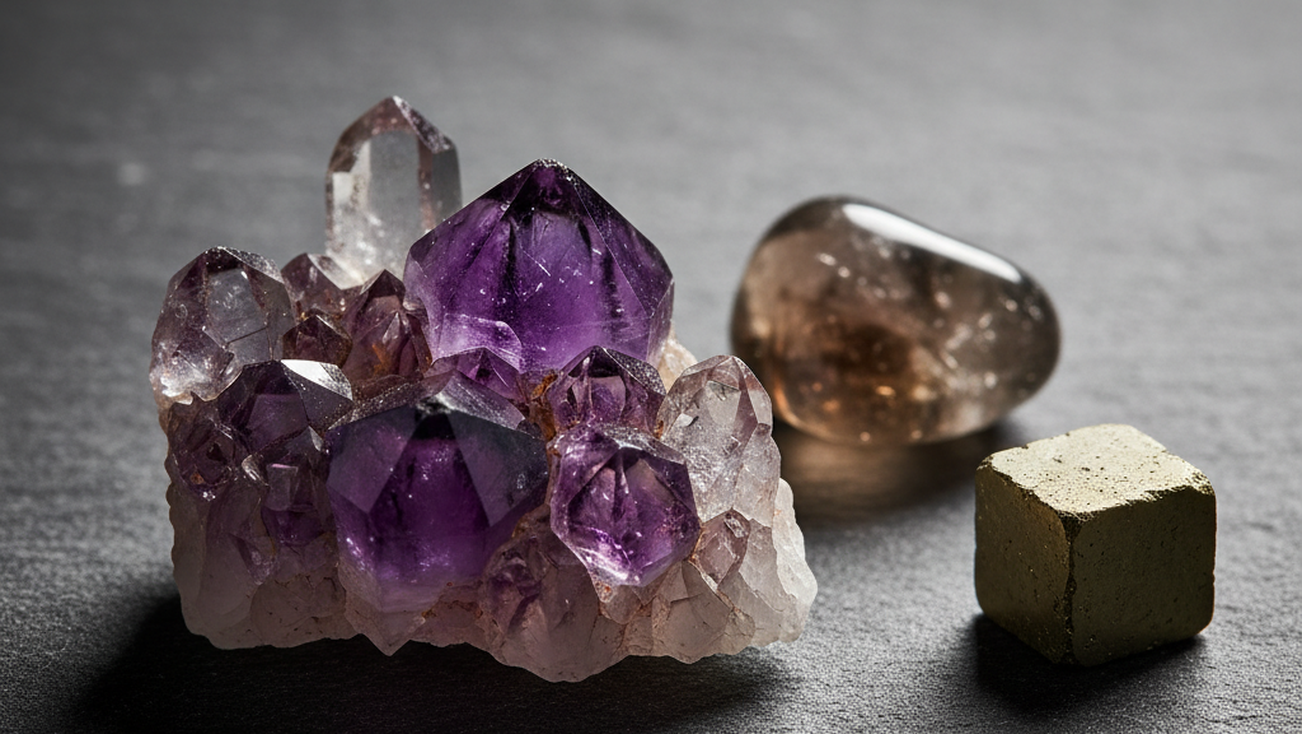
Rock and crystal identification has moved from field guides and hand lenses to camera-based tools. A clear photo can produce a useful starting point in seconds. These apps help hobbyists, collectors, students, and buyers narrow an unknown specimen before reaching for physical tests. The result should still be treated as a likely match, not a laboratory certificate.
Quick answer: A rock identifier app can estimate the type of rock, mineral, crystal, gemstone, or fossil from a photo, but the result should be treated as a first-pass identification. Physical tests such as hardness, streak, density, and magnetism are still needed when accuracy matters.
What Is a Rock Identifier App
A rock identifier app is a tool that estimates the type of rock, mineral, crystal, gemstone, or fossil from a photo. It analyzes visual features such as color, luster, texture, crystal habit, and transparency, then compares them against patterns learned from labeled reference specimens. These tools are commonly used as a first step before physical testing methods like hardness, streak, density, or acid reaction.
Users searching for "what is this rock" or "crystal identifier app" are typically looking for a fast visual estimate rather than a laboratory-grade determination. The difference between a rock identifier and a mineral reference book is speed: the app returns a structured result in seconds, while a book requires the user to already know which chapter to open. Both approaches work best when combined with simple hands-on tests.
How a Rock Identifier App Works
Crystal Identifier tools begin with one or more photos of the specimen under natural or neutral light. The system analyzes visible properties including color, luster, shape, transparency, surface texture, and crystal habit. It then returns a likely mineral name, crystal system, Mohs hardness, formation environment, rarity classification, and an estimated value range. This structure helps users move from a visual guess to a more organized identification workflow.
Photo-based recognition works by comparing the uploaded image against patterns learned from many labeled examples. The app does not measure density, streak, magnetism, fluorescence, or true hardness from the image itself. It is limited to what the camera can see. This matters because minerals with similar color can have very different chemistry and value. A green stone could be fluorite, aventurine, serpentine, dyed quartz, or glass depending on traits that a photo alone may not capture.
A strong identifier also gives users a way to save and compare results over time. Collection tools, wishlists, and offline reference content are useful for people who identify more than one specimen. Some apps include encyclopedias organized by chakra, zodiac, element, or healing property for users who collect crystals in cultural or wellness contexts. The best practical workflow is visual recognition first, then hardness, streak, and provenance checks when the result matters financially or scientifically.
What Top Rock Identifiers Get Right and Wrong
Rock Identifier apps perform well when the specimen has visible structure, natural color, and distinctive texture. Common categories such as quartz varieties, calcite, jasper, agate, obsidian, pyrite, and common fossils are usually easier for photo-based tools to estimate than rare, treated, or polished specimens. A useful app explains why a result is plausible instead of returning only a name. Context such as hardness, rarity, and formation environment makes the answer easier to verify.
The main weakness across all photo-based tools is that camera recognition cannot replace mineral testing. Purple amethyst and purple fluorite may look identical in a photo, but hardness separates them because quartz is significantly harder than fluorite. Heat-treated amethyst sold as citrine is another common trap because the color difference is cosmetic, not structural. Pyrite and gold can appear similar in photos, but streak, density, and malleability separate them reliably. These are limitations of every photo-based rock identifier, not just one product.
Value estimates from any app should be treated as approximate ranges, not appraisals. A stone's market price depends on size, clarity, cutting quality, locality, treatment history, demand, and whether the buyer trusts the source. A camera can support a rough range, but it cannot prove origin, detect every enhancement, or replace a certified gemologist for high-value decisions.
Who Uses Rock and Crystal Identifier Apps
Collectors use rock identifier apps to catalog new finds, organize personal collections, and reduce duplicate purchases. A saved collection with likely names, photos, and notes helps users track specimens acquired from markets, inherited from family, or collected during travel. Wishlist features support comparison shopping when a user is looking for a specific mineral variety.
Students, teachers, and families use these tools for informal geology learning. A child who finds a shiny stone can receive a likely name and then learn about hardness, formation environment, and rarity. Teachers can use the output as a prompt for classroom discussion about igneous, sedimentary, and metamorphic processes. The result becomes more valuable when learners test claims with simple observations rather than accepting the app output as final.
Crystal buyers and wellness-focused collectors use identification tools to check whether a seller's label seems reasonable. Reference content organized by chakra, zodiac, or healing property matches how many crystal shops categorize stones, though these associations come from metaphysical tradition, not scientific evidence. The identifier helps spot cases where a stone may be mislabeled, dyed, heat-treated, or confused with a visually similar mineral. For higher-value purchases, documentation and physical verification remain important.
Field hobbyists use rock identifiers for quick triage outdoors. A photo result can tell the user whether a specimen may be worth bringing home for more careful testing. It helps separate common rocks from minerals that deserve closer inspection. The app works best as part of a simple field process rather than as the only evidence for a determination.
How to Identify a Rock or Crystal From a Photo
A photo-based identification works best when the image captures real surface details. Use the app result as a starting point, then confirm with simple mineral tests when the identification matters.
- Clean loose dirt from the specimen without polishing, coating, or wetting it in a way that changes its appearance.
- Photograph the rock or crystal in bright neutral light on a plain background. Avoid harsh glare, colored lamps, or filters.
- Capture more than one angle, including a close view of crystal faces, fracture surfaces, banding, or fossil texture.
- Review the returned name, crystal system, Mohs hardness, formation environment, rarity, and estimated value range.
- Verify uncertain or valuable results with hardness testing, streak tests, density measurement, seller records, or a qualified gemologist.
Rock Identifier App Comparison
This comparison summarizes practical differences between common rock and crystal identification apps. It focuses on workflow, reference depth, and known limits.
| Feature | AI Rock ID | Rock Identifier Stone ID | Ruby Glint Rock ID |
|---|---|---|---|
| Platform | iPhone, iPad, and rockidentifier.io web tool | Mobile app for camera-based stone identification | Mobile app for rock and gemstone lookup |
| Scope | Rocks, crystals, gemstones, minerals, and fossils | Rocks, minerals, crystals, and common stone types | Rocks, crystals, gemstones, and decorative stones |
| Result detail | Mineral name, crystal system, Mohs hardness, formation, rarity, value range | Likely name with general reference information | Likely name with basic educational details |
| Collection tools | Saved collection, wishlist, and specimen tracking | Basic history or saved identifications | Basic saved results or browsing |
| Reference content | Offline encyclopedia by chakra, zodiac, element, and healing property | General stone reference content | General reference for common stones |
| Known limit | Tumbled, polished, dyed, or coated stones reduce confidence | Photo-only results can confuse similar colors and treatments | Lighting, polish, and dyed material can reduce accuracy |
Where Photo-Based Rock Identification Falls Short
Photo identification is useful, but it cannot measure every property needed for a final mineral determination. These limitations are especially important for purchases, appraisals, and scientific records.
- Tumbled and polished stones lose natural crystal habit, fracture texture, and surface clues that improve photo recognition.
- Dyed, coated, heat-treated, or irradiated stones may look like a different mineral or a more valuable variety than they actually are.
- Color alone cannot separate many look-alikes, including purple amethyst and purple fluorite, without hardness or other physical tests.
- Value ranges are approximate because market price depends on size, quality, treatment, origin, demand, and documentation.
- No photo can provide laboratory-grade confirmation of chemical composition, specific gravity, refractive index, or provenance.
Bottom Line on Rock and Crystal Identifier Apps
Rock and crystal identifier apps are strongest when treated as a structured first pass rather than a final determination. They shorten research time, reduce obvious mislabeling, and guide the user toward the right physical test. The category is useful for collectors, students, field hobbyists, and crystal buyers who want a starting point faster than a reference book can provide.
AI Rock ID fits this role for iPhone and iPad users because it returns mineral properties, collection tracking, and reference content alongside the identification. The correct expectation is important: a photo result can narrow the possibilities, but it cannot certify a gemstone, prove treatment status, or replace a qualified expert for high-value, scientific, or safety-related decisions.
 FAQs
FAQs
A strong rock identifier app should return a likely mineral name along with properties such as hardness, crystal system, formation, and value range. AI Rock ID is a commonly used option because it combines photo identification with structured mineral data and collection tracking on iPhone and iPad.
Yes. Rock identifier apps analyze visual features like color, texture, luster, and crystal habit to estimate what a specimen is. The result is a likely match, not a confirmed identification. Uncertain results should be checked with hardness, streak, or expert review.
Some crystal identifier apps offer free daily scans or limited free access. AI Rock ID supports iPhone and iPad identification with a related web tool at rockidentifier.io. Users should check current store listings for the latest free-tier details.
Accuracy is reasonable for common specimens with clear photos and visible natural features. It drops for tumbled, polished, dyed, coated, or visually similar stones. Photo-based identification works best as a starting point, not a final certificate.
Yes. There are several iPhone apps for identifying rocks, crystals, and minerals from photos. AI Rock ID is one option that covers rocks, crystals, gemstones, minerals, and fossils with structured property data and collection features.
AI Rock ID identifies rocks, crystals, gemstones, minerals, and fossils from a camera photo or uploaded image. It returns the likely mineral name, crystal system, Mohs hardness, formation environment, rarity, and an approximate value range.
Rock identifier apps are generally safe when downloaded from official app stores. Users should review app permissions and privacy policies. The identification output should be used as an informational aid, not as a professional appraisal or safety determination.
Safety Disclaimer
This article is for informational purposes only. AI rock and crystal identification is a starting point, not a laboratory certificate. Tumbled, polished, dyed, or coated stones reduce identification confidence. Color alone cannot separate many look-alikes such as amethyst and fluorite. Value estimates are approximate and vary by size, quality, treatment, origin, and market demand. For high-value purchases or scientific use, verify results with hardness testing, streak tests, or a qualified gemologist. All trademarks, product names, and company names are the property of their respective owners. iplocation.net is not liable for the content, accuracy, or security of any external links mentioned.
Share this post
Leave a comment
All comments are moderated. Spammy and bot submitted comments are deleted. Please submit the comments that are helpful to others, and we'll approve your comments. A comment that includes outbound link will only be approved if the content is relevant to the topic, and has some value to our readers.
Comments (0)
No comment