
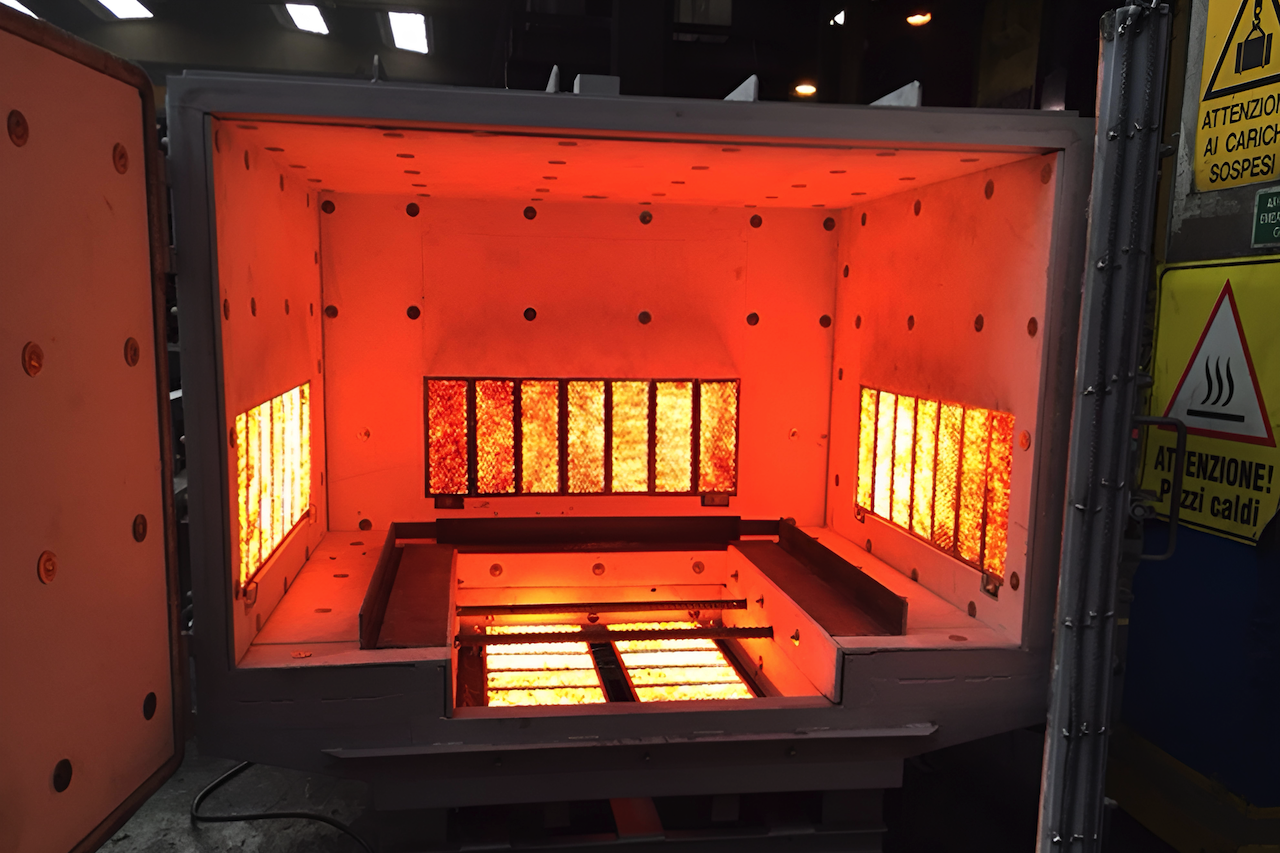
In modern industrial plants, process heat is no longer just a technical variable to manage; it is a strategic factor that affects costs, product quality, production flexibility, and sustainability. In this context, traditional combustion technologies are struggling to meet the demands for responsiveness, fine control, and emissions reduction required by markets and regulations.
RHT (Radiant High Temperature) burners are emerging as a concrete answer to these challenges, especially in sectors that depend on continuous or highly dynamic thermal processes: metallurgy, automotive, ceramics, glass, technical textiles, and industrial food processing. This article examines why more and more plants are moving toward RHT burners, which technological and economic trends are accelerating their adoption, and which operational implications entrepreneurs, plant managers, production managers, and process technicians need to consider.
From “Heating” to “Governing Heat”: How RHT Burners Came About
For decades, the dominant logic in industrial combustion systems was installed power, ensuring sufficient process temperatures, with relatively wide tolerance for variation and limited priority given to response dynamics. This approach suited a context in which:
- Product quality tolerance windows were wider
- Energy costs were relatively stable and had less impact on the income statement
- Environmental regulations were less stringent than they are today
With the advancement of factory automation and digitalization, process heat has become a controllable parameter with increasing precision, much like electrical, chemical, or mechanical parameters. This evolution has led to high-temperature radiant burners with fast response times (RHT), designed to:
- Reach operating temperature quickly after start-up or setpoint changes
- Modulate thermal power precisely and steadily
- Transfer heat more uniformly, reducing gradients and hot spots
- Integrate with advanced control systems and automation architectures
At the same time, pressure on energy costs and regulations on emissions and efficiency have pushed companies to reassess their entire burner fleet. According to various sector reports on industrial energy efficiency published after 2020, thermal energy frequently accounts for between 40% and 60% of total energy consumption in many heavy manufacturing sectors. In such a scenario, even a small increase in efficiency can have significant economic and environmental impacts.
It is in this context that RHT burners are progressively replacing older solutions in furnaces, dryers, industrial painting lines, forming systems, and many other thermal applications where speed and control are decisive.
Data, Statistics, and Trends in the Adoption of RHT Burners
There is not yet a single global statistic dedicated exclusively to RHT burners, but it is possible to reconstruct the picture through data relating to:
- Modernization of industrial combustion systems
- Investment in energy efficiency for thermal processes
- Diffusion of advanced heat control systems
According to estimates by industrial associations in the thermal engineering sector published between 2022 and 2023, the share of investment allocated to retrofitting and upgrading combustion systems in existing plants grew by an average of 20% to 30% compared with the second half of the 2010s. A significant portion of that investment is concentrated specifically on high-efficiency, fast-response burners.
In manufacturing, energy-efficiency programs co-financed by public and institutional initiatives have increasingly focused on thermal processes. According to analyses by energy and industrial bodies in 2023, in energy-intensive sectors such as steel, cement, glass, ceramics, and paper, the technical potential for reducing thermal consumption through burner and heat-recovery system upgrades is estimated at around 10% to 20% while maintaining the same output.
Data collected by applied research institutes in the field of industrial processes also show several significant trends:
- In industrial painting and surface treatment lines, the adoption of high-temperature radiant burners with advanced modulating control has enabled gas consumption reductions of around 10% to 15%, with average payback periods between 2 and 4 years
- In continuous furnaces for light metallurgy and heat treatment, systems with fast-response burners have reduced setup and product changeover times by 20% to 30%, thereby increasing actual annual production time
- In high-productivity drying applications such as technical textiles, specialty paper, and automotive components, high-temperature radiant burners allow frequent setpoint changes depending on product type without compromising process stability
The growth of automation and advanced control in thermal processes is another indirect indicator. Many manufacturers of industrial supervision and control systems report that, in new lines installed after 2020, the demand for digital burner interfacing for fine modulation, diagnostics, and integration with production recipes has become the norm rather than the exception. RHT burners, inherently designed to communicate with these systems, therefore have a clear advantage over traditional burners adapted only after the fact.
Why Fast Response Is a Real Competitive Advantage
The fast heat response of RHT burners is not just a technical detail, but a concrete competitive lever, especially in production contexts where:
- Batches, formats, or product types change frequently
- Volumes are medium to low but with high variety, which is typical of many industrial SMEs
- Customer lead times are constantly shrinking
- Plants operate at variable capacity, with frequent stops, flexible shifts, and make-to-order production
In practical terms, a fast-response combustion system generates:
1. Reduced Non-Productive Time
Every time a furnace, dryer, or heating chamber has to change setpoint, switch from holding mode to full operation, or perform start-up after a scheduled stop, the time required to reach and stabilize the temperature matters. With traditional burners, these phases can amount to several tens of minutes of non-productive time per day. Over the course of a year, this loss of production capacity translates into lower revenue or the need for additional shifts.
2. Greater Thermal Stability During Load Fluctuations
In many continuous lines, the actual thermal load varies with the size, mass, and composition of the product being processed. RHT burners are designed to modulate power rapidly in response to these variations, avoiding overshoot or temperature drops that can compromise quality. The stability of the thermal profile thus becomes a controlled variable rather than a risk factor.
3. More Sophisticated Control Strategies
A rapid thermal response enables more advanced control logic: predictive regulation based on recipes, real-time adaptation to batch properties, and joint optimization of energy consumption and product quality. All of this is only possible when the combustion system responds on timescales comparable to those of the control system.
Better Process Control: From Quality to Traceability
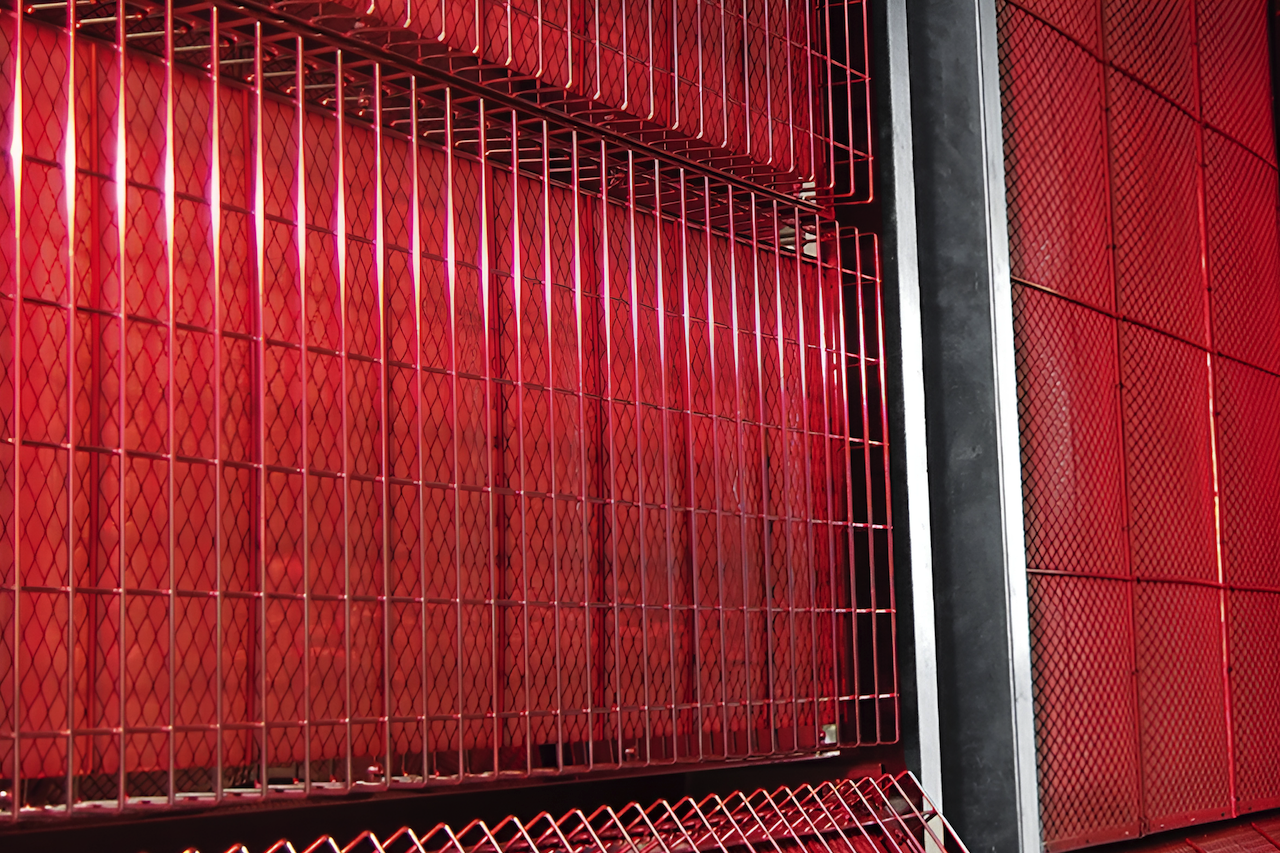
The second key element of RHT burners is their ability to offer much finer control over the heating process. This translates into advantages that go beyond energy efficiency, affecting strategic dimensions such as quality, repeatability, and compliance.
Uniform Thermal Profile
High-temperature radiant technology, combined with a design aimed at homogeneous heat distribution, makes it possible to reduce significant differences between zones in a furnace or drying tunnel. In many industrial applications, deviations of just a few degrees from the setpoint can affect:
- Hardness and microstructure of metal parts
- Adhesion and surface appearance of paints, coatings, and films
- Residual moisture content in textiles, paper, or composite materials
- Internal stresses in ceramic or glass materials
With more precise control of heat distribution, RHT burners help reduce scrap, rework, and customer quality complaints.
Batch Repeatability and Process Traceability
In a context where process traceability is increasingly required, both for compliance and supply chain reasons, having a combustion system that can provide reliable data on the thermal profile, delivered power, residence times, and operating conditions is a major advantage. Thanks to their integration with control systems, RHT burners allow each batch to be associated with documented thermal conditions, which is useful both during audits and in subsequent optimization analyses.
Alignment with Just-in-Time and On-Demand Production
When production moves toward just-in-time or make-to-order logic, intermediate buffers are reduced, and margins for process error become thinner. A thermal deviation that might previously have been absorbed by safety stock now has an immediate effect on delivery performance. By enabling tighter control of the thermal process, RHT burners help make these organizational models genuinely viable.
Risks and Critical Issues for Companies That Do Not Modernize Combustion Systems
Choosing not to invest in RHT burners and, more generally, not to modernize industrial combustion systems entails a series of risks that business decision-makers must carefully evaluate.
1. Erosion of Competitiveness Due to Energy Costs
With gas and energy prices subject to volatility and potentially further regulatory pressure, operating with inefficient burners becomes increasingly penalizing. Even differences of 5% to 10% in specific thermal energy consumption can determine, for low-margin products, the difference between profitability and loss.
2. Greater Exposure to Quality Non-Conformities
Slow combustion systems with limited modulation and suboptimal heat distribution increase the risk of unwanted quality variations. In sectors where customer requirements are becoming more stringent, this translates into complaints, returns, contractual penalties, and loss of trust.
3. Difficulty Integrating with Factory Automation
Plants that remain anchored to analog or poorly integrated control logic become bottlenecks within increasingly digitalized production lines. In the medium term, this technological asymmetry makes maintenance more complex, software updates more costly, and process data collection less reliable.
4. Regulatory and Environmental Compliance Risk
Regulations on emissions of NOx, CO, and other pollutants derived from industrial combustion are becoming progressively stricter. Obsolete burners can quickly fall out of compliance, forcing emergency interventions that are often more costly and less rational than a planned modernization strategy.
Opportunities and Advantages for Companies Adopting RHT Burners
The adoption of RHT burners, if planned and inserted into an overall plant-efficiency and modernization strategy, offers several concrete opportunities for industrial SMEs and large plant manufacturers.
Energy Efficiency and Lower Operating Costs
Higher thermal efficiency, combined with the ability to modulate power precisely according to actual load, avoids unnecessary overheating and operation far from the optimal point. In many cases, the combination of:
- RHT burners
- Heat recovery systems such as exchangers, recuperators, and regenerators
- Advanced control based on production recipes
This leads to overall reductions in gas or equivalent fuel consumption of 10% to 20%, depending on the starting conditions. With payback times often under 5 years, these interventions are competitive compared with other optimization options.
Increased “Virtual” Production Capacity
By reducing start-up, product changeover, and thermal stabilization times, RHT burners free up hours of actual production capacity on existing plants without necessarily requiring new lines. In markets characterized by variable demand and uncertainty over long-term horizons, this “virtual capacity” is often preferable to structural investment in new installations.
More Stable Quality and Reduced Scrap
Fine control of the thermal profile, combined with greater spatial heat uniformity, reduces the number of out-of-spec or rework items. This effect, often underestimated in preliminary analyses, translates over time into improved operating margins, especially where rework costs are high or materials have high unit value.
Alignment with ESG Standards and Decarbonization Pathways
Many companies, including medium-sized ones, are now required to report their environmental impacts according to ESG standards and demonstrate progress in reducing greenhouse gas emissions. Making thermal processes more efficient through RHT burners directly contributes to these objectives, with benefits in terms of reputation, access to subsidized financing, and calls for green innovation.
Regulatory Framework: Where RHT Burners Fit In
The regulatory environment for industrial plants using thermal burners is constantly evolving. Three areas are particularly relevant:
1. Atmospheric Emissions Regulations
Many countries have introduced increasingly stringent limits on NOx, CO, and particulate emissions from industrial combustion processes through integrated environmental permits or sector-specific regulations for energy-intensive industries. Thanks to more controlled and optimized combustion, RHT burners can help keep emissions within required limits, often without the need for extremely complex abatement systems.
2. Energy-Efficiency Directives and Guidelines
End-use energy-efficiency directives are pushing companies to reduce specific consumption per unit of product. National programs requiring energy audits for large enterprises and encouraging them for SMEs repeatedly highlight the savings potential associated with burner modernization. Projects involving technologies such as RHT burners are often among the most immediately feasible, both technically and financially.
3. Plant Safety and Compliance with Technical Standards
Combustion systems must comply with a series of technical standards regarding safety, flame control, gas management, shut-off devices, and emergency systems. Latest-generation RHT burners are generally designed to comply with the most recent standards, simplifying the approval process and reducing the risk of later retrofits. For companies operating outdated systems, introducing new burners can be an opportunity to update technical documentation and safety procedures more broadly.
Operational Guidance for SMEs and Plant Managers
The adoption of RHT burners is not merely a matter of replacing components, but a change that affects the core of the thermal process. Some operational guidelines can help set the course correctly.
1. Start with an Energy and Process Diagnosis
Before choosing the technology, it is advisable to conduct a diagnosis that combines energy and process analyses. This means measuring not only fuel consumption, but also:
- Actual temperature profiles inside furnaces and drying chambers
- Start-up, product changeover, shutdown, and restart times
- Scrap rates and causes of non-conformity related to heat
- Variability of parameters by batch, season, and operator
Only with a clear picture of the critical issues can suitable specifications for the new burners be defined.
2. Involve Production, Maintenance, and Quality from the Start
The decision to switch to RHT burners should not rest solely with the technical office or energy manager. It is essential to involve production, maintenance, and quality managers to understand:
- Real needs in terms of flexibility and setpoint variability
- Priorities among efficiency, quality, speed, and reliability
- Available skills for managing and maintaining the new systems
A project developed jointly across functions has a much higher chance of generating measurable benefits.
3. Think in Stages: From Pilot to Rollout
For many SMEs, complete and simultaneous replacement of all combustion systems is difficult to sustain, both economically and operationally. An effective strategy is to identify a representative and critical pilot line on which to install RHT burners and rigorously measure:
- Reduction in cycle and setup times
- Fuel savings per unit of product
- Impact on scrap and on customer-perceived quality
- Ease of integration with the existing automation system
Based on the results of the pilot phase, it is then possible to build a solid business case for gradual extension to other lines or departments, optimizing timing and intervention methods.
4. Pay Attention to Training and Change Management
The introduction of RHT burners requires updated skills for operators, maintenance personnel, and process technicians. Aspects such as understanding modulation logic, reading diagnostic data, configuring setpoints, and managing abnormal conditions must be addressed through specific training. Advanced technology used with “old” logic loses much of its potential.
Conclusions: Heat as a Strategic Lever, Not Just a Technical One
The move toward RHT burners represents a paradigm shift for many manufacturing companies, from simply “supplying heat” to “governing the thermal process intelligently and dynamically.” In a context of uncertain energy costs, stringent environmental regulations, and growing demands for quality and production flexibility, the choice to renew combustion systems is no longer a marginal issue, but an essential component of industrial strategy.
For entrepreneurs, plant managers, and production managers, the question is no longer whether this evolution will arrive, but how quickly and in what way it should be addressed. A gradual approach, based on accurate analysis, well-measured pilot projects, and cross-functional involvement, makes it possible to turn RHT burners from a simple technical upgrade into a high-value strategic investment that can affect costs, quality, reputation, and competitiveness in the most demanding markets.
Those who can govern process heat with the same precision with which they now control material and information flows will gain a competitive advantage that will be difficult for companies relying on outdated technologies and legacy logic to close.
 FAQs
FAQs
RHT burners are especially effective in plants with continuous or semi-continuous thermal processes that require frequent setpoint changes and very precise control of the thermal profile: heat treatment furnaces, painting and curing lines, dryers for paper and textiles, furnaces for technical ceramics and glass, and forming and molding systems with heating phases. Even in batch plants, reducing start-up and stabilization times can generate significant benefits.
Not always, but it is often strongly recommended. RHT burners can also be integrated into existing control systems, provided that minimum interface and safety requirements are met. However, to fully exploit fast response and fine modulation, it is useful to plan an upgrade to the control system, at least in terms of setpoint regulation logic, recipe management, and remote diagnostics.
After installation, it is advisable to systematically monitor fuel consumption per unit of product, start-up and format-change times, stability of temperature profiles relative to setpoints, the rate of scrap and rework associated with thermal defects, and any combustion anomalies or alarms. Comparison with historical data makes it possible to quantify benefits and progressively optimize regulation parameters.
Share this post
Leave a comment
All comments are moderated. Spammy and bot submitted comments are deleted. Please submit the comments that are helpful to others, and we'll approve your comments. A comment that includes outbound link will only be approved if the content is relevant to the topic, and has some value to our readers.
Comments (0)
No comment