
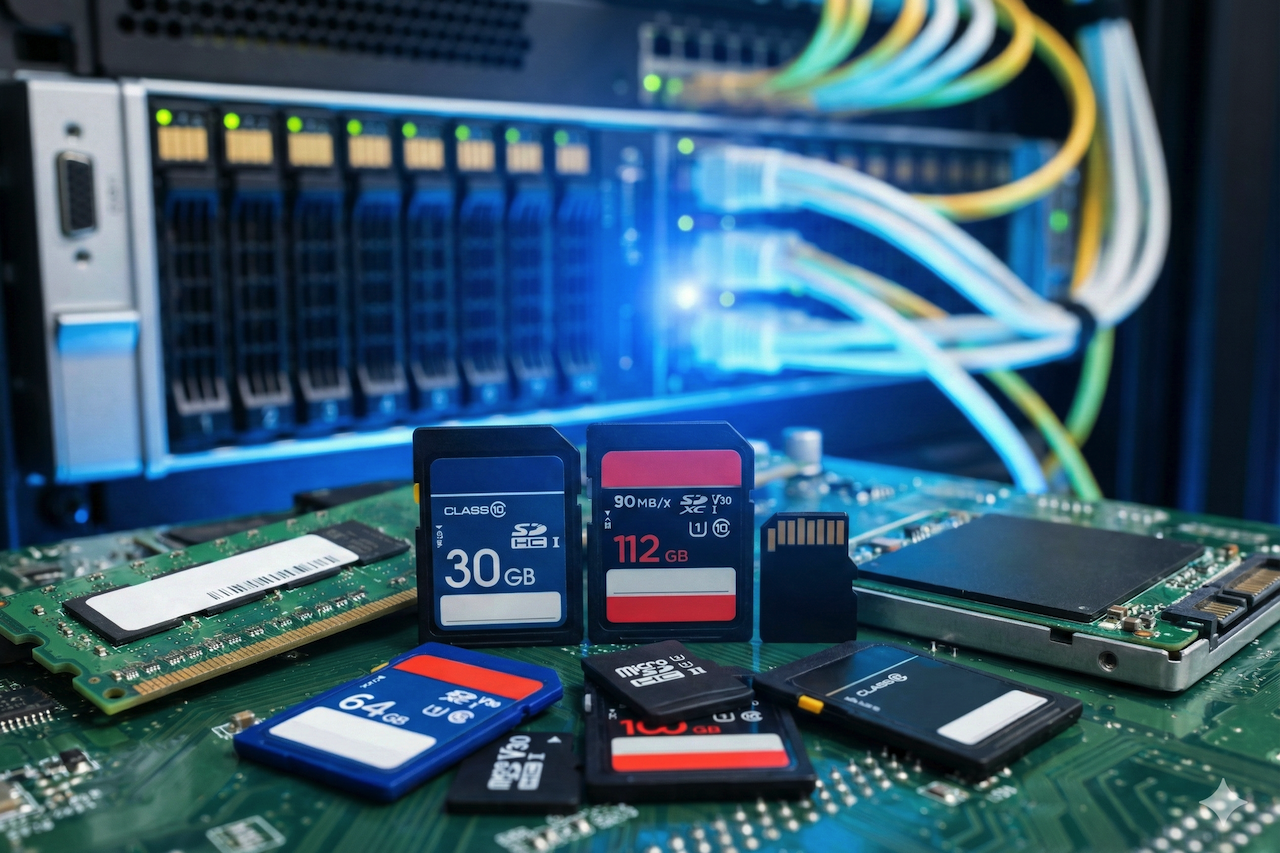
Hardware is one of the most overlooked parts of the internet. While most people think of websites, apps, and cloud platforms, all of it ultimately depends on physical infrastructure. Storage devices, memory solutions, and server components are what make digital services reliable and fast.
For businesses that sell IT products, manage networks, run e-commerce platforms, or maintain hosting services, sourcing and selecting the right hardware matters. Two areas that often require careful consideration are memory cards and server parts.
In this article, we’ll explore what memory cards are used for, why they remain relevant, and what to look for when selecting server hardware. This is an informational guide designed for buyers, resellers, and IT professionals who want to make informed decisions.
Why Memory Cards Are Still In Demand
Even with cloud storage and high-capacity internal drives, memory cards remain widely used. They are compact, affordable, and compatible with countless devices. Many industries continue to rely on them because they are easy to replace and transport.
Common use cases include smartphones, cameras, drones, dash cams, security systems, industrial monitoring equipment, and IoT devices. In many of these applications, removable storage is more practical than internal storage, especially when devices need to be serviced in the field.
For businesses that deploy devices at scale, purchasing wholesale memory cards is often a practical way to maintain consistent inventory and manage costs. However, memory cards can vary significantly in performance and durability, which makes proper selection more complex than it may initially appear.
Understanding Memory Card Types and Performance Ratings
When choosing memory cards, it’s important to understand the basic technical categories. Memory cards typically come in SD and microSD formats, and are further divided into SDHC and SDXC based on capacity and file system support.
Speed is another major factor. Memory cards are labeled with speed class symbols such as Class 10, UHS-I, UHS-II, V30, V60, or V90. These markings indicate minimum sustained write speed and expected performance levels.
This matters because different use cases require different performance capabilities. For example:
- A camera recording 4K video needs a card with a high sustained write speed.
- A dash cam recording continuously may require a card designed for endurance.
- A phone or tablet using a card for app storage benefits from better random read performance.
In industrial and surveillance environments, memory cards must also handle heat, vibration, and frequent write cycles. High-endurance cards are specifically designed for these conditions and typically last longer than standard consumer models.
Risks in Choosing Low-Quality Memory Cards
While memory cards may seem simple, quality differences can be significant. The market has long struggled with counterfeits and mislabeled products. Some cards are reprogrammed to display higher capacity than they actually have. Others may work temporarily but fail under heavy usage.
The consequences can include data loss, warranty claims, system malfunctions, and reputational damage. For security installations, card failure may result in lost footage, which can have serious operational implications.
For this reason, buyers should prioritize authenticity, reliability, and clear warranty terms when selecting memory cards. Consistency across installations also helps reduce troubleshooting and ensures predictable performance.

Why Server Hardware Requires Careful Selection
Memory cards are widely used in consumer and edge-device environments. Server components, on the other hand, support the infrastructure behind networks and online services.
Servers are built for stability and long-term operation. Unlike personal computers, servers often run 24/7 under heavy workloads. Their components must meet stricter reliability standards.
Server hardware may include processors, RAM, storage drives, RAID controllers, network interface cards, power supplies, and cooling components. Each part must be compatible with the server model, firmware version, and workload requirements.
For companies managing hosting, cloud services, enterprise IT, or data centers, choosing server hardware is not just about price. It is about uptime, compatibility, and long-term performance. Organizations that purchase at scale often work closely with the best server parts wholesale supplier to ensure consistent availability, verified components, and predictable support.
What to Look for When Choosing Server Hardware
Selecting server hardware requires attention to several key factors.
- Authenticity and condition: Clear labeling and documentation are essential. Some components may be refurbished, which is not necessarily a problem, but buyers should understand the condition and warranty coverage before deployment.
- Compatibility: Server environments rely on precise part numbers and specifications. RAM must match speed, ECC type, and platform requirements. Storage drives must align with controller capabilities. Accurate technical documentation helps prevent costly compatibility issues.
- Reliability and durability: Since servers operate continuously, components must handle sustained workloads. Enterprise-grade drives and ECC memory are designed for this purpose.
- Warranty and support: Server components are high-value investments. Clear warranty terms and predictable support processes are critical for managing risk.
- Availability and replacement speed: Organizations often require quick replacements to minimize downtime. Ensuring access to commonly used components can significantly reduce operational disruptions.
Balancing Cost and Reliability
Cost efficiency is important, but the lowest price is not always the best choice. In hardware procurement, cheaper components can become expensive if they lead to failures, downtime, or frequent replacements.
This is especially true for server components. A failed server drive or unstable memory module can interrupt services and impact customers.
For memory cards, the financial impact of failure may be smaller, but it can still affect customer satisfaction and increase returns. Reliability protects both performance and reputation.
Trends Driving Demand for Storage and Server Components
Several trends continue to shape the hardware market.
The growth of video content has increased demand for high-speed memory cards. More devices record in 4K and even 8K, requiring faster sustained write speeds. Security and surveillance deployments are also expanding, increasing demand for high-endurance cards.
On the server side, AI workloads, virtualization, and cloud expansion are increasing demand for higher-capacity RAM, faster SSD storage, and modern CPUs. Organizations are upgrading networks to handle higher traffic volumes, which increases demand for enterprise-grade networking components.
These trends reinforce the importance of choosing hardware that can support evolving performance requirements.
Final Thoughts
Hardware remains the foundation of digital services, even in a cloud-driven world. Memory cards support portable and edge-device storage needs, while servers power the systems behind websites, platforms, and enterprise networks.
Selecting reliable memory cards requires understanding performance ratings, durability, and authenticity. Choosing the right server hardware demands attention to compatibility, reliability, and long-term support.
With careful evaluation and a focus on quality, businesses can reduce risk, maintain performance, and build infrastructure that supports sustainable growth.
Featured Image generated by Google Gemini.
Share this post
Author

Leave a comment
All comments are moderated. Spammy and bot submitted comments are deleted. Please submit the comments that are helpful to others, and we'll approve your comments. A comment that includes outbound link will only be approved if the content is relevant to the topic, and has some value to our readers.
Comments (0)
No comment