

Leading Enterprise Restaurant Loyalty Software: 2026 Tech Comparison
Looking for the best loyalty program software for restaurants to support a multi-location or enterprise operation? In this guide, we’ll review 6 leading enterprise platforms used by restaurant chains to manage points, tiers, subscriptions, and omnichannel rewards across POS, mobile apps, and ordering systems in 2026.
We compared their architecture models, integration flexibility, data capabilities, and implementation timelines so you can evaluate which solution fits your technical stack, growth plans, and operational requirements.
TL;DR:
- The best loyalty program software for restaurants supports points, tiers, subscriptions, and omnichannel earn-and-redeem across POS, apps, and ordering systems.
- Enterprise platforms differ in architecture, AI depth, integration flexibility, and implementation timelines.
- Enterprise restaurant deployments typically require multi-month rollouts depending on POS and data integrations.

Image by Freepik.
Why Can You Trust Us?
Our evaluation centers on enterprise restaurant requirements, not vendor messaging. We analyzed the technical architecture, scalability, and operational risk across all the platforms we reviewed.
What We Assessed
- API model and POS integration depth (including vendor lock-in risk)
- Loyalty mechanics coverage: points, tiers, gamification, subscriptions
- Omnichannel execution across app, web, POS, and ordering
- Data capabilities: real-time profiles, segmentation, AI-driven decisioning
- Security posture and enterprise compliance signals
- Verified review data from Capterra and other platforms
- Public case metrics tied to revenue, frequency, and engagement
- Implementation timelines and integration complexity
6 Best Enterprise Restaurant Loyalty Software
| Platform | Focus | Architecture | Restaurant Specialization | Omnichannel | AI / Data Depth | Integrations | Typical Implementation |
|---|---|---|---|---|---|---|---|
| Open Loyalty | Enterprise loyalty engine | Headless, API-first | General enterprise (adaptable to QSR) | App, web, POS, CDP | Advanced rules engine, event-based logic | POS-agnostic, custom API integrations | 2–3 months (enterprise scope) |
| Antavo | AI-powered loyalty cloud | API-centric + no-code workflows | Retail, hospitality, QSR | In-store, app, web | Predictive modeling, AI optimizer | Enterprise integrations, global stack | 5–14 months, depending on legacy systems |
| Paytronix | Restaurant guest engagement suite | Unified SaaS stack | Restaurants & c-stores | POS, app, web, ordering | AI segmentation & lifecycle marketing | 30+ POS partners | Multi-month for full-stack rollout |
| Annex Cloud | Loyalty experience platform | Modular SaaS | Retail & B2C (adaptable to food) | Web, mobile, in-store | Advanced segmentation, zero/first-party focus | 100+ prebuilt integrations | Multi-month enterprise deployment |
| Punchh (PAR) | Restaurant-first loyalty & CRM | Integrated engagement stack | Strong QSR / multi-unit focus | App, web, POS, ordering | AI-driven offers & automation | Restaurant POS ecosystem | Multi-month enterprise rollout |
| SessionM (Mastercard) | Enterprise loyalty-driven platform | Real-time CDP + rules engine | Multi-vertical incl. restaurants | App, web, POS, messaging | Real-time profiles, decisioning engine | Enterprise ecosystem integrations | Multi-month enterprise project |
1. Open Loyalty
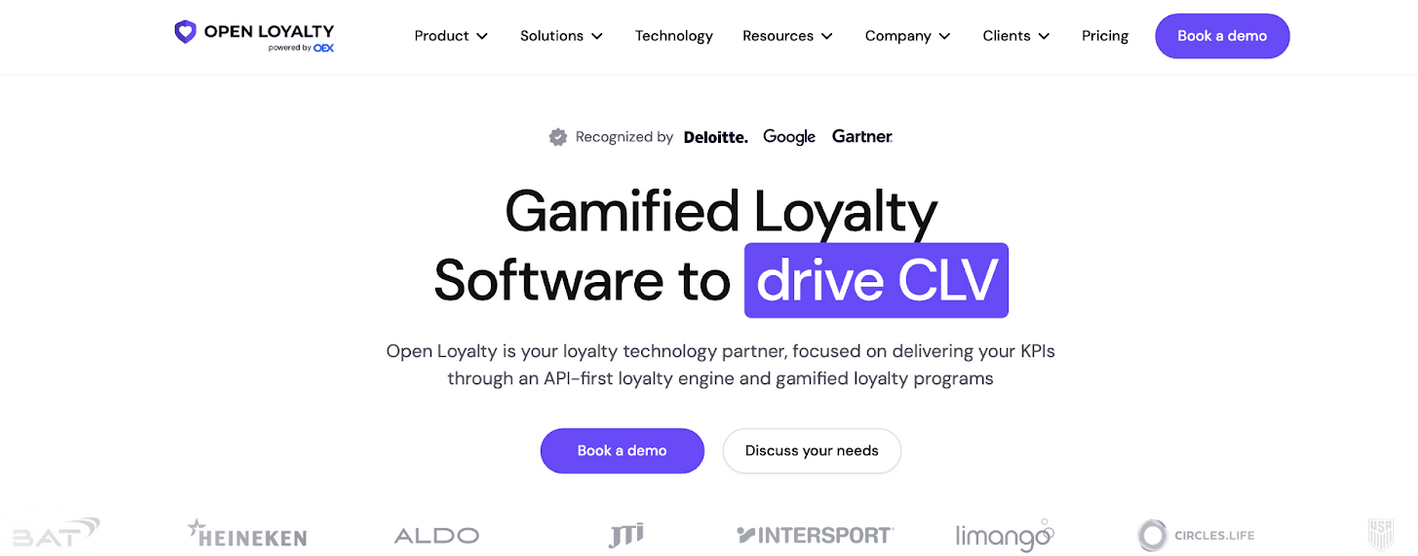
Rating (Capterra): 4.8
Open Loyalty is a leading headless, API-first loyalty engine built for mid-market and enterprise brands that require full control over program logic, rewards, and customer experience. Its REST API core with an administrative UI enables restaurant chains to embed points, tiers, challenges, badges, coupons, campaigns, and multi-tenant structures directly into their own POS, mobile apps, ordering platforms, and CDPs. With ISO 27001 and ISO 9001 certifications, a 99.99% uptime SLA, an average API response time of 120ms, and support for 50M transactions and 800M loyalty events annually, Open Loyalty delivers enterprise-grade scalability and gamification depth, making it one of the best loyalty program software solutions for restaurants operating at multi-location scale.
Pros
- Headless, API-first architecture enabling full POS-agnostic integration
- Advanced gamification mechanics, including challenges, badges, referrals, leaderboards, and spin-the-wheel campaigns
- Multi-country, multi-brand support with white-label capabilities
- Enterprise compliance standards (ISO 27001, ISO 9001) and documented SLA
- High scalability with proven transaction and event volume capacity
- Dedicated loyalty success team with advisory and implementation support
Cons
- API-centric operations may increase complexity for non-technical teams
- No lightweight, plug-and-play version for small single-location restaurants
Clients: Heineken, BAT, ALDO, Intersport, JTI, USSF, Dietly
Implementation Speed: Enterprise deployments have launched in as little as 2–3 months for global omnichannel programs, depending on integration scope and infrastructure complexity.
2. Antavo
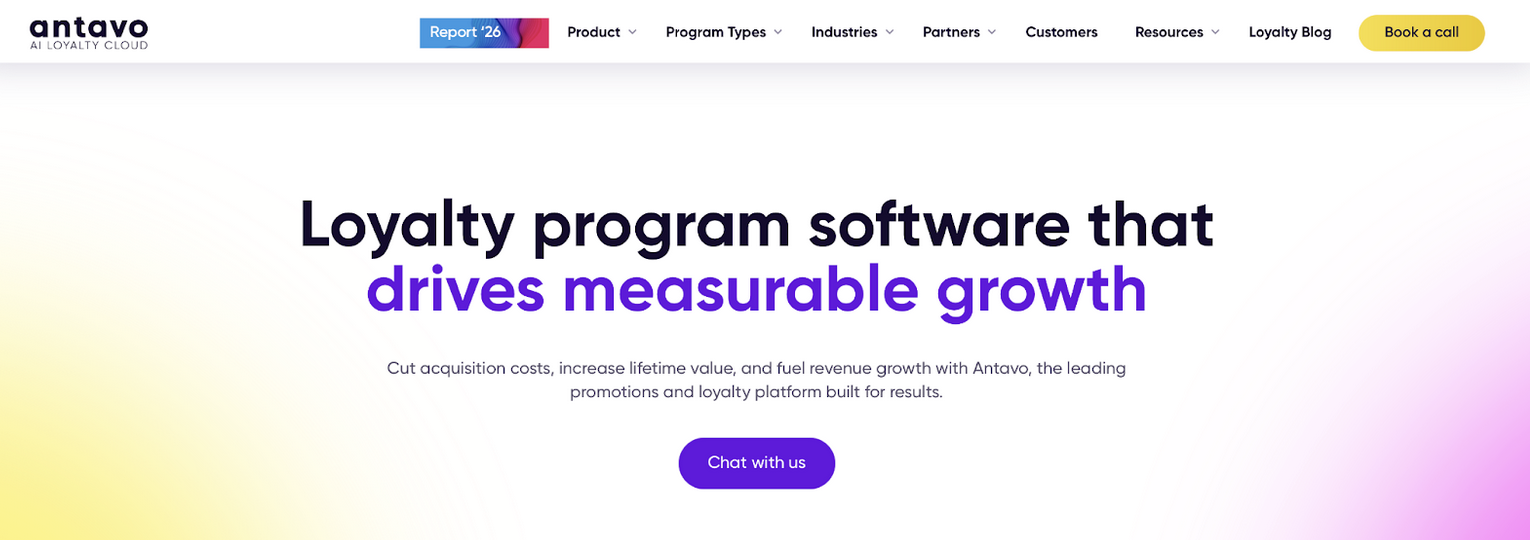
Rating (Capterra): 4.4
Antavo is an enterprise-grade, AI-powered loyalty cloud built for complex omnichannel programs across retail, hospitality, and QSR. Its API-centric architecture, combined with a no-code workflow tool, allows marketing teams to configure tiers, promotions, gamification, and customer journeys without continuous developer involvement. The platform supports multi-country, multi-currency deployments and integrates with in-store, mobile, and web channels at a global scale.
Pros
- Enterprise promotion and loyalty engine supporting complex, global programs
- No-code workflow editor for marketer-led configuration
- AI-driven optimization, behavioral clustering, and predictive modeling
- High customer service ratings and a proactive support model
Cons
- Enterprise onboarding and legacy integrations can extend timelines
- Occasional support response delays are reported
- Minor bugs and platform glitches noted in reviews
- Complex projects require significant coordination and planning
Clients: KFC, C&A, Modanisa, Benefit Cosmetics, Hyatt
Implementation Speed: Full enterprise deployments typically range from several months to 9–14 months, depending on the integration scope and legacy systems.
3. Paytronix
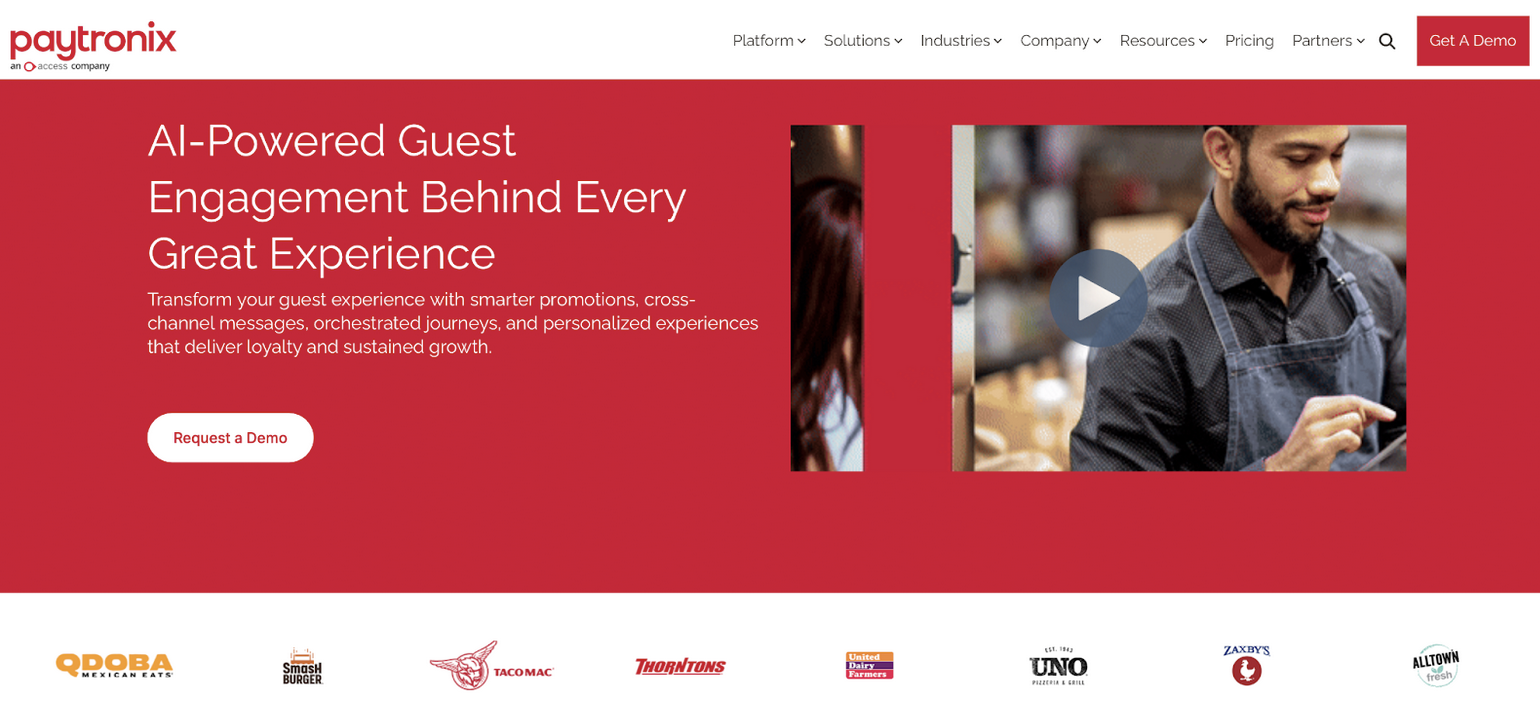
Rating (Capterra): 4.3
Paytronix is an all-in-one guest engagement suite designed specifically for restaurants, convenience stores, and retail. Loyalty combines loyalty, subscriptions, online ordering, gift cards, payments, CRM, and AI-driven segmentation within a single ecosystem, supported by integrations with 30+ major POS systems. The platform focuses on visit frequency and lifetime value across in-store, web, mobile app, and aggregator channels.
Pros
- Unified stack covering loyalty, ordering, gift, and payments
- Deep restaurant focus with a broad POS integration network
- AI-driven segmentation and predictive guest targeting
- User-friendly interface for campaign and guest management
- Large installed base across multi-unit restaurant brands
Cons
- Data unification and segmentation can require careful configuration
- Minor UI issues and occasional glitches reported
- An integrated ecosystem can increase switching complexity
- Full-stack enterprise deployments require a multi-month implementation
Clients: Five Guys, DutchBros, California Pizza Kitchen
Implementation Speed: Small and mid-sized restaurant groups can deploy relatively quickly once POS integration is configured, while larger groups that are implementing loyalty, ordering, and gift cards together typically face multi-month rollout timelines.
4. Annex Cloud
Rating (Capterra): 4.6
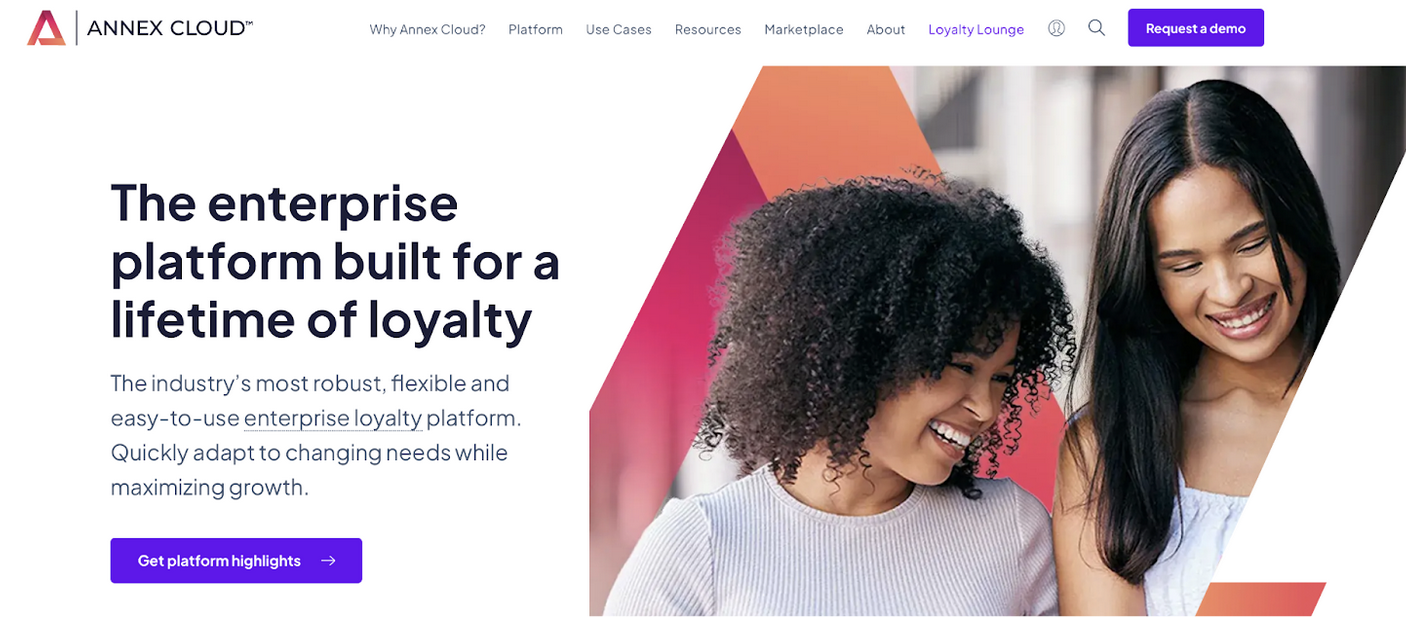
Annex Cloud is an enterprise loyalty-experience platform focused on zero- and first-party data collection, omnichannel engagement, and modular program design. Its SaaS suite covers points and tiers, paid memberships, referrals, UGC, surveys, contests, and gamification, supported by progressive profiling and advanced segmentation. The platform integrates with 100+ e-commerce, CDP, CRM, ESP, POS, and marketing systems and supports multi-brand, multi-region deployments.
Pros
- Modular platform covering loyalty, referrals, UGC, and engagement tools
- Strong zero- and first-party data strategy with advanced segmentation
- Broad prebuilt integration ecosystem (40–100+ platforms)
- Flexible rules engine for points, tiers, and action-based rewards
- Marketer-configurable campaigns without continuous IT involvement
Cons
- Some users request more advanced built-in analytics
- Certain integrations may require manual data feeds
- Unique operational models may require custom development
- Enterprise deployments typically involve multi-month timelines
Clients: N/A
Implementation Speed: Prebuilt integrations and modular architecture support structured rollouts, but enterprise implementations generally take several months, depending on integration depth and customization needs.
5. Punchh (PAR Punchh)
Rating (Gartner): 4.6
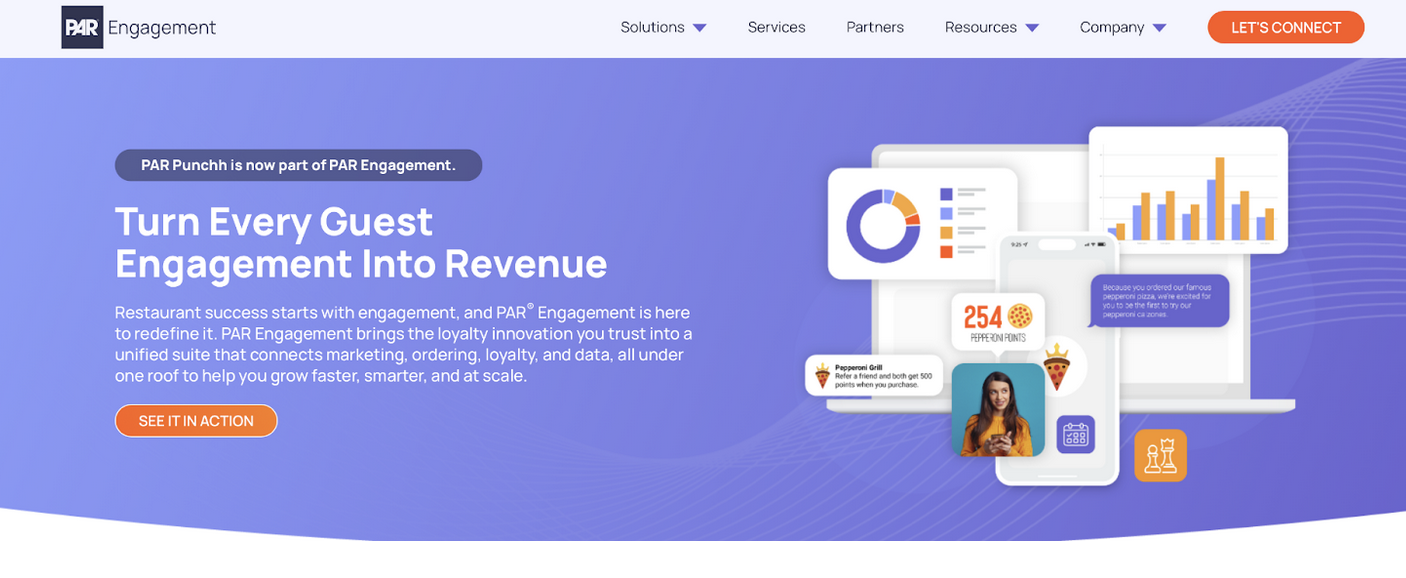
Punchh (PAR Punchh) is a restaurant-focused loyalty and guest engagement platform that combines loyalty, CRM, offers, ordering, payments, and branded mobile apps. It captures data across in-store and digital touchpoints and applies AI-driven segmentation and automation to personalize rewards and campaigns. The platform supports spend- and visit-based programs, tiers, referrals, surveys, and omnichannel earn/redeem across app, web, and POS environments.
Pros
- Built specifically for restaurant and QSR users, loyalty channel integrated with ordering and payments
- AI-driven segmentation and automated campaign capabilities
- Widely adopted among large multi-unit restaurant brands
- Supports branded mobile apps as engagement hubs
Cons
- Mixed user-review sentiment across review platforms
- Enterprise-level configuration can be complex
- Broad feature scope increases platform dependency
- Multi-month implementation for full-stack deployments
Clients: Tropical Smoothie Cafe, Blaze Pizza, Earl of Sandwich, Hungry Howie’s, Rita’s Italian Ice
Implementation Speed: Standard POS integrations enable structured rollouts, but full enterprise deployments with custom apps and advanced integrations typically require multi-month project timelines.
6. SessionM (Mastercard SessionM)
Rating (G2): 4.5
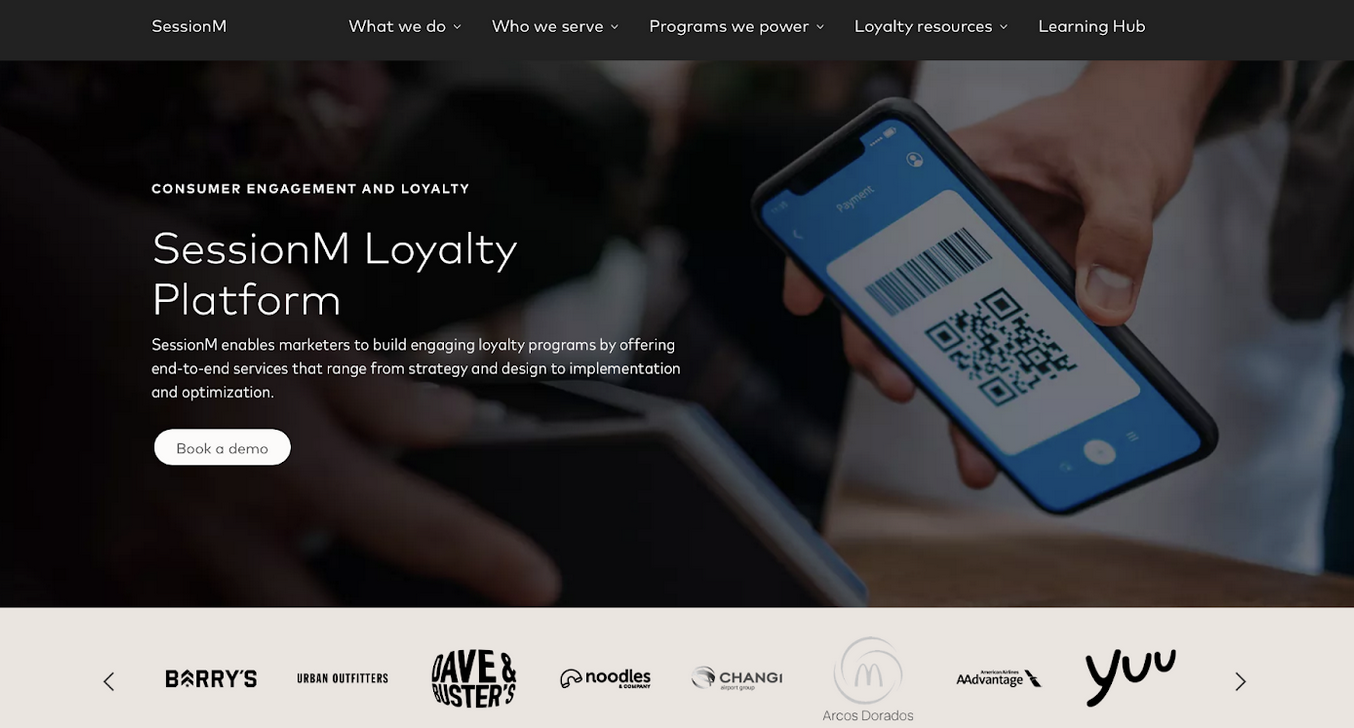
SessionM (Mastercard SessionM) is an enterprise loyalty and customer engagement platform that combines a real-time customer data layer with a configurable loyalty rules engine and omnichannel campaign orchestration. It supports points, tiers, dynamic segmentation, personalized offers, and event-based rewards, and can be deployed modularly or as a full-stack solution. Backed by Mastercard services, it targets large restaurant, retail, airline, and CPG brands running multi-market, data-driven loyalty programs.
Pros
- Real-time customer profiles and dynamic segmentation
- Flexible rules engine supporting complex loyalty economies
- Modular architecture for phased adoption
- Omnichannel orchestration across app, web, POS, and messaging
- Access to Mastercard strategy and optimization services
Cons
- Enterprise-level complexity requires experienced teams
- Multi-month implementation is typical for large brands
- Limited recent public SaaS-style reviews on Capterra
- A broader ecosystem can increase migration complexity
Clients: Kimberly-Clark, Huggies, Chipotle, Lowe's, Red Robin
Implementation Speed: Configurable loyalty modules support structured deployment, but full enterprise rollouts integrating POS, e-commerce, and data feeds typically require multi-month project timelines.
Conclusion
Enterprise restaurant loyalty requires scalable architecture, flexible rules, and deep integration across POS, app, and ordering systems. The platforms compared differ mainly in terms of integration flexibility, data depth, and ecosystem dependency.
 FAQs
FAQs
The best platforms support points and tiers, visit- and spend-based rewards, subscriptions, referrals, gamification, digital wallets, and mobile redemption. They integrate with POS, online ordering, branded apps, and CRM or CDP systems to unify guest data. Advanced systems add real-time segmentation, AI-driven offers, and omnichannel campaign orchestration across in-store and digital channels.
POS integration determines whether earn-and-redeem flows operate in real time at checkout and across digital ordering. API-first or POS-agnostic systems allow restaurateurs to connect loyalty to multiple vendors, reducing lock-in risk. Vendor-tied solutions may simplify setup but can limit customization and cross-channel expansion.
Large chains assess uptime SLAs, transaction capacity, multi-location support, and multi-country deployment capability. They review compliance signals, such as ISO 27001 alignment and documented security controls. Enterprise-grade platforms also demonstrate high-volume event processing and integration readiness with CDP, BI, and marketing automation systems.
SMB restaurant deployments can launch within weeks if using bundled POS loyalty modules. Enterprise implementations integrating POS, mobile apps, ordering, payments, and data systems usually require multi-month project timelines. Complexity increases with custom rules engines, data migration, and omnichannel orchestration requirements.
Featured Image generated by Google Gemini.
Related Articles

May 26, 2026
Best Contractor Software for Global Teams in 2026
Paying contractors across countries is no longer just a finance task. For global teams, every contractor payment fits within a broader workflow: onboarding the contractor, collecti...
Read More
March 16, 2026
Travel Software vs Off-the-Shelf Solutions: What Should You Choose?
Modern travel agencies rely on technology as a core part of their operations. Travel agencies, tour operators, and booking platforms need software solutions that help them manage s...
Read More
June 27, 2023
Transforming Education: A Deep Dive into the Leading Education Software Companies
Digitalization is among the most crucial trends of the current century. Do you want to transform education-related practices in your business? In that case, we recommend looking fo...
Read More
Comments
Comments are available to signed-in users and are moderated to keep the discussion useful and respectful. Spam, automated submissions, and low-value promotional comments are removed. Outbound links may be approved when they are relevant and genuinely helpful to readers, but they are displayed as plain text rather than clickable hyperlinks.
No comments have been published yet.
Please sign in to submit a comment.