
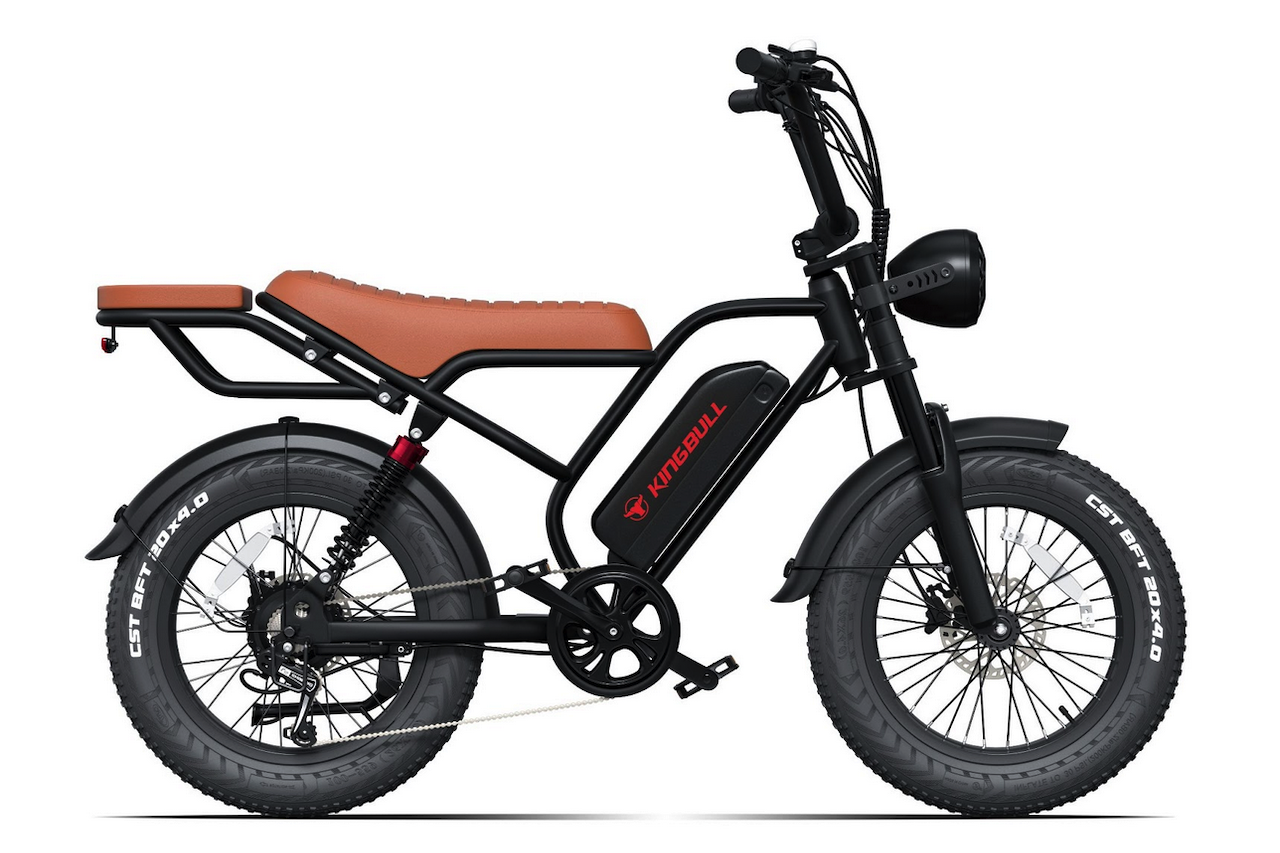
The Kingbull Ranger enters the fat-tire e-bike category with a highly aggressive value proposition: 1500W peak output, dual suspension, 80-mile claimed range, and motorcycle-inspired styling—all positioned in the $700 early launch range via Kingbull.
On paper, the specification sheet reads closer to bikes priced well above entry-level. The question is whether the real-world ride experience aligns with those numbers. Here is a structured evaluation.
Motor and Power Delivery
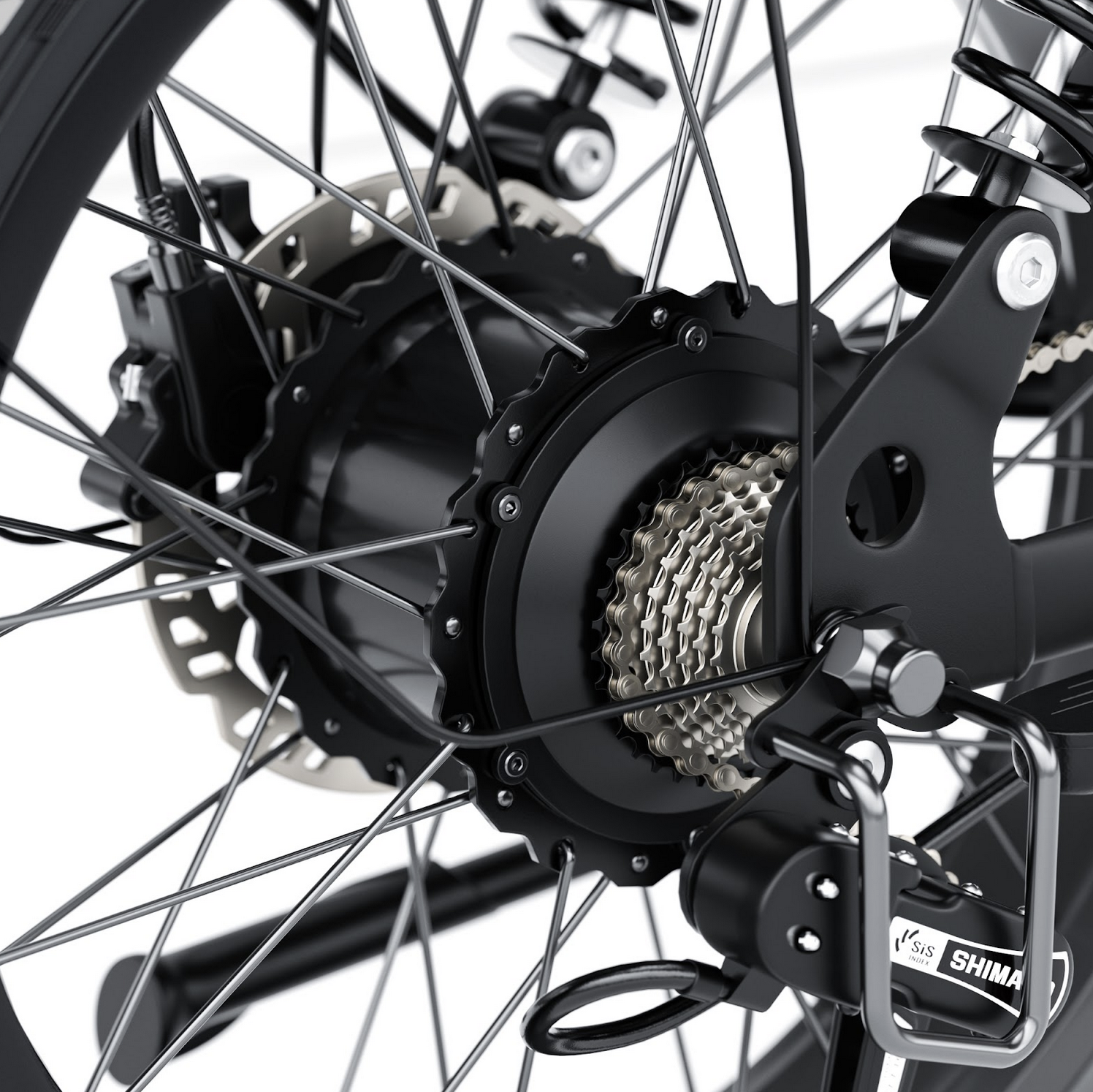
At the core of the Ranger is a 48V 750W rear hub motor, rated at 1500W peak output and delivering 80Nm of torque. For context, 80Nm in a hub-drive configuration provides meaningful low-end acceleration and sufficient climbing force for steep urban grades or loose terrain.
Kingbull claims the Ranger can handle inclines up to 30°, which, while aggressive in marketing terms, translates in practice to strong performance on sustained hills when using higher PAS levels or throttle assist.
The bike offers:
- Top speed: 31 MPH
- 5 speed levels: 6 / 12 / 19 / 25 / 31 MPH
- Twist throttle
- Cruise control: Activates after 10 seconds of steady speed
Acceleration is brisk off the line, particularly in PAS 4 and 5. The twist throttle modulation is predictable rather than abrupt, which is important for a 20x4.0" fat-tire platform.
Battery and Range
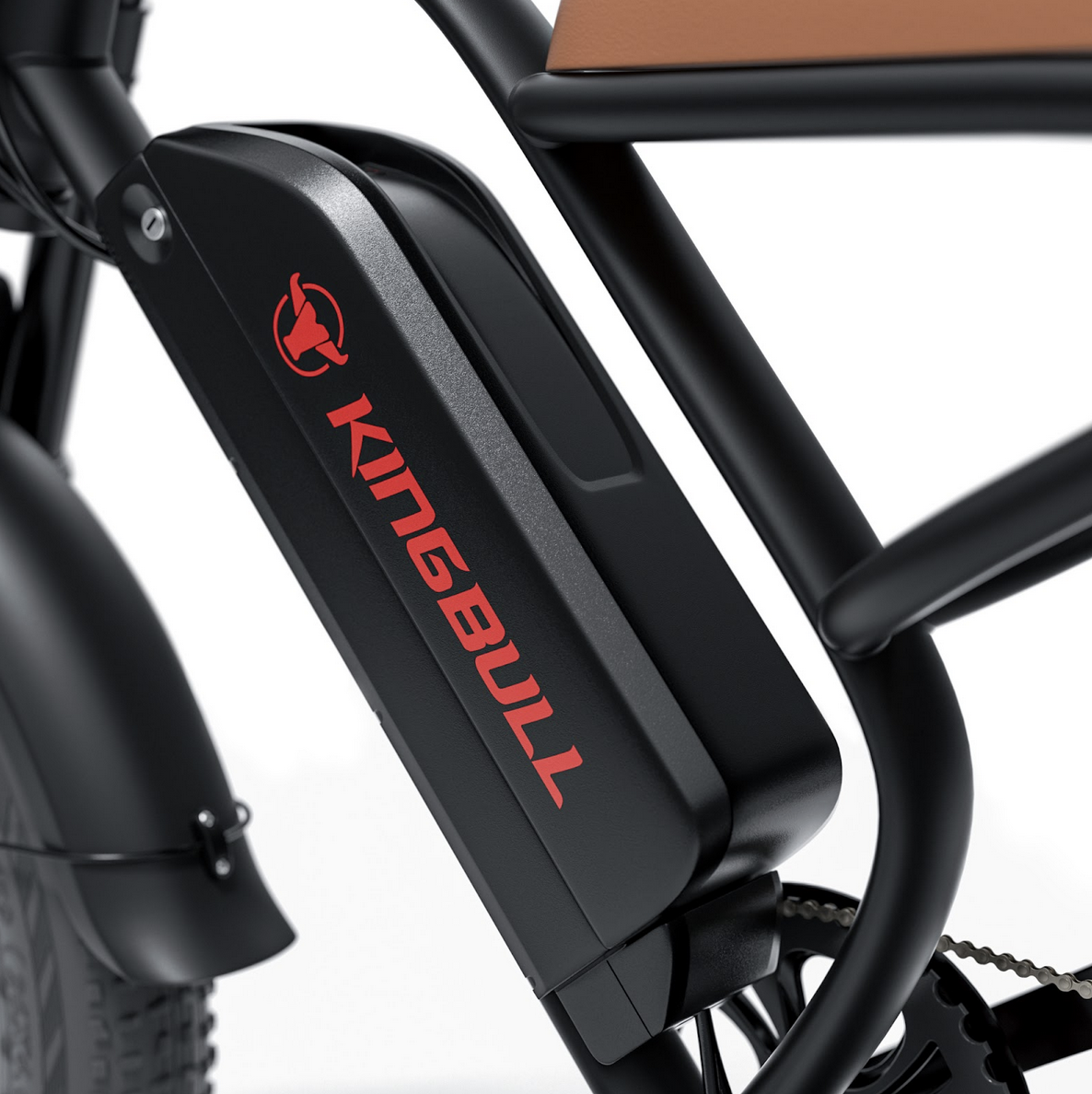
Powering the system is a 48V 18Ah lithium battery, paired with a 54.6V 2A smart charger.
Claimed max range: Up to 80 miles (PAS mode)
In practical riding terms, 80 miles will require conservative PAS usage (Level 1–2), moderate rider input, and flat terrain. In mixed riding with throttle, use a more realistic expectation of approximately 40–60 miles, depending on rider weight and conditions.
The capacity, however, is competitive for this price class and aligns well with commuter and light adventure use.
Ride Quality: Dual Suspension + Fat Tires
The Ranger uses a high-carbon steel 20-inch frame in a retro, motorcycle-style layout. While steel increases weight, it also adds structural rigidity and durability.
Key ride components include:
- Front suspension fork
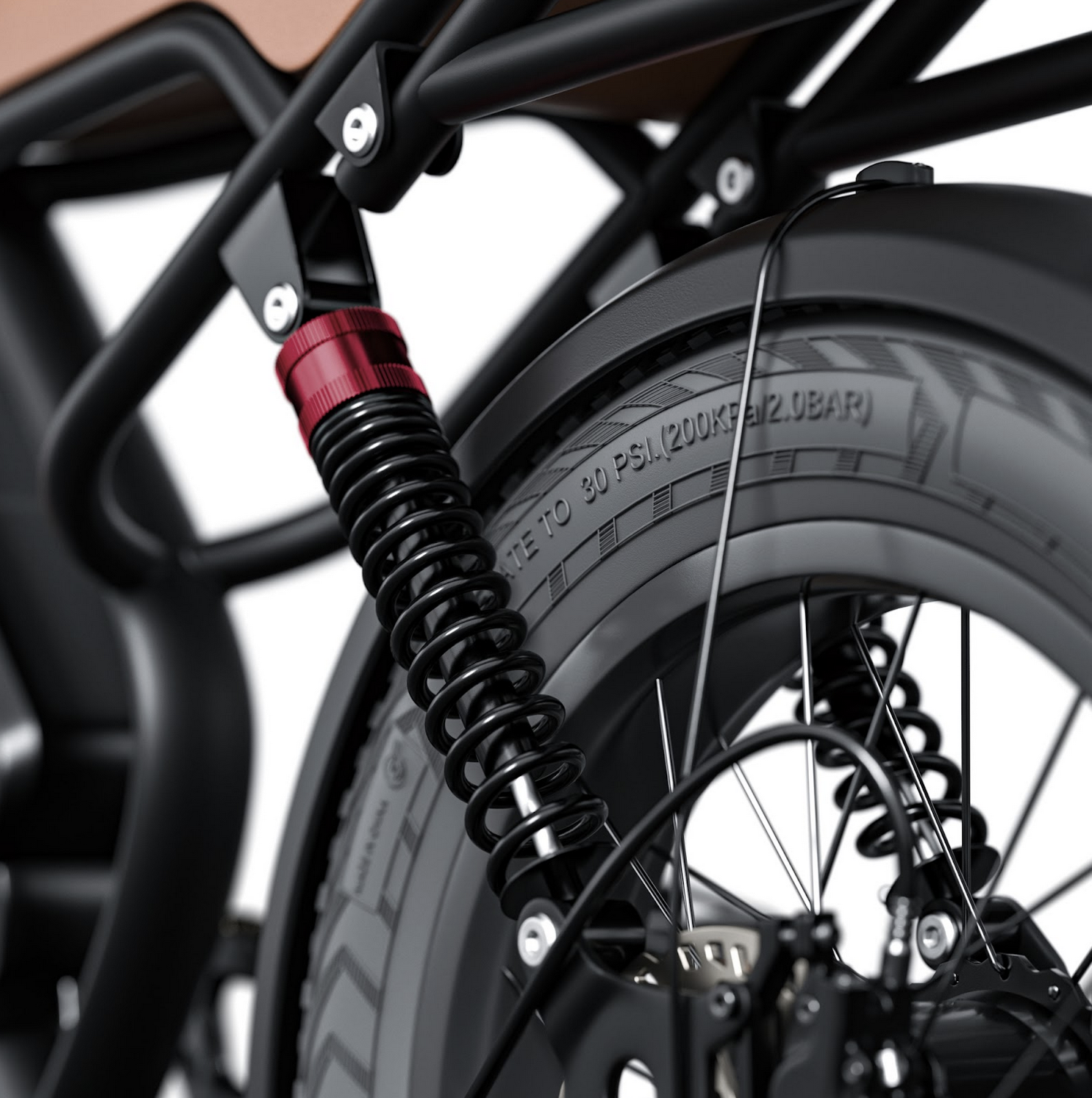
- Rear spring shock
- CST BFT 20x4.0" all-terrain fat tires
- 20-inch spoked rims
The dual-suspension setup significantly improves comfort compared to hardtail fat-tire models. With 4-inch-wide tires, the bike effectively absorbs road chatter, gravel vibration, and uneven surfaces.
At 86 lbs, the Ranger is not lightweight, but that mass contributes to planted stability at higher speeds.
Drivetrain and Braking
The Ranger is equipped with:
- Shimano 7-speed transmission
- ATA index freewheel (14–28T)
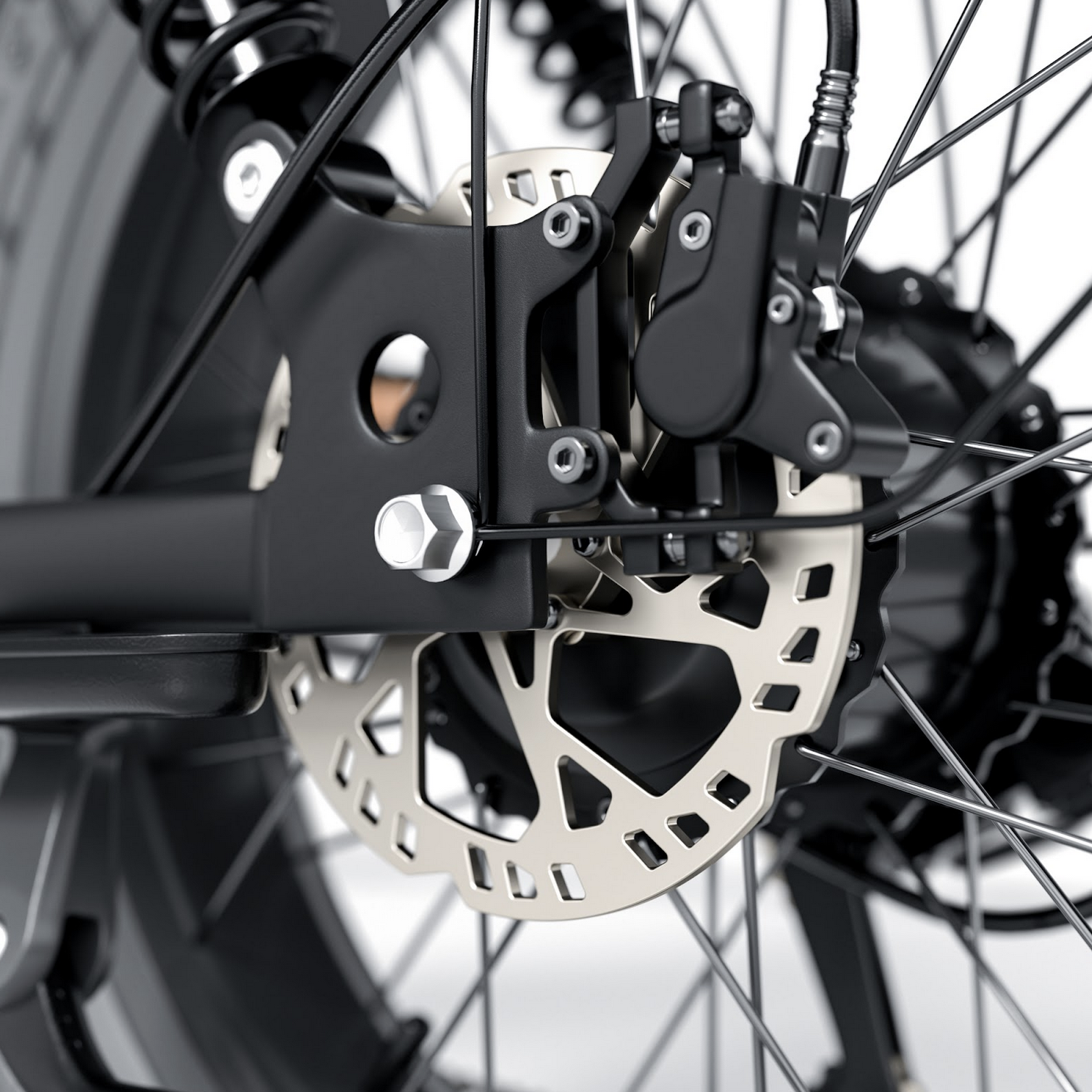
- Hydraulic disc brakes with 180mm rotors
- Motor cut-off brake levers
The inclusion of hydraulic brakes at this price tier is notable. Stopping power is strong and progressive, which is essential given the 31 MPH top speed and overall weight.
The Shimano 7-speed system is functional and reliable for casual riding, though it is clearly positioned for practicality rather than performance-level shifting precision.
Electronics and Safety Integration
The Ranger includes a well-rounded electronics package:
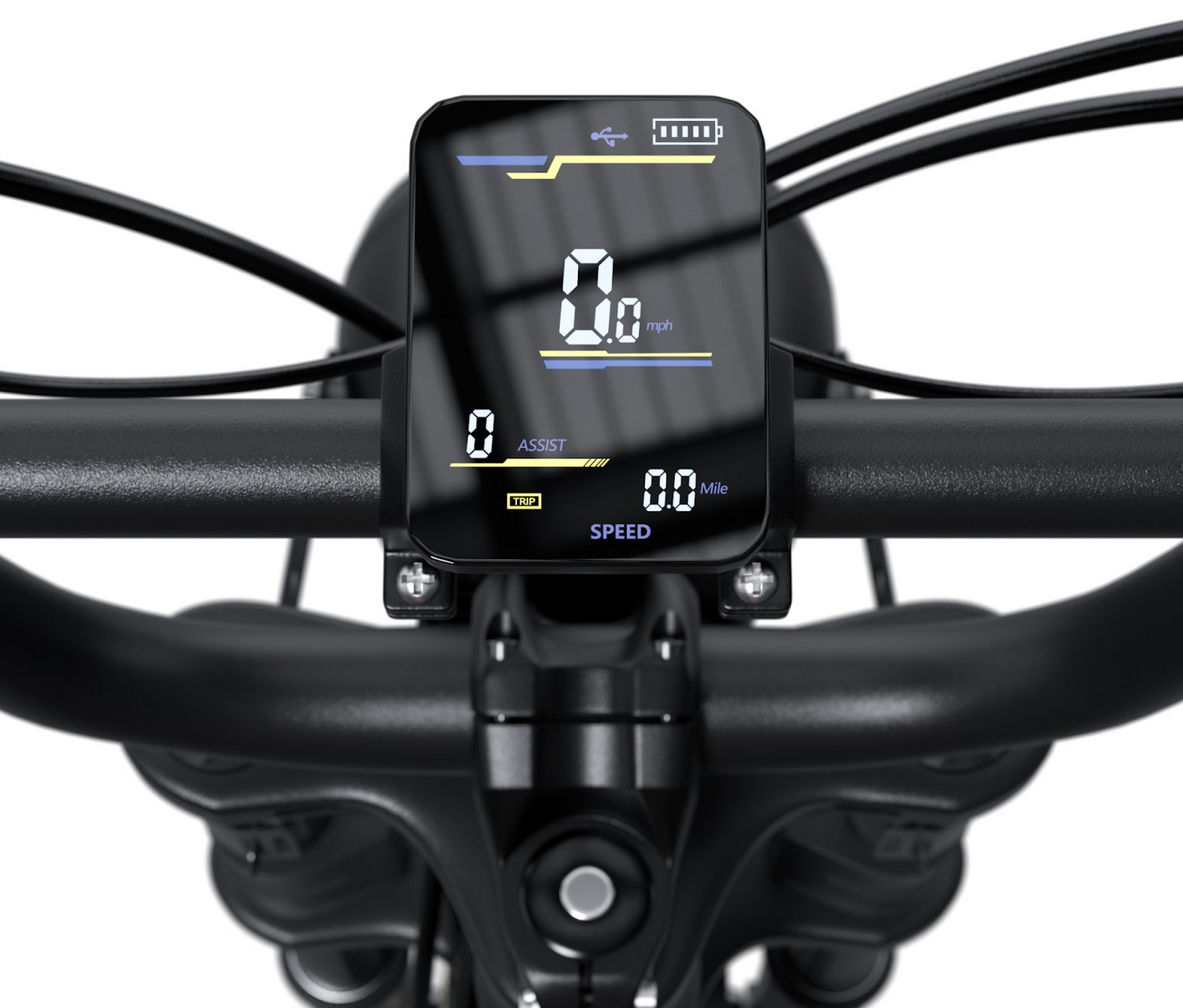
- 3.5-inch full-color LCD (mid-mounted)
- Integrated high-lumen headlight with horn
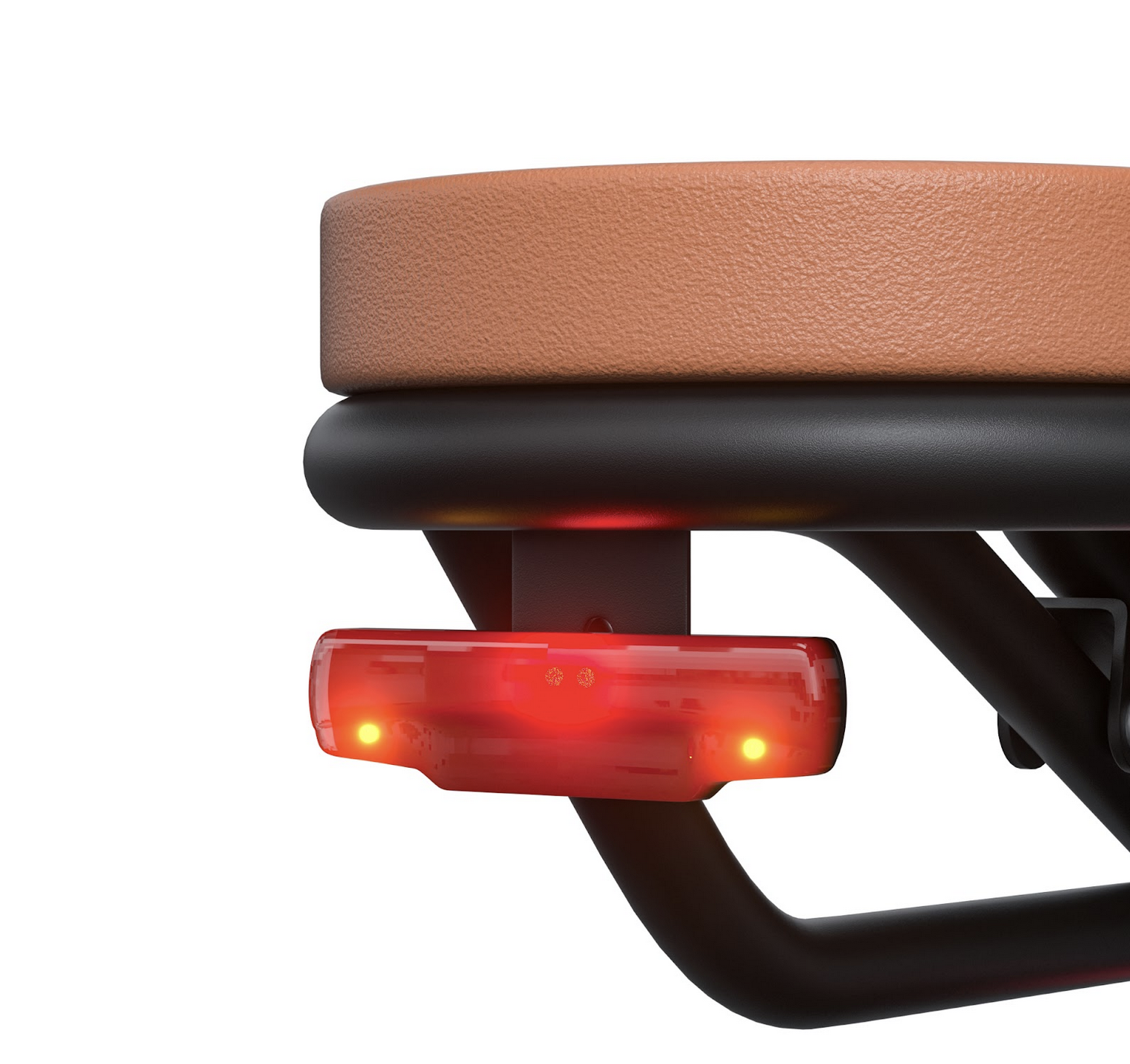
- Integrated rear light with brake signal and turn indicators
- Dedicated switch controls for lighting and signals
Turn signals and brake-integrated lighting are practical commuter features that are often omitted in this segment.
Capacity and Practical Use
- Max payload: 350 lbs
- Pre-assembly: 85% pre-assembled on delivery
The high payload rating broadens usability for larger riders or cargo setups. Assembly requirements are minimal, typically limited to handlebars, front wheel alignment, and pedals.
Value Assessment
The most disruptive aspect of the Ranger is not any single component; it is the pricing structure.
Positioned in the $700 early-launch range, the Ranger combines:
- 1500W peak power
- 80-mile claimed range
- Dual suspension
- Hydraulic brakes
- Integrated lighting system
In the current fat-tire market, that combination typically sits in a significantly higher bracket.
Who Is the Ranger For?
The Ranger is best suited for:
- Budget-conscious riders wanting high peak power
- Urban commuters who prioritize comfort
- Casual off-road and gravel riders
- Larger riders needing a 350 lb capacity
It is less suited for riders seeking lightweight portability or advanced mid-drive performance dynamics.
Final Verdict
The Kingbull Ranger is engineered as a value-forward, power-heavy fat-tire e-bike. It prioritizes comfort, torque output, and feature integration over weight savings or premium drivetrain refinement.
For riders evaluating entry-level pricing without entry-level specifications, the Ranger represents a compelling proposition in the evolving sub-$1,000 e-bike category.
Share this post
Author

Leave a comment
All comments are moderated. Spammy and bot submitted comments are deleted. Please submit the comments that are helpful to others, and we'll approve your comments. A comment that includes outbound link will only be approved if the content is relevant to the topic, and has some value to our readers.
Comments (0)
No comment