
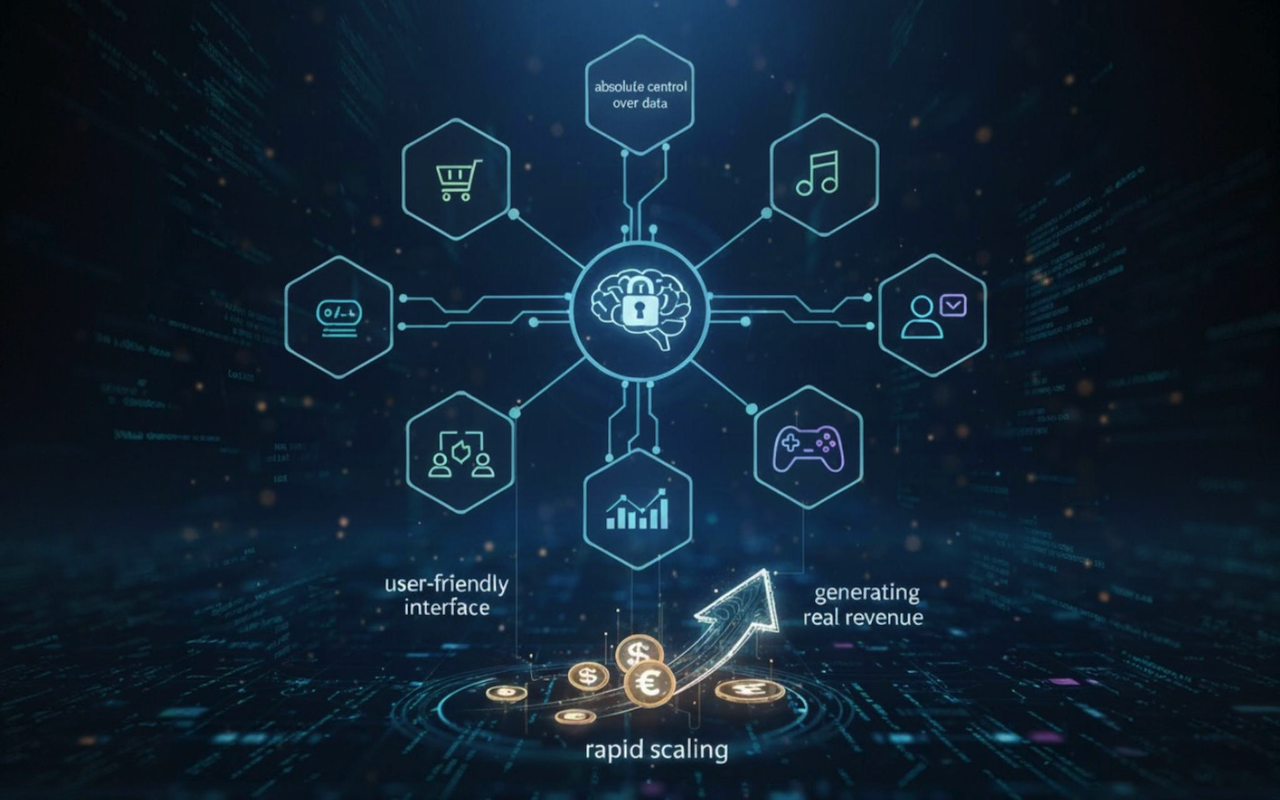
Decentralized applications (dApps) are rapidly becoming an integral part of our daily lives, and only the most effective ones attract and retain large numbers of active users. The best dApp needs to have a user-friendly interface, like any other app, while also giving users absolute control over their data. By following our recommendations, dApps can rapidly scale and start generating real revenue.
We focused on removing the primary barriers that previously prevented non-crypto users from using Web3, such as complex registration, slow transactions, and security concerns. This article is a quick guide for developers, founders, and investors, illustrating how prioritizing a seamless user experience, high safety standards, mobile convenience, and genuine decentralization can lead to practical implementation.
What Makes a dApp Successful?
Successful dApps have user interfaces that are friendly, onboarding processes of a few seconds, and designs comparable to the best-performing centralized solutions. By employing well-developed Layer-2 technologies, they ensure super-fast transaction execution with zero transaction fees.
It is also a key aspect of a successful decentralized application, providing a high level of safety, often performing numerous audits, maintaining active bug bounties, and hardening upgrade procedures to secure users’ funds. By keeping a perfect harmony between innovation and improvement, a decentralized application can transform a fascinating novelty into a vital tool used daily by millions of users.
Why Building a Feature-Rich dApp Matters for Business Growth
The scene for dApps will be highly competitive, and only if they are as advanced as Web2 giants while still offering complete decentralization will they survive and thrive. This will be demonstrated through three measurable components: a substantially higher user retention rate, fully stable transactions, and considerably greater monetization opportunities.
1. Higher User Retention
A multifunctional dApp turns one-time visitors into DAUs (Daily Active Users) with a mobile-first design, instant push notifications, and a smart wallet that simplifies crypto complexity. High user engagement will, in turn, motivate loyal users to invite friends, provide liquidity, vote on governance, and become your most effective word-of-mouth marketing channel.
2. Smooth Transactions
A smooth user experience at every stage is ensured by well-functioning dApps, which offer finalized transaction confirmation in less than a fraction of a second, free commission transactions, intent-driven routing across different chains, and commission support for payment systems. Wallet connectivity conversion rates for completed transactions can exceed 90% once this infrastructure is in place.
3. Better Monetization Opportunities
Trust, a friendly experience, scalability, and privacy should be highly emphasized. Multifunctional dApps continue to deliver returns far higher than regular dApps, as users are willing to stake more to enjoy a superior experience. Those projects that have engaged the entire stack since inception lead the way.
Key Benefits dApps Provide Over Traditional Apps
Decentralized applications are no longer an alternative; they have several advantages that their Web2 alternatives cannot match. Below are four key reasons why dApps are attractive.
1. Actual Ownership of Assets (NFTs, Tokens, Identity Data)
In conventional apps, you do not even own your digital assets within an app — it is the app that owns your data, along with all in-game assets.
A dApp gives you the chance to put your assets, like NFTs and even your identity information, onto the blockchain and control all of this through your private keys, thus affording you an ownership right that can be verified and transferred.
2. Censorship Resistance and Reduced Platform Risk
Centralized applications may also deny users access, freeze their accounts, or fail altogether in response to policy changes, government pressure, or corporate decisions, as has happened in previous instances involving high-profile systems.
On a public blockchain, decentralized applications run on a network that can't be easily shut down or prohibited, because once deployed, they remain functional as long as the blockchain exists.
3. Global Accessibility and Borderless Payments
The applications are limited by location, banking connections, and fees, and are not very appealing to the large masses of people.
On the other hand, dApps can be used by anyone with internet connectivity and a digital wallet, indicating that, in most instances, a bank account or ID will not be required. International transactions will take only a few seconds to complete and will only incur a few cents in processing fees.
4. Permissionless Innovation and Community-Driven Growth
Web2 sites decide on the functionality that developers can provide, and the app store or gateway service providers charge a commission of 30% or more of the earnings.
dApps will empower users to build apps on public protocols and create tools without approval. This will ensure fast innovation cycles, fair revenue sharing, and user-centric products rather than organization-centric ones.
Core Features Every High-Performing dApp Must Include
To make it easier for beginners and hassle-free for dApps to offer the best experience for their users, they need to emphasize functionality that addresses user experience, reliability, and costs, and address them most effectively. The most essential attributes of every dApp are listed below, along with a short description for the readers.
Seamless Wallet Connection
With this functionality, users can easily connect their wallets, which is primarily done via social networks or email login. Connecting smart wallets is also more manageable for beginners, hassle-free.
Why it matters: The complexity of the setup process leads most users to quit before they can start, whereas integration enables higher user conversion and attracts more new users who are not acquainted with cryptocurrency.
Simple User Onboarding
Progressive feature revelation teaches the user how to use the latest features only after they have had a chance to adjust to the application. This learning process is highly user-friendly.
Why it matters: Having a more straightforward onboarding process will enable more people to start using it, bring more new users back, and spread the word about this dApp to people beyond those familiar with crypto. Onboarding helps individuals interested in using it become regular users.
Upgradeable Smart Contracts
Proxy templates or transparent update techniques are used to design contracts that allow bug fixes and feature updates without preventing users from accessing their money or data. Logic and proxy code are included in the documentation and auditing.
Why it matters: The code in a blockchain cannot be easily changed, so having the ability to make changes will improve security and introduce new functionality while maintaining user trust, whereas without it, a single mistake could destroy a project forever.
Gas Optimization
Smart contracts and interfaces are designed to reduce computation costs and associated fees through optimized opcodes, off-chain computation, and batching. Periodic review is necessary to ensure that the optimizations are valid.
Why it matters: High gas costs will leave users reluctant to use it. A smart gas cost allows execution, thereby driving frequent use, even when congestion occurs. Efficient gas costs will boost user satisfaction.
Mobile-First User Interface
The dApp is developed for tablets and especially smartphones because of its responsiveness, touch, and fast loading times, which are suited to the bandwidth of mobile networks.
Why it matters: Most browsers on the internet use apps on mobile platforms. A mobile-centric layout will ensure a native app experience and will cover the broadest possible audience. One of the benefits of mobile platforms is an essential feature in distinguishing very successful dApps.
Layer-2 and Low-Fee Blockchain Support
dApps are built on scalable Layer 2 technology or on economically feasible chains that offer fast transaction confirmation times and low costs, and often also include bridges. It is convenient to overcome the temporary problems with the backup systems.
Why it matters: Users want transactions to happen instantly and for free; relying solely on high-cost Layer 1 blockchains would limit adoption and day-to-day use. High fees would also prevent microtransactions.
Transaction Transparency
Transactions are handled transparently, with live status updates, access to the blockchain explorer, and explanations of events occurring within the blockchain.
Why it matters: Transparency creates a culture that inspires trust and eliminates anxieties about waiting times; instead, people can understand and confirm the processes within a complex form of blockchain technology that can be confusing for a layperson.
Performance Monitoring Systems
Innovative embedded functionalities include tracking transaction speeds, downtime, error logs, and user drop-off points, with the developer notified of any issue in real time. Analytics are also embedded in the data and the chain's functions.
Why it matters: This helps identify problems and resolve them instantly, ensuring dApp users always receive reliable, high-performance services. This could prove a significant disadvantage if the problems go unidentified and users start registering complaints about them.
How the Right Development Partner Impacts Success
The type of partnership involved in the development cycle is the most significant factor in determining a dApp's success or failure. The involvement of skilled experts in the development process not only helps create the code but also shapes the direction the final product will take.
Strategic Planning
A good dApp development company will already have relevant experience with scalable blockchain solutions from the moment you first start communicating. A professional partner will also aid in formulating crucial elements of an actual deployment strategy that helps satisfy strategic objectives.
Feature Prioritization
Good teams know how to distinguish between features that must be included and those that can wait until later. It’s about figuring out how to use data and testing to prioritize features that lead ultimately to adoption and retention. In effect, it leads to an MVP that is trimmed and launched much sooner, and it ends up taking a larger market share before others.
Post-Launch Support
The best teams think of launching as a beginning, not an endpoint. The best team will always help boost productivity and build new features that keep you productive and retain new users.
Security-First Development
The ideal partner should prioritize safety at every level, from multiple audits and solid critical logic to bug bounty programs and a secure update process. They incorporate the most secure-practicing approaches for key and access management and emergency disabling while taking a decentralized stance.
Industry Expertise
A seasoned business partner with experience in your industry (DeFi, gaming, social, RWA, etc.) will be highly knowledgeable about token economics and regulatory obligations.
Your business partner will also be well-versed in the significant partnerships your dApp must make to succeed, the blockchains your industry is active on, and the rewards users actually respond to.
Monetization Strategies for dApps
A successful dApp is no longer reliant on launching tokens for investment; it needs a method of earning ongoing revenue, and this is how the most profitable dApps function, synthesizing their profitability with tokens and the community. Below are the three most popular strategies a dApp can earn profitability on:
1. Transaction Fees and Usage-Based Revenue
In most popular dApps, there are nominal protocol fees for every transaction, exchange, loan, and other services carried out within the application. The nominal protocol fee ranges from 0.05% to 0.3%, of which a portion is allocated to liquidity fund providers, stakers, the treasury, and buyback programs, respectively.
2. Premium Features and Subscription Models
Nearly all dApps provide a freemium model wherein premium functionalities such as trading robots with less delay, sophisticated analytics and user interfaces, priority transaction execution, and strategies for optimizing returns are offered in exchange for a cost. These membership services ensure a stable source of revenue streams for the environment.
3. Marketplaces, Trading Fees, and Value Capture
dApps offering NFT marketplaces, gaming items, RWA, and prediction markets can immediately monetize their value through listing fees, royalties, and second-hand markets. Dynamic royalty schemes and liquid protocol-side markets can help ensure that all participants get paid for their work, not just on the same chain but across multiple chains as well.
Final Thought
The success of a dApp depends on a careful blend of cutting-edge technology, robust data protection, and user-centered design concerns. Developers should focus on a smooth wallet experience and an easy sign-up process to attract both crypto-savvy customers and a wider audience.
Collaborations with reputable developer teams will accelerate your protocol's development and ensure compliance with the highest safety standards in this market.
Developing and prioritizing user safety, conducting regular audits, and implementing a bug bounty program are critical to protecting users’ resources. Competition in the field requires continued innovation and improvement. Eventually, dApps will lead the next digital transformation due to their high standards in user experience, security, and value.
Disclaimer
This article is published for informational and educational purposes only. It does not constitute financial, investment, legal, or professional advice. Decentralized applications (dApps), blockchain technologies, and related platforms involve technical complexity and inherent risks. Readers should conduct their own research and consult qualified professionals before making any decisions based on the information provided.
While every effort has been made to ensure accuracy at the time of publication, technologies, regulations, and industry practices may change. iplocation.net makes no representations or warranties regarding the completeness, accuracy, or reliability of the information contained in this article.
This article may contain links to third-party websites for reference or additional context. iplocation.net is not responsible for the content, availability, accuracy, or security of external websites and does not endorse any products, services, or opinions expressed on those sites. Accessing external links is done at the reader’s own risk.
Featured Image generated by Google Gemini.
Share this post
Leave a comment
All comments are moderated. Spammy and bot submitted comments are deleted. Please submit the comments that are helpful to others, and we'll approve your comments. A comment that includes outbound link will only be approved if the content is relevant to the topic, and has some value to our readers.
Comments (0)
No comment