
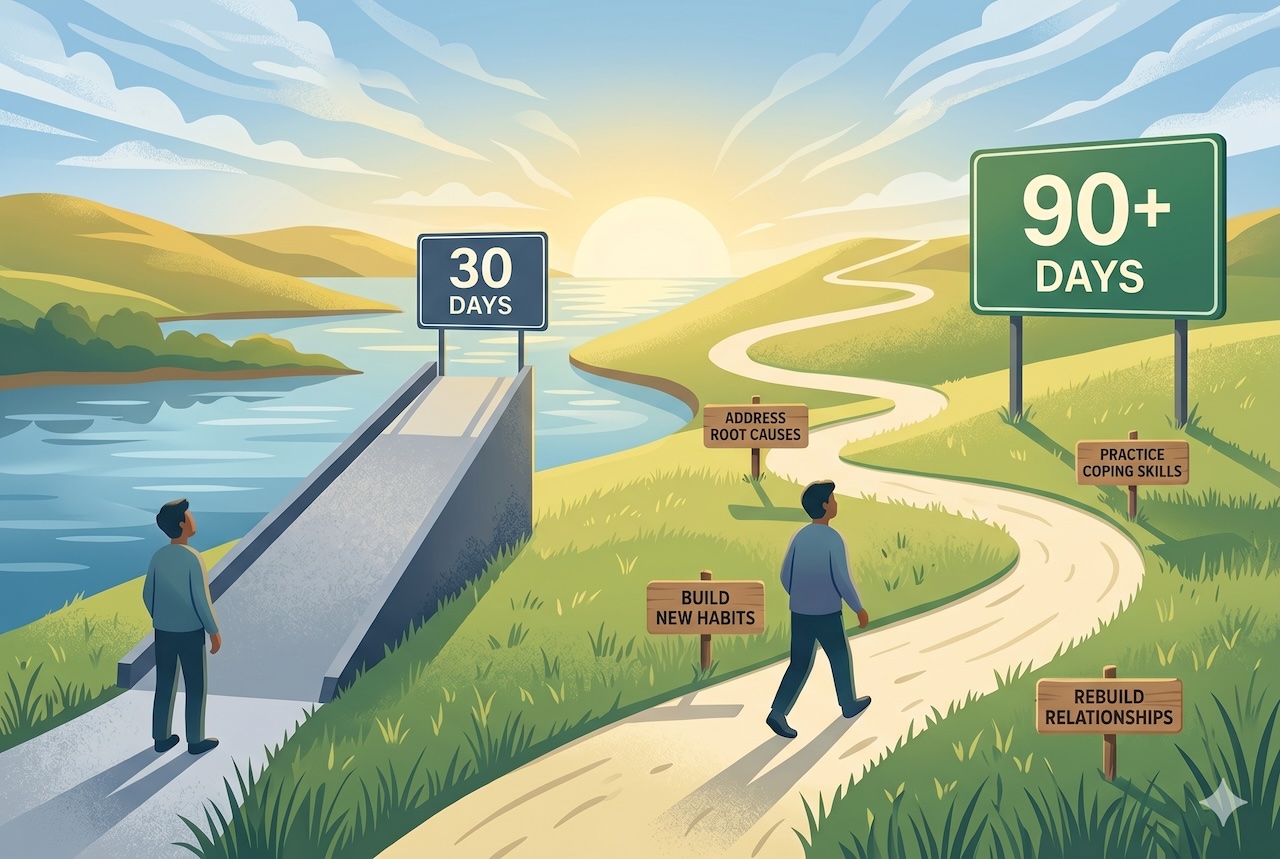
For decades, the 30-day rehab stay has been the most familiar image of addiction treatment. It is what most people think of when they hear the word rehab, and it is often the option that insurance plans cover most easily. But for many people struggling with substance use, 30 days is just not enough time to make changes that last.
If you or a loved one is considering treatment, it is worth taking a closer look at how long programs really need to be to give people their best shot at recovery.
Where the 30-Day Model Came From
The 30-day standard has more to do with history and insurance than with science. It became common partly because early Air Force programs used a 28-day model, and partly because insurance companies built coverage around that timeframe. Over the years, it stuck. But research on addiction treatment has come a long way since then, and it points in a different direction.
Many treatment professionals now recommend longer stays, especially for people with severe or long-standing addiction. A 90-day rehab program gives people enough time to move past the early, fragile stage of recovery and start building real, lasting change. It also creates space to address mental health conditions, family dynamics, and other factors that play a role in addiction.
What the Research Says About Treatment Length
According to the National Institute on Drug Abuse (NIDA), research has consistently shown that staying in treatment for an adequate period of time is critical, and that good outcomes are typically associated with treatment lasting at least three months. Shorter stays may help in the moment, but they often leave people without enough time to build the skills and structure needed to stay sober once they go home.
This does not mean that everyone needs exactly 90 days, or that shorter programs do not help. It means that recovery takes time, and that more time generally allows for more progress.
Why More Time Often Leads to Better Outcomes
Time to Address Root Causes
Addiction rarely exists on its own. Many people who struggle with substance use also live with depression, anxiety, post-traumatic stress, or unresolved grief. Addressing these underlying issues takes time. In a 30-day program, the focus is often on stabilization. A longer stay creates space to dig deeper and treat addiction along with whatever is driving it.
Time to Build New Habits
Real change in habits and routines does not happen in a few weeks. People in longer programs have more opportunity to practice waking up sober, handling stress without substances, eating regular meals, and rebuilding healthy sleep. These daily routines may sound simple, but they are the foundation of long-term recovery.
Time to Practice Coping Skills
Therapy in a 30-day program often introduces coping tools but rarely allows much time to use them. A longer program lets people practice new skills repeatedly, with support, before facing real-world stress. This kind of practice can make a meaningful difference when triggers come up after treatment ends.
Time to Rebuild Relationships
Substance use affects everyone close to the person using. Family therapy, communication skills, and rebuilding trust all take time. A 90-day program leaves room for loved ones to participate in the recovery process, which often improves outcomes for everyone.
What a 90-Day Program Usually Includes
Longer programs are typically structured in phases that gradually shift from intensive support to greater independence. A common pattern looks like this:
- Detox, when medically necessary, often during the first week
- Residential or inpatient treatment for the early weeks, with daily therapy and structure
- A step-down to a partial hospitalization or intensive outpatient program as stability grows
- Aftercare planning that includes ongoing therapy, support groups, and sometimes sober living
The exact mix depends on the program and the person, but the goal is the same: a smooth transition from full-time treatment back to everyday life, without rushing the process.
Who Benefits Most From a Longer Stay
While longer treatment can be helpful for almost anyone, it is especially valuable for:
- People with co-occurring mental health conditions such as depression, anxiety, or PTSD
- Those who have relapsed after shorter programs and need a different approach
- People with long histories of substance use or severe addiction
- Anyone returning to a high-risk environment, such as a home or community where substance use is common
- People who feel they need more time and support to feel ready for the next step
If any of these sound familiar, a longer program may be worth serious consideration.
Common Concerns About Longer Programs
Cost and Insurance
Cost is often the first concern people raise. The good news is that many insurance plans cover longer stays when they are deemed medically necessary, especially for severe addiction or co-occurring conditions. Treatment centers often have admissions teams that can verify benefits and explain payment options. It is worth asking, even if a longer stay seems out of reach at first.
Time Away From Work or Family
Stepping away from a job or family for 90 days feels overwhelming to many people. But it can also be one of the most important investments a person ever makes in their health, relationships, and future earning potential. Some employers offer leave protections under the Family and Medical Leave Act for treatment, and many programs help families plan for the time apart.
The Bottom Line
Recovery is not a race. While 30 days can give someone a meaningful start, it often is not enough time to address the deeper roots of addiction or to build a life that supports long-term sobriety. For many people, a longer stay is what makes the difference between an early setback and a real turning point.
If you or someone you love is weighing treatment options, do not let the 30-day default be the only thing on the table. The right amount of time in treatment is the time it takes to truly begin again.
Featured Image generated by Google Gemini.
Share this post
Leave a comment
All comments are moderated. Spammy and bot submitted comments are deleted. Please submit the comments that are helpful to others, and we'll approve your comments. A comment that includes outbound link will only be approved if the content is relevant to the topic, and has some value to our readers.
Comments (0)
No comment